Some breakfast cereals promised vitamins. The Nintendo Cereal System promised Mario, Zelda, and a much better reason to get out of bed.
If you were a kid in the late 80s, that was enough. A box like this didn’t sit in the pantry like food. It sat there like loot, part breakfast, part toy aisle, part Saturday morning bragging rights. That’s why people still remember it.
The Nintendo Cereal System Highlights
- The Nintendo Cereal System launched in 1988 by Ralston Purina, featuring a dual-sided box with Super Mario Bros. fruity cereal on one side and The Legend of Zelda berry cereal on the other, each in separate bags—turning breakfast into a choose-your-adventure.
- Its explosive design, packed with iconic characters, enemies, and power-ups, made the box feel like a toy aisle standout amid late-80s grocery shelves, perfectly capturing Nintendo’s total cultural takeover.
- More than just sugary flakes, it wove into kids’ routines with game tips, trading cards, and promo offers, blending breakfast with cartoons, school chatter, and after-school gaming sessions.
- Short-lived and discontinued by 1989, unopened boxes now fetch high prices from collectors chasing that cardboard time capsule of 80s Nintendo nostalgia.
When Nintendo Took Over the Kitchen
By 1988, Nintendo wasn’t only popular, it was everywhere. Kids spent afternoons hunting warp zones, trading tips on impossible jumps, and sketching maps for Zelda dungeons on notebook paper. The Nintendo Entertainment System had moved past “new toy” status. It was the center of the room. It matched perfectly while playing one of your favorite 80s video games.
So when Ralston Purina put Nintendo on a cereal box, it didn’t feel random. It felt inevitable. According to Wikipedia’s overview of the cereal, it arrived in 1988 and disappeared by 1989. Short shelf life, huge memory.
Kid logic in 1988 was simple: if something had Mario on it, it got your attention. If it had Zelda too, now you were listening. Bedrooms had posters, lunchboxes had characters, and TV ads turned every aisle into a mini entertainment zone. The cereal section wasn’t separate from the fun. It was part of it.
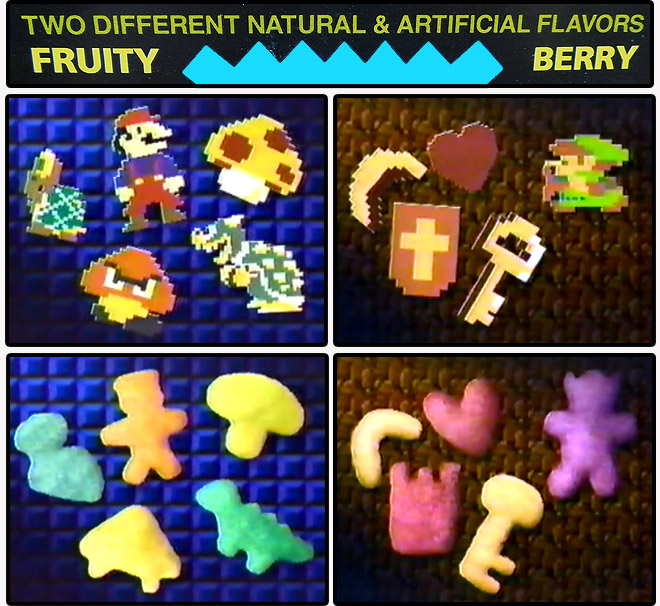
Branded cereal was already a thing, of course. But this one had a sharper hook. It tied itself to two of Nintendo’s biggest games at once, Super Mario Bros. and The Legend of Zelda. Mario brought color, noise, and instant recognition. Zelda brought mystery, fantasy, and a slightly cooler vibe. The dual-sided box offered two distinct types of cereal, fruity-flavored pieces and berry-flavored pieces. One box, two moods, zero chance a Nintendo kid would ignore it.
That’s what made the Nintendo Cereal System feel different. It caught the exact moment when game worlds spilled into everyday life. Not only on your TV, but at the breakfast table too.
Why the Box Hit Like Treasure
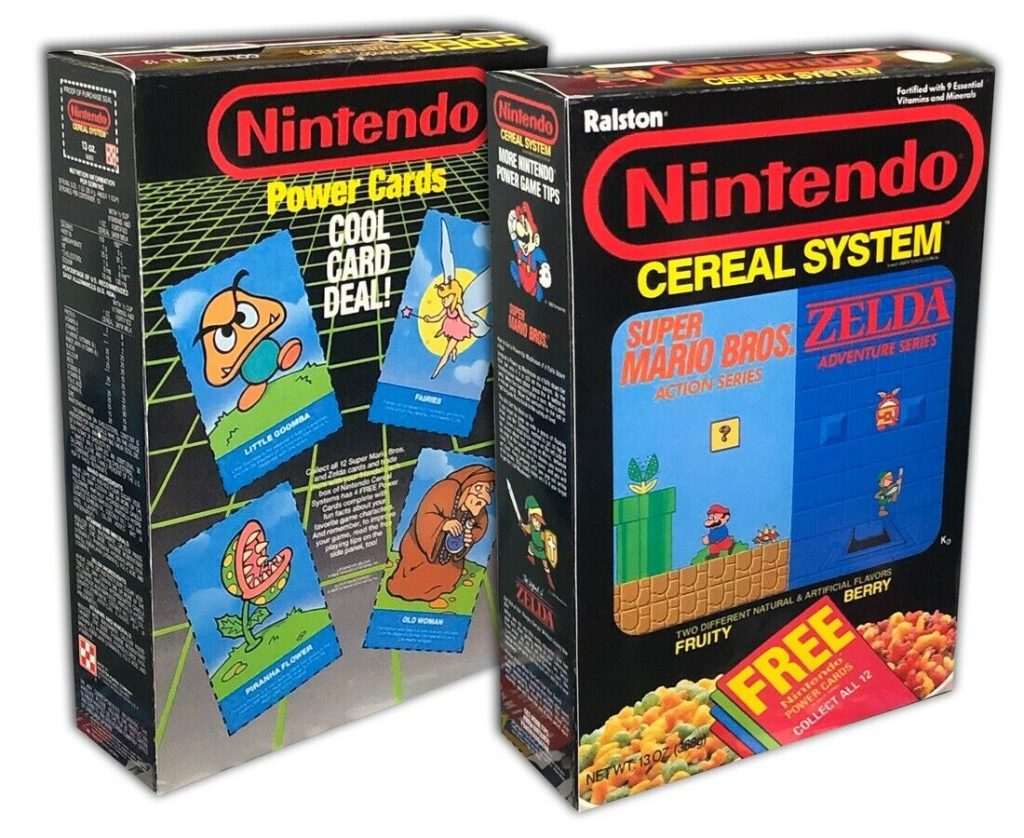
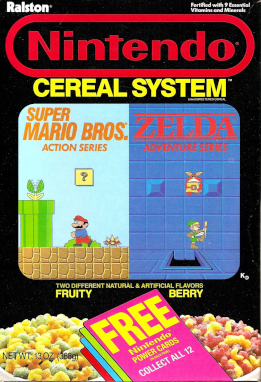
Walk down a grocery aisle in the late 80s and you saw plenty of bright boxes. Most still looked like cereal. The Nintendo one looked like an event. Its physical cereal box design, with the split layout featuring Mario on one side and Zelda on the other, had the same pull as a toy package hanging on a pegboard. Graphics burst with iconic enemies like Koopa Troopas and Goombas, plus King Koopa looming in the artwork.
It wasn’t subtle, and that was the point. Bold colors, busy graphics, and familiar game worlds with power-up imagery like the Super Mushroom did all the selling before you ever looked at the ingredients. Even the name was a smart wink, a breakfast riff on the Nintendo Entertainment System itself. For kids, that pun landed. It made the box feel like a piece of the console’s magic had been smuggled into the kitchen.
The box didn’t whisper “breakfast.” It shouted “Nintendo” from halfway down the aisle.
Packaging mattered more than people like to admit. In a lot of homes, the cereal box stayed on the table long after the first pour. You stared at it between spoonfuls. You read the side panels loaded with game tips and stickers. You kept it turned a certain way so the best art faced you. In that setting, design wasn’t decoration. Design was the experience.
The Nintendo Cereal System nailed that part. It knew kids didn’t want a plain old food item. They wanted something that looked collectible before it was even opened. That box had the same energy as a rental store display, a new action figure, or a toy catalog page you circled in red pen. Breakfast had become merch, and kids were fully on board.
Two Bags, Two Worlds
The cleverest part was inside. As Retrovolve’s look back at the cereal remembers, each Nintendo Cereal System box held two separate vertical bags, one for the Super Mario Bros. Action Series and one for the Zelda Adventure Series. That detail made the whole thing feel bigger. This wasn’t one cereal trying to cover all bases. It was a breakfast double feature.
That choice changed the mood. You weren’t only pouring cereal. You were picking a side. Mushroom Kingdom this morning, or Hyrule? Fruity-flavored Super Mario Bros. Action Series chaos, or berry-flavored Zelda Adventure Series cool with Link? Bright, cartoonish energy, or fantasy-adventure vibe? For a kid, that tiny decision felt weirdly important.
Nobody remembers the Nintendo Cereal System because it was health food. That’s not the lane. People remember the sound of the inner bag crackling open, the rush of sugary scent, the little rattle into a plastic bowl, and the cold milk hitting the cereal while cartoons played nearby. It was fast, sweet, bright, and happily artificial in the most 80s way possible.
The split concept also gave both game series room to shine. Mario already had mass appeal, goofy and high-energy. Zelda added a sense of adventure that made the box feel a little more special, almost like a secret handshake for kids who knew both franchises. Parents saw cereal. Kids saw identity.
And that, more than flavor notes or nutrition panels, is the reason it worked. The cereal let you interact with Nintendo before school, before homework, before even brushing the crumbs off your shirt. It made breakfast feel like level select.
Breakfast Became Part of the Nintendo Routine
The cereal didn’t exist in a vacuum. It landed in the same culture that made Saturday mornings feel electric. Cartoons, toy commercials, mall kiosks, movie tie-ins, lunchboxes, sticker albums, all of it blended together into one big kid-facing universe. Nintendo fit neatly into that world because it already owned so much of your imagination.
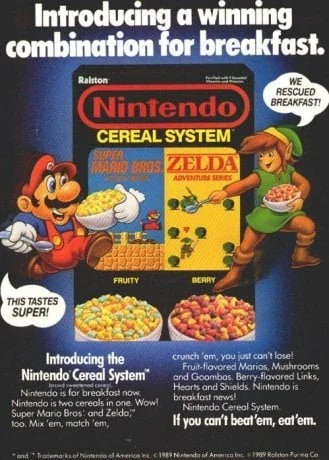
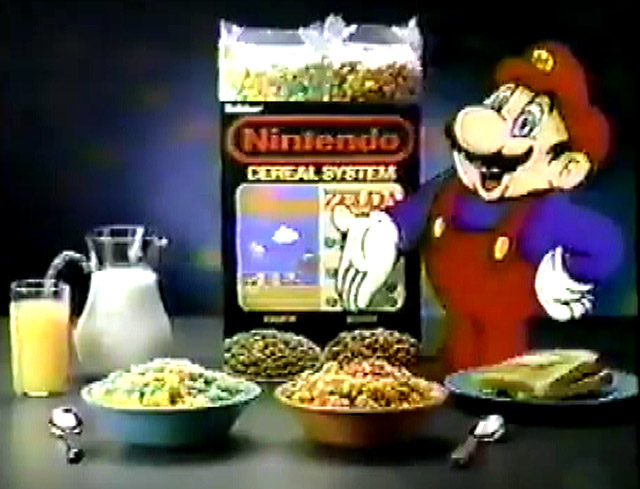
Cereal ads were part of the same machine. They were loud, colorful, and a little ridiculous, which made them perfect for kids half-watching TV in pajamas. A Technologizer roundup of strange Mario merchandise still calls out the cereal and its commercial, a high-energy spot packed with game clips and prize teases that made the pitch unforgettable.
The morning ritual did the rest. Pour the bowl. Watch cartoons. Read the box. Talk games. Head to school. Then compare notes at lunch. Did your house get the Nintendo cereal? Which side did you like better? Did your mom buy it because you asked nicely, or because she got worn down after hearing about it for a week?
And like many great cereals from the era, the box kept giving after breakfast. Side panels featured trading cards or Nintendo Power Cards, promos included Power Pad giveaways or Super Mario cereal bowl offers, little bonus touches like those made it part of a larger ecosystem of memorabilia. In the 80s, packaging was often part toy, part ad, part mini magazine. The Nintendo box understood the assignment perfectly.
That broader routine is why the cereal stays lodged in memory. It wasn’t only about eating something sweet. It was about how neatly it fit into a kid’s whole media day, from the first spoonful to the last after-school game session.
Why Collectors Still Chase Unopened Boxes
Most cereals vanish twice, first from stores, then from memory. The discontinued Nintendo Cereal System only did the first part. Because its run was so short, and because Nintendo nostalgia only got stronger, the box turned into a tiny cardboard time capsule.
Collectors aren’t only after the cereal itself. They want the graphics, the oddball concept, the crossover appeal, and the proof that this wonderfully specific product once sat in ordinary American kitchens. An unopened box feels less like pantry stock and more like preserved atmosphere. The trading cards cut from these boxes are also highly sought after.
That’s part of why values got attention. Nintendo Life’s look back at the cereal recalled the collectible cards and old box offers, and reported that an unopened box sold for $207.50 in 2010. Today, the discontinued Nintendo Cereal System commands high prices on online auction sites like eBay. When something disposable survives long enough, it stops being disposable. It becomes evidence of a moment.
Retro gaming fans also love the odd corners of Nintendo history, the merchandise that made the brand feel bigger than the console itself. This cereal fits that category perfectly. It is not only a food product. It is a snapshot of how huge Nintendo felt in 1988, when even breakfast could be turned into licensed excitement.
And maybe that’s the sweetest part. The cereal itself disappeared fast. The memory didn’t. One stayed in the bowl for a few minutes. The other stuck around for decades.
Frequently Asked Questions
What was the Nintendo Cereal System?
The Nintendo Cereal System was a short-run cereal from 1988 that split one box into two worlds: Super Mario Bros. Action Series with fruity-flavored pieces in one bag, and The Legend of Zelda Adventure Series with berry-flavored pieces in the other. It wasn’t just breakfast—it was a dual-sided event tying Nintendo’s biggest hits to your morning bowl. Kids picked their side like choosing a game cartridge.
Why did it only last from 1988 to 1989?
It hit shelves at the peak of Nintendo mania but vanished quickly, likely due to its limited promo run and the fast-moving world of branded cereals. The short shelf life only boosted its legend status. Today, that brevity makes it a collector’s holy grail.
What made the box design so memorable?
The split layout screamed Mario chaos on one side and Zelda mystery on the other, bursting with Koopas, Goombas, and Super Mushrooms in bold 80s graphics. It looked less like food and more like a pegboard toy or rental store display. Parents saw cereal; kids saw loot.
Are unopened boxes valuable today?
Absolutely—collectors chase them for the pristine graphics, trading cards, and pure 80s vibe, with one selling for $207 in 2010 and prices climbing on eBay since. They’re not just empty boxes; they’re snapshots of Nintendo spilling into kitchens. Nostalgia turned disposable packaging into treasure.
How did it fit into 80s kid culture?
It landed in a world of cartoon mornings, toy ads, and Nintendo everywhere, making breakfast feel like level select with crinkly bags, game tips, and promo bowls. You poured, ate, read the panels, then talked it up at school. It blurred food, fun, and fandom perfectly.
The Box Still Wins
Plenty of 80s cereals were sugary. Fewer felt like an event. The Nintendo Cereal System turned breakfast into a side quest, and that’s why the memory has lasted so well.
You remember the iconic cereal box with its split design, the crinkle of the bags, the pull of Mario on one side and Zelda on the other. Maybe you begged for it. Maybe you only saw it at a friend’s house and never forgot that little flash of envy.
The real legacy of the Nintendo Cereal System is simple: joy in a cereal box. For one brief moment, an ordinary school morning felt a lot more like play.