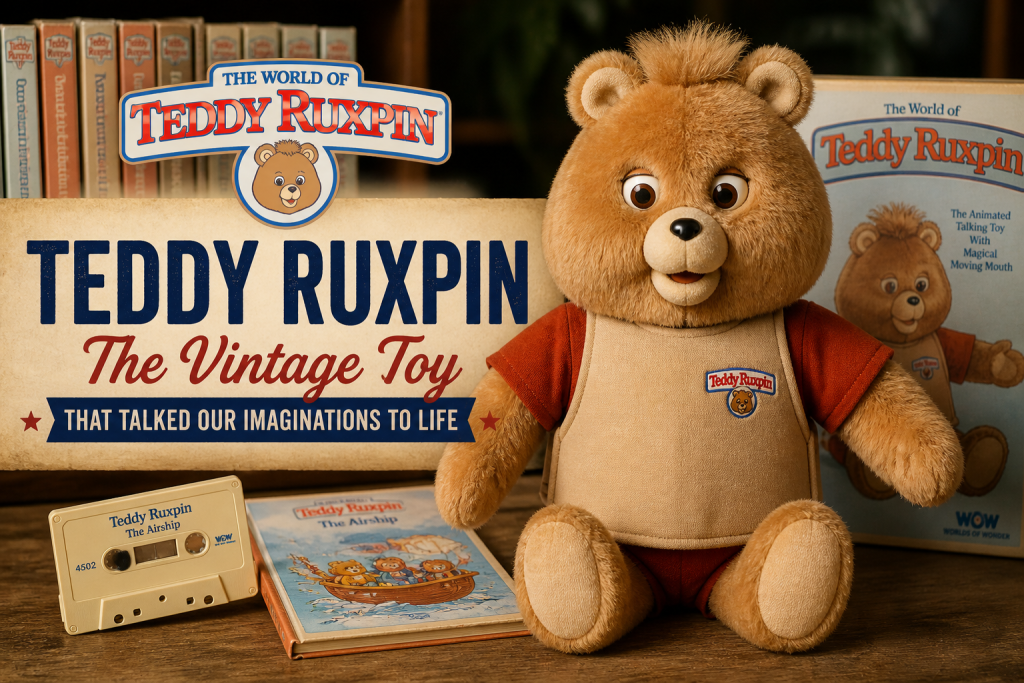
Before smart speakers and talking gadgets filled the house, one plush bear already had star power. Teddy Ruxpin did more than sit on a bed and look cute, he told stories, moved his mouth, and seemed almost alive.
If you grew up in the 80s, you probably remember that voice. If you didn’t, it’s still easy to see the appeal. Teddy was part toy, part bedtime companion, part tiny piece of animatronic wonder, and that mix hit kids right in the imagination.
Why Teddy Ruxpin Felt Like Magic
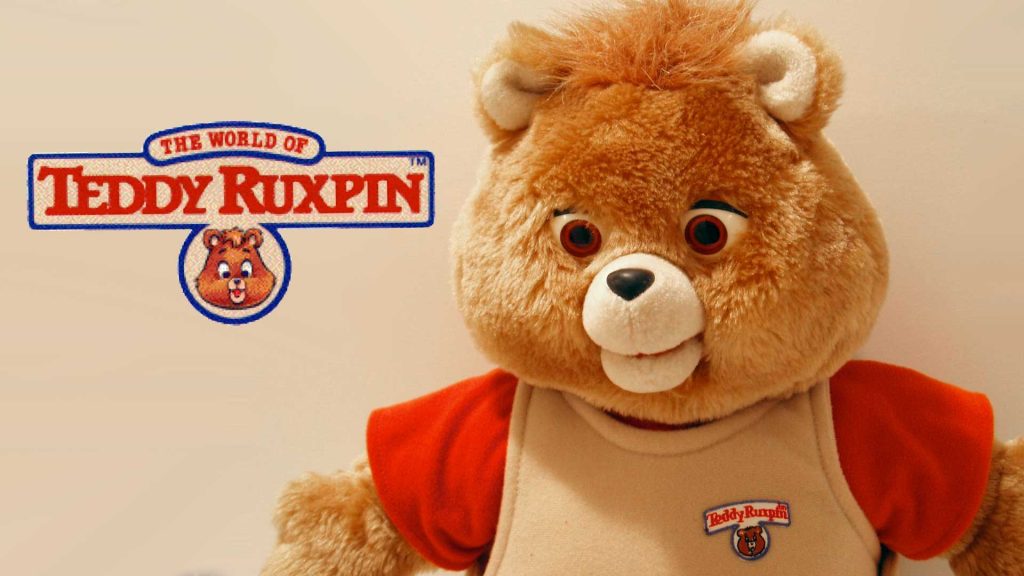
Teddy Ruxpin arrived in September 1985, and he didn’t feel like another stuffed animal on the shelf. He felt new. Created by Ken Forsse and released by Worlds of Wonder, Teddy brought together plush comfort and battery-powered storytelling in a way kids hadn’t seen before.
He also arrived at exactly the right moment. The 80s loved toys with personality, but Teddy had something softer than most. He wasn’t about battles or bravado. He was gentle, curious, wide-eyed, and built for stories before bed.
At his peak, Teddy Ruxpin was one of the best-selling toys of 1985 and 1986. Years later, TIME included him among its 100 greatest toys, which feels right. He wasn’t a fad that vanished the second the batteries died.
Teddy Ruxpin didn’t just read a story. He made story time feel like an event.
That’s the part people still remember. Plenty of toys made noise. Teddy made a mood. You’d press play, settle in, and suddenly your bedroom felt a little bigger, a little stranger, a little more magical. For kids, that was huge. For parents, it was a toy that entertained without sounding like a robot meltdown at midnight.
And yes, there was something almost movie-like about him. The moving mouth. The blinking eyes. The sense that your plush toy had crossed some invisible line and started performing. A little eerie to some adults, maybe. To kids? Pure fascination.
How the Talking Bear Worked, and Why It Hooked Kids
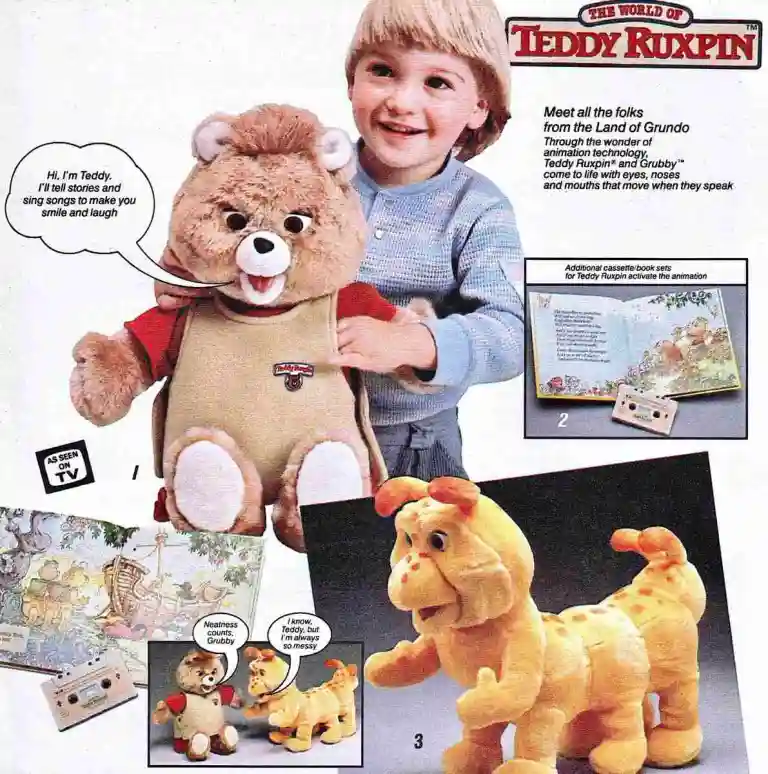
The big trick was simple, at least on the surface. Teddy had a cassette player built into his back, and specially made tapes powered the stories. As the audio played, his mouth and eyes moved along with it, which made the whole thing feel less like a toy and more like a character in your room.
If you never saw one in person, picture a plush audiobook player with facial animation. That’s the basic idea. Kids could listen, watch, and follow along instead of choosing between a stuffed animal and a storybook. Teddy bundled all of it together.
The stories mattered as much as the mechanics. In Teddy’s fiction, he wasn’t a plain old teddy bear at all. He was an Illiop from the world of Grundo, and that gave the toy a bigger identity. There were friends like Grubby, more tapes to collect, books, and then the 1986 animated series, “The Adventures of Teddy Ruxpin.” The official Teddy Ruxpin page notes that the brand has sold more than 8 million units, which tells you how far that story world reached.
That broader world is a big reason kids bonded with him. Teddy wasn’t only talking at you. He had lore, side characters, and a whole fictional life. He felt like a friend who came with episodes. That’s catnip for a kid’s imagination.
The Teddy Ruxpin Commercial that melted our Hearts
Why Teddy Ruxpin Still Matters in 80s Nostalgia
Some toys stay trapped in their original moment. Teddy Ruxpin didn’t. Even after Worlds of Wonder folded in 1988, the character kept coming back through later versions and reissues. Hasbro brought him back in the 1990s, and newer editions followed after that.
That long shelf life says something. Teddy wasn’t loved only because he was clever tech for 1985. He stuck because the core idea still worked: a comforting toy with a personality, a voice, and stories built in. Strip away the decade, and that appeal is still easy to understand.
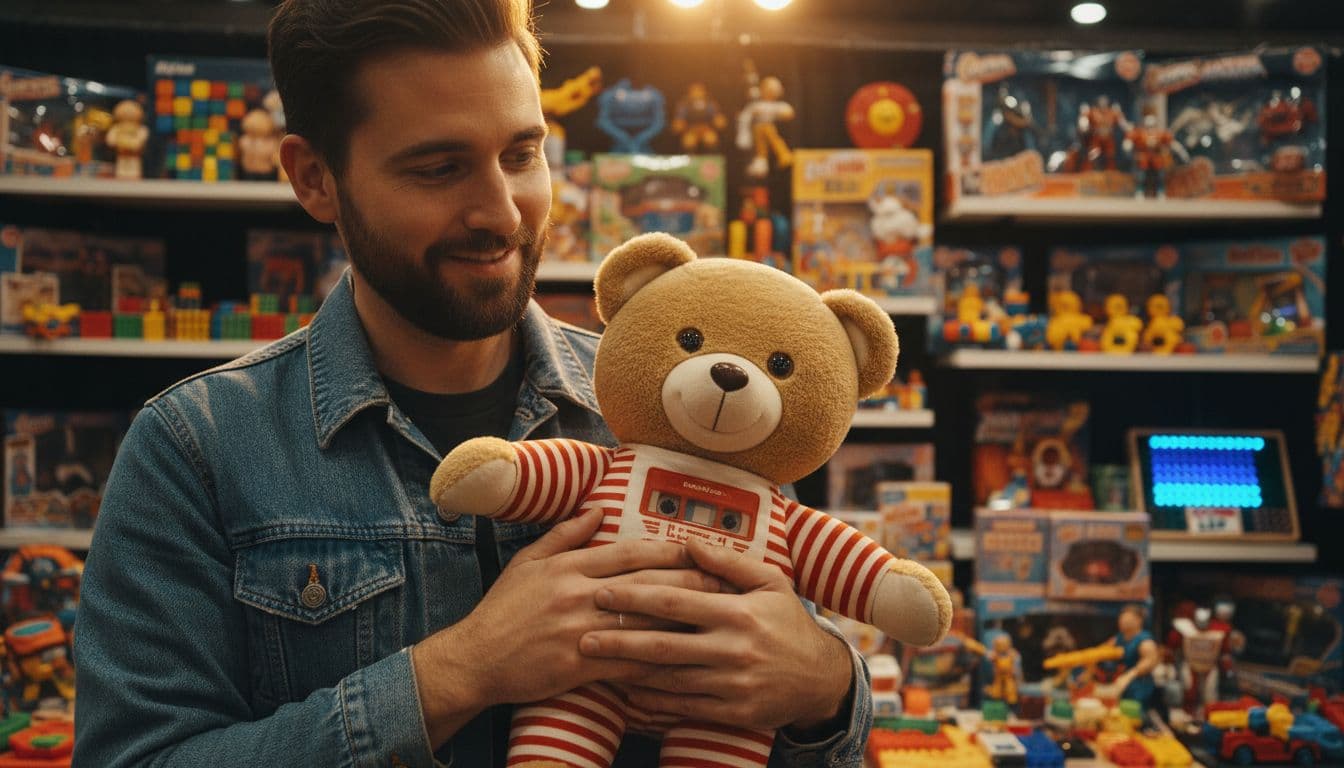
For collectors, Teddy is catnip for another reason. There are first-edition bears, tapes, companion characters, boxes, and working models to hunt down. Condition matters. So does whether the voice still plays cleanly and the facial movements still work. That mix of nostalgia and mechanics keeps the bear interesting. hobbyDB’s look at Teddy Ruxpin captures that ongoing fascination well.
He also fits perfectly into today’s 80s nostalgia culture. Put Teddy on a shelf next to a View-Master, a stack of VHS tapes, and a few mall-era toys, and the whole decade snaps into focus. He isn’t background decoration. He’s a memory trigger. One glance, and people remember sleepovers, toy store aisles, Christmas wish lists, and that strange little feeling that the future had arrived in fuzzy form.
Final Thoughts
Long before homes were full of talking devices, Teddy made technology feel warm. That was his secret, and it still is. He wrapped electronics in fur, stories, and a friendly face.
That’s why Teddy Ruxpin still holds up as one of the most unforgettable toys of the 80s. He wasn’t only impressive for his time. He was lovable, and that’s the part people never outgrow.