You didn’t casually eat Chocolate Sandwich Cookies, you squared up to it.
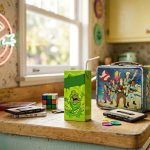
For a lot of 80s kids, this wasn’t just another sweet snack. It was a lunchbox surprise, after school cookies, and a tiny piece of excess that made perfect sense in the decade of more-is-more.
If you’ve never seen one, picture a regular Oreo after a comic-book mutation. Same basic idea, same dark wafers and white creme, only blown up into something that looked almost too big to be real. That’s why people still talk about it.
Some Bif Stuf Takeaways
- Oreo Big Stuf was a late-80s giant: Launched around 1987 and gone by 1991, this oversized, individually wrapped cookie turned a standard Oreo into a single-serving spectacle with massive wafers and exaggerated creme.
- Novelty ruled the 80s snack scene: Its huge scale delivered bragging rights, lunchroom wow-factor, and messy fun that felt like an event, not just a snack.
- Discontinued for real-world reasons: Too messy, heavy, and calorie-packed for everyday eats, it faded as novelty wore thin—unlike shareable modern takes like Mega Stuf.
- Nostalgia keeps it alive: Fans miss the wrapper reveal, crumb chaos, and kid-logic magic of one giant cookie that made ordinary excess feel epic.
What Oreo Big Stuf Actually Was
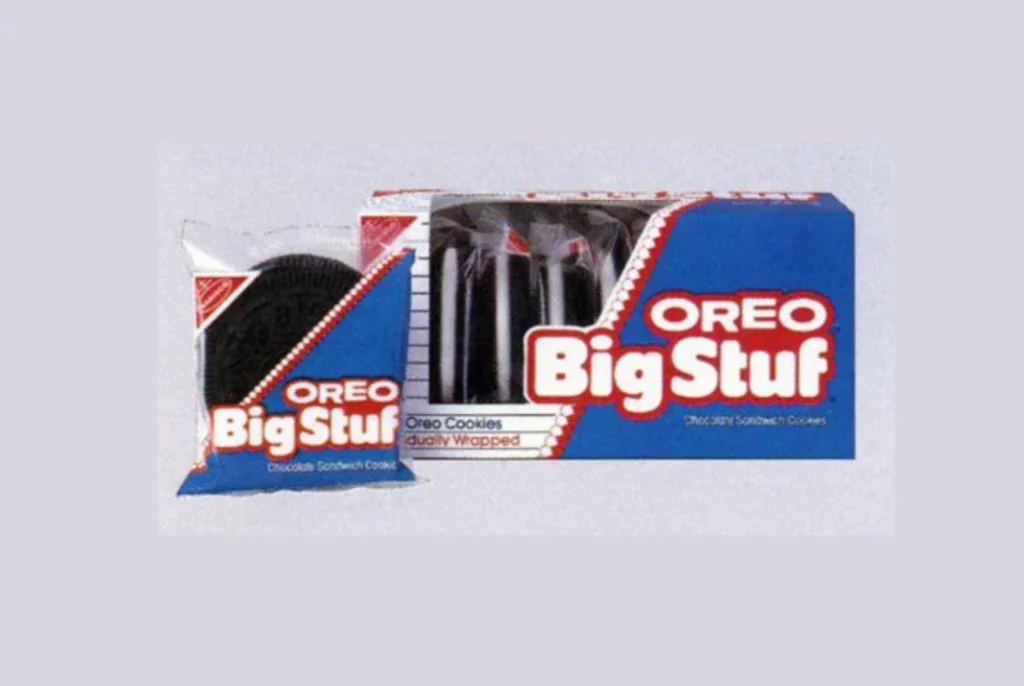
At its core, Oreo Big Stuf was exactly what the name promised: a huge creme-filled cookie within the OREO brand family sold as a single serving. It wasn’t a pack of sandwich cookies. It wasn’t a “family size” sleeve. It was one oversized sandwich cookie, individually wrapped, like it had its own star billing.
Most modern snack-history summaries place its run in the late 1980s, then show it disappearing in the early 1990s. The Oreo Big Stuf arrived in 1987, came in boxes of 10, had an item weight of 48 grams, and package dimensions of about 3 inches wide. Wikipedia’s Oreo varieties list also lists 1987 and says it was discontinued in 1991.
Some details do vary across sources. One older retrospective gives a different launch year and higher calorie count. So the safest version is this: Big Stuf showed up in the late 80s, it was several times larger than a regular Oreo, and it didn’t stay around long.
For anyone who never held one, the appeal is easy to explain. A normal Oreo is a quick bite. Big Stuf was a whole session.
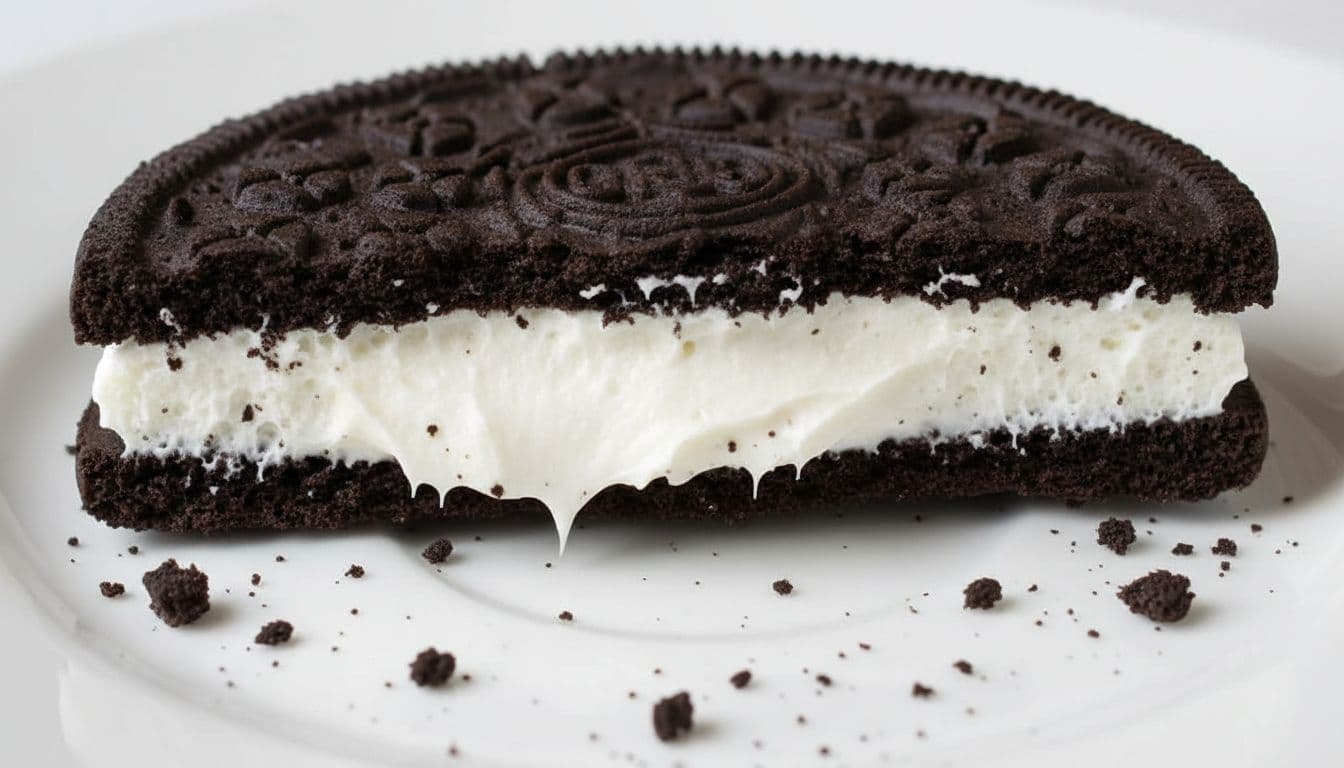
You’d peel back the wrapper and there it was, thick, dark, round, and slightly ridiculous. The wafers looked familiar, but the scale changed everything. It felt heavier. The cookie had presence. The creme wasn’t a neat little stripe anymore. It was a rich white layer that looked almost exaggerated, the kind of filling a kid would draw if asked to invent the perfect Oreo.
And yes, that size mattered. Kids love ordinary things made oversized. A giant pencil, a giant gummy bear, a giant cookie, same magic. Big Stuf took a supermarket classic and turned it into a novelty item without changing the basic formula too much.
Why One Giant Oreo Felt Like a Big Deal
The genius of Big Stuf wasn’t subtle. It was the joke, the stunt, the bragging rights.
A regular Oreo comes in a row, shoulder to shoulder with the others. Big Stuf came alone, and that changed the whole vibe. One cookie, one wrapper, one moment. It felt less like grabbing a snack and more like receiving a prize.
It wasn’t a bigger package. It was one bigger cookie, and that made it feel special.
That’s a small difference on paper. In a kid’s mind, it was huge.
There was also the sensory side of it. The first bite wasn’t neat. It couldn’t be. Your teeth had to get through a much wider wafer, then into that thick layer of OREO creme. Crumbs fell. Creme pushed outward. If you twisted it open, the whole thing looked almost absurd, like someone had enlarged an Oreo in a photocopier and forgotten to stop.
And that was the fun.
Some people remember it as hockey puck-sized. Others remember it as closer to a coaster. Memory loves to supersize things, especially childhood treats, but nobody remembers it as small. That’s the point. Even the fuzzy memories agree on the main fact: it was big enough to feel a little wild, almost too big to be dunkable.
It also fit the 80s snack mood perfectly. This was a time when packaging got louder, portions got bolder, and food marketing understood something basic about kids: surprise matters. Big Stuf was the ultimate sweet treat for 80s kids. It delivered surprise before you even tasted it.
Then there was the lunchroom factor. Pulling one of these out had social currency. A regular chocolate sandwich cookie said snack. A giant Oreo said, “Look what I got.”
The Wrapper, the Commercials, and the Full 80s Show
Big Stuf didn’t rely on size alone. The presentation helped sell the fantasy.
Each cookie came in its own wrapper, which made it feel half cookie, half event. That wrapper matters more than people think. Individually wrapped snacks always carry a little extra drama. You have to open them. Reveal them. Hold them for a second before the first bite.
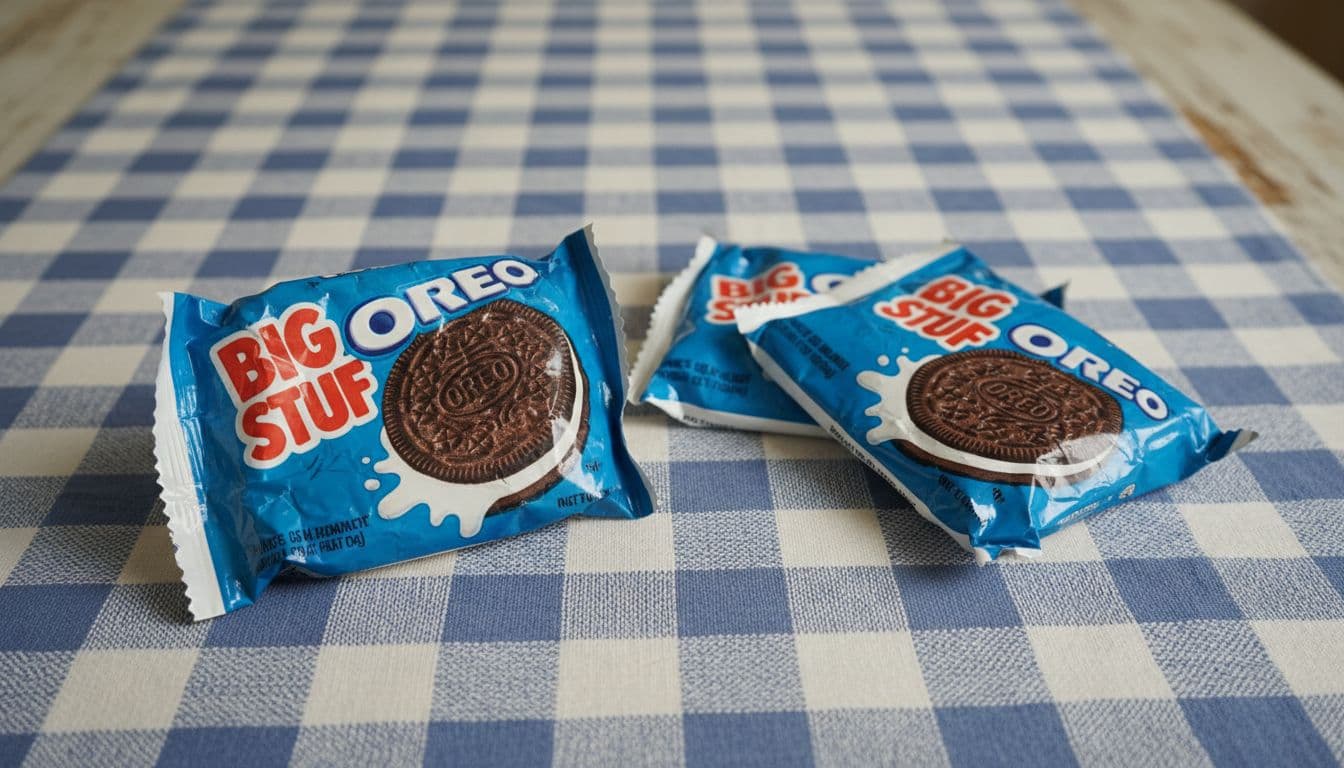
A vintage wrapper photo on Flickr shows the bold blue-and-white look fans still remember. Like standard Oreos, these were Kosher cookies. The spelling helped too. “Stuf,” with one f, wasn’t proper. It was brand language, toy-like, slightly goofy, very much in step with the era.
Commercial memories are a little hazier, but they still pop up whenever people swap discontinued-snack stories. On old nostalgia forums and memory pages, talk about the ads, the jingle, the lunchbox appearances, and that unmistakable “wait, these were real” reaction. That’s part of Big Stuf’s charm now, as a piece of Mondelēz International portfolio history. It feels half snack, half shared dream.
And the ads didn’t need a complicated pitch. This wasn’t a sophisticated product. It was an oversized Oreo. The whole message was right there in the name and the reveal.
That’s also why the packaging sticks in people’s minds. The cookie didn’t pretend to be elegant. It was cheerful. Loud. Kid-forward. A little over the top. Exactly right, with classic recipe standards that included soy and wheat.
If you grew up then, you probably know the feeling. Some snacks lived in the pantry. Others arrived with a tiny sense of occasion. Big Stuf was in the second group.
Why Oreo Big Stuf Disappeared
Short answer: novelty is powerful, but novelty doesn’t always last.
No easy, official public explanation settles the whole story. What does seem clear is that Big Stuf had a brief run and then vanished. A Fast Company retrospective on oversized brand experiments treated it as a classic case of a familiar product getting too oversized for everyday use.
That makes sense.
A giant cookie is fun once. Maybe even often, if you’re a kid. But it also creates problems. It’s messier. It’s heavier. It’s less shareable than a sleeve of normal Oreos and less convenient than a smaller snack pack. Depending on the version and source, it also packed a lot of calories into one cookie, which made it harder to position as a casual treat.
The very thing that made it memorable may have limited it. Big Stuf was all payoff up front. After the surprise wore off, shoppers still had to decide whether they wanted to buy a box of enormous single cookies again.
And as of May 2026, it is still discontinued, with no announced comeback.
That’s the part nostalgia fans hate, of course. Oreo still sells bigger-creme variations now, but those aren’t the same thing. Modern fans might find 3x more creme in current varieties like OREO Mega Stuf or Mega Stuf Chocolate, yet the scale of Big Stuf was unique. Double Stuf and Mega Stuf play with filling in resealable packs or party size packs for better convenience and shareability. Big Stuf played with scale through individual wrappers. It was a regular Oreo turned into a prop, a punchline, and a dessert all at once.
Why People Still Miss This Cookie
People don’t miss Big Stuf only because it tasted good. They miss it because it felt like a moment.
Discontinued snacks often work that way. The memory is never just flavor. It’s the wrapper crackle, the crumb mess, the way your hand looked smaller holding it. It’s your mom tossing one in a lunch bag. It’s your grandmother saying yes in the grocery aisle. It’s the tiny thrill of getting something oversized because, for once, oversized was the whole point. Reflecting on the 80s era, this cookie was a staple for birthday treats.
That’s why Big Stuf, a classic sweet snack food, belongs in the same conversation as other vanished favorites, from cult cereals to the Marathon Bar 80s candy. These snacks weren’t always the best-designed products. They were the most memorable ones.
And Big Stuf was memorable by design.
It also came from a sweet spot in snack history. Back then, a giant version of a classic cookie still felt surprising. Now, store shelves are packed with mashups, extremes, and limited editions. In the 80s, one huge Oreo could still stop you in your tracks.
That kind of novelty hits differently when you’re a kid. It feels bigger than a product. It feels like magic that made it through the checkout line. Looking ahead, the brand now focuses on sustainability via Cocoa Life, Sustainably Sourced Cocoa, and sustainable cocoa sourcing as part of their modern cocoa sourcing goals.
Frequently Asked Questions
What exactly was Oreo Big Stuf?
Oreo Big Stuf was a single, oversized chocolate sandwich cookie—think regular Oreo wafers blown up big with a thick layer of creme, sold individually wrapped in boxes of 10. It weighed about 48 grams and hit shelves as a novelty treat in the late 1980s. The “Stuf” spelling and bold blue wrapper added to its goofy, kid-appeal charm.
When was Oreo Big Stuf available?
It launched around 1987 and was discontinued by 1991, giving it a short but memorable run during peak 80s excess. Sources like Tasting Table and Wikipedia pin those dates, though some memories fuzz the edges. No comebacks since, leaving it firmly in nostalgia territory.
Why did Oreo Big Stuf disappear?
Novelty sells once, but practicality wins long-term—Big Stuf was messy, hard to share, and loaded with calories in one giant bite. It didn’t fit everyday snacking like packs of regular or Double Stuf Oreos. Modern oversized options like Mega Stuf focus on shareable formats instead.
How does Big Stuf compare to today’s Mega Stuf?
Big Stuf was about scale with one huge cookie per wrapper, while Mega Stuf ramps up creme (3x more) in convenient packs for sharing. Both deliver excess, but Big Stuf felt like a prize-winning prop from the 80s. Neither is dunkable the same way, but memories make Big Stuf irreplaceable.
Can you still get Oreo Big Stuf anywhere?
Nope, it’s fully discontinued with no official return as of 2026. Fans hunt eBay or nostalgia spots, but it’s mostly stories and fuzzy recollections now. Oreo’s current lineup nods to big-creme vibes, just not the exact giant single-cookie magic.
The Cookie That Felt Bigger Than Life
Oreo Big Stuf lasted only a few years, but it left a large imprint for a simple reason: it turned an ordinary cookie into an event.
That’s what people remember. Not only the taste, though that matters. They remember the scale, the wrapper, the spectacle, and the pure kid logic of it all. If one Oreo is good, then one giant Oreo must be amazing.
Its legacy lives on for fans of chocolate cookies and sandwich cookies. Unlike today’s bulk cookies available in large packs, this single-serving giant came individually wrapped to maintain freshness.
And for a little while, it was.