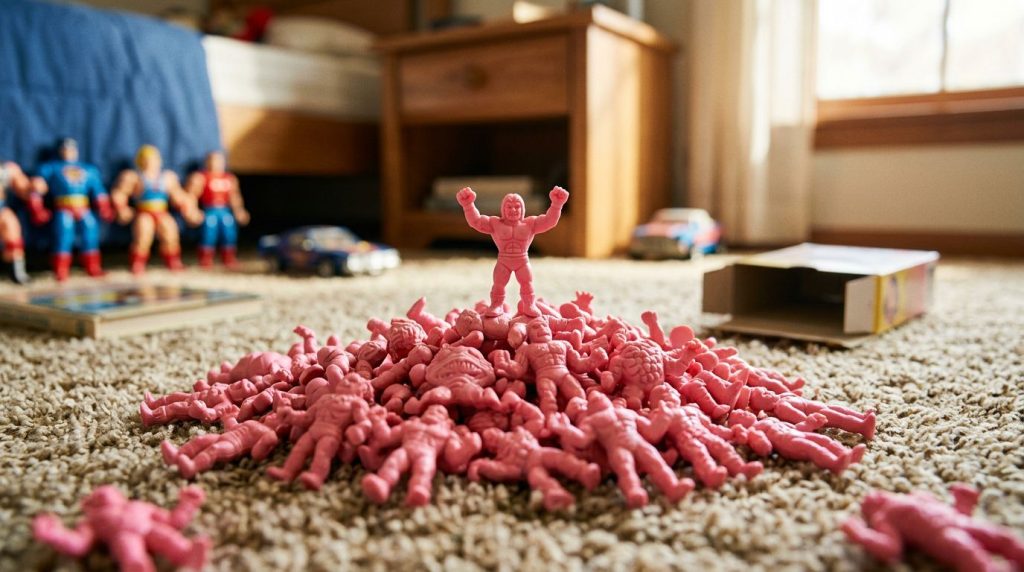
They fit in your palm, vanished under the couch, and somehow became the most important professional wrestling athletes in your bedroom. M.U.S.C.L.E. figures were small, pink, weird, and ready to throw down at a moment’s notice.
If you collected them in the mid-1980s, you probably remember the ritual. Tear open a pack from this definitive 1980s toy line, dump the tiny wrestlers onto the carpet, and scan the lineup for somebody new. Then, start a battle before the packaging hit the trash.
These little rubber bruisers had a bigger backstory than most kids ever knew.
Key Takeaways
- Mattel introduced M.U.S.C.L.E. figures to the North American market in late 1985, and they quickly became a staple of the toy aisle by 1986.
- The toy line originated from the Japanese Kinnikuman manga series and the massive Kinkeshi mini-figure craze.
- The standard United States collection consists of 236 figures, ranging from traditional wrestlers to bizarre monsters and unique oddities.
- Their affordable price point, eccentric designs, and small size made them perfect for trading and collecting among children.
- These original pieces remain highly sought after by modern hobbyists, particularly when found in rare colors, sealed packaging, or as part of the broader category of keshi toys.
The Japanese Roots Behind M.U.S.C.L.E. Men
The brand name stood for Millions of Unusual Small Creatures Lurking Everywhere. It was a quintessential 1980s toy moniker that perfectly captured the essence of the line. These were not polished superheroes or cuddly animals, but a chaotic gang of compact, muscle-bound maniacs with faces only a toy box could love.
The journey of these toys began in Japan as Kinkeshi, which were small, eraser-like items tied to the popular Kinnikuman manga series. Created by the manga duo Yudetamago, the story began in 1979 and followed an unlikely alien superhero who rose to become a wrestling champion. When Bandai launched the line in 1983, they distributed these keshigomu (erasers) through vending machines and gashapon dispensers, turning the bizarre wrestlers into instant hits.
Mattel eventually brought the concept to the United States and Canada in late 1985. The American release did not arrive with the original Japanese cartoon or its deep narrative lore. Instead, the company focused on the core appeal: tiny extraterrestrial wrestlers, exaggerated physiques, and a massive, ever-expanding roster that included iconic characters like Muscleman and Terry Bull.
A helpful history of M.U.S.C.L.E. figures documents the transition from the Japanese Kinkeshi to the toys North American kids remember. While the Mattel versions utilized a harder plastic-like rubber than the original Japanese erasers, they maintained the signature monochrome look and those wonderfully bonkers sculpts that defined the aesthetic.
For a brief, blazing stretch, these figures were everywhere. They populated toy stores, drugstores, and birthday party goodie bags. You likely had a few hiding at the bottom of your backpack, tucked away next to a pencil with teeth marks all over it.
A M.U.S.C.L.E. figure never needed batteries, instructions, or a backstory card. You gave it a name and let the mayhem begin.
Why These Tiny Wrestlers Took Over the Floor
At around two inches tall, M.U.S.C.L.E. figures were too small to be traditional action figures and too strange to be ordinary collectibles. That was their magic. A kid could buy a four-pack for about a dollar, toss a few in a pocket, and carry an entire professional wrestling federation to school. These M.U.S.C.L.E. figures provided endless entertainment, proving that bigger is not always better when it comes to toy boxes.
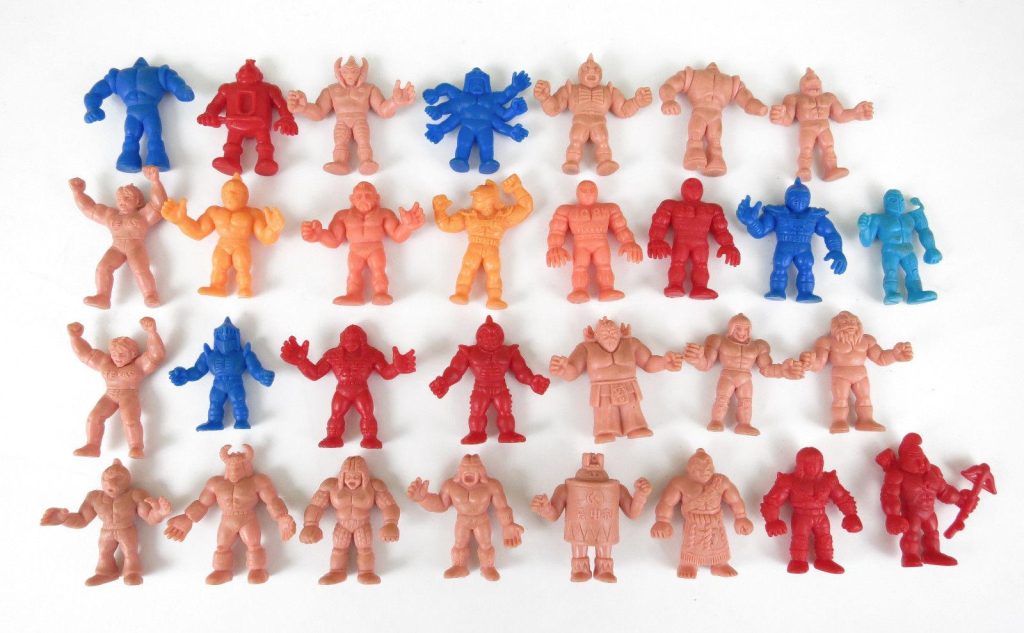
The original toys arrived in a classic flesh color, the signature hue that still identifies the brand to former collectors. Mattel later introduced blue, red, purple, green, orange, and magenta versions. Suddenly, finding the same sculpt did not mean you had a duplicate. Because fans actively hunted for color variants, each discovery could represent a new team member or a wrestler who needed a fresh grudge.
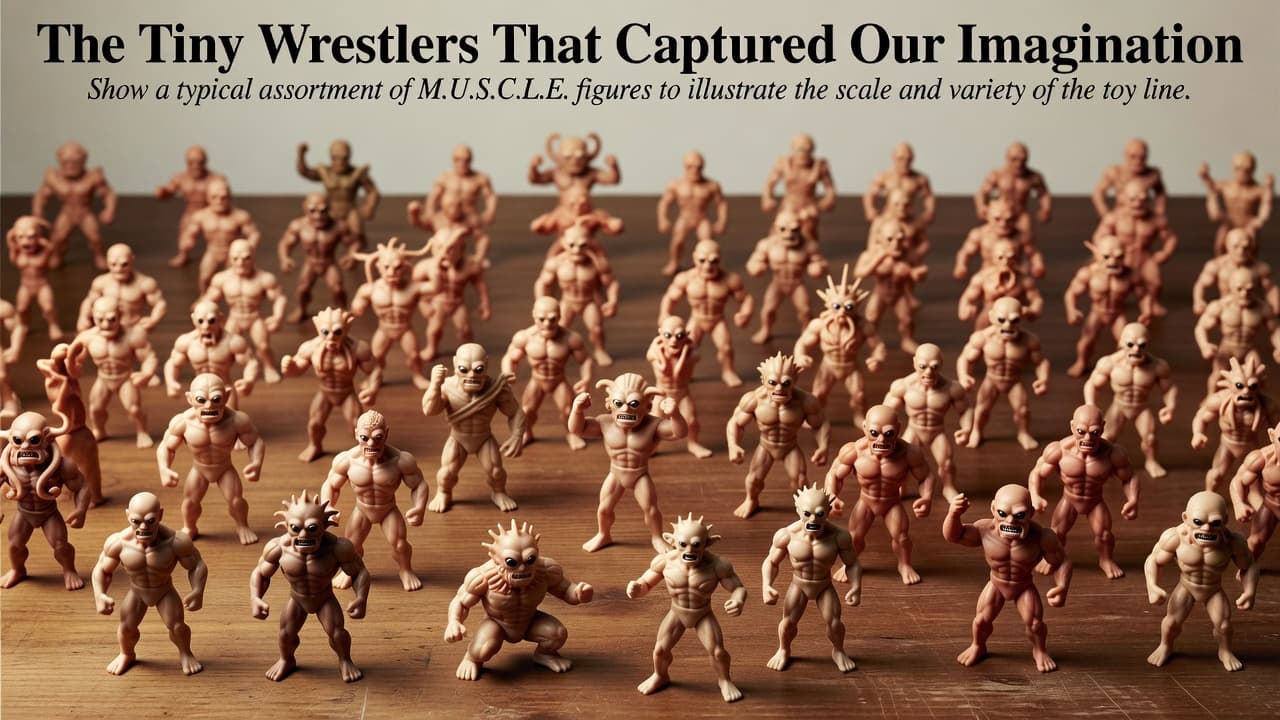
And the characters? Pure after-school imagination fuel. There were horned creatures, masked fighters, cavemen, robots, sumo-sized bruisers, multi-armed monsters, and figures that looked like they had wandered out of a fever dream at the arcade.
Kids did not need to know official names. The figure with the giant mouth became Mouth Guy. The one with the cape became champion. The bizarre one nobody wanted became the surprise villain who cheated every single match.
Their charm also came from how little they demanded. They were as easy to fidget with as an original 80s Koosh ball, but they carried a whole imaginary universe inside those tiny poses. One was fun. Ten was a roster. Fifty was a full-blown promotion with championship drama.
Packs, Garbage Cans, and Cosmic Crunchers
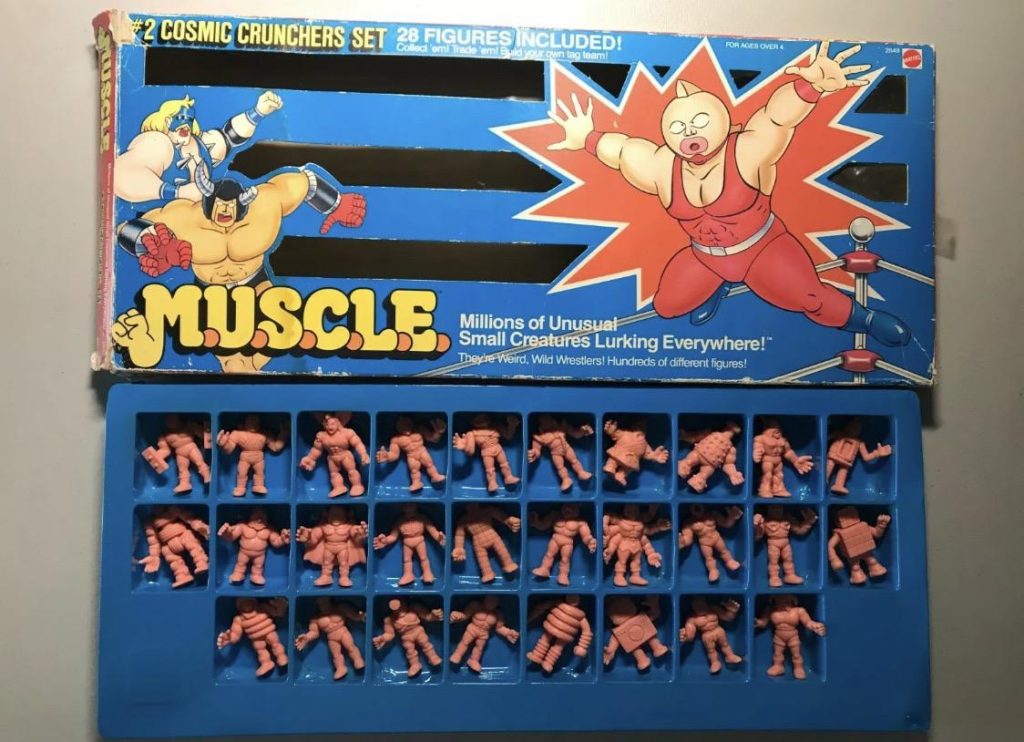
M.U.S.C.L.E. packaging knew how to make a small toy feel like a big score. Four-packs provided a quick hit, while larger sets raised the stakes. The famous 10-packs arrived in iconic plastic garbage can containers, because the 1980s perfectly understood that miniature wrestlers stored in a trash can were impossible for kids to resist.
Then came the 28-packs, the kind of purchase that could make a Saturday trip to the store feel like Christmas morning. Early sets were divided into two opposing sides: the heroic Thug Busters and the villainous Cosmic Crunchers. Those names are ridiculous, yet they are also perfect for the aesthetic of these toys.
Mattel sold a wrestling ring playset, complete with two exclusive figures, along with a board game. Still, the bare M.U.S.C.L.E. figures were the main event. You could battle them on the ring, on a couch cushion, across the family room rug, or in a shoebox with a towel draped over the top rope.
That freedom separated the line from bigger toy brands. A M.A.S.K. vehicle had wheels, weapons, and a mission. A classic M.A.S.K. transforming vehicle felt like a secret agent’s dream ride. These wrestling figures had no moving parts at all, but they won with personality.
The figures also made trading easy. You could swap one at lunch without much ceremony.
“Two pink weirdos for your blue guy.”
“Make it three.”
Deal done.
A standard U.S. set contains 236 sculpts, including two tied to the ring playset. That number sounds manageable until you remember the colors, the packaging variations, and the collector urge to track down every last oddball. One little guy is never only one little guy. That is how the obsession starts.
Why M.U.S.C.L.E. Figures Disappeared So Fast
Mattel’s M.U.S.C.L.E. run ended in 1988. That is a short life for a toy that left such a long memory. By then, toy aisles were crowded with louder concepts, cartoons with bigger marketing pushes, and action figures packed with accessories.
M.U.S.C.L.E. figures had none of that armor. Because they were molded as simple PVC figures, they lacked articulation, paint, and laser cannons. They were simply rubber wrestlers in outrageous poses.
But simplicity can be a superpower when a toy lets kids supply everything else. While the original run was relatively short, the concept was strong enough to eventually spawn a sequel and revival under the name Ultimate Muscle.
The line also had a funny problem: its variety was its strength, but it could be confusing. Unlike a toy line built around a weekly cartoon, the brand did not hand American kids a clean list of heroes, villains, episodes, and must-know lore. You got these strange little creatures and made the rules yourself.
That probably made M.U.S.C.L.E. figures harder to sustain at retail. It also made them unforgettable. The line belonged to the same wild toy decade that turned soft dolls into holiday mania. The 1983 Cabbage Patch Kids craze had parents fighting over dolls. M.U.S.C.L.E. figures had kids hunting for a tiny purple alien with a bodybuilder’s chest.
Different energy. Same glorious toy-aisle fever.
Collecting M.U.S.C.L.E. Figures Today
The first question for modern collectors is simple: do you want nostalgia, completion, or the hunt? Those are three different hobbies, even if they begin with the same pink pile.
A former 80s kid may only want a handful of familiar faces. The wrestler with the wildest pose. The character you carried around in your jeans pocket. A garbage can pack, if one ever slipped through your fingers back then.
Completionists chase all 236 U.S. sculpts, then colors, packaging, foreign Kinkeshi figures, and rarities. That path can get expensive in a hurry. Sealed packs, unusual color releases, and hard to find figures often command far more than a loose common pink figure. While original Mattel releases remain the gold standard for many, modern revivals from Super 7 have introduced new collectors to the line. As you dive deeper into the market, remember that specific versions of the iconic Muscleman, especially those in a rare flesh color, are highly prized by serious enthusiasts.
Before buying, keep a few things in mind:
- Look closely at photos for chew marks, bends, cracks, and sticky residue. These M.U.S.C.L.E. figures lived hard lives.
- Ask whether a lot includes original Mattel toys, Japanese Kinkeshi, later reissues, or a mix.
- Do not assume every flesh colored figure is common. Character, color, condition, and release all matter.
- Buy the figures you love first. A weird little wrestler you remember beats a checklist entry that leaves you cold.
For a collector friendly rundown of the line’s 1986 arrival and its tiny rubber appeal, this M.U.S.C.L.E. Men retrospective is a fun reminder of why they were such a big deal.
Frequently Asked Questions
How many M.U.S.C.L.E. figures were in the standard collection?
The standard United States collection consists of 236 distinct sculpts. While they started with a core set of figures, the sheer variety of weird, wrestling-themed characters meant that there was always something new for kids to hunt down.
Why are some M.U.S.C.L.E. figures painted in different colors?
While the original toys were produced in a signature flesh color, Mattel eventually released figures in blue, red, purple, green, orange, and magenta. These color variants turned the simple task of collecting into an addictive hunt, as fans sought to find their favorite character sculpts in every possible color.
What does the M.U.S.C.L.E. acronym stand for?
The brand name stands for Millions of Unusual Small Creatures Lurking Everywhere. It was a perfect 1980s moniker that captured the chaotic and compact nature of these bizarre, muscle-bound characters.
The Little Wrestlers Still Win
These tiny toys did not need flashy features or complex mechanics to earn their permanent spot in the 80s toy hall of fame. They were affordable, delightfully strange, and perfectly portable, built for the kind of imaginative play that could erupt anywhere at a moment’s notice.
That tiny pink wrestler on your shelf represents more than just a piece of nostalgia. It serves as a reminder that the best childhood toys often came with no rules at all, requiring only a handful of rubber weirdos and a very big imagination. Whether you are rediscovering them in a box in the attic or hunting for rare pieces online, M.U.S.C.L.E. figures remain an enduring symbol of a golden era in playtime.