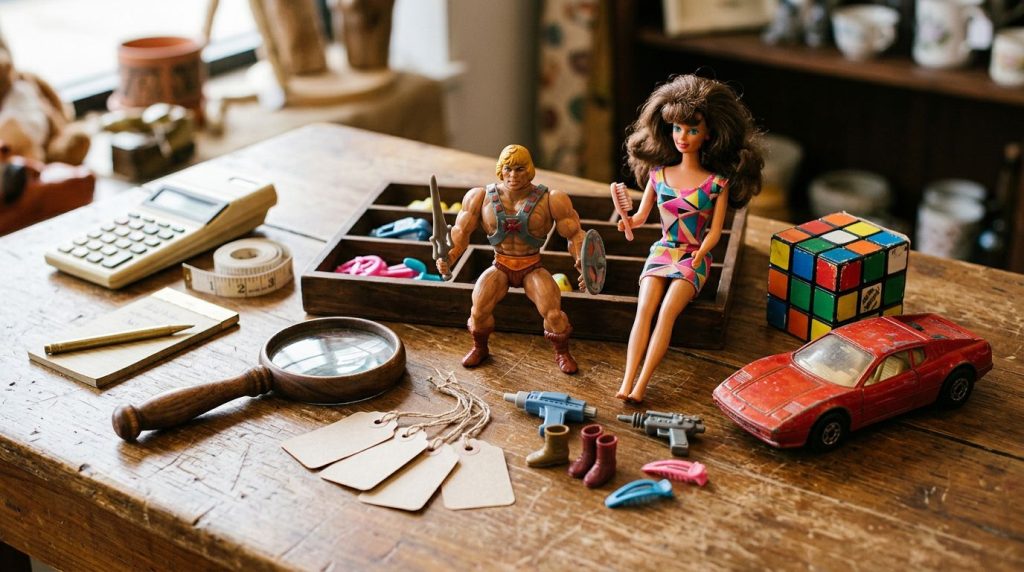
Nothing spoils a nostalgic toy rush like realizing that $18 He-Man figure needs another $60 in missing gear.
The good news is that vintage 80s toys don’t have to be a collector-budget catastrophe. You can still find the childhood toys you loved, including heroes, dolls, vehicles, puzzles, and weird little plastic treasures, without paying museum money for a toy with mystery stains and one lonely boot.
The trick is knowing what you want, where to look, and when to walk away.
Key Takeaways
- Decide whether you want a casual nostalgia display, a focused toy collection, or loose-complete pieces before you start spending.
- Use sold listings—not hopeful asking prices—to compare the exact toy, variant, condition, accessories, and packaging.
- Calculate the full landed cost, including shipping, tax, buyer’s premiums, and replacement parts, before calling something a bargain.
- Inspect accessories, date stamps, country marks, packaging, and possible reproduction parts before buying higher-priced vintage toys.
- Popular, clean, mostly complete toys often deliver more joy per dollar than rare sealed pieces you’ll be afraid to touch.
Decide What You Want Before You Start Hunting
“Vintage toy” covers a lot of territory. A loose Skeletor with paint rubs is one thing. A sealed, first-release Skeletor with a sharp card back is a whole other tax bracket.
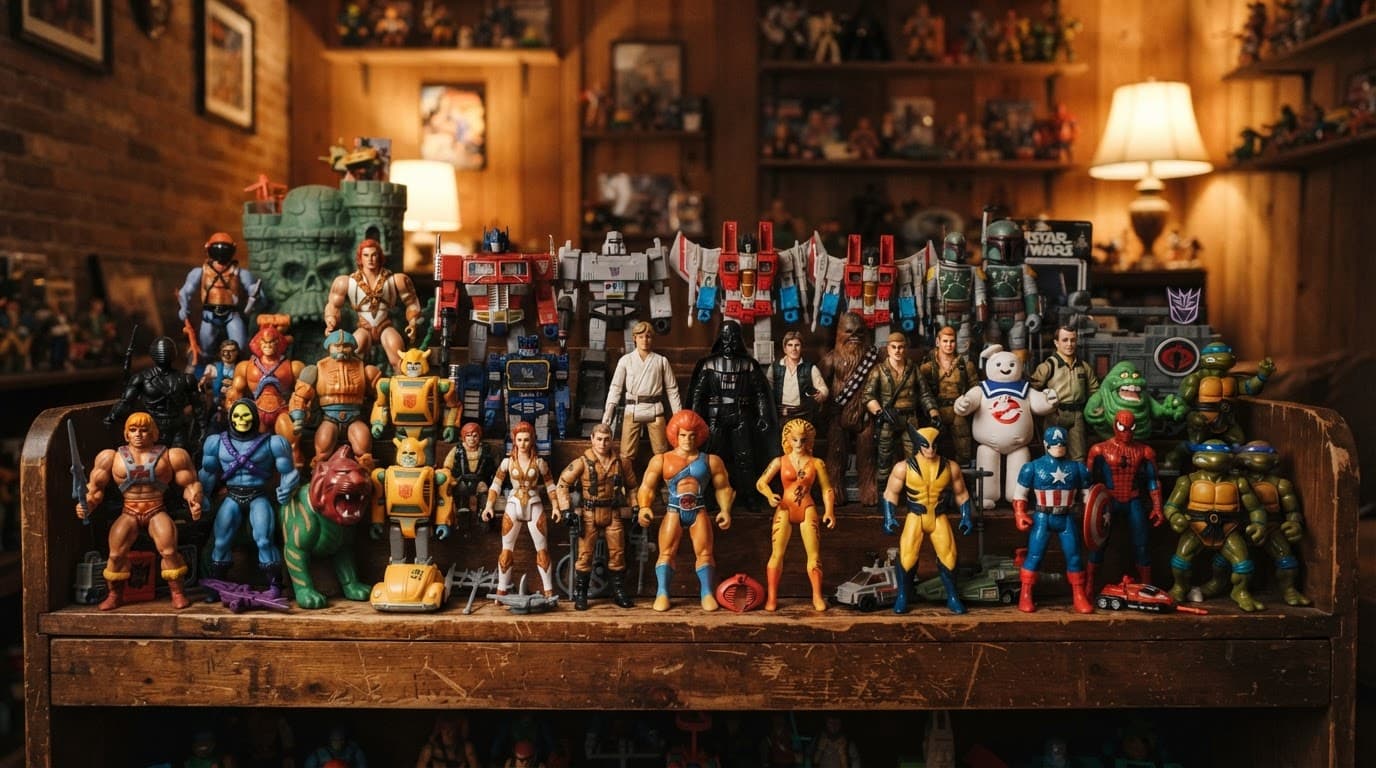
Start by choosing your lane. Maybe you want a handful of childhood action figures, vintage dolls, or vintage plush toys for the shelf. Maybe you’re rebuilding one beloved line into a focused toy collection. Or maybe you want loose complete figures, with every sword, backpack, missile, and tiny impossible-to-replace plastic doohickey included.
That choice controls your spending.
A casual nostalgia display can look fantastic with played-with Mattel toys, such as Masters of the Universe. Teenage Mutant Ninja Turtles, My Little Pony, and Cabbage Patch Kids work beautifully, too. A serious collection needs closer attention to variants, package condition, country marks, and original accessories.
Remember, plenty of iconic 1980s toys and games were everyday stuff when they hit shelves. A Rubik’s Cube cost about $2 in its early 1980s boom. Cabbage Patch Kids had a suggested retail price around $21.99 in 1983, before the holiday frenzy sent parents into full battle mode. The Nintendo Game Boy arrived in 1989 at $89.99 in the United States.
Those old price tags are fun trivia, not a modern price guide. The market cares about condition, demand, and whether the toy still has the pieces kids lost under the couch in 1987.
For the shelf-worthy stuff, a clean loose figure often gives you more joy per dollar than a sealed item you’ll be scared to touch. The same goes for classic M.A.S.K. transforming vehicles. A Thunderhawk with its doors, wheels, and secret-surprise action is a beautiful thing, even without a pristine box.
Where to Buy Vintage 80s Toys for Less
The cheapest listing isn’t always the cheapest purchase. Shipping, tax, auction fees, missing parts, and a bad return policy can turn a “bargain” into a tiny plastic financial disaster.
Different parts of the secondary market favor different shopping strategies.
| Where to shop | Best for | Watch out for |
|---|---|---|
| eBay | Huge selection and sold-price research | Inflated asking prices, stock photos, costly shipping |
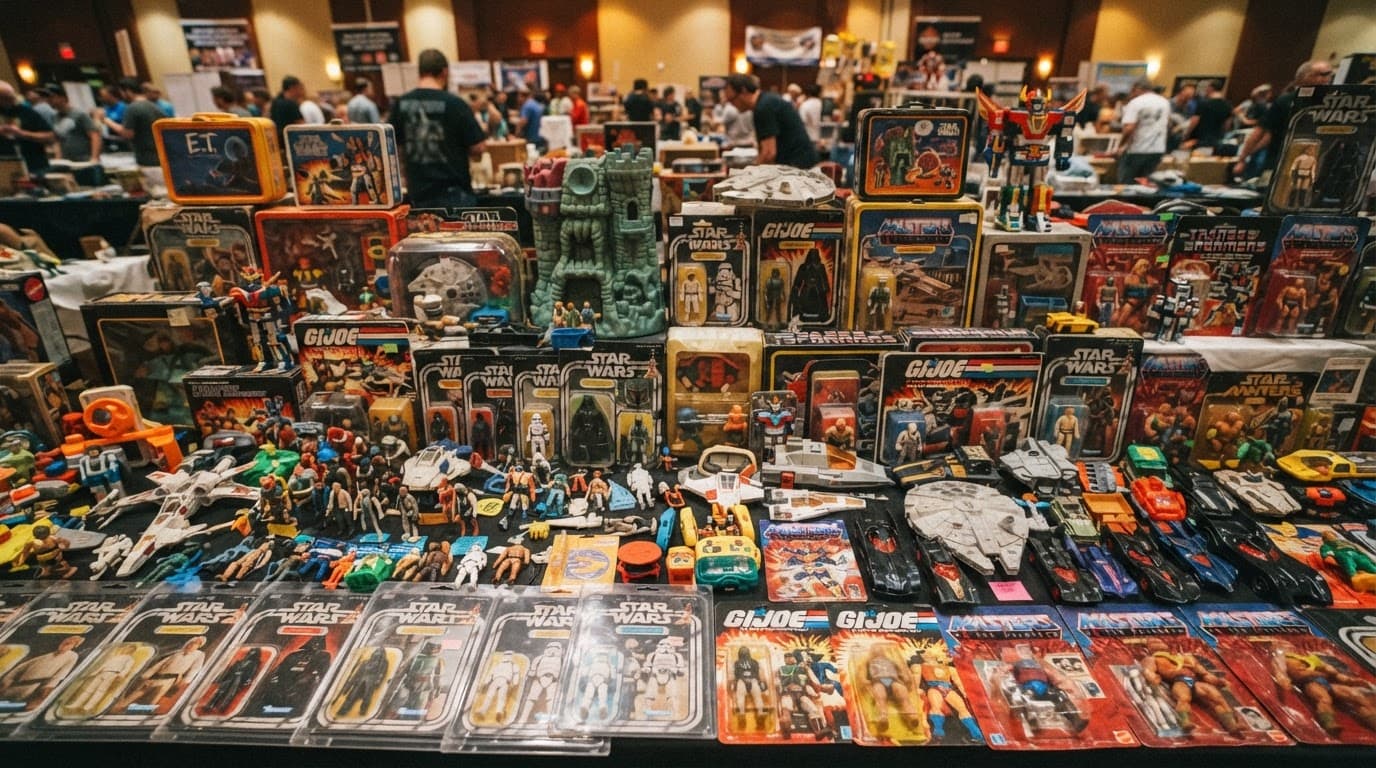
| Toy shows and conventions | Seeing condition in person and negotiating | Dealers may price at the high end |
| Facebook Marketplace and local listings | Bundles, estate cleanouts, no shipping | Vague descriptions and zero buyer protection |
| Vintage toy shops | Curated stock and easier returns | A convenience premium |
| Auction houses | Rare pieces and documented sales | Buyer’s premiums and fierce bidding |
eBay is the research library and the toy aisle. Use the Sold Items filter before you buy, then compare the exact character, variant, condition, and accessory count. A loose complete G.I. Joe is not comparable to the same figure standing bare in a zip-top bag. Check several recent sales, not one wild outlier.
Toy shows are where patience pays. Arrive with a short want list, a budget, and your phone loaded with reference photos. Dealers are often more flexible late in the day, especially on common figures, incomplete vehicles, and bundles.
Facebook Marketplace, estate sales, flea markets, and garage sales are better for luck-based scores. A seller may call a box of toys “old action figures,” with vintage board games and other 1980s items mixed in. They may not realize that one figure’s removable helmet matters. That’s the dream, obviously. But don’t let the dream make you careless.
A low sticker price means nothing if the figure needs a $35 weapon, $20 backpack, and $15 shipping to become complete.
Price Like a Collector, Not a Hopeful Seller
Active listings are wishes. Sold listings are receipts.
Before paying more than $20 for an item, look at three to 10 recent sales of the closest possible match. Match the character, release, accessories, packaging, and condition. Then add the full landed cost: item price, shipping, tax, buyer’s premium if there is one, and any replacement parts you’ll need later.
Auction data can help with expensive pieces, but it needs context. Heritage Auctions’ action figure value guide is useful for seeing documented auction history and identifying items that live in a higher collector tier. It isn’t a reason to treat every dusty toy-bin find like a four-figure artifact.
For kenner action figures, visual references matter. A figure that looks ordinary at first glance may have a different sculpt, paint detail, weapon, or country-of-origin mark. The Galactic Collector visual guide helps you compare toy variations, including vintage Star Wars figures, vehicles, and accessories, before you commit.
Here is the condition ladder that keeps prices honest:
- Loose means the toy is out of its package, often without gear or paperwork.
- Loose complete means the figure has its original included accessories, not modern substitutes.
- Boxed means the original packaging survives, though it may be worn or open.
- MOC, MIB, and MISB usually describe carded or boxed toys with varying degrees of unopened status.
A common loose 1980s action figure may cost $5 to $50. A desirable loose-complete figure can jump far higher. Add a clean box, rare variant, sealed package, or unusual promotion, and the numbers can get wild fast.
The box is part of the collectible. So is the bubble, tape, insert, instruction sheet, sticker sheet, and tiny catalog tucked behind the toy.
Catch Counterfeits, Reproduction Parts, and Sneaky Damage
A seller doesn’t need to be dishonest for a listing to be wrong. Plenty of people don’t know that a modern reproduction sword can lower the value, or that yellowed plastic isn’t “excellent vintage condition.”
Ask for clear photos before buying any figure priced above your comfort zone. You want the front, back, face, hands, accessories, date stamp, and country-of-origin mark. For boxed toys, ask for the corners, seals, bubble, tape, tray, and every side of the package.
Watch for these trouble spots:
- G.I. Joe figures often lose backpacks, rifles, helmets, and fragile antenna pieces.
- Masters of the Universe figures are frequently missing weapons, armor, shields, or their original odor-free rubbery condition.
- Transformers G1 toys can have broken tabs, loose joints, missing missiles, and replacement stickers.
- Teenage Mutant Ninja Turtles figures may lack belts, weapons racks, small accessories, or undamaged soft heads.
- My Little Pony buyers should inspect for tail rust, hair cuts, body marks, and discolored plastic.
With Hasbro vintage lines, brand identification helps, but it doesn’t prove every part is original.
Reproduction accessories have their place if you want a display piece. Just don’t pay original-accessory money for them. Ask directly: “Are any parts reproductions, replacements, or custom-painted?” Save the answer with the listing.
Carded figures bring another layer of headaches. A recard is a loose figure placed on a newly made or altered card to look factory-sealed. Look for mismatched bubble shapes, fresh-looking glue, strange cuts, odd card color, or a figure that doesn’t sit naturally in the bubble. Touch-up paint and restored sticker residue can also hide damage.
Rare international figures deserve extra homework. Brazilian Star Wars releases and Italian Laser Power He-Man pieces can be stunning, but they need provenance, close comparisons, and seller history. A different country mark alone doesn’t make something rare.
For a sealed or high-dollar piece, third-party grading from firms such as AFA, CAS, or UKG can add documentation. It still doesn’t replace your own inspection. Grade labels aren’t magic glasses.
Know Which Toys Bring the Big Prices
Most childhood toys are not holy grails. That is fine. It means you can buy them, hold them, and enjoy them without calling your bank manager.
High prices usually come from a mix of scarcity and demand, the two forces behind many rare collectibles. Mail away offers, short-run releases, foreign variants, prototypes, unopened packaging, and easy-to-lose gear sit near the top. G.I. Joe Starduster is a classic example, a premium collectors chase harder than many regular retail figures.
Some obscure lines also have devoted followings. Sectaurs, Power Lords, Inhumanoids, Visionaries, and Crystar may not have ruled every playground, but they have fans who remember every bizarre creature and chrome-plated accessory.
Don’t assume obscure means valuable, though. A toy can be rare because nobody bought it. It can also be rare because nobody saved it. Those are two very different stories.
The sweet spot for most 80s kids is popular, loose, clean, and mostly complete. A well-loved Optimus Prime, a favorite Turtle, a bright Koosh Ball, or a simple rubiks cube from the original Rubik’s Cube craze can bring the memory rushing back. Familiar favorites such as a Nintendo Game Boy, Care Bears, Ghostbusters toys, and Thundercats figures can do the same without requiring a collector-grade loan.
Frequently Asked Questions
How can I avoid overpaying for vintage 80s toys?
Compare three to 10 recent sold listings for the closest possible match, including the character, variant, condition, and accessories. Then add shipping, tax, fees, and any replacement parts to find the real cost.
What is the difference between loose, loose complete, and boxed toys?
A loose toy is out of its package and may be missing accessories or paperwork. Loose complete means it has its original included gear, while boxed, MOC, MIB, and MISB describe toys with varying degrees of surviving or unopened packaging.
Where is the best place to buy vintage 80s toys?
eBay is useful for research and selection, while toy shows let you inspect items and negotiate in person. Local listings, estate sales, and flea markets can produce great bundles, but they offer less buyer protection and require more careful inspection.
How do I spot reproduction parts or a recarded figure?
Ask for clear photos of the toy, accessories, date stamp, country mark, and every side of the package. Reproduction parts and recards may show mismatched colors, fresh glue, strange bubble shapes, odd cuts, or accessories that do not look right for the figure.
Are all vintage 80s toys valuable?
Not at all. Prices usually depend on demand, scarcity, condition, packaging, and completeness, so many popular loose toys remain affordable while rare variants and sealed examples can become expensive very quickly.
The Best Buy Is the One You Still Love Tomorrow
Buying vintage 80s toys is part detective work, part treasure hunt, and part reunion with your eight-year-old self. Check sold prices, inspect every accessory, and count the real cost before you hit Buy It Now.
A toy doesn’t need to be rare to be special, especially when nostalgic toys bring back a favorite memory. Buy the memory first, then choose the condition and completeness of a retro toy your budget can comfortably handle.