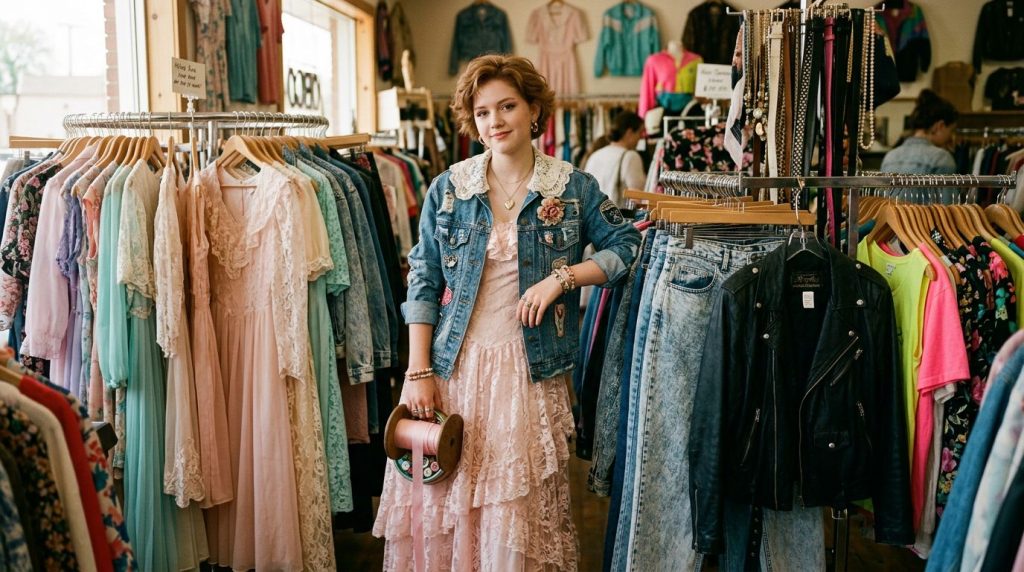
One pink prom dress did more than decorate a final scene. It told us who Andie Walsh was before she said a word.
That is why 80s teen movie fashion still sticks in the brain like a favorite soundtrack. The clothes were never only clothes. A lace collar, a thrifted blazer, a varsity jacket, or slouch socks peeking above everyday shoes could reveal your budget, your crush, your lunch table, and your whole attitude.
Pretty in Pink gave teenage style a heartbeat. Let’s revisit the looks that made it last.
Key Takeaways
- 80s teen movie fashion used clothing as character shorthand, revealing social groups, personalities, budgets, and attitudes before the dialogue began.
- Pretty in Pink made Andie’s style memorable through thrift-shop spirit, soft layers, practical pieces, and a handmade pink prom dress that felt personal rather than perfect.
- The decade’s teen wardrobe mixed acid-washed denim, leather jackets, miniskirts, slouch socks, high-tops, shoulder pads, neon colors, punk details, and polished mall fashion.
- The most wearable way to revisit the era is to choose one strong 80s element and balance it with modern basics instead of copying a head-to-toe costume.
- These looks still linger because they connected bold silhouettes and accessories to characters with real feelings, rebellion, romance, and individuality.
How Pretty in Pink Made 80s Teen Movie Fashion Personal
Costume designer Marilyn Vance gave Pretty in Pink its visual pulse. Andie didn’t dress like a glossy mall mannequin. Her wardrobe felt assembled, adjusted, loved, and occasionally rescued from a clothing rack nobody else wanted.
Pink shows up, sure, but it isn’t sugary. On Andie, it has texture and nerve. Feminine tailoring meets oversized silhouettes. A fitted collar sits under a roomy cardigan. Soft lace shares space with practical layers. Nothing looks too precious to wear on the bus.
Andie’s Lace, Tulle, and Thrift-Shop Spirit
Andie’s prom dress is remembered because it isn’t perfect. In the movie, she and Iona remake an old dress into something new, which makes it feel personal instead of store-bought. The tulle and pink fabric create romance, but the slightly offbeat shape keeps it from becoming a fairy-tale gown.
Andie’s prom dress works because it isn’t an arrival look. It’s a handmade answer to a room that expects her to match.
Her everyday clothes had the same feeling. She didn’t need the polished miniskirts and matching separates of conventional mall fashion. A feminine silhouette could be interrupted by practical layers, slouch socks, or Dr. Martens on some days. It was tender, scrappy, and unmistakably hers.
For more on the actress at the center of that style moment, revisit Molly Ringwald’s iconic teen-movie wardrobe.
Iona Dressed Like the Rules Did Not Apply
Then there was Iona, Andie’s record-store boss and patron saint of fabulous weirdness. Her rubber dress, piled-on accessories, scrunchie, dramatic hair, and bright color made new-wave fantasy feel deliciously close to punk fashion.
She wasn’t dressed for approval. She was dressed for a better story.
A Harper’s Bazaar costume retrospective recalls the collaboration between Annie Potts and Vance that made Iona’s outfits so wild and distinct. Next to Andie’s soft layers, Iona looked like a living collage. That contrast is the whole point.
The Clothes Mapped the Cafeteria
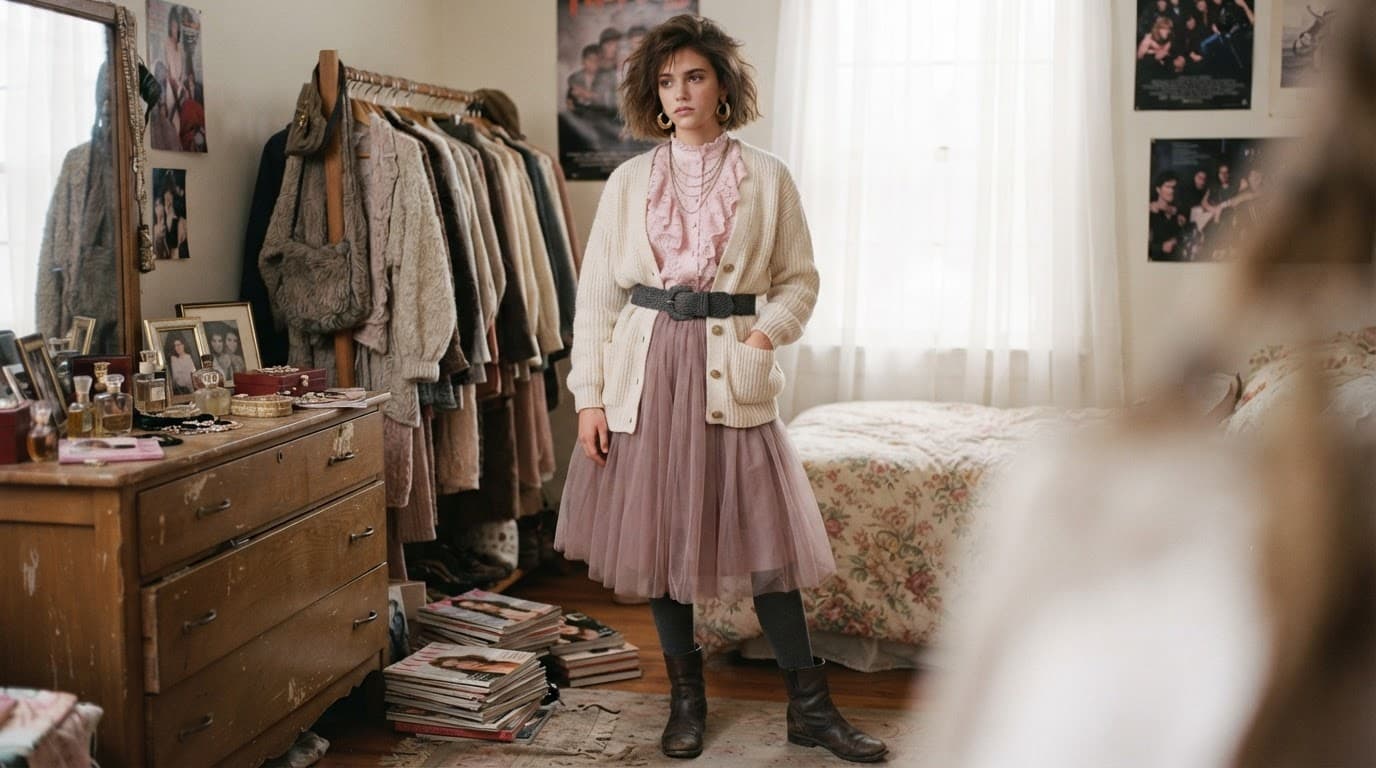
John Hughes movies understood that high school had tribes long before anyone used that word in a branding meeting. Clothes made those groups visible in one glance, a defining shorthand of 1980s youth culture.
The Breakfast Club did it with almost comic-book clarity. Claire’s polished pink, Andrew’s letterman look, Bender’s battered denim and boots, Allison’s dark piled-up layers, and Brian’s practical preppy basics all made sense before the detention bell rang.
A Jacket Could Tell You Everything
Letterman jackets suggested sports, status, and school spirit, while leather jackets could say rebellion, boredom, or both before noon. Slouch socks and miniskirts could signal school status or conformity. Preppy style, with neat knits, button-down shirts, loafers, and tidy layers, often signaled comfort with the system.
Meanwhile, punk fashion treated the system like a dartboard. Black leather, safety pins, torn denim, printed t-shirts, Dr. Martens, and mismatched accessories carried a different message. Punk fashion rejected institutional rules through clothes that looked deliberately unapproved.
Letterman jackets could say “team captain.” A reworked dress could say “I made my own rules.” Both were plot points before the dialogue started.
These weren’t census reports on every teenager in America. They were movie shorthand, turned up for the camera. Still, the shorthand worked because real teens recognized the social signals.
The 80s Teen Movie Fashion Wardrobe, Piece by Piece
The strongest movie-era teen fashion wasn’t one look. It was a closet full of possibilities, with every garment pulling toward a different version of cool.
Denim, Leather, and the Big-Silhouette Years
Acid-washed jeans were a major player, while miniskirts offered another route into the decade’s look. Pair them with tucked-in printed t-shirts, slouchy sweaters, or cropped jackets. The pale, cloudy finish made the jeans look a little dangerous, even if you were headed to algebra.
The Fashion History Timeline’s 1980s overview notes the popularity of high-waisted, straight-legged acid- and stone-washed jeans in young wardrobes. Layer bomber jackets, leather jackets, oversized denim coats, or trench coats for instant movie-poster swagger.
Shoulder pads also had their moment. They gave blazers, dresses, and sweaters a stronger outline, helping define power dressing. Not everyone wanted linebacker shoulders, obviously, but the decade enjoyed a silhouette that took up space.
Shoes and Accessories Did the Final Talking
Footwear was never an afterthought. Converse All Stars carried a scruffy, creative edge. Reebok high-tops felt athletic and fresh. Jelly shoes brought plastic color to summer outfits, while slouch socks and leg warmers made sneakers feel more playful.
Pulling slouch socks over leggings gave sneakers a scruffier, layered finish.
Statement accessories supplied the punctuation:
- Big earrings, stacked bangles, a scrunchie, chunky belts, and animal prints made simple outfits feel louder.
- A fanny pack could read sporty, practical, or gloriously uncool, depending on the wearer.
- Sunglasses, fingerless gloves, and a single bold necklace could push an outfit toward punk fashion or new wave without much effort.
The mall was part of the fantasy, too. Stores such as The Limited helped teens build a movie moment with polished sweaters, leggings, miniskirts, designer jeans, blouses, and belts. Tracksuits brought a sporty note, while a second scrunchie helped complete the look. Those 80s mall fashion retailers were practically dressing rooms for future prom queens, band kids, and hallway heartthrobs.
Early 80s DIY, Late 80s Gloss
The decade did not sit still. Early 1980s teen style carried more punk fashion, new-wave sharpness, thrift-store layering, and club-kid experimentation.
By the late 1980s, fashion got brighter, bigger, and more polished. Neon fashion, designer jeans, tracksuits, athletic wear, shoulder pads, and big hair were ready for their close-up.
The Shift Was Real, but the Mix Stayed Messy
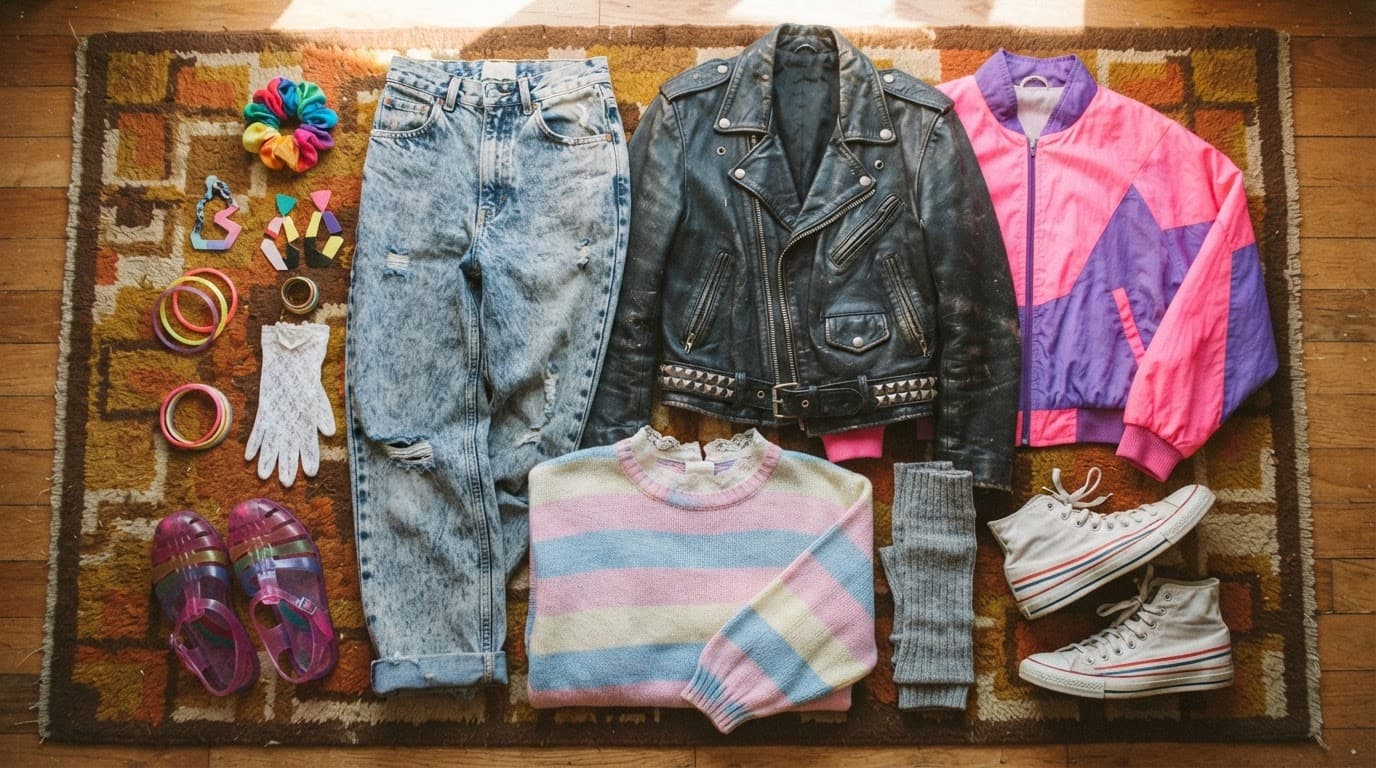
Early-80s outfits often looked assembled from found pieces. Skinny ties, narrow trousers, leather jackets, lace gloves, torn denim, and offbeat color pairings had an artsy, slightly nervous energy. Think less “perfect outfit” and more “I found this amazing thing and made it work.” Mixing miniskirts, slouch socks, and a scrunchie captured that spirit.
Later looks loved surface drama, with neon colors popping against black and animal prints adding another jolt. Shoulder pads sharpened dresses and jackets, giving power dressing a sharper, more status-conscious silhouette. Acid wash became mainstream. A casual outfit might include leggings, a long sweater, leg warmers, slouch socks, and high-tops. A party look could pair miniskirts with tulle, metallic fabric, and giant earrings, while a scrunchie and big hair made the whole look ready for its close-up.
The Vogue look back at 1980s fashion also tracks the decade’s mix of Lycra, power dressing, punk fashion, hip-hop style, and streetwear. That wild overlap is why one clean definition of “the 80s look” never quite works.
Madonna, Michael, and the Pop-Star Ripple Effect
Teen movies got the clothes into theaters. Music videos sent those ideas straight into bedrooms, school hallways, and mall parking lots.
Madonna made lace gloves, layered necklaces, tulle skirts, crucifix jewelry, visible lingerie, and big hair feel like an invitation. You didn’t need a full Like a Virgin replica. A lace glove, a scrunchie, or stacked bangles could do the trick.
Different Stars, Different Kinds of Swagger
Michael Jackson brought another flavor entirely. His style made leather jackets, embellished military-inspired details, sunglasses, loafers, and that famous single-glove energy feel like showmanship.
Run-DMC, Prince, Cyndi Lauper, and the MTV parade widened the options even more, from punk fashion to polished pop. A teen could choose a preppy sweater vest one day, then try neon athletic gear the next. Another look might feature slouch socks and miniskirts, animal prints, tracksuits, or Converse All Stars.
That freedom is part of why this teen-movie style remains so much fun. It wasn’t minimalist. It wasn’t shy. It believed an outfit could have a point of view.
Wear the Movie Mood, Not the Costume
Want the feeling without looking like you got lost on the way to an 80s-theme party? Build casual styles around one strong element, such as a scrunchie, then let modern basics do the rest.
Keep the Contrast, Lose the Pileup
Try a lace blouse with straight-leg dark jeans and simple boots. Put a soft tulle skirt under a clean knit instead of adding every accessory in the jewelry box. For a subtle touch of power dressing, wear one oversized blazer with light shoulder pads, a fitted T-shirt, and sneakers.
A few easy combinations still work:
- Pair an oversized cardigan with miniskirts and slouch socks, then keep the shoes simple.
- Let one statement detail, such as bold earrings, a bright scrunchie, or animal prints, carry the color.
- Choose acid-washed jeans with slouch socks, or high-tops, but not both with neon, jelly shoes, and leg warmers.
Andie’s look had tension. Soft but tough. Romantic but practical. That mix is more useful than copying a head-to-toe outfit.
Why These Looks Still Linger
The clothes lasted because they were attached to people we cared about. Andie didn’t wear pink because she was a standard-issue prom queen. Bender’s jacket wasn’t polished because Bender wasn’t polished; his silhouette communicated resistance and nonconformity, the spirit of punk fashion. The wardrobe gave each character a silhouette, then gave that silhouette a little soul.
Molly Ringwald’s Fashion Flashback costume memories are a nice reminder: movie clothes can carry complicated feelings. A dress, or even big hair, may become a symbol, even if it wasn’t anybody’s favorite the first time around.
We remember the lace, the layers, the tulle, the scuffed sneakers, the slouch socks, the miniskirts, the animal prints, the giant earrings, and a single scrunchie. More than that, we remember what those things seemed to promise.
Frequently Asked Questions
What made 80s teen movie fashion so memorable?
The clothes acted as visual shorthand for personality, social status, and teenage identity. A jacket, pair of shoes, or scrunchie could tell viewers what a character cared about before the character said a word.
What did Andie’s style in Pretty in Pink represent?
Andie’s wardrobe represented creativity, practicality, and individuality rather than polished mall perfection. Her handmade pink prom dress felt especially meaningful because it transformed an imperfect old garment into something distinctly hers.
Which pieces define 1980s teen fashion?
Acid-washed jeans, miniskirts, leather or letterman jackets, oversized sweaters, slouch socks, high-tops, scrunchies, big earrings, and shoulder pads all helped define the era. Punk fashion, preppy layers, neon colors, and sporty tracksuits offered different ways to wear the decade.
How can you wear 80s-inspired fashion without looking like you are in costume?
Start with one statement detail, such as a scrunchie, oversized blazer, lace blouse, or pair of slouch socks. Keep the rest of the outfit simple and modern so the 80s influence feels intentional rather than piled on.
The Look Was Never Just Pink
Pretty in Pink proves memorable fashion doesn’t have to be flawless. It has to feel like it belongs to somebody.
The best teen-movie style of the 1980s had personality in every cardigan, jacket, shoe, and ridiculous accessory. It made teenage feelings visible, which is why a pink dress, lace, slouch socks, or a pair of high-tops can still send us right back to the hallway.