
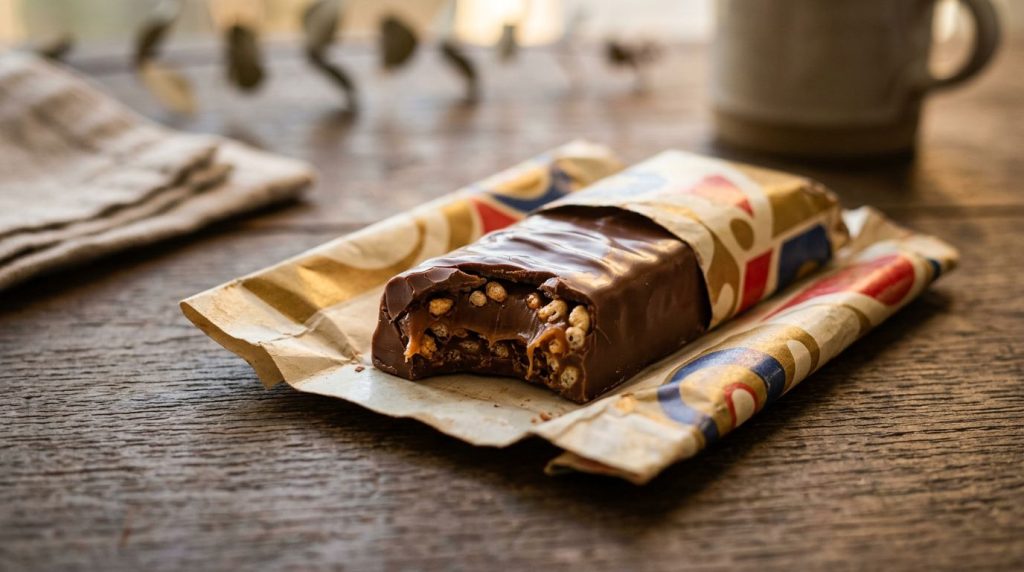
Some candy bars vanish and barely leave a ripple. The Caravelle candy bar did the opposite. Although it disappeared years ago, this retro chocolate bar is still remembered fondly for its soft caramel center, its satisfying crisped rice snap, and that smooth milk chocolate shell that made every bite feel special.
That is usually the sign of a real favorite. It was not necessarily the loudest bar on the shelf, nor was it the one with the biggest marketing machine behind it, but it was the one that hit your taste buds in exactly the right order. Let’s talk about why Caravelle still gets that kind of love.
Key Takeaways
- The Caravelle was a classic 1960s-era candy bar featuring a signature combination of milk chocolate, soft caramel, and crisped rice.
- Created by the Peter Paul company, the bar is best remembered for its satisfying balance of creamy and crunchy textures rather than flashy marketing or complex ingredients.
- While frequently compared to the modern 100 Grand bar due to its similar flavor profile, fans often recall the original as having a distinct, buttery softness.
- Despite its enduring legacy in the minds of snack enthusiasts, the exact date of the Caravelle’s discontinuation remains unclear due to evolving corporate history and conflicting individual memories.
What made the Caravelle Bar so memorable
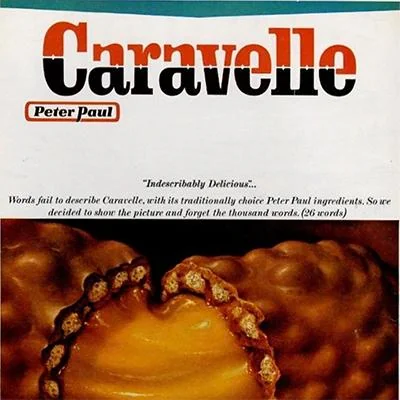
If you strip away the nostalgia for this beloved vintage candy bar, the appeal is easy to understand. Caravelle had a simple, almost perfect formula: milk chocolate on the outside, soft caramel inside, and crisped rice for texture. That mix gave it two personalities at once. It was creamy and crackly, rich and light, soft and crisp.
That contrast is what people tend to remember first.
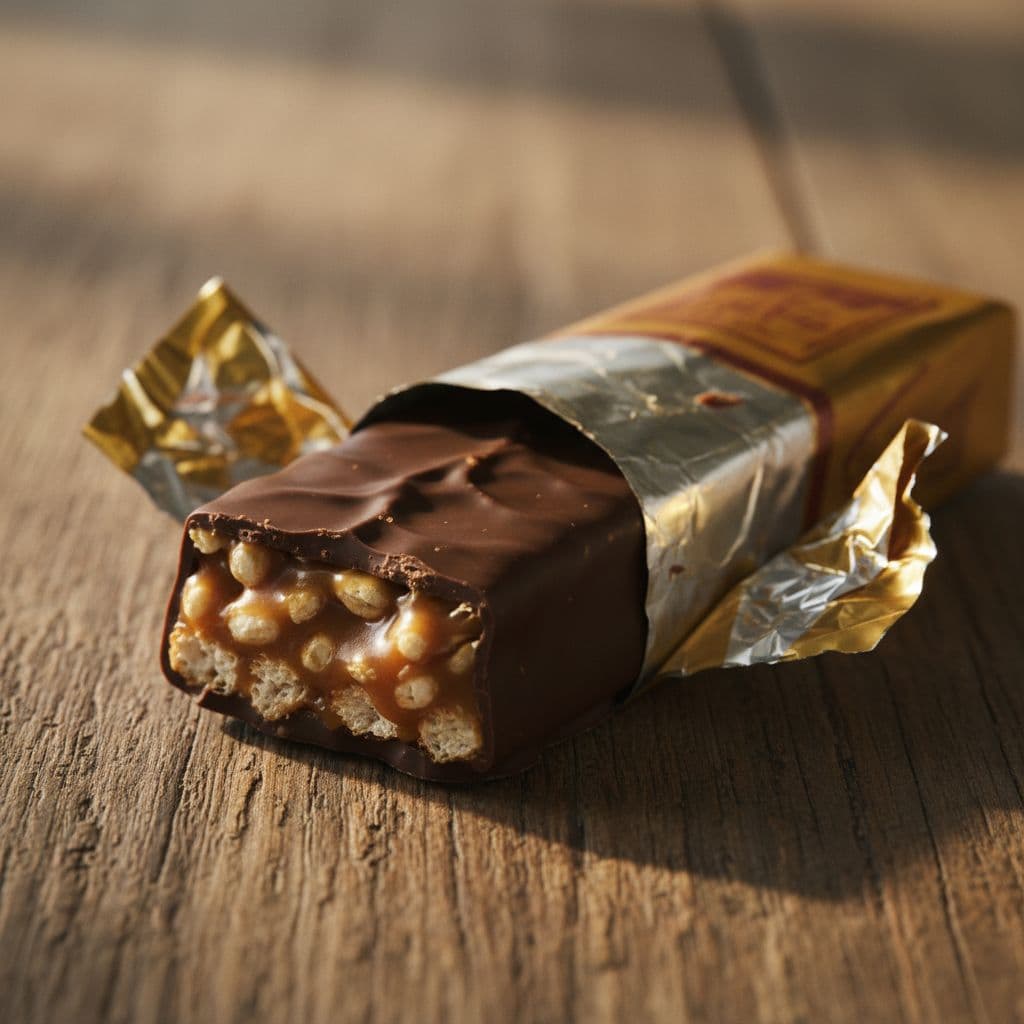
According to Tasting Table’s look back at Caravelle, the bar was introduced in 1965 and was built around milk chocolate, caramel, and crisped rice. That lines up with the broadest, most consistent description of the candy. Bite into it, and you got a firm chocolate coating first, then the sticky pull of soft caramel, then little pops of crisped rice that kept the whole thing from feeling too heavy.
It wasn’t a fussy bar. No endless layers. No wild flavor twists. Just a really satisfying flavor profile that prioritized a consistent texture stack.
What stuck in people’s minds wasn’t a gimmick. It was the contrast of the chocolate coating, soft caramel, and that unmistakable crisped rice crunch.
There is one wrinkle, though. Some later write-ups and recollections do not fully agree on the exact build. One older candy-history page describes the bar differently, which tells you something important: when a product has been gone for decades, memories blur and secondary sources drift. The safest version is the clearest one, as Caravelle is best remembered as a chocolate bar with caramel and crisped rice, though some accounts even mention a variation involving Brazil nuts.
That kind of uncertainty does not erase the bar’s identity. If anything, it makes the central memory feel even sharper. People may disagree on the fine print, but they do not forget the experience: buttery caramel, a crisp texture, and a bite that felt smoother than a lot of its competitors.
A Peter Paul candy bar, and a product of its time
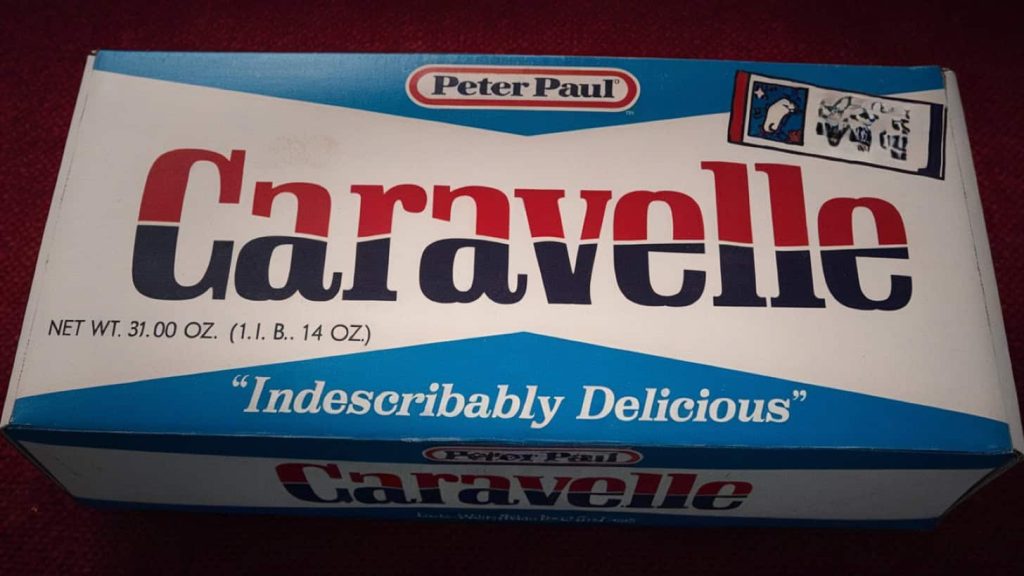
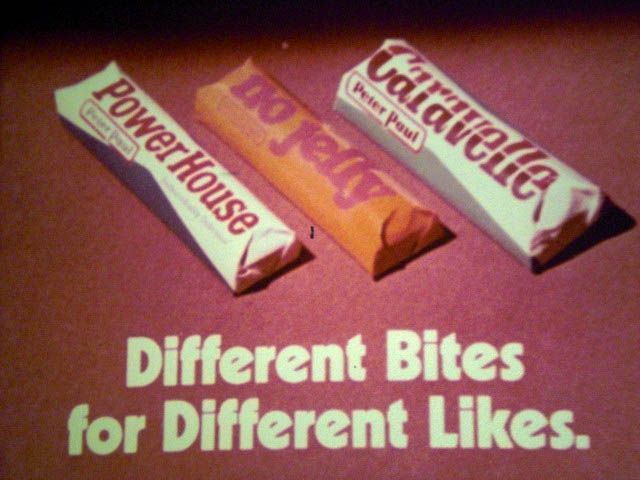
Caravelle was crafted by the Peter Paul Candy Manufacturing Company, the iconic business founded by Peter Paul Halijian. Known for legendary treats like Almond Joy and Mounds, the company solidified its reputation as a premier candy-maker with several mid-century favorites. The most solid timeline places the debut of Caravelle in 1965, with its peak popularity arriving during the late 1960s and through the 1970s. That history is important because it truly defines the Caravelle as a classic 1970s candy bar, rather than an 80s invention, even if many fans of that decade later adopted it into the hall of fame for snacks gone too soon.
That makes sense. Childhood memory does not care much about decade boundaries.
If you grew up in the 80s, Caravelle might sit in that almost mythic zone. Maybe you tasted one, or perhaps an older sibling did. You might have heard it mentioned in the same way people talk about the Marathon Bar, the Reggie! Bar, or other ghosts of the checkout aisle. It had that kind of afterlife.
The style of the bar also fits its era. Candy makers during this time loved bars that played with texture but still felt familiar. Caravelle was not trying to shock anybody; it wanted to be comforting and generous, and it succeeded.
This is also where the nostalgia gets a little sweeter, because Caravelle did not need a giant backstory to earn affection. It was a dependable pleasure. It was one of those bars that felt slightly more grown-up than a plain chocolate bar, but still fun. It was not elegant, and it was not messy. It was just right.
For readers who enjoy tracing the family tree of lost chocolate bars, the feeling is similar to the legendary BarNone candy bar, another snack people remember as a full sensory event rather than just a sugar hit. Different bars, different builds, same emotional category: Why did they stop making this?
The closest modern comparison is 100 Grand, but it’s not a perfect match
Ask people what Caravelle was like today, and the most common answer is the 100 Grand bar. That is a fair comparison, at least as a starting point. Both treats are built around chocolate, caramel, and crisped rice. Both deliver chew plus crunch in the same bite, living in that sweet spot where texture does half the work.
Still, comparing it to a 100 Grand bar only gets you so far.
For one thing, memory tends to paint Caravelle as a little softer and more buttery. Some fans describe it as less busy, less sharp around the edges, and more melt-in-your-mouth than its closest surviving cousin. It is worth noting that this treat was originally marketed as the $100,000 Bar, and while the name changed, the nostalgic appeal remains. That is hard to prove bite for bite now, because Caravelle isn’t sitting next to modern bars on a store shelf. But the comparison comes up too often to ignore.
Here is the easiest way to think about it:
- If you like a 100 Grand bar, you can at least imagine the Caravelle experience.
- If you want an exact one-to-one replacement, you are probably going to be disappointed.
- If you miss that balance of caramel and chocolate crispies coated in milk chocolate, the modern alternative is the nearest mainstream reference point.
Caravelle also was not trying to be a wafer bar, a nougat bar, or a peanut bar. That matters. Its identity was cleaner than that. Chocolate, caramel, rice crisp. Done. That clean profile is part of why the memory has lasted. Unlike a modern candy commercial that might rely on irony or flashy branding, Caravelle felt like it was engineered for pure pleasure. When a candy bar knows exactly what it is, people remember it more clearly.
Maybe that is the real comparison, not just to a specific competitor, but to a whole class of bars that felt simple and honest. No gimmicks, just the candy version of a favorite pop song with a killer hook.
Why the discontinuation story gets fuzzy
Here is where things get messy, and it is better to say that plainly.
Caravelle is long gone, but the exact end date for this classic treat is not perfectly documented across modern sources. Some articles place its disappearance in the late 1970s. Others suggest it lingered into the 1980s, or at least survived in some form or in some markets later than fans remember. Chowhound’s roundup of forgotten candy bars puts it in the group of bars that did not make it past the 80s, while Tasting Table frames it more as a casualty of the 1970s.
Those two versions do not fully match.
The most careful takeaway is this: Caravelle was introduced in 1965, was most associated with the 1960s and 1970s, and has long resided in the confectionary graveyard of lost snacks. If you are looking for a currently manufactured version, there is not a verified one. No mainstream revival has brought the original bar back, and there is no reliable current retail listing that points to a true return.
The corporate story is also murkier than the basic product story. Peter Paul made the bar, and that part is solid. However, the brand eventually became part of the complex history involving Cadbury Schweppes and later Hershey. Because a major corporate merger often shifts priorities regarding the shelf life of older products, it is difficult to pin the exact date the bar was discontinued. Since these retellings do not line up cleanly, it is smarter not to pin the bar’s fate on one neat narrative unless hard documentation turns up.
That is frustrating, sure. But it is also pretty common with discontinued candy. Ads vanish, wrappers get tossed, and regional memories clash. One person’s recollection of buying it in 1982 is another person’s claim that it was gone by then.
Candy history can be like that. A little sticky. A little messy. Very on brand.
Why people still talk about Caravelle
A lot of forgotten candy bars are remembered because they were weird. The Caravelle candy bar is remembered because it was good.
That is a different kind of legacy.
It had a name with a little flair, a texture people could describe in one breath, and a flavor profile that still makes sense now. Nothing about it sounds dated. In fact, if a major brand launched a caramel and crisped rice milk chocolate bar today, it would probably feel familiar, not old-fashioned.
There is also something charming about how unshowy it seems in hindsight. Caravelle was not a towering novelty bar, and it was not a stunt candy with six surprise layers. It was a comfort food bar, built on textures people love almost by instinct. You did not need a pitch meeting to understand it. One bite did the work.
That explains why it still pops up in conversations about lost sweets and iconic snacks. The memory is not abstract; it is sensory. People remember the chew. They remember the snap. They remember the way the chocolate gave way to that softer center.
For fans of nostalgic treats, that is catnip. Not every discontinued bar deserves a comeback, but some of them capture a moment in candy design that still feels smart. Caravelle did. It sounds good on paper, and it delivered in real life, which is likely why so many people still hunt for copycat recipes to recreate the experience at home.
Frequently Asked Questions
What was inside a Caravelle candy bar?
The Caravelle was defined by a simple, consistent trio of ingredients. It featured a smooth milk chocolate coating surrounding a layer of soft, buttery caramel mixed with crispy rice pieces.
Can I still buy a Caravelle bar today?
Unfortunately, no. The Caravelle has been discontinued for decades, and there are currently no major manufacturers producing an official version of the candy bar.
Why do people compare Caravelle to the 100 Grand bar?
Both bars share the same core components of milk chocolate, caramel, and crisped rice, making the 100 Grand the closest surviving cousin to the Caravelle experience. While they are structurally similar, many loyal fans of the original Caravelle argue that it felt slightly softer and less busy than modern alternatives.
Who originally manufactured the Caravelle?
The candy bar was produced by the Peter Paul Candy Manufacturing Company, a firm well-known for creating other iconic mid-century treats like Mounds and Almond Joy. The brand was introduced in 1965 and became a staple of the late 1960s and 1970s snack scene.
Conclusion
The Caravelle Bar still has a firm grip on our collective memory for a simple reason: it sounded delicious, and by all accounts, it truly was. The combination of milk chocolate, caramel, and crisped rice is a classic flavor profile that never goes out of style.
While the specific details regarding its later years remain somewhat fuzzy, the core story of the Caravelle candy bar is clear. It was introduced by Peter Paul in 1965 and became a beloved staple of the 1960s and 1970s before eventually being discontinued.
Some treats earn their fame because they stayed on store shelves for generations. The Caravelle is different, as it remains famous precisely because it disappeared, leaving fans to fondly remember exactly how that first bite felt.



The creamy softer caramel is what made the Caravelle better! I couldn’t believe they just quit making it!
Bring Caravelle back if you like making a profit! A new generation will love it just like we did!