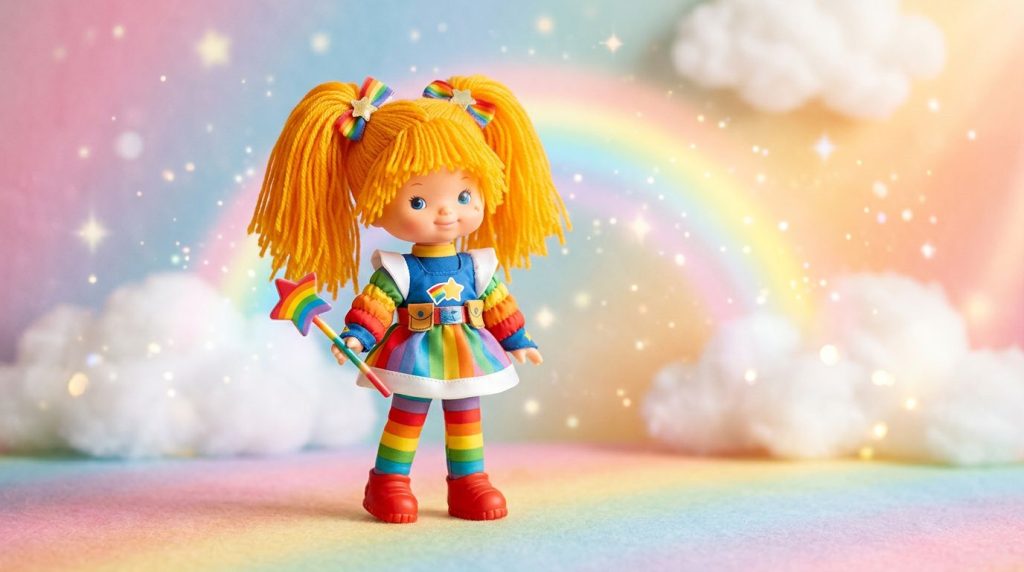
Some toys asked for attention. Rainbow Brite dolls practically glowed.
If you were a kid in the 1980s, you probably clocked them in a split second. Bright yarn hair. Candy-colored clothes. Big, cheerful eyes. They didn’t feel distant or fancy. They felt like they wanted to be picked up, carried around, tucked into blankets, and taken on adventures.
That’s a big reason people still remember them so fondly. These dolls weren’t only cute. They came wrapped in a whole fantasy, and that fantasy had serious staying power.
Why Rainbow Brite Dolls Jumped Off the Shelf
If you weren’t part of the Jem and Holograms revolution, then you were a Rainbow Brite girl! A lot of 80s toys had strong shelf appeal, but Rainbow Brite dolls had a different kind of pull. Barbie gave you glamour. Action figures gave you battle poses. Rainbow Brite dolls gave you color, warmth, and a face that looked genuinely happy to see you.
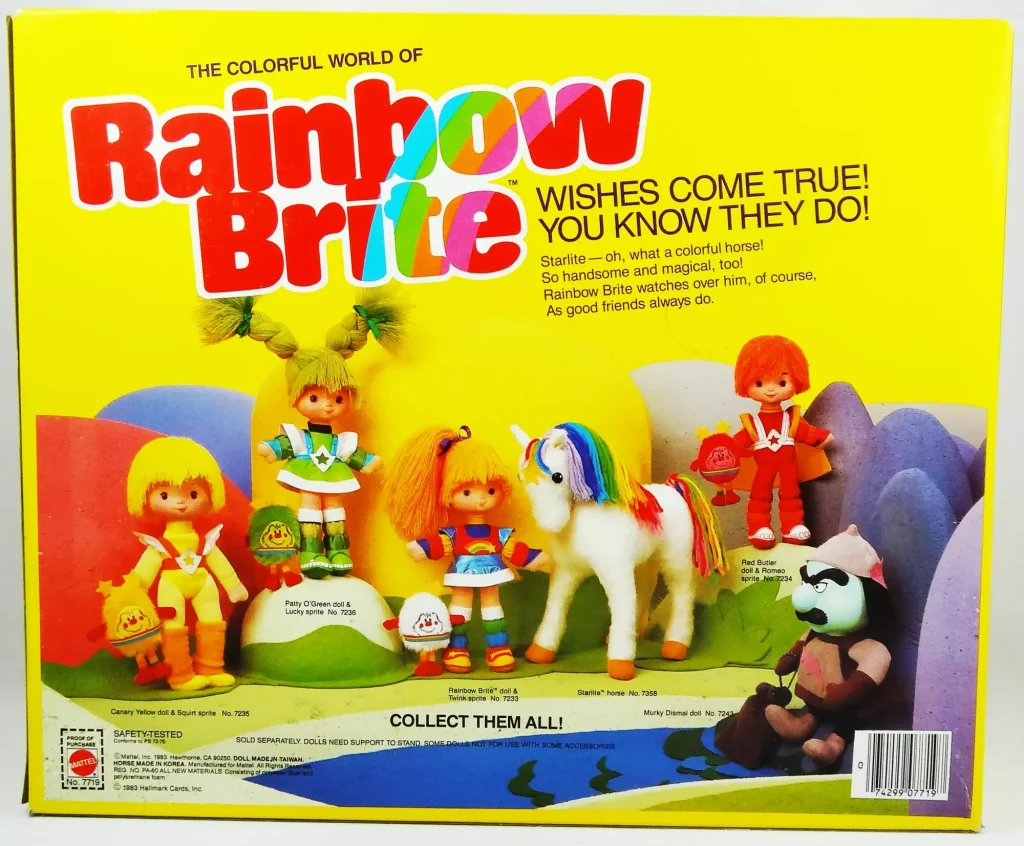
The design did a lot of work right away. The soft body made the dolls feel cuddly. The vinyl face gave them expression. Then came the clothes, bright dresses, aprons, boots, rainbow trims, star details, and those unforgettable chunks of yarn hair that looked halfway between a doll hairstyle and a craft project made by magic. It was a smart combination. Polished enough to feel special, soft enough to feel personal.
For a quick background check, the Rainbow Brite overview notes that Mattel produced the first generation of the dolls and many related toys from 1984 to 1987. That timing matters. The line arrived in a decade that loved bold color, but Rainbow Brite pushed that instinct into full fantasy mode.
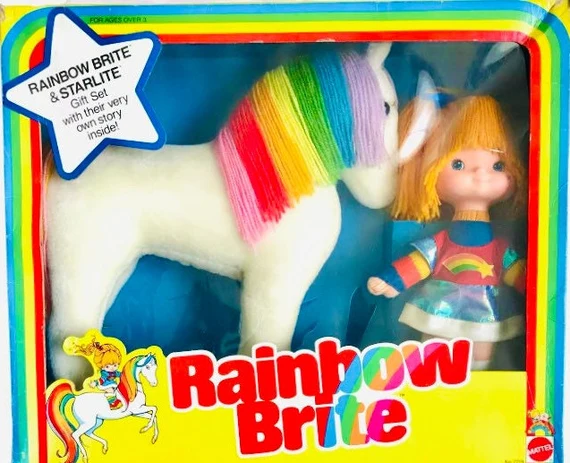
The look said it all: soft, bright, and impossible to ignore.
Kids didn’t need a sales pitch to “get” these dolls. One glance told the story. This was a character who belonged in a happier place, a more colorful place, maybe a place you could build yourself out of couch cushions and blankets after school.
And that’s the secret sauce. Rainbow Brite wasn’t styled like a miniature adult. She looked like joy, plain and simple. That made the toy feel accessible in a way some other dolls didn’t. You didn’t admire her from afar. You brought her into the middle of your playtime.
More Than a Doll, a Ticket to Rainbow Land
The doll mattered, sure. But the bigger hook was the universe around her.
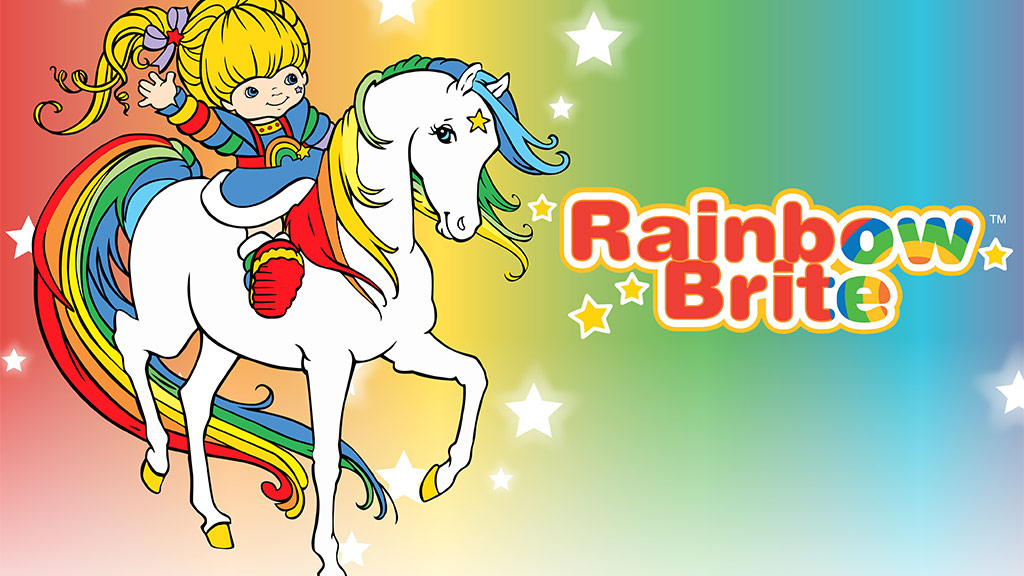
Rainbow Brite lived in Rainbow Land, and that setting felt like catnip for imaginative kids. It wasn’t a tidy little backdrop with one house and one pet. It was a full fantasy space, full of colors, stars, sprites, villains, and helpers. If you only owned one doll, you still felt like you were holding the front door to a much larger story.
That’s where characters like Twink, Starlite, Murky Dismal, Lurky, and the Color Kids made everything richer. Twink added sweetness. Starlite brought speed and sparkle. Murky and Lurky gave the whole thing a little friction, because every bright world needs somebody trying to mess up the weather. Even the bad guys looked memorable, not scary in a nightmare way, but strange enough to keep the story moving.
Rainbow Brite worked because it sold a mood as much as a toy: kindness, color, comfort, and a little mischief.
The Color Kids were a huge part of that charm. Each one was tied to a color, and each felt like a member of a cheerful team. Red Butler, Canary Yellow, Patty O’Green, and Buddy Blue weren’t subtle names, and that was the point. Kids understood the setup instantly. Everyone had a shade. Everyone had a place. Everyone helped make the world brighter.
That structure made play easy. You didn’t need pages of backstory. You could line up dolls and figures on the carpet and the plot practically wrote itself. Murky is causing trouble. The sprites are helping. The colors need saving. Starlite is ready. Go.
And because the franchise spilled into animation, books, and licensed toys, the line felt bigger than what sat in your toy box. The world had rules, faces, and recurring favorites. That kind of cross-medium magic hit hard in the 80s. It made the dolls feel less like products and more like residents from a place you visited whenever you played.
The Details Kids Never Forgot
Ask someone what they remember about Rainbow Brite, and watch how fast the little details come back.
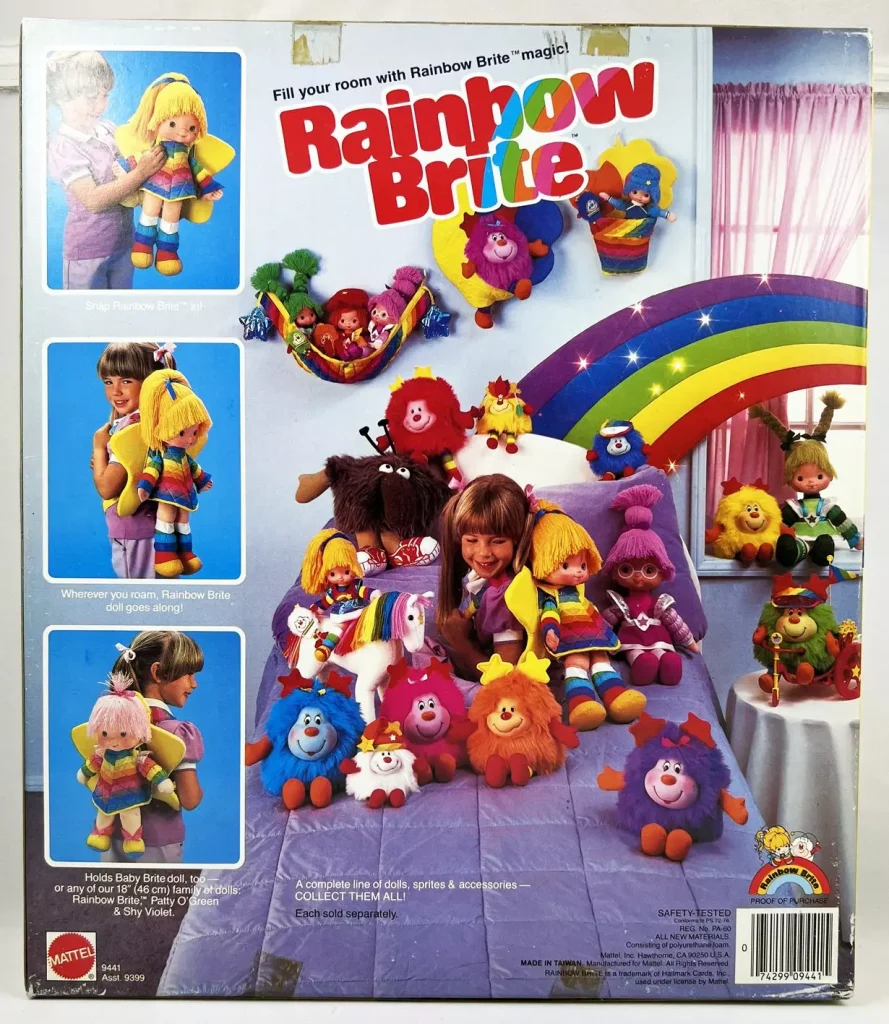
Not just “the doll.” The hair. The boots. The sprite companion. The names. The way every color looked turned all the way up. Memory loves specifics, and this toy line had plenty of them.
A few features come up again and again:
- The thick yarn hair, bright and slightly wild, with a texture you wanted to smooth and fluff.
- The color-saturated outfits, with rainbow trims and starry touches that felt pure storybook.
- The sidekicks, especially Twink and the sprites, who made the dolls feel like part of a living cast.
- The larger fantasy extras, like Starlite and other play pieces, which made one character feel like the center of a whole kingdom.
What made those details stick is that they weren’t random decoration. They all pointed in the same direction. This was a universe where color had meaning. Red wasn’t only red. It was a personality. Blue wasn’t only blue. It was a friend. That’s such a kid-friendly idea, and it lands because it turns emotion into something visible.
There’s also something worth saying about the emotional design of these dolls. They weren’t sarcastic. They weren’t edgy. They weren’t trying to be cooler than the child holding them. Rainbow Brite and her friends felt open-hearted. For a lot of kids, that mattered. The line invited nurturing play, cooperative play, rescue play, and dreamy world-building, all at once.
You can feel the difference when you compare Rainbow Brite to more attitude-heavy toy lines from the same decade. This brand had sparkle, but it also had softness. It had fantasy, but not distance. It said, “Come in, everything’s brighter here.”
That emotional clarity is a big reason the dolls stayed lodged in people’s memories. The look was bold, yes, but the feeling was even stronger.
Why Collectors and Former Fans Still Care
Nostalgia does funny things. Sometimes you see an old toy and think, “Oh right, I had that.” Other times you see one and your whole childhood rushes back in full color. Rainbow Brite usually lands in that second category.
Part of the appeal is visual. Even now, an original doll can light up a shelf. The palette still works. The textures still charm. The faces still have that sweet, optimistic expression that made the line feel so inviting in the first place.
Part of it is memory. Former fans don’t only remember owning a doll. They remember the world around it, the cartoon vibe, the character names, the sidekicks, the sense that good weather and good feelings were somehow connected. That is a strong nostalgia package.
Collectors tend to pay attention to condition, original outfits, companion pieces, and boxed examples, but the emotional pull often matters more than checklist perfection. A doll with a little hair wear can still be the exact one that takes someone back to a bedroom floor in 1985. If you want a snapshot of what still circulates, these vintage Rainbow Brite doll listings show everything from loose dolls to more complete playsets.
What’s lovely is that the franchise doesn’t survive on rarity myths or auction drama alone. It survives because people still respond to the look and the feeling. Rainbow Brite hit a sweet spot that many toy lines chase and few nail. It was highly stylized, but never cold. It was brandable, but still imaginative. It gave kids characters they could recognize instantly and a setting they could expand forever.
That is why so many former fans still smile the second they see Twink, Starlite, or a familiar burst of rainbow yarn hair.
Why the Memory Still Glows
Rainbow Brite lasted because the dolls gave kids more than something pretty to hold. They gave them a whole emotional color wheel, a cast of cheerful companions, and a fantasy world that felt safe, playful, and wide open.
That’s why the memory sticks. These weren’t only 80s toys. They were tiny invitations to imagine a brighter place, and for a lot of kids, that invitation felt irresistible.
If a toy could look like hope, Rainbow Brite came pretty close.