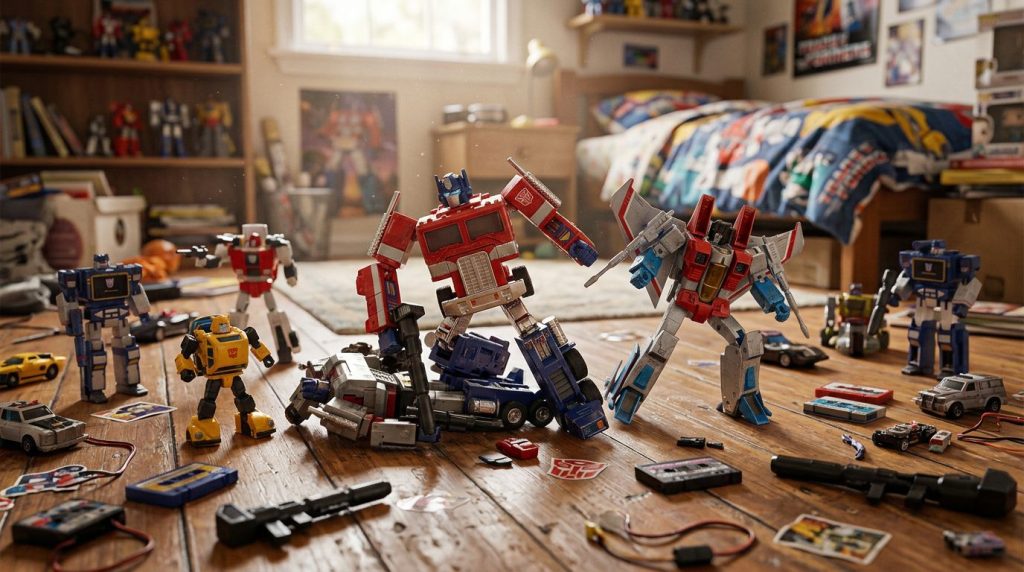
Every kid had a favorite Transformer, and they defended that pick like it was family business. Maybe you were an Optimus Prime loyalist. Maybe you went full chaos goblin and claimed Starscream.
That was the pull of Transformers toys. They weren’t only action figures. They were puzzles, vehicles, characters, and little identity badges you could hold in your hand.
Once one of those robots rolled into your toy box, the debate was on.
Why Transformers Toys Felt So Different
A lot of 80s toys were cool. Few of them felt like a magic trick.
You’d start with a car, jet, tape deck, or dinosaur. A few careful flips later, there was a robot staring back at you. No batteries. No screen. No app. Just plastic, hinges, stickers, and that small rush of “wait, how does it do that?”
That simple transformation did a lot of heavy lifting. It made the toy feel smarter than other toys. It invited you to learn it, master it, and show it off. If you could turn Soundwave from cassette player to robot without the instructions, you had status.
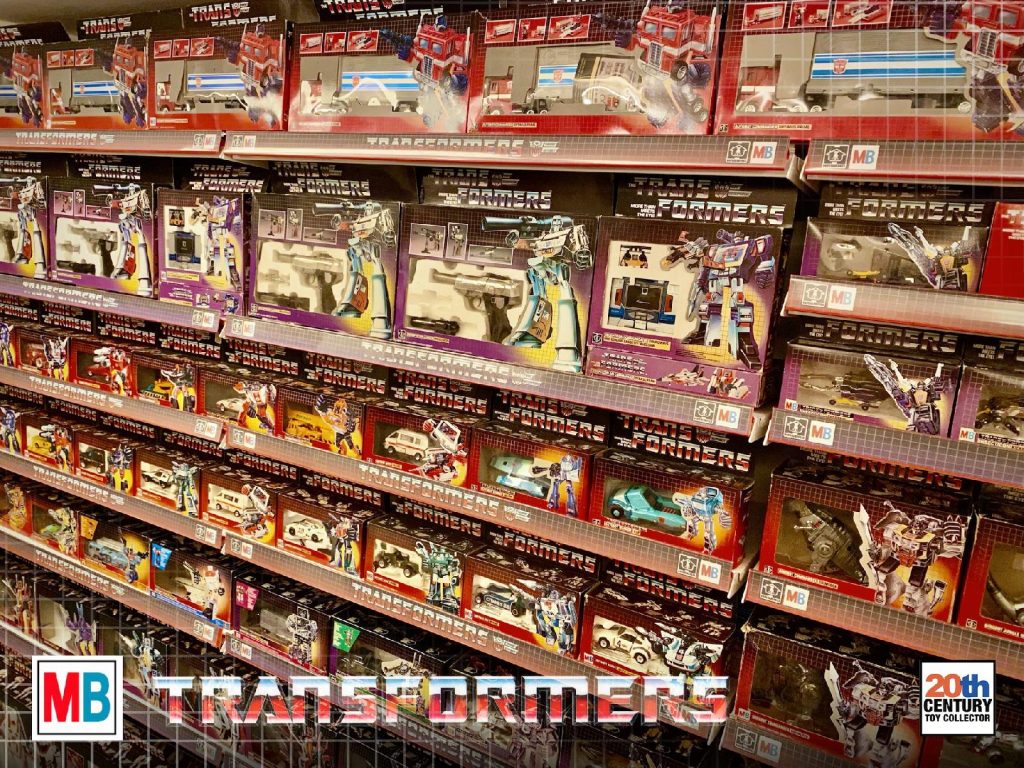
The original Generation 1 lineup hit hard because it built a whole cast in a hurry. The 1984 and 1985 toys gave kids cars, trucks, jets, minibots, cassettes, and combiners, all with distinct looks and names. That mattered. Nobody was asking for “the blue robot.” They wanted Bluestreak. They wanted Jazz. They wanted their guy.
The details sealed it. Chrome parts gleamed. Faction symbols felt important. Later, rub signs gave kids one more ritual, thumb on sticker, waiting for the Autobot or Decepticon logo to appear like a secret message. Even the paper instructions had drama. One wrong move and you thought you’d snapped off a door forever.
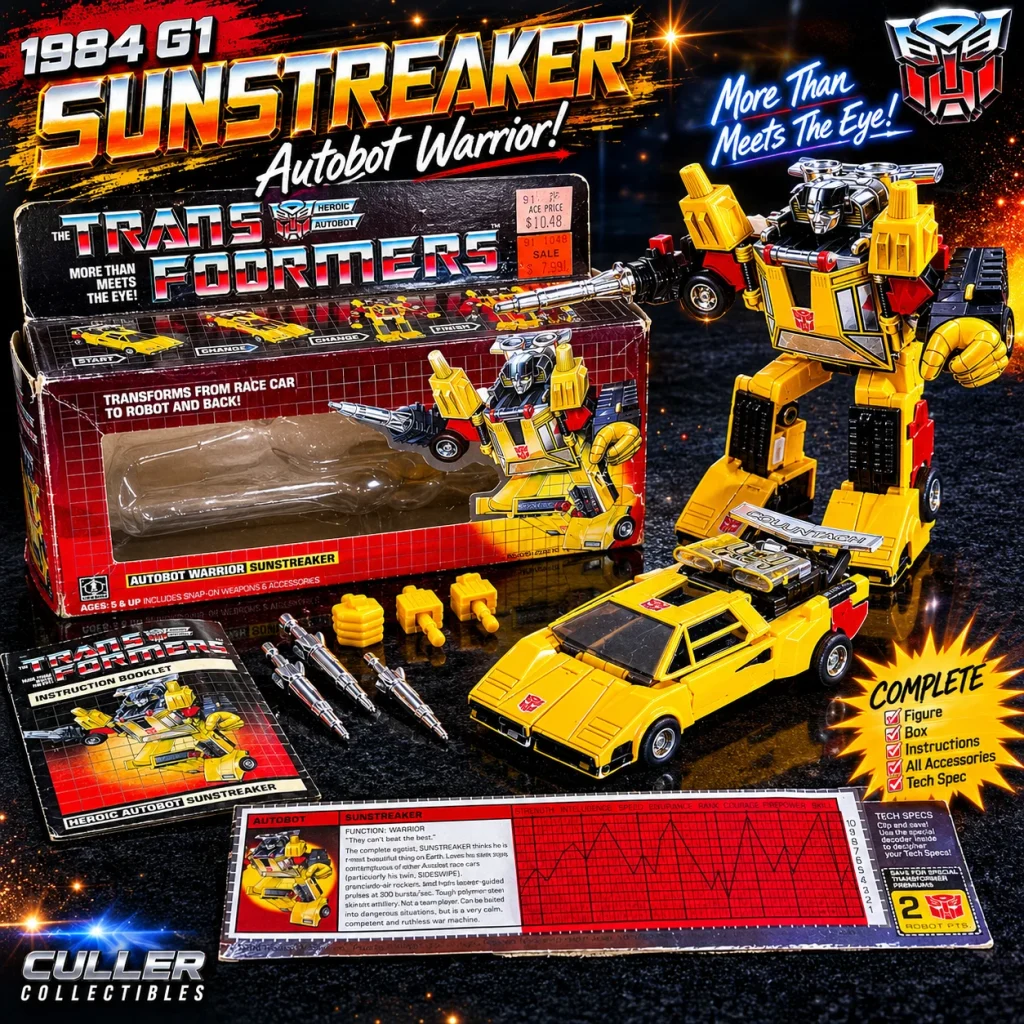
And then there was the box. The art looked huge, loud, and heroic. The tech specs on the back, decoded with that red strip, felt like spy gear from another universe. You weren’t buying a toy. You were adopting a machine with a backstory.
TV, Comics, and the Movie Turned Plastic Into Personality
Here’s where the bond got serious: the toys didn’t stay in the toy aisle.
The cartoon gave the robots voices, rivalries, catchphrases, and moods. The comics gave them a little more edge. Suddenly, that truck on your bedroom carpet wasn’t only a truck. It was Optimus Prime, noble, steady, and carrying the emotional weight of the whole team.
Once a toy had a voice, it stopped feeling like plastic.
That’s why favorites got personal fast. Bumblebee wasn’t the biggest or strongest, but he was easy to root for. Starscream was a backstabbing mess, and kids loved him anyway. Soundwave barely raised his voice, which somehow made him cooler. Even side characters stuck because they had a vibe, a silhouette, a role in the drama.
Then 1986 arrived and the animated movie proved this brand could punch kids right in the feelings. Suddenly, these robots could change, disappear, sacrifice themselves, and leave a mark. That sounds intense for a toy line, because it was. The toys stayed fun, but the attachment got stronger.
That emotional hook is a big reason the line lasted. As the history of the franchise’s toy roots shows, the molds began in Japanese toy lines before Hasbro wrapped them in names and story. The story part was the rocket fuel. It turned clever objects into characters kids cared about.
The Robots Kids Picked, and Why They Picked Them
Ask a room full of grown adults about their favorite Transformer and watch how fast the answers fly. Nobody needs time to think. They know.
Some picks were obvious. Some were gloriously weird. All of them made sense to the kid choosing them.
Here’s the quick snapshot:
| Character | Why kids latched on | What the toy had going for it |
|---|---|---|
| Optimus Prime | He felt safe, strong, and heroic | A truck, a robot, a trailer, and instant leader energy |
| Bumblebee | He was the underdog with heart | Small size, simple transformation, easy to carry anywhere |
| Starscream | He was loud, dramatic, and fun to hate | Sleek jet mode and classic villain swagger |
| Soundwave | He was cool in that icy, unbeatable way | Cassette door, mini allies, and a look nobody forgot |
| Grimlock | He was a robot dinosaur, case closed | T-rex mode, brute force, and zero interest in subtlety |
Optimus Prime was the gold standard for a reason. He had presence. The trailer made him feel huge, even before you factored in the cartoon. Kids didn’t only admire him, they trusted him. That’s a different kind of affection.
Bumblebee lived at the other end of the scale. He wasn’t massive. He wasn’t loaded with gear. He felt reachable. If Optimus was the team captain, Bumblebee was the one you’d imagine hanging around with after school. He fit in a pocket, too, which never hurt.
Then there were the dramatic picks. Starscream had fans because he was messy and entertaining. He looked sharp, transformed into a jet, and acted like he was one betrayal away from a full meltdown. Kids understood that kind of cartoon nonsense on a spiritual level.
Soundwave had a whole different kind of cool. He was square, mechanical, and weirdly elegant. Better yet, he came with cassettes, which meant one toy could turn into a whole squad. Ravage alone sold a lot of imaginations. If you liked gadgets, secret compartments, or villain energy with style, Soundwave was your guy.
Grimlock played by his own rules. A robot that turns into a T-rex is such a strong idea that it barely needs support. Kids who loved monsters, dinosaurs, or blunt-force solutions usually ended up in Grimlock’s corner. Same with Devastator, whose combined form felt like five toys worth of bragging rights in one giant green payoff.
And then there were the oddball loves. Megatron had that dangerous, pre-safety-era strangeness. Jetfire looked enormous. Shockwave had one glowing eye and a voice built for intimidation. The point wasn’t always logic. Sometimes your favorite was simply the one that looked coolest on the bedspread during an all-out Autobot versus Decepticon war.
Why Your Favorite Said a Lot About You
This is the part people remember, even if they don’t say it out loud: your favorite Transformer felt like a tiny personality test.
If you picked Optimus, maybe you liked the hero who meant it. If you picked Bumblebee, maybe you had a soft spot for the smaller guy. If Starscream was your number one, you probably enjoyed a little chaos. Soundwave fans liked control. Grimlock fans wanted maximum noise and minimal debate.
Of course, kids didn’t think in those terms. They went with instinct. They saw a character, heard a voice, tried a transformation, and something clicked.
That click lasted because Transformers toys asked for participation. You had to fold panels, turn waists, swing arms into place, line everything up. The toy wasn’t finished until you finished it. That matters. It made the bond feel earned.
It also helped that every kid could play the line differently. Some were strict cartoon purists. Others mashed everybody together, Autobots, Decepticons, GoBots if they were feeling lawless. One kid kept the stickers perfect. Another wore the chrome off in a week. Same toys, different stories.
That personal history still sticks. You don’t remember only the character. You remember the cracked windshield, the missing fist, the sticker peeling off one wing. You remember the exact way the joints felt. Favorite toys are memory machines like that. They carry fingerprints.
Why Adults Still Chase Their Childhood Transformers
By the time you hit adulthood, the attachment changes shape, but it doesn’t disappear.
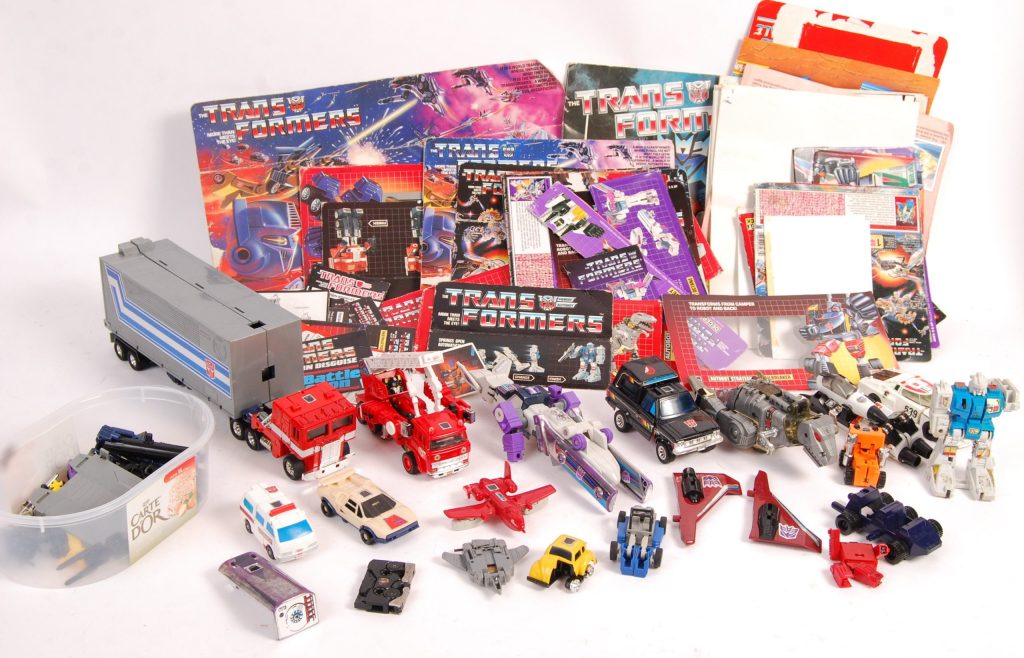
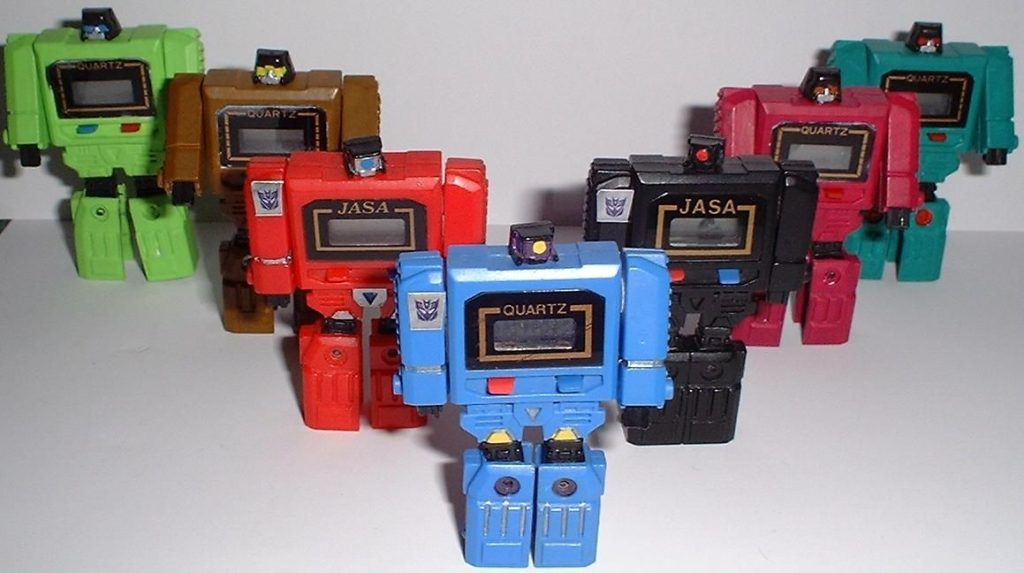
Now the appeal can be the box art, the engineering, the hunt, or the joy of finally owning the figure you missed in 1985. Some collectors want clean, boxed examples with the styrofoam insert and paperwork. Others want a loose, played-with copy that looks exactly like the one they dragged across the living room rug.
That’s the sweet spot of nostalgia. A mint figure is impressive. A worn one can hit harder.
Collectors still talk about chrome wear, tight joints, original fists, unapplied sticker sheets, and whether the tech-spec decoder is still packed in. Those details aren’t fussy for the sake of it. They’re time machines. One glance at an old package can bring back an entire toy aisle.
If you want a quick visual jog through the early line, this vintage toy history video is packed with familiar faces, especially the combiners and classic G1 heavy hitters. One minute in, and you’re back in front of a shelf deciding whether this week’s allowance can stretch to one more robot.
That collecting angle also says something nice about the brand. Transformers survived because the idea still works. Kids still get the fun of the change. Adults still get the rush of recognition. It’s mechanical, emotional, and a little theatrical, all at once.
And maybe that’s the secret. These weren’t passive toys. They asked you to engage, to choose, to memorize, to care. Your favorite Transformer wasn’t random. It became part of your own pop-culture wiring.
Every kid had a favorite, and that choice still says something years later. Transformers toys gave children more than a clever gimmick. They gave them characters to believe in, villains to quote, and a machine that could become something else in your hands.
That’s why the memory sticks. You might forget the instructions, lose a blaster, or peel off half the sticker sheet, but you don’t forget your robot.
Say the names out loud, Optimus, Bumblebee, Soundwave, Grimlock, Starscream, and chances are one still jumps to the front of the line.