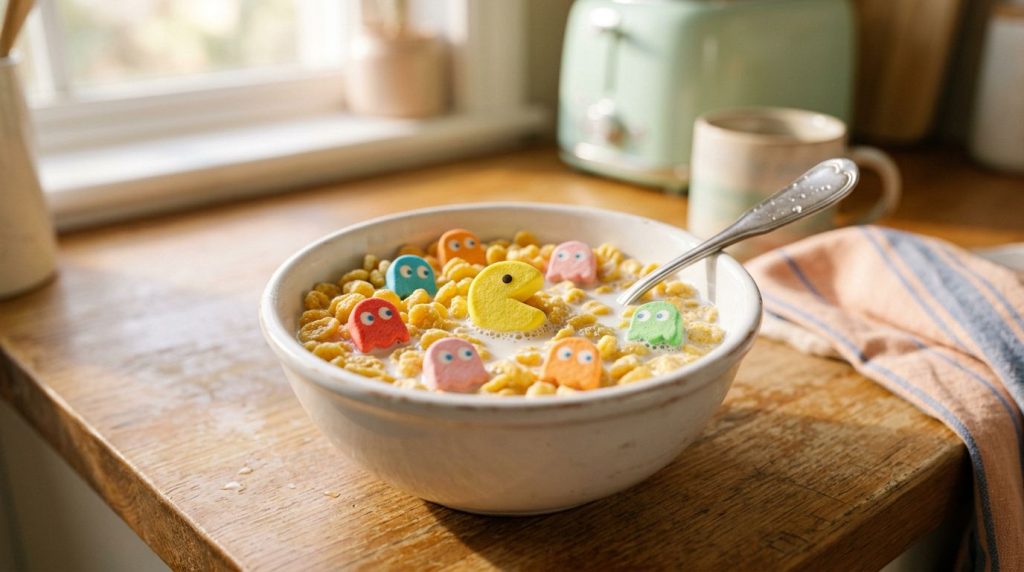
Some cereals fed you. A few gave you a whole little Saturday morning mood. Pac-Man cereal did that with one bright, goofy, brilliant move: it dropped Pac-Man and his ghost enemies right into the bowl.
If you grew up in the 1980s, you probably remember the pitch instantly. Arcade fever was everywhere, and breakfast got pulled into the party. What made this cereal stick wasn’t only the name on the box. It was those marshmallows, the tiny Pac-Man shapes and colorful ghosts that made every spoonful feel like a game in progress.
When Pac-Man Hit the Cereal Aisle
General Mills introduced Pac-Man cereal in 1983, right when the character was still one of the biggest stars in pop culture. That timing mattered. Pac-Man wasn’t some niche arcade favorite. He was a full-blown sensation, the kind of character who could jump from game cabinets to lunchboxes, pajamas, and, yes, a cereal box without anyone blinking.
The cereal itself was a sweetened corn cereal with marshmallows. Simple base, smart idea. The hook was visual, immediate, and kid-proof. You didn’t need a long explanation when the bowl already looked like a tiny cartoon version of the maze chase.
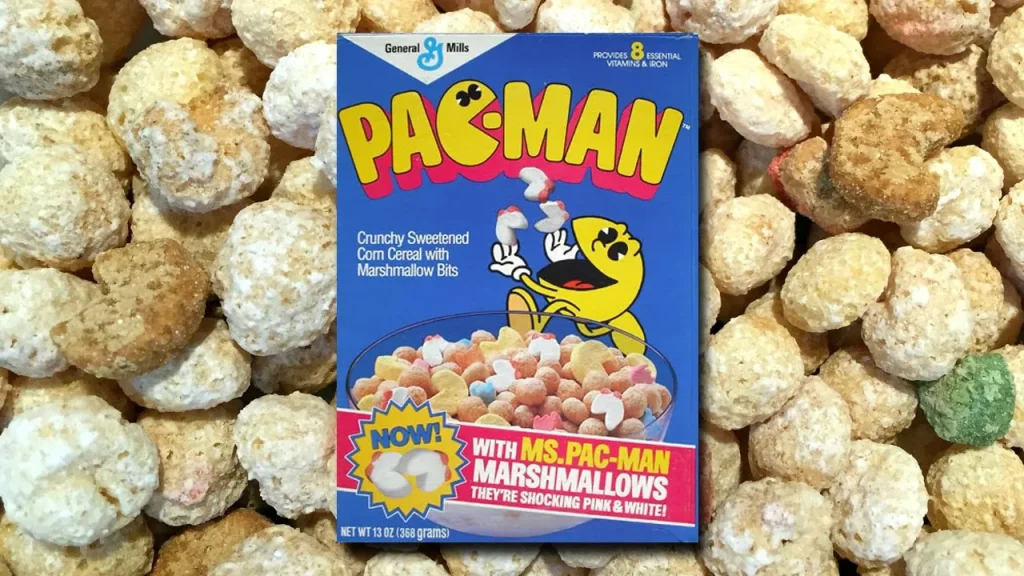
Pac-Man cereal is sometimes mixed up with Ralston’s run of licensed cereals, but Pac-Man was a General Mills product. Ralston still matters to the story, though. Its Donkey Kong cereal had already shown that video game characters could move off the screen and into the pantry. That earlier wave is easy to spot in Dinosaur Dracula’s look at Donkey Kong cereal, which captures how fast game licensing was spreading across the breakfast aisle.
The exact store date isn’t perfectly pinned down, but collector records and old references commonly place Pac-Man cereal’s arrival in the summer of 1983, likely around June. Its exit date is fuzzier. Some sources put the end around 1985, while others remember it hanging on into the late 1980s. That kind of blurry timeline is common with discontinued cereals, especially ones that burned bright and vanished before they could turn ordinary.
Here’s the quick snapshot:
| Detail | What we know |
|---|---|
| Manufacturer | General Mills |
| First release | 1983 |
| Base cereal | Sweetened corn cereal |
| Signature marshmallows | Pac-Man and the ghosts |
| Later additions | Ms. Pac-Man and Super Pac-Man marshmallows |
| Run length | Mid-1980s to possibly late 1980s |
The takeaway is pretty clear. Pac-Man cereal arrived at exactly the right moment, with exactly the right gimmick.
The Marshmallow Magic of Pac-Man and the Ghosts
This is the part people remember first, and for good reason. The marshmallows weren’t random stars, moons, or vague blobs in bright colors. They were shaped like Pac-Man and the four ghosts, Blinky, Pinky, Inky, and Clyde. That detail turned the cereal from a licensed novelty into something much more personal.
Kids recognized those shapes in a split second. There was no guesswork. You poured the bowl and there they were, the chase gang, floating in milk before you even grabbed the spoon.
That may sound small now, but it was the whole charm. A lot of branded cereals slapped a famous face on the box and then gave you a pretty standard product inside. Pac-Man cereal matched the outside promise with inside details. The marshmallows did the heavy lifting.
The bowl didn’t only reference the game, it looked like the game had fallen into breakfast.
The cereal pieces around them mattered too. A marshmallow-only stunt would’ve worn thin fast. The sweet corn pieces gave it crunch and structure, while the character marshmallows provided the fun, the color, and the thing you went hunting for first. It was a good balance, the cereal equivalent of having both the maze and the power pellets.
Later versions kept the idea moving. Some releases added Ms. Pac-Man marshmallows with a pink bow, which is about as 1980s a design choice as you can imagine. There were also Super Pac-Man marshmallows, larger Pac-Man shapes that tied the cereal even closer to the games’ expanding world. Those additions showed that General Mills wasn’t treating the brand like a one-note cash-in. It kept remixing the shapes because the shapes were the point.
And that’s why people still talk about the marshmallows in such specific terms. Nobody says, “I vaguely remember some sweet cereal.” They remember the ghosts. They remember scooping up Pac-Man. They remember staring into the bowl for an extra second before eating it, which is maybe the highest compliment any novelty cereal can get.
Packaging, Marketing, and Peak 1980s Energy
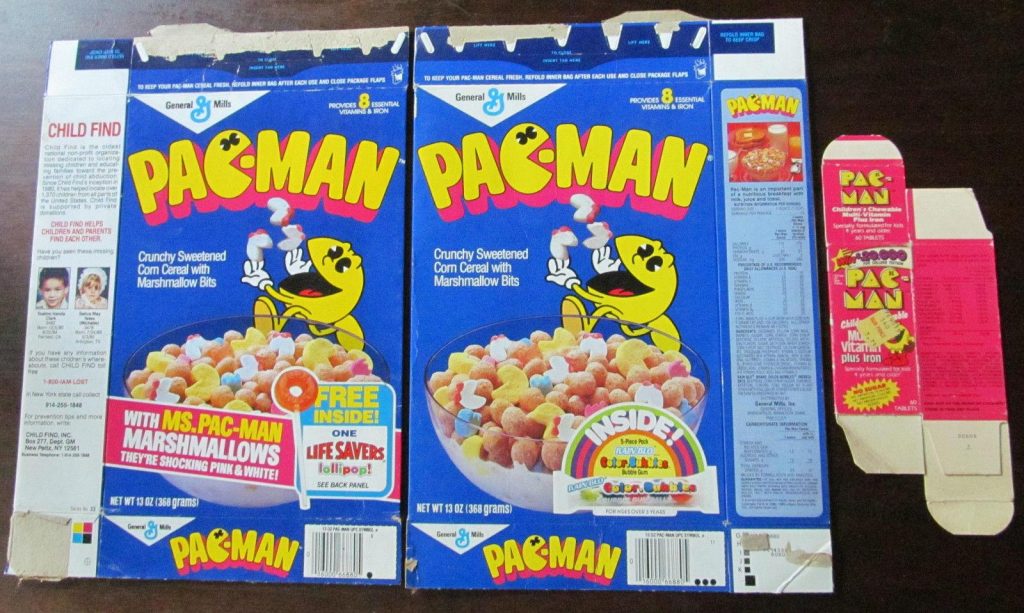
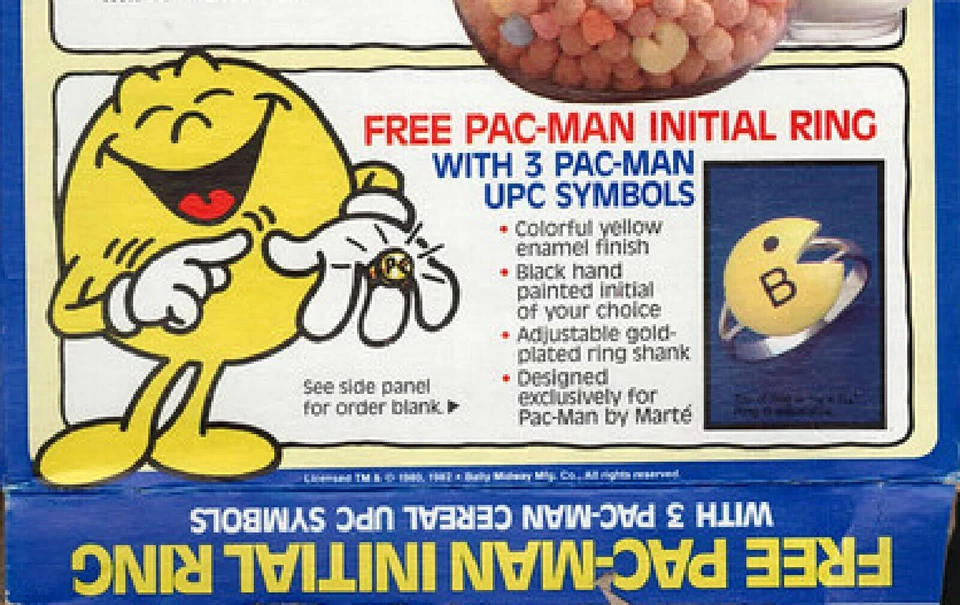
Pac-Man cereal didn’t need subtle marketing. It needed recognition, color, and that little jolt of “Wait, they made this into cereal?” On that front, it had a built-in advantage. Pac-Man was already one of the most recognizable characters in the country. Put him on a box, pair him with ghost marshmallows, and you’ve already done most of the selling.
That kind of thinking was all over the 1980s. Cereal companies were chasing cartoons, movies, and video games because kids didn’t separate those worlds. Saturday morning TV, arcade cabinets, toy aisles, and breakfast tables all felt connected. If you want a wider look at that mash-up, this article on cartoon cereals from The 80s and 90s lays out the era’s habit of turning pop culture into pantry goods.
Pac-Man cereal sat right in that sweet spot. It had the right mascot, the right moment, and an easy visual identity. The packaging almost had to be bold because the character already was. Nobody wanted a quiet Pac-Man box. They wanted something that looked like it belonged next to a stack of arcade tokens and a blaring TV set.
The competitive backdrop makes it even more interesting. Ralston had already moved hard into licensed cereals, and Dinosaur Dracula’s snapshot of Ralston’s branded cereal streak is a fun reminder of how crowded and wild that category became. Pac-Man cereal wasn’t part of Ralston’s stable, but it clearly lived in the same pop-culture feeding frenzy.
What set it apart was clarity. Some licensed cereals needed a little explanation. Pac-Man cereal didn’t. You saw the name, the characters, the marshmallow idea, and the whole thing clicked at once. It was clean, bright, and almost impossible for an arcade-obsessed kid to ignore.
Why Pac-Man Cereal Still Lives in People’s Heads
A lot of discontinued cereals fade into a general blur of sugar and cardboard. Pac-Man cereal doesn’t. It sticks because the concept was so clean. The box promised Pac-Man and ghosts, and the bowl delivered Pac-Man and ghosts. No bait-and-switch. No letdown.
There’s also the memory factor that only certain foods get. You don’t remember them as products. You remember them as scenes. The kitchen light. The clink of the spoon. The cartoon still warming up in the next room. A cereal tied to an arcade icon already had a head start, but the marshmallows gave it texture in memory. They made it visual.
Its short, somewhat hazy shelf life helped too. Familiarity can make a cereal ordinary. Scarcity makes it legendary. Because Pac-Man cereal disappeared years ago, and because the exact end date still gets debated, it never had time to become boring. It stayed frozen in that bright, sugar-dusted pocket of 1980s kid culture.
Then there’s the bigger reason, the one nostalgia fans know by heart. Pac-Man cereal captured how the 1980s loved to blur entertainment and everyday life. The decade didn’t ask whether a video game should become breakfast. It asked how fast it could happen. That restless, playful energy is a huge part of why retro fans still chase old cereal memories alongside toys, cartoons, and arcade cabinets.
And if we’re being honest, the ghost marshmallows are half the legend. Maybe more than half. They’re the image that keeps coming back, colorful little enemies drifting in milk, waiting for the spoon.
Pac-Man cereal worked because it understood the assignment. It wasn’t trying to be cleverer than the game. It was trying to put the game’s personality in a bowl, and those Pac-Man and ghost marshmallows made that happen.
That’s why people still remember it with such odd precision, even decades later. Not only the name, not only the box, but the shapes, the colors, the whole tiny breakfast spectacle.
Some cereals disappear and stay gone. Pac-Man cereal disappeared and turned into a memory you can almost taste.