Some 80s products didn’t ask for your attention, they grabbed your sleeve in the grocery aisle. E.T. cereal was one of those.
If you were a kid then, you already knew the feeling. A movie you loved didn’t stay on the screen. It showed up on lunchboxes, pajamas, stickers, and, if the marketing machine was feeling extra bold, right next to the Corn Flakes. Breakfast stopped being routine and started feeling like part of the event.
That’s what made this cereal stick in memory long after the box disappeared.
Breakfast Joined the Blockbuster
The 1980s were built for licensed food. Studios wanted one more way into your house, cereal companies wanted one more way into your head, and kids were more than happy to meet both halfway, spoon in hand.
A movie tie-in cereal hit differently than a poster or a toy. You saw it every morning. You handled the box. You stared at it half-awake before school. That kind of repetition mattered. It turned pop culture into furniture.
E.T. was a perfect fit for that treatment. The movie was already huge, warm-hearted, and everywhere in the early 80s. Even after its theatrical wave, the character still had that glow around him, sweet, strange, friendly, and instantly recognizable. Put that face on a cereal box and you didn’t need a hard sell.
Kids weren’t thinking in marketing terms, of course. They were thinking, “Wait, E.T. has a cereal?” That question alone did the work.
Parents saw breakfast. Kids saw permission to bring the movie into one more part of the day. That was the trick of so much 80s merchandising. It made buying groceries feel a little like buying fandom.
And E.T. cereal wasn’t some odd one-off. It belonged to the same bright, sugar-dusted tradition that later gave us the classic Nintendo Cereal System, where the box itself felt like part collectible, part commercial, part morning entertainment. In the 80s, the cereal aisle wasn’t a side room to pop culture. It was one of the main stages.
In that decade, breakfast wasn’t outside the hype machine. Breakfast was in it.
That sounds cynical now, maybe. Back then, it felt magical.
What Was in the Box That Kids Couldn’t Ignore
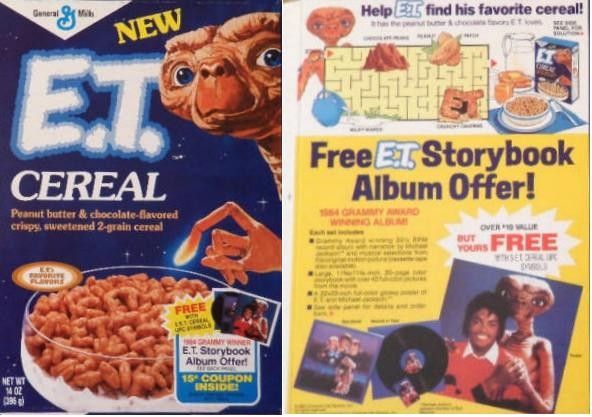
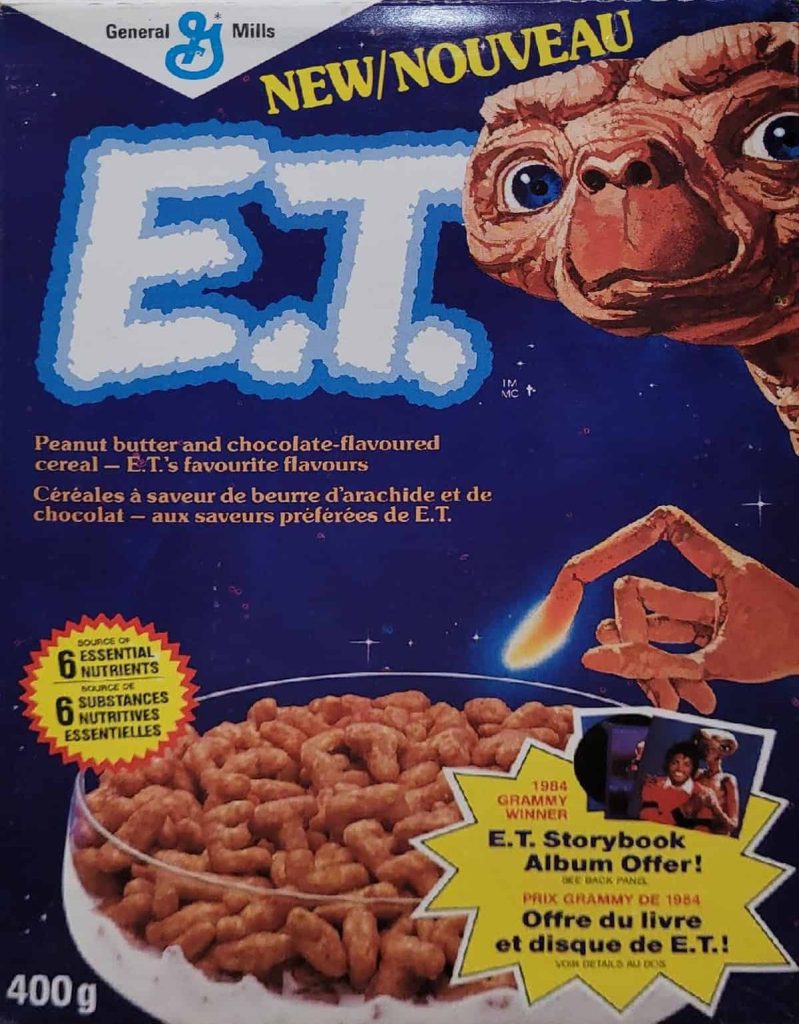
Part of the appeal was pure visual simplicity. According to Cereal Graveyard’s E.T. entry, the pieces came in capital “E” and “T” shapes. You didn’t have to decode anything. The cereal spelled the movie right in your bowl.
That matters more than it sounds. Kids love food that does a trick. Alphabet cereal, marshmallow shapes, cookies with filling hidden inside, anything that turns eating into a little game. E.T. cereal understood that instinct cold.
Collector writeups also remember the flavor as chocolate and peanut butter, which made perfect thematic sense. A Dinosaur Dracula collector post describes it that way, with an obvious wink to E.T.’s candy association. That wasn’t subtle. It wasn’t supposed to be. It was smart, kid-friendly brand logic.
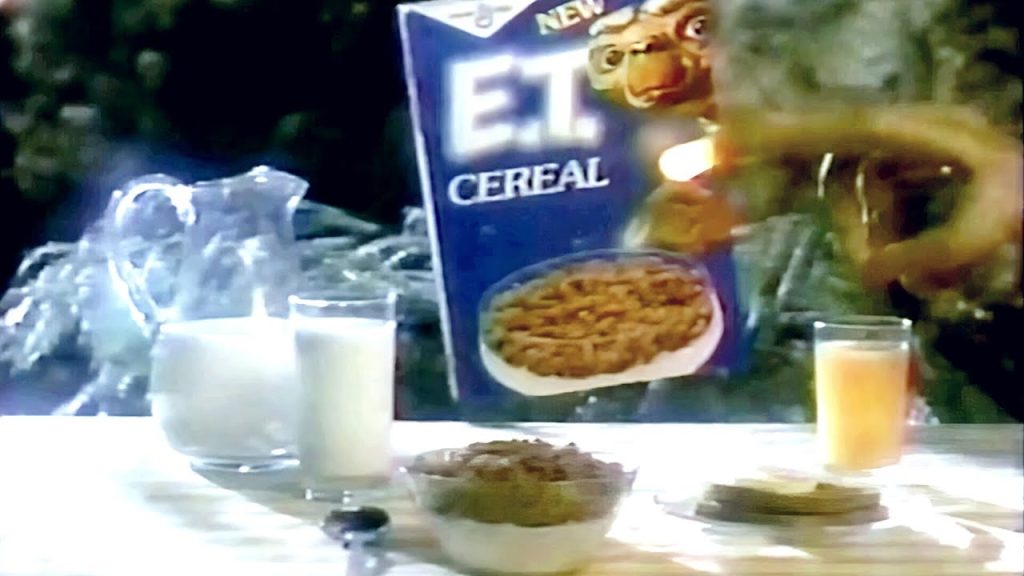
Now picture the whole scene. Cardboard box in your hands. Crinkly inner bag. Sweet chocolate-peanut-butter smell hitting first. Cold milk rushing over letter-shaped pieces. A quick search for a perfect “E” and “T” before your sibling got the best ones. That’s not just a bowl of cereal. That’s a micro-event before the school bus.
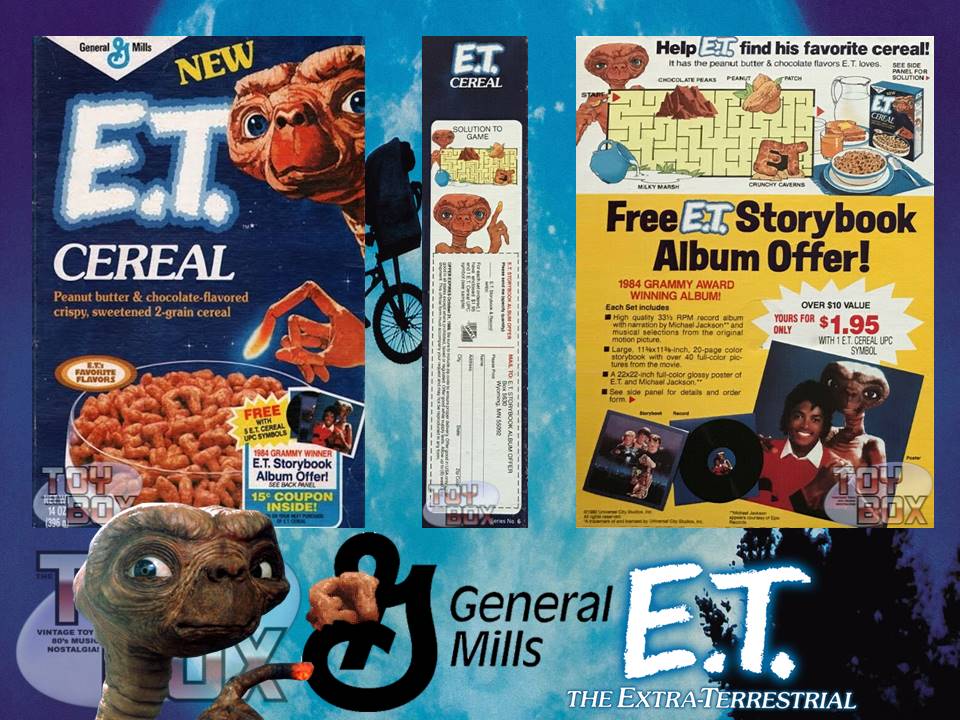
A look back at the cereal from The Toy Box leans into that same memory, the bowl packed with those letter bits, the kind of detail that lodges in your brain for decades. Maybe the cereal was amazing. Maybe it was only good. For most kids, that almost didn’t matter.
The point was access. The movie had followed you home, parked itself on the breakfast table, and waited for you beside the milk.
Why Movie-Themed Cereals Worked So Well in the 80s
Here’s the thing about cereal in the 80s: it had a built-in audience and a built-in ritual. Kids already cared about it. They already had opinions. Which brand? Which mascot? Which prize? Which box was worth begging for?
So when a movie character jumped onto a cereal package, the pitch didn’t have to fight for space. It slid right into a habit that was already there.
That made licensed cereals feel bigger than they were. You weren’t going to the theater every day. You weren’t getting a new toy every day. But you were probably wandering into the kitchen every morning. That’s where the hook sank in.
E.T. was especially strong as a breakfast mascot because the character carried emotion, not only recognition. He wasn’t cool in the action-hero sense. He was lovable, odd, gentle, and a little miraculous. Kids wanted to keep him around. A cereal box did that cheaply and constantly.
The era loved this kind of crossover. Cartoons sold snacks. Video games sold breakfast. Oversized novelty treats turned up everywhere. You can see the same spirit in other remembered shelf-grabbers, including Ghostbusters cereal, Nerds cereal, and that wave of Oreo Big Stuf nostalgia, where the product wasn’t only food. It was spectacle.
That was the secret sauce, if you’ll forgive the phrase. In the 80s, food packaging often doubled as entertainment. The box art shouted. Mascots mugged for attention. The back panel might as well have been a mini magazine. Even the flavors could feel like a story pitch.
E.T. cereal fit that world perfectly. It translated a blockbuster into shapes, sweetness, and shelf presence. It made the movie tactile. You could pour it, crunch it, and stare at it while cartoons played in the background.
Was it advertising? Absolutely.
Was it also fun? Come on, of course it was.
The Box Is Gone, but the Memory Hangs Around
One reason E.T. cereal still gets talked about is simple: cereal is disposable, but the memory isn’t. You crush the box, finish the bag, move on. Then 30 or 40 years later, one photo or one collector post brings the whole thing back in a rush.
That’s why nostalgia for breakfast foods hits so hard. They were ordinary, which means they were close to your actual life. Not the big birthday moments. Not the once-a-year trip. Tuesday morning. School clothes. A cartoon theme song in the next room. That stuff sticks.
Movie tie-in cereals also had short shelf lives by nature. They were tied to a promotional cycle, a moment, a season of excitement. Miss it, and it was gone. That scarcity gives them collector heat now, but it also explains why kids felt they had to try them then. Waiting around wasn’t part of the deal.
E.T. cereal gets an extra glow because the movie itself still carries such a strong emotional charge. It isn’t remembered as loud or aggressive. It’s remembered as tender, funny, and a little wistful. Attach that feeling to a sugary cereal and you get a memory that’s half taste, half atmosphere.
For collectors, the surviving box art, ads, and fan snapshots matter because they rescue small details that everyday life usually throws away. For everyone else, the appeal is easier to explain: this was one of those products that made childhood feel bigger than it was.
Not richer. Not more sophisticated. Bigger.
A bowl of cereal could hold a whole movie mood, at least for ten minutes before school.
Still Glowing in 80s Memory
E.T. cereal wasn’t memorable because it changed breakfast forever. It was memorable because it captured a very 80s promise, that your favorite movie could spill into the rest of your life and make even a weekday morning feel a little special.
That’s why kids had to try it. The letter shapes, the sweet flavor, the box on the table, all of it added up to a small burst of pop-culture magic. Some cereals filled you up. E.T. cereal gave you a story with the milk.