The 1980s Barbie Dream House felt like a real home because it gave Barbie somewhere to live between adventures. Separate rooms, movable furniture, and familiar household details made ordinary routines feel worth playing out.
For children who loved these houses, arranging dinner or putting Barbie to bed could be as absorbing as dressing her for a glamorous night out. The appeal was having a whole little household under your control, with considerably fewer rules about moving the sofa.
That feeling started with the house itself, especially the unmistakable A-frame.
80s Article Snapshot
•The A-frame associated with early-1980s play arrived in 1979, with three sections children could separate and rearrange.
•Familiar rooms and furnishings encouraged everyday stories, while the bold colors kept everything wonderfully Barbie.
•Collector prices depend on the specific house, condition, completeness, and packaging. Headline resale figures aren’t a dependable price guide.
Which Dream House Are We Talking About?
“Eighties Dream House” can describe several houses, including designs introduced before the decade began. That’s where memories, seller descriptions, and model histories sometimes get tangled.
A child might remember receiving a 1981 Barbie Dreamhouse at Christmas, even if the design launched earlier. A Christmas catalog reflects a selling season, not necessarily a launch date.
The Townhouse Came First
The 1974 Barbie Townhouse had three stories and a working elevator. Its cardboard backdrops supplied much of the setting, while the tall structure gave Barbie different floors to visit.
That elevator was an excellent little piece of theater. Moving between levels became something you could do, rather than something you had to imagine happening elsewhere.
The Townhouse already offered a household with a rhythm: upstairs, downstairs, another appointment with fabulousness.
The A-Frame Entered the Eighties
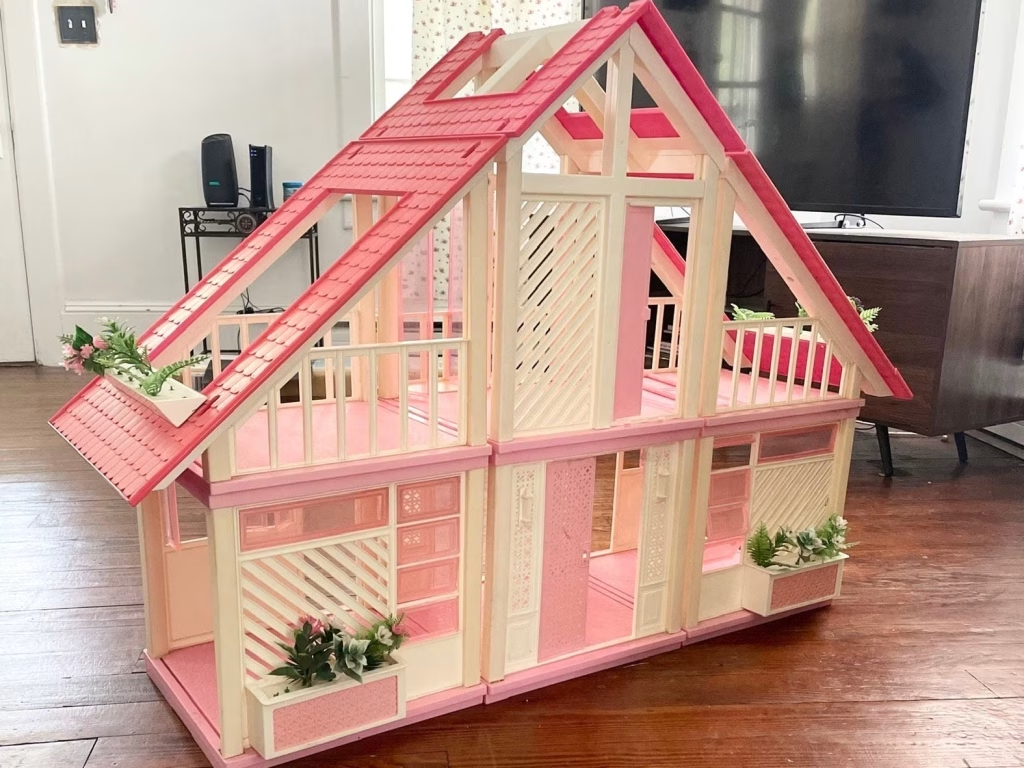
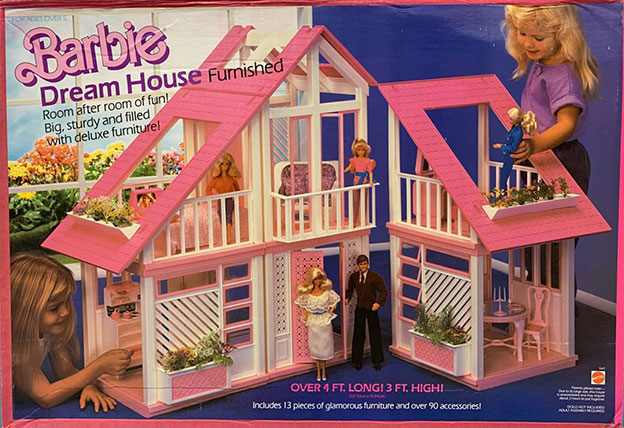
Design histories date the plastic A-frame to 1979. Its three fold-out sections could be separated and rearranged, giving children more say over how Barbie’s home occupied the floor.
That makes it an important distinction for collectors and nostalgic fans alike. A late-1970s introduction could still be somebody’s defining 1980s toy.
People’s Dreamhouse design timeline places these houses within a much longer history, beginning with the cardboard original in 1962.
The 1980s Barbie Dream House Made Everyday Life Playable
A convincing dollhouse needs places for things to happen. The house’s roomy, accessible arrangement gave children space to build those connections.
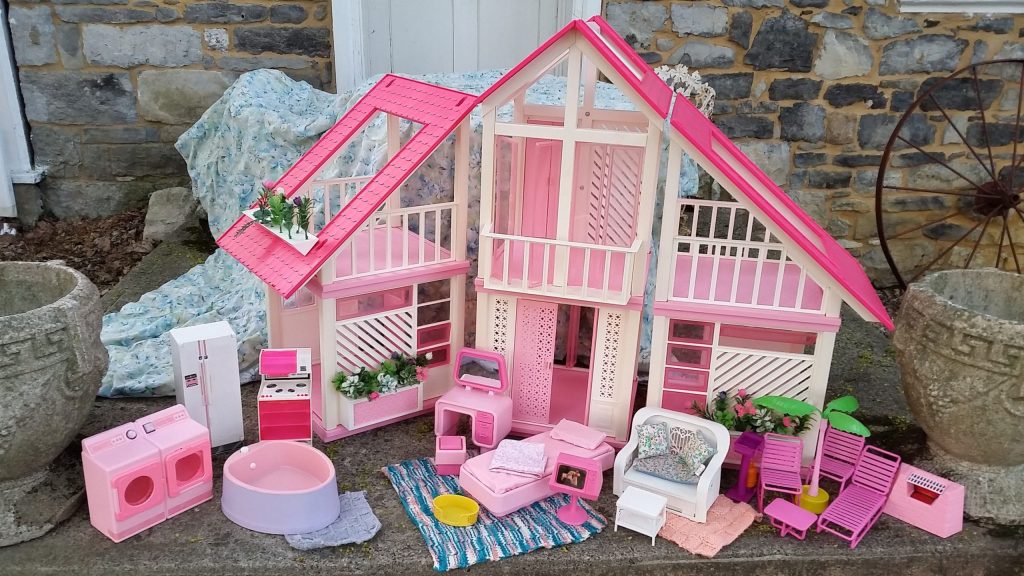
Furniture helped explain each area. A bed suggested bedtime. A dining table suggested a meal. Suddenly Barbie had a day ahead of her.
Rooms Gave the Stories a Routine
Different living spaces encouraged different kinds of play. Getting dressed, receiving visitors, eating, relaxing, and sleeping could each have their own setting.
Those activities were familiar even when Barbie’s wardrobe was considerably fancier than anything hanging in the family coat closet.
The house gave children a manageable version of adult independence. They could decide where someone sat, when a visitor arrived, and whether the bedroom needed another makeover.
Domestic drama, with excellent outfits.
Open Access Put You in Charge
The open dollhouse format mattered as much as the rooms. Children could reach into the scene, move a doll, shift a chair, and continue the story without taking everything apart.
Its separable sections added another possibility: changing the arrangement of the house itself.
That flexibility made decorating part of play. A room could be set up carefully, lived in for an afternoon, and rearranged before the next story began.
For children who enjoyed organizing miniature spaces, the decorating could become the main event. Barbie occasionally had to wait while her interior designer finished.
Bold Colors, Familiar Furniture, Tiny Domestic Drama
The house had personality before a single doll moved in. Its yellow walls, orange shutters, and brown roof gave it an instantly recognizable look.
It was bright enough for the toy aisle, but its roofline and household features still made sense as a house.
The Palette Had Some Suburban Swagger
The warm colors helped distinguish the familiar house from the overwhelmingly pink image often attached to Barbie houses today.
Brown roofing and orange shutters had a different flavor. A little suburban, a little vacation-house fabulous.
The result was recognizable architecture with the volume turned up. You could understand what kind of building it was while enjoying colors that demanded attention across a bedroom.
That balance helped the fantasy feel approachable. Barbie’s house could be special without looking entirely detached from everyday surroundings.
Furniture Made the Rooms Personal
The pieces gave children choices beyond where to stand a doll. A chair could face another chair. A table could become the center of a gathering.
Those relationships made the rooms feel occupied.
Original house contents, separately sold pieces, and later additions shouldn’t be confused, though. A lovingly furnished childhood house could contain pieces acquired over several birthdays.
The Sears Wish Book’s toy pages captured that expanding fantasy beautifully: the big house was one wish, and furnishing Barbie’s life could become several more.
Later Dreamhouses Turned Up the Spectacle
The 1980s house shouldn’t be remembered as a smaller copy of every later mansion. Its appeal depended heavily on architecture, arrangement, and the child’s own running commentary.
Later houses added more electronic household activity. WealthGang describes the 1990 Magical Mansion with working lights, a ringing telephone, and a musical fireplace.
A fireplace with its own soundtrack? Barbie had standards.
Pink also became more prominent, although it wasn’t a sudden 1990s invention. Architectural Digest connects Barbie’s stronger pink identity with the introduction of Superstar Barbie in 1977.
The history of successive Dreamhouse designs makes another point clear: Dreamhouse evolution involved distinct products, not one house receiving occasional cosmetic updates.
The cardboard original, vertical Townhouse, earlier plastic house, and later mansions offered different ways to play. Remembering those differences gives the eighties houses their own character, rather than treating the whole collection as one enormous pink blur.
What Are Vintage Barbie Dream Houses Worth?
The eye-catching prices deserve context. WealthGang’s roundup reports the following figures, but the underlying transactions, dates, and item conditions aren’t consistently documented.
These are reported examples, not current appraisals or independently verified auction results.
| House as identified in the roundup | Reported price |
|---|---|
| 1985 Barbie Dream House, as listed in the roundup | $3,500 |
| Magic Sounds House, listed as 1991 | $3,000 |
| Magical Mansion, listed as 1990 | $2,000 |
| Dream House, angled-roof example | $1,300 |
| Folding Dream House, listed as 1996 | $632 |
| New Dream House | $600 |
| Original 1962 Dream House | $580 |
| Dream Cottage, listed as 1982 | $384 |
| Victorian Dream House | $350 |
The 1985-labeled house and Magic Sounds House have the highest reported figures in that list. A headline figure alone doesn’t establish that a house is valuable or that these are the highest-value vintage houses on the market.
Nor does it make every surviving example worth thousands.
A complete boxed house and a loose structure missing doors are different purchases. So are an ambitious asking price and a documented completed sale.
For a useful comparison, match the model, included pieces, structural condition, and packaging. Three to ten recent comparable sales give you a better starting point than one spectacular number passed around the internet. On eBay, compare like-for-like completed listings and check the “Sold for” label. The model, condition, completeness, and sale date still matter.
And remember: shipping a dollhouse isn’t quite like mailing Barbie’s shoes.
Buying the House Without Buying the Hype
The best purchase depends on what you want. A display piece, a playable nostalgia project, and an unopened collector example each call for a different budget.
Our vintage toy buying guide follows the same principle: choose the kind of collection you’ll enjoy before paying for somebody else’s definition of perfection.
Identify the House, Then Count the Pieces
Useful identifiers include molded markings, product numbers where present, instructions, and original box artwork. Color alone isn’t enough when houses have accumulated replacement pieces over decades.
A molded copyright date doesn’t necessarily tell you when that particular example was sold.
The collector archive of Barbie playsets also shows why names matter: houses, sets, and related playsets form a much larger catalog than memory usually supplies.
A familiar-looking sofa doesn’t automatically belong to that house.
Condition Includes More Than Clean Walls
Inspect connections, roof sections, doors, windows, discoloration, and repairs. For houses with moving or electronic features, their working condition belongs in the price comparison.
Completeness includes the easily overlooked pieces: railings, set components, instructions, and original packaging inserts. Verify a seller’s “mint condition” claim by checking completeness and structural condition yourself.
Replacement parts can improve a display, but they shouldn’t be priced as original accessories.
Add shipping, tax, any buyer’s premium, and missing parts to the purchase price. A clean, mostly complete house may deliver much more pleasure than a cheaper shell with an expensive renovation ahead.
Frequently Asked Questions
How Much Did a Barbie Dreamhouse Cost in 1980?
A dependable, model-specific 1980 retail price isn’t established in the available accounts. Prices attached to another year or a different house shouldn’t be presented as the answer.
That distinction matters because “Barbie Dreamhouse” covers several designs, not one unchanged product.
How Much Is an Original Barbie Dreamhouse Worth?
The original 1962 house was a cardboard fold-out studio apartment. WealthGang reports a $580 example, but that figure isn’t a universal valuation.
Surviving cardboard condition, original furniture, completeness, and packaging all affect how comparable one example is to another.
Is a Vintage Dream House Worth the Money?
For a nostalgia display, a clean, played-with house can be a satisfying purchase. Collector-grade packaging adds cost without necessarily adding anything to the scene you want to arrange.
If you plan to handle it, prioritize sound construction and useful completeness over a pristine box.
A Little House With Room for Your Imagination
The 1980s Barbie Dream House made everyday life feel worth staging. Rooms supplied the setting, furniture supplied the possibilities, and children decided what happened next.
For the fans who connected with it, that freedom to arrange a life was a big part of the affection.
The roof was plastic. The decorating decisions were serious. And somewhere between moving a chair and putting Barbie to bed, the house could start to feel like home.