Sectaurs toys gave kids something gloriously strange: armored insect warriors riding giant bugs they could operate by hand. Coleco released the action figures in spring 1985, and their big, detailed designs looked ready to march straight off a fantasy paperback.
The catch? These creatures demanded serious birthday money.
Their Hands-In-Action design made each creature a puppet kids could control with their hands. That feature made the toys unforgettable, even though the original line disappeared fast. To understand their cult appeal, start with the bugs, the battles, and that confusing 1984 stamp.
80s Article Snapshot
•Coleco’s retail launch came in spring 1985, despite the toys’ 1984 copyright markings.
•Large figures, creature companions, and hand-operated puppet features gave Sectaurs their personality and higher price.
•Today’s collectors prize complete accessories and working features; the 2018 Kickstarter and later licensed revivals are separate from the original toy line.
Sectaurs Toys Arrive on Symbion
The 1984 Stamp, Explained
That 1984 date on an old figure can send you down the wrong toy-aisle memory lane.
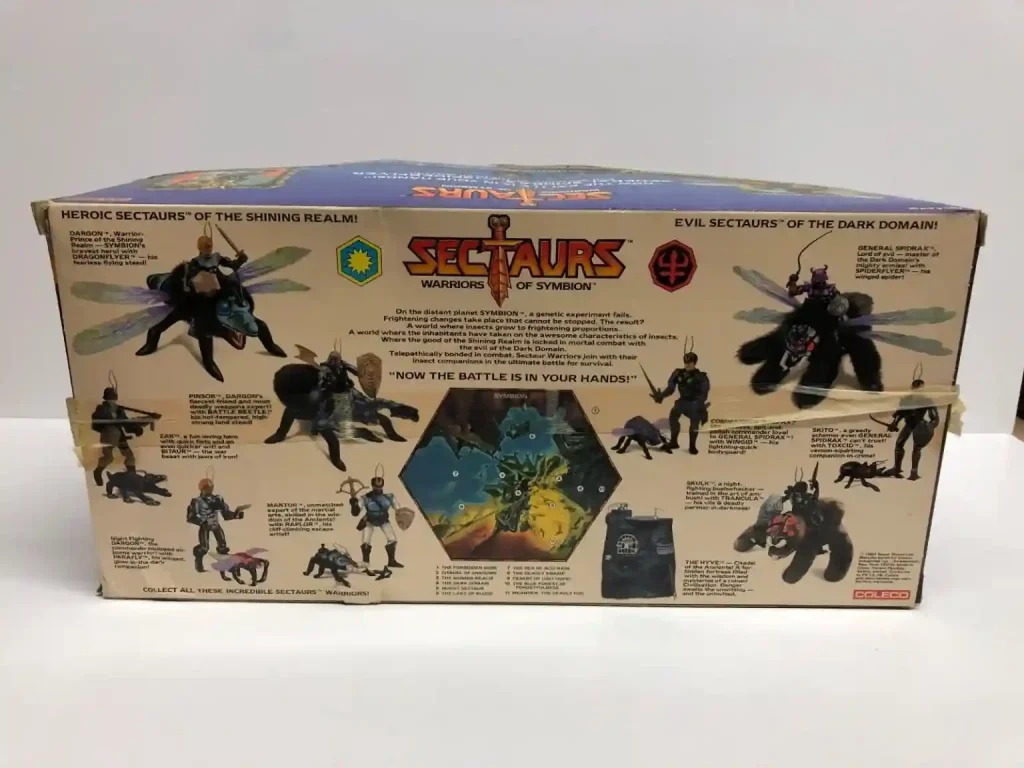
Coleco’s figures reached stores in spring 1985, as the Sectaurs toy history records. Copyright dates can come before a toy’s retail arrival, so the stamp doesn’t establish a 1984 store release.
Nine pack-in mini-comics are also dated 1984. They’re part of the franchise’s early publishing history, not proof that the full figure range was already on shelves.
Good Guys, Bad Guys, Very Big Bugs
Created by Maureen Trotto, Tim Clarke, and Larry Mass, Sectaurs takes place on Symbion, where a failed genetic experiment produced insect-influenced life.
Prince Dargon led the heroic Shining Realm. Empress Devora ruled the evil Dark Domain, with General Spidrax supplying plenty of front-line menace.
The humanoid warriors formed telepathic bonds with non-humanoid insectoid creatures called Insectoids. Each action figure had a personality, a weapon, and a giant bug companion.
That was a pretty persuasive introduction.
Hands-In-Action Made the Creatures the Stars
Your Hand Powered the Adventure
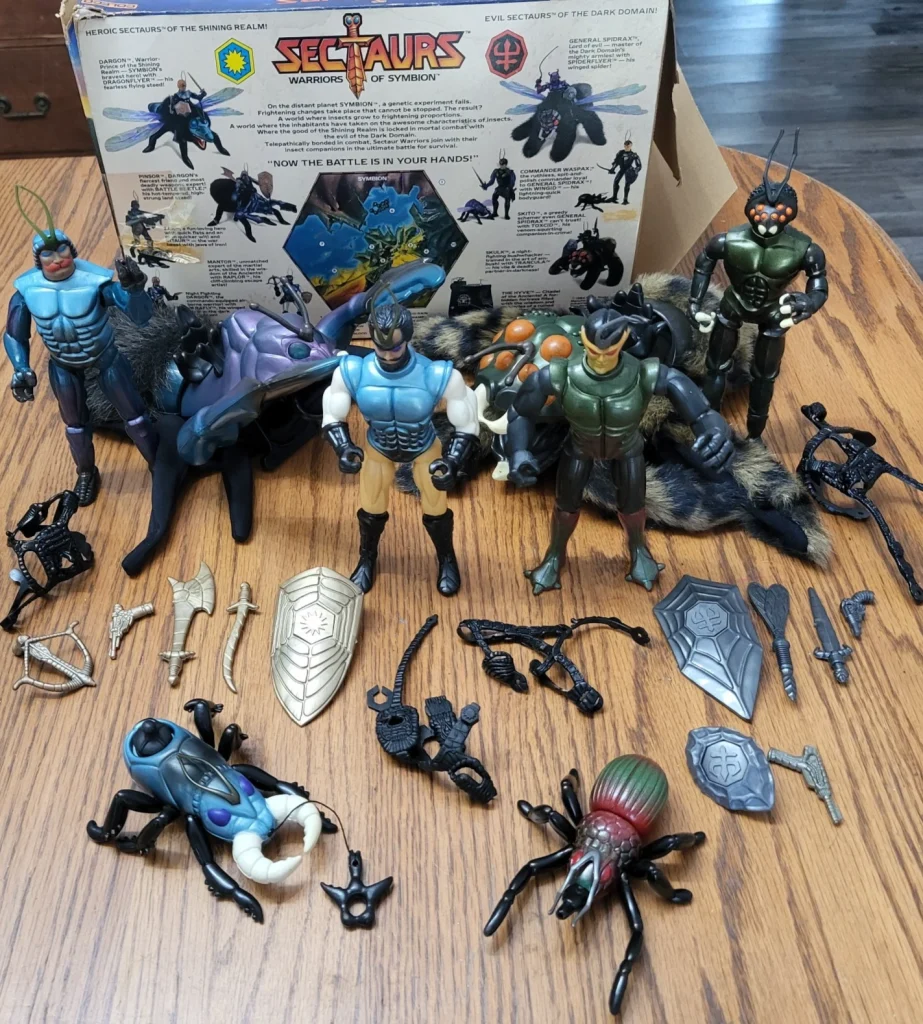
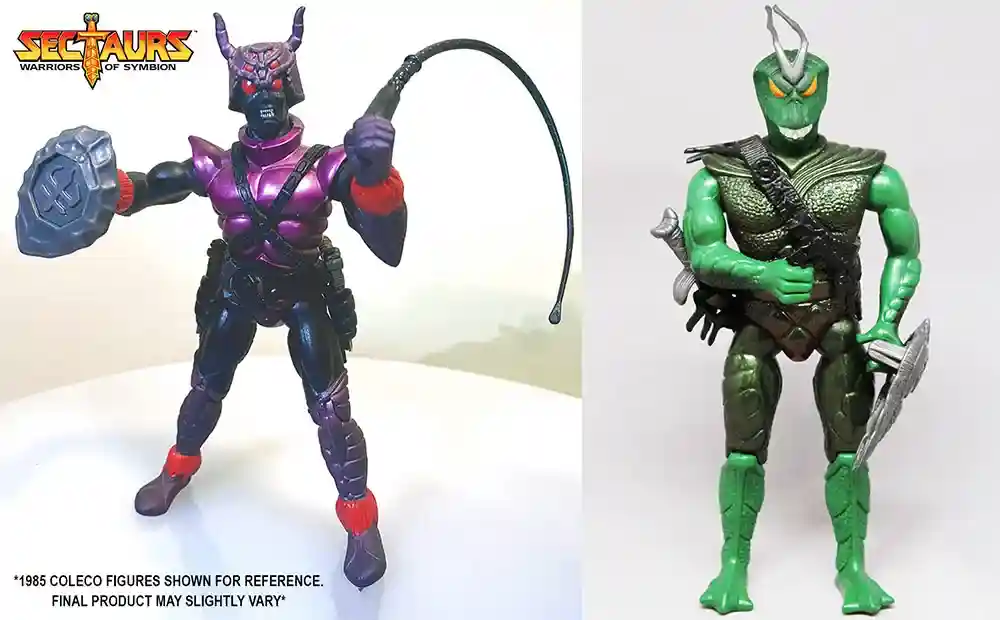
The approximately 7-inch warriors had muscular bodies, insect-like eyes, textured armor, and plenty of shelf presence. But the oversized creatures stole the show.
Coleco called their signature feature Hands-In-Action. Kids slid their hands into the large ride-on Insectoids and used each as a puppet, moving its legs, mandibles, or wings depending on the creature.
A mount could scuttle into battle instead of sitting there while you supplied every movement.
The appeal was wonderfully physical. You could feel the creature move because you were making it happen.
Steeds, Action Bugs, and Battle Bugs
The creature categories described different play jobs.
Steeds were large enough for warriors to ride. Action Bugs concentrated on a single button- or crank-operated feature. Battle Bugs carried an artillery weapon with a rider seat.
Those categories shouldn’t become a shortcut for identifying original releases. Planned products also appear in Sectaurs material, and a creature pictured in development artwork wasn’t necessarily sold.
For collectors, the distinction matters. For kids, the headline was simpler: your army had bugs with equipment.
The Original Figure-and-Creature Checklist
These are the core Coleco action figures and their character pairings, including Dargon’s second outfit.
| Warrior | Creature companion |
|---|---|
| Dargon | Dragonflyer |
| Night Fighting Dargon | Parafly |
| Pinsor | Battle Beetle |
| Zak | Bitaur |
| Mantor | Raplor |
| General Spidrax | Spiderflyer |
| Commander Waspax | Wingid |
| Skito | Toxcid |
| Skulk | Trancula |
Night Fighting Dargon is a separate release to watch for, not another character hiding behind a familiar face.
The range also included the Power Cycle vehicle and the Hyve playset. Weapons, shields, harnesses, and other included pieces matter when comparing similar listings.
The abandoned second wave included Bodyball, Nuckles, and Bandor. Creepers such as Snagg and Ax-Back were planned but never released during Coleco’s original run.
They’re part of the line’s unfinished story, not ordinary retail figures you somehow missed at Christmas.
The Hyve Was a Bedroom-Sized Battle Plan
The Hyve belonged to that wonderful category of 1980s playset that made the surrounding furniture look like supporting scenery.
One of the decade’s largest, the Hyve packed in a wrecking ball, Skalibur turret gun, ladder, cage, and collapsible bridge. There were places to climb, prisoners to rescue, and structures to destroy before dinner.
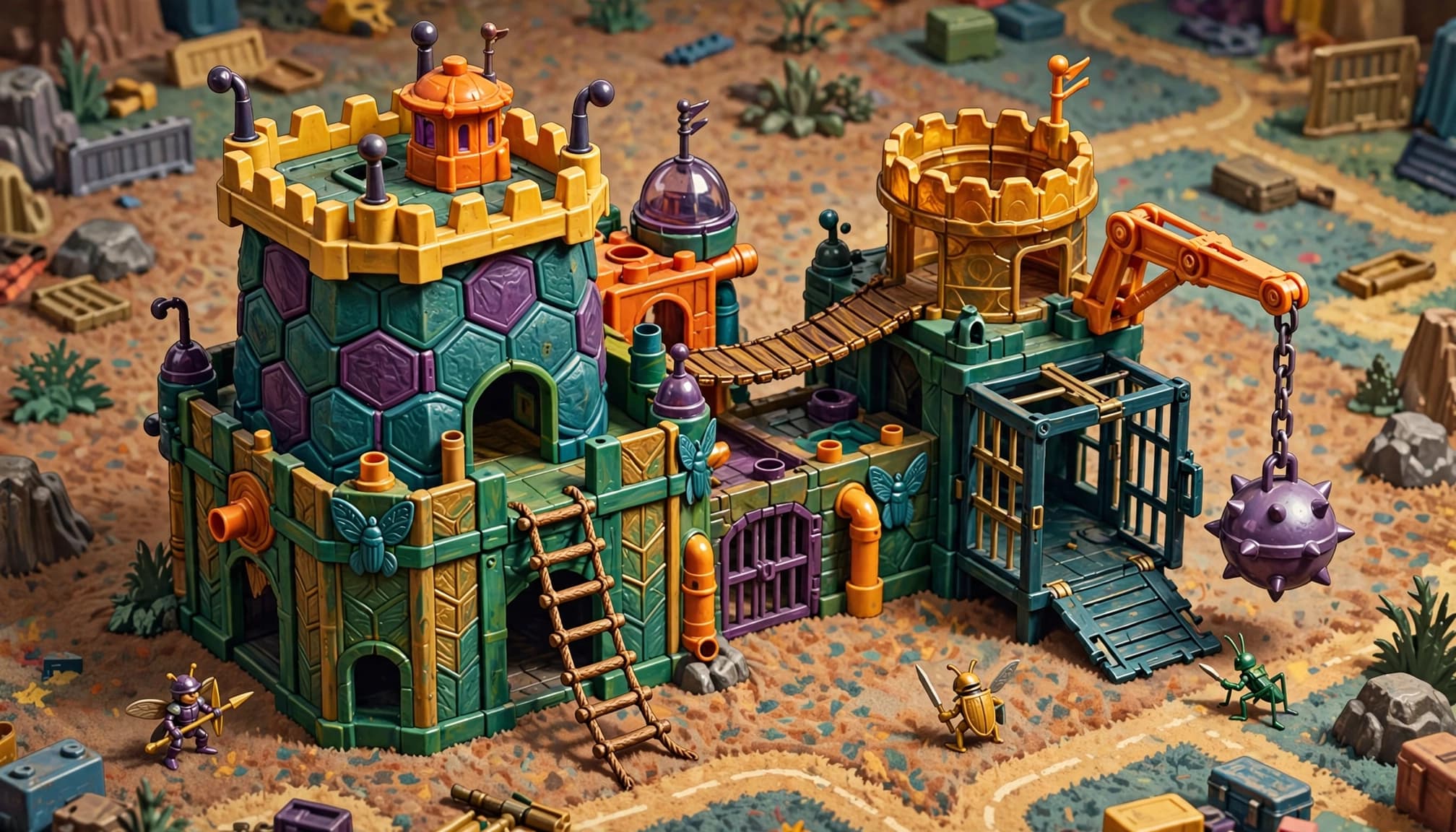
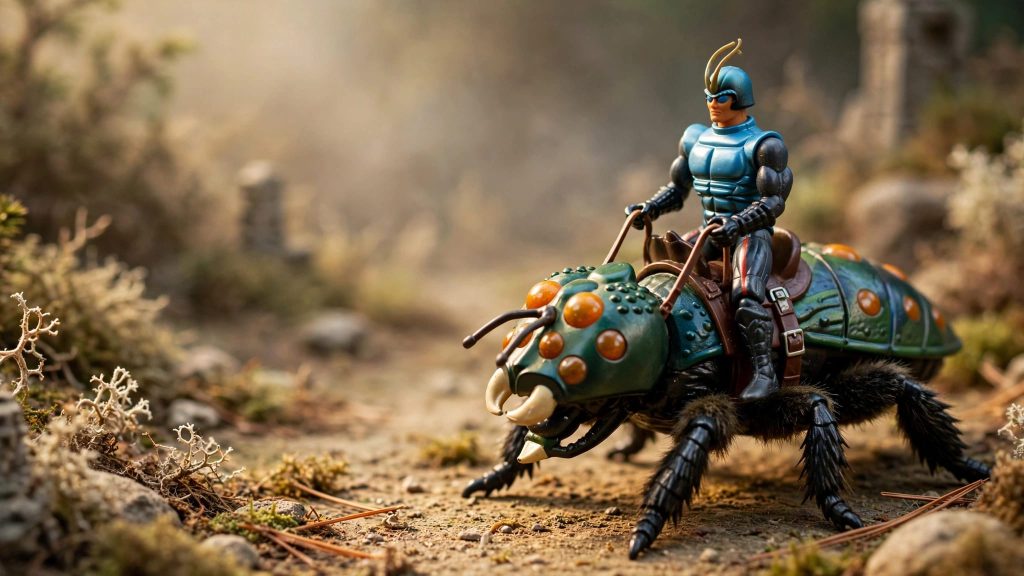
An imagined insect fortress captures the toy’s oversized scale.
Its appeal came from giving the figures somewhere to do all that dramatic posing. A warrior on a shelf looked impressive. A warrior charging across a collapsing bridge had a problem.
Today, the Hyve’s generous accessory count creates a collector challenge. A surviving fortress shell and a complete set are two different purchases.
The Cartoon and Comics Told Their Own Stories
Five Episodes of Animated Adventure
Ruby-Spears produced a five-episode animated series in 1985, with music by Shuki Levy and Haim Saban.
Five episodes gave the warriors voices, but they had far less television time than G.I. Joe or Transformers.
The Sectaurs franchise history distinguishes the cartoon from the toy range and its publishing offshoots. They’re connected parts of the property, with different release histories.
The toys supplied creatures you could touch. Television supplied the dramatic speeches.
Both had their uses on a rainy afternoon.
Marvel Gave Symbion More Room
Marvel published an eight-issue Sectaurs comic series between 1985 and 1986, written by Bill Mantlo.
The full-sized Marvel issues are separate from the nine miniature comics associated with the toys. The pack-ins introduced characters and adventures inside the purchase, a familiar part of 1980s toy packaging.
For collectors, the Marvel numbered series and the toy-packaged mini-comics are different targets.
A listing that says “includes comic” needs a closer look.
Why Sectaurs Couldn’t Hold the Toy Aisle
The price made these bugs a harder sell.
A basic figure cost nearly twice as much as a Masters of the Universe figure, and about two and a half times as much as a G.I. Joe figure.
The larger bodies, detailed sculpting, creature companions, and mechanical features explain the premium. They also explain why a parent comparing packages might reach for something smaller.
Sectaurs entered an aisle already crowded with established heroes, including G.I. Joe. Its short animated run gave it less time to become a weekly habit, while ambitious products required families to make bigger purchases.
There isn’t a dependable published sales total that reduces the whole story to one neat number.
Coleco’s wider financial troubles made matters worse. The company filed for bankruptcy in 1988, after the line had already lost momentum. That collapse closed off the prospect of a sustained Coleco-backed comeback.
The unreleased designs were left with nowhere to go.
The Comebacks Kept Symbion Alive
A 2018 Kickstarter campaign sought to restart the franchise, proof that those strange old warriors still had people rooting for them.
It was a fan-led Kickstarter effort, separate from the later licensing deal.
In 2022, rights holder Seven Towns Ltd. reached a long-term agreement with The Nacelle Company. The Seven Towns agreement covered new figures and plans for animation.
The 2022 licensing announcement from Seven Towns described an animated series in development. The project wasn’t the 1985 Ruby-Spears miniseries, and it hasn’t been released.
Nacelle’s initial figure offerings included a 7-inch Dargon and 6-inch Stelara, with modern articulation and vintage-inspired styling.
Publishing returned, too. Oni Press released a three-issue miniseries in 2024 and 2025, written by Dennis Culver and illustrated by Ramon Bachs. Unlike Marvel’s earlier series, it joined the publisher’s NacelleVerse comics lineup.
These are later chapters, separate from Coleco’s original toys and Marvel’s original comics.
Collecting Sectaurs Without Getting Stung
Condition Includes the Puppet
Original Sectaurs toys have become cult collectibles, especially among fans who remember their oddball creature features. But a handsome warrior doesn’t tell you whether its companion still works.
Inspect flexible puppet sections for tears, stiffness, deterioration, and repairs. Moving wings, legs, and mandibles deserve attention, along with saddles, straps, joints, and attachments.
Ask for photographs that show the underside and working parts, rather than accepting one flattering front view.
For the Hyve, compare the included accessories with the original contents. Missing bridge pieces or a turret can turn a tempting purchase into a lengthy parts hunt.
A complete-looking creature can still be missing the working feature that made it special.
Prices Depend on What Survived
Recent online asking-price snapshots include loose figures around $10 to $40. Those are seller requests, not verified sale values or a fixed price guide.
Complete creature sets, boxed examples, and surviving paperwork can attract higher asking prices. Obscurity alone doesn’t guarantee value, though. Scarcity needs interested buyers.
Use several comparable completed sales when setting a budget. Match the character, condition, original gear, and packaging, then add shipping and replacement parts.
Our advice on buying vintage toys without overpaying applies here: decide whether you want a nostalgic display or a complete collection before the first tempting auction.
One beloved bug warrior can be plenty.
Frequently Asked Questions
Was There a Sectaurs Cartoon?
Yes. Ruby-Spears made a five-episode animated series in 1985. It was a short television production, rather than a long-running weekly series with multiple seasons.
Are the Unreleased Figures the Rarest Ones to Buy?
Unreleased designs aren’t normal retail collectibles. A claimed prototype needs documented provenance, and a modern custom isn’t an original production sample. Keep those categories separate before paying a premium for an unfamiliar character.
Are Modern Figures Coleco Originals?
No. Licensed revival figures are later products. Their release history, construction, accessories, and collector market are separate from the 1985 Coleco range.
The Bugs Earned Their Following
Sectaurs gave kids a wonderful combination: expressive warriors, oversized creatures, and play features that put the action directly in their hands.
The prices were tough, and the original run was short. But working Insectoids still capture what made the line special.
For a nostalgia shelf, start with the pairing you love. Sometimes one giant bug brings back the whole toy aisle.