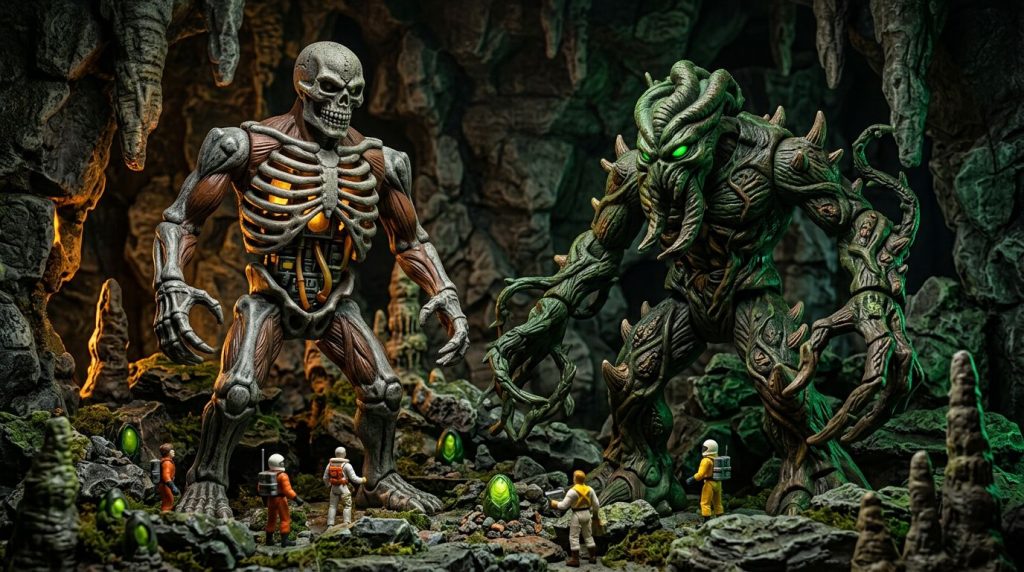
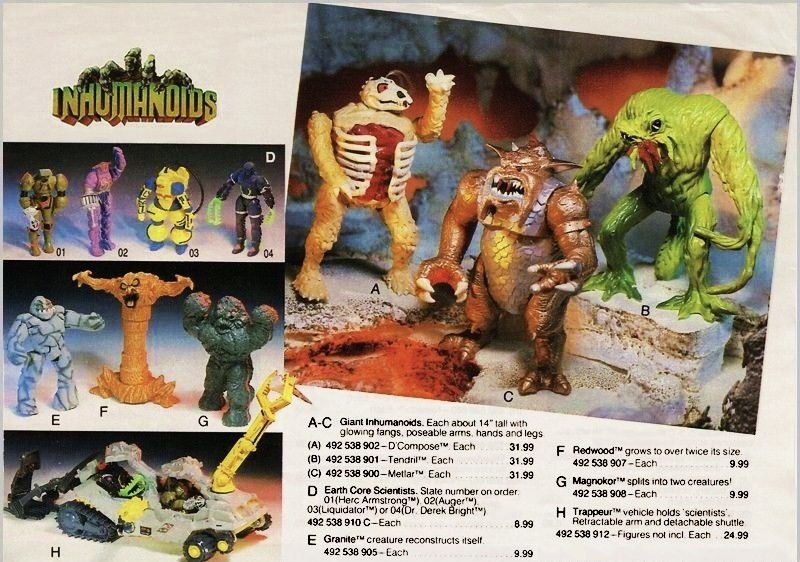
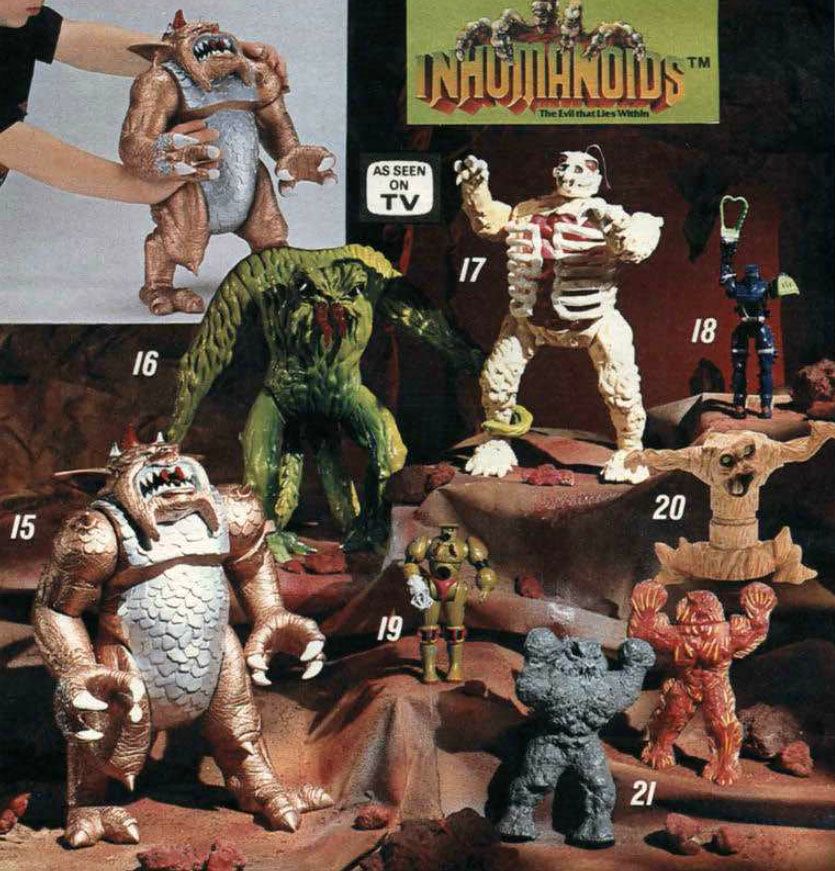
Inhumanoids toys were Hasbro’s 1986 invitation to put enormous, gloriously gruesome monsters on your bedroom floor. Based on the cartoon of the same name, the line paired underground creatures with scientist-heroes who looked positively snack-sized beside them.
An opening rib cage? Glowing eyes? A removable rock shell? I have to admire the confidence, but today’s collectors need to pay as much attention to condition as creature appeal.
Let’s meet the monsters, their wonderful gimmicks, and the aging parts hiding behind those auction photos.
80s Article Snapshot
•The oversized monsters are the main attraction, but working mechanisms and original parts matter when buying.
•Decompose needs special attention around its legs and rib cage, while Tendril’s rubber parts deserve close inspection.
•Original retail estimates aren’t current collector values. Compare closely matched completed sales, including packaging, condition, and completeness.
Inhumanoids Toys Went Full Creature Feature
Hasbro released the Inhumanoids action figure line and cartoon in 1986, with a premise practically built for bedroom-floor adventures: scientists exploring a world beneath the Earth, where the neighbors had teeth. Lots of teeth.
The Earth Core heroes supplied the human scale. The monsters supplied the reason your parents wondered what, exactly, you were watching.
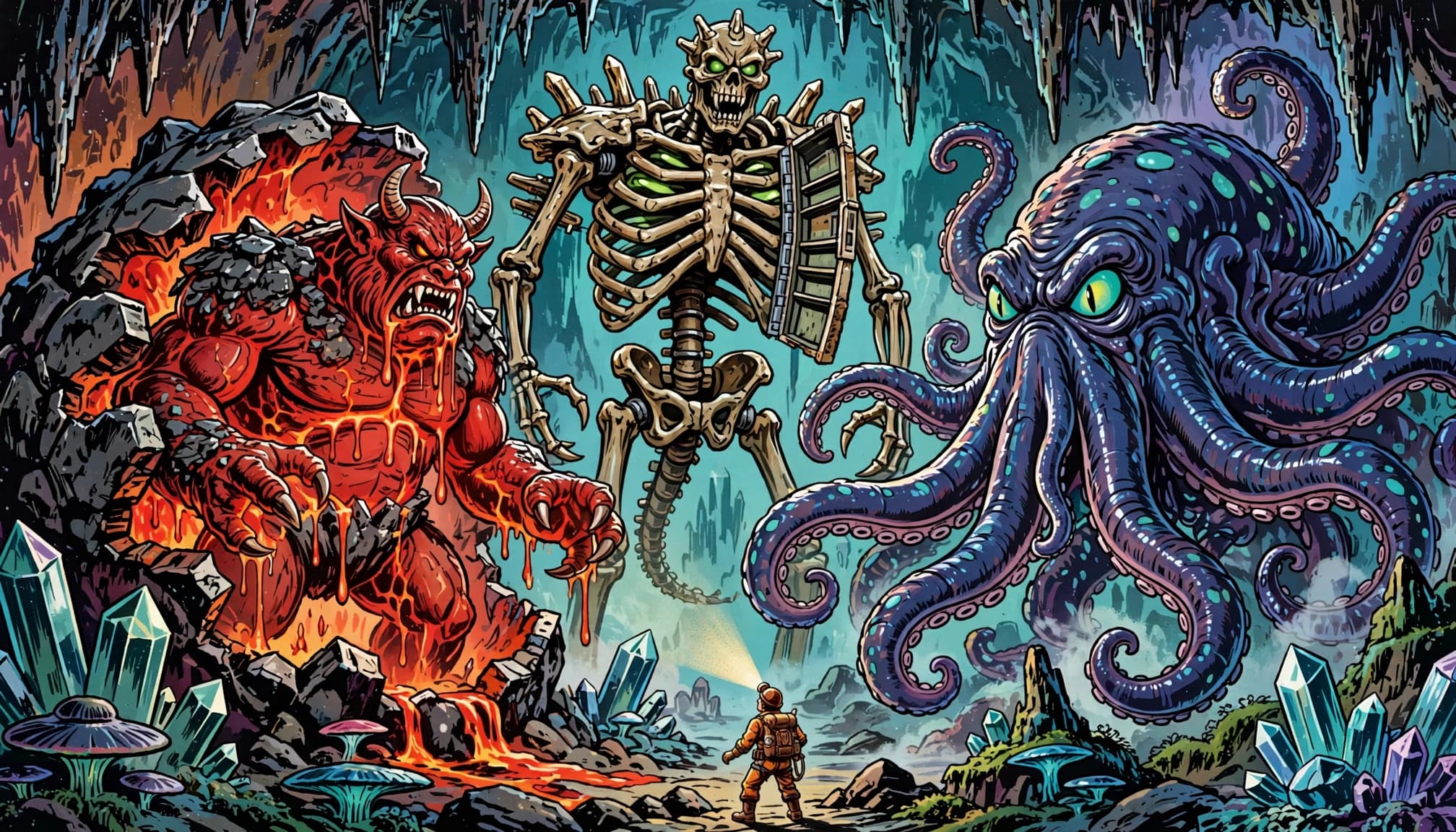
There was something wonderfully excessive about the whole thing. Where other action figures needed vehicles or playsets to dominate a room, these creatures could do it standing still.
The same decade gave us the Madballs gross-out craze, so monster-loving kids had options. Inhumanoids took that appetite for the bizarre and gave it towering legs, grabby arms, and a subterranean address.
Metlar and Magnacore: An Underground Grudge Match
Metlar, the Monster in Charge
Metlar is the leader of the Inhumanoids, with the hulking presence that job description demands. His story also gives collectors a reason to look beyond the three headline monsters: he’s trapped in Magnacore’s magnetic field.
That relationship makes the pair especially satisfying together. You get the big villain and the character tied directly to his imprisonment.
For a loose Metlar, focus on paint wear, cracks, joint condition, and whether the figure stands as pictured. A dramatic sculpt can distract you from an awkward lean. The listing photo should show the whole figure, including its feet.
Magnacore’s Removable Rock Shell
Magnacore splits into a molten core and an outer rock shell. The shell pops apart at its seam and remains a separate piece.
That last detail matters. This removable-component toy is incomplete if its shell is missing.
The shell isn’t a second fully articulated warrior. Its appeal is the reveal: rocky exterior outside, fiery-looking character inside. Very 1986, very theatrical.
Look closely at the seam and attachment areas. A shell that appears present in one photograph can still have damage hidden along its edges.
Decompose and Tendril: Big Monsters, Different Problems
Decompose’s Rib Cage Steals the Show
Decompose, also styled D’Compose, stands about 13.5 inches tall. He’s a skeletal nightmare with one of the line’s most memorable features: a rib cage that opens and closes through levers.
Yes, a smaller Earth Core toy can fit inside. Securely? That’s another story. The cage holds those figures loosely, so don’t expect a snug prisoner compartment.
His size also disguises a relatively flimsy build. Hollow plastic construction makes Decompose less substantial than that enormous silhouette suggests.
The legs are prone to popping out of their sockets. His feet can sit unevenly, too, which leaves him vulnerable to losing balance.
For collectors, clear photographs should show both legs seated, the feet resting on a flat surface, and the cage open and closed. One handsome front view doesn’t tell the whole story.
The monster has presence. The engineering deserves its own inspection.
Tendril Takes Over the Shelf
Tendril measures about 14.5 inches to the shoulders and roughly 16 inches across with the arms spread. That’s a serious chunk of display space before anything else joins him.
His arms, legs, and trailing extensions use soft rubber. Wonderfully creature-like in appearance, wonderfully good at gathering dust and hair in storage.
Inspect those parts for splits, sticky residue, hardening, and distortion. Surface dirt and damaged material are different problems, even when both look unpleasant in a listing.
Poseability comes through those sprawling, flexible parts rather than the elaborate joint systems modern collectors might expect. The silhouette does much of the work.
And what a silhouette. Tendril looks ready to occupy an entire shelf and charge the other figures rent.
Redlen, Granok and the Smaller Heroes
Redlen Brings the Forest Underground
Redlen, sometimes written Redlin, is the tree warrior figure that extends upward and twists. That expanding action gives a fairly simple character a little extra stage presence.
The tree warriors share a similar appearance in different colors, so color alone doesn’t tell you everything about an example’s identity or condition.
Look at the sculpt, moving sections, paint, and molded markings together. For character identification, the Inhumanoids toy reference helps put these supporting figures in context.
The appeal here is tactile and immediate: a tree creature that grows taller in your hands. Fancy? Hardly. Effective? Absolutely.
Granok and the Human Scale
Granok is a rock warrior that flexes through rubber-band construction. Articulation is limited, with the movement centered on that flexible assembly.
An intact-looking example may still have tired internal bands. Ask for photographs showing how its parts sit together, rather than assuming every gap is part of the design.
Then there are Dr. Derek Bright and the other Earth Core members. They’re much smaller than the enormous Inhumanoids, which makes the confrontation work beautifully on display.
Beside Decompose or Tendril, a human figure immediately explains the scale. Suddenly that monster isn’t merely big. It’s somebody’s very bad afternoon.
Glowing Eyes and Old-School Monster Movement
The Inhumanoids’ glowy eyes use light-piping. Clear plastic in the head carries light through to the eyes, creating that eerie illuminated effect.
The position of the light matters, so an auction photograph with dark eyes doesn’t automatically establish damage. You also want a clear view of the transparent plastic and surrounding head.
Movement throughout the line is more about character-specific tricks than endless posing options. Think opening, extending, twisting, and flexing.
That makes a video review of the entire line useful when you’re learning how the parts move. A still photo can show a beautiful monster without showing whether its defining feature works.
The gimmicks are a big part of the charm. They’re also part of what you’re paying for.
Buying Vintage Inhumanoids Without the Regret
A vintage Hasbro purchase should leave you smiling, rather than discovering a missing shell after the parcel arrives.
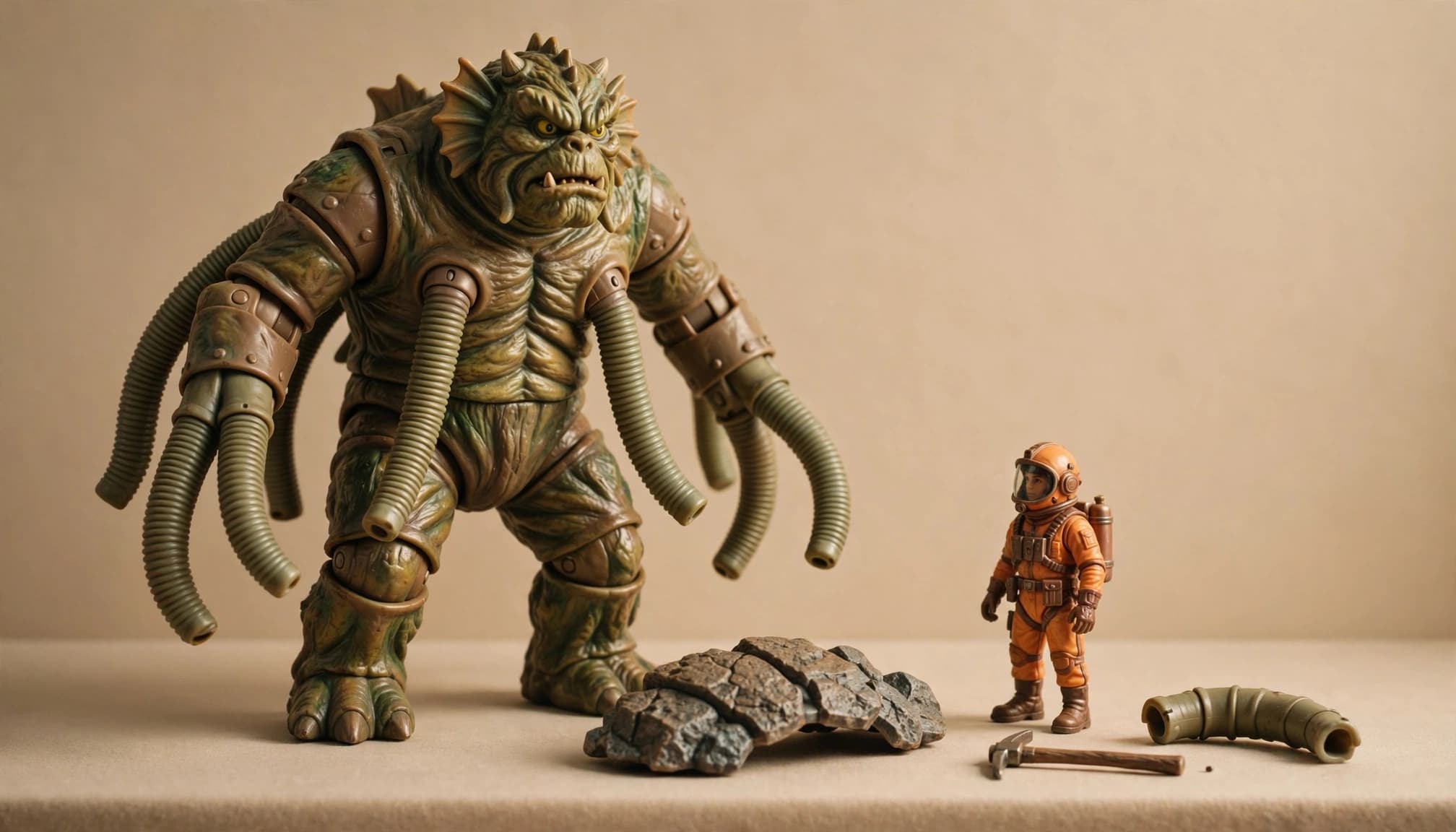
Keep the inspection focused on the actual figure and everything included:
- Request front, back, face, feet, molded date stamp, and country-of-origin photographs, plus close-ups of removable pieces.
- For Decompose, look at the leg sockets, standing position, rib-cage levers, and cage panels.
- Examine Tendril’s rubber extensions, Magnacore’s shell seams, and Granok’s flexible assembly for visible deterioration.
- With packaged examples, inspect every side, corners, seals, tape, trays, bubbles where present, and included paperwork.
Ask whether anything is repainted, repaired, reproduced, or replaced. A replacement piece can make a display enjoyable, but it shouldn’t be priced as an untouched original.
Yellowing, cracks, and sticky material aren’t erased by the phrase “excellent vintage condition.” Neither is a different country mark proof of rarity.
Our guide to buying vintage toys without overpaying follows the same principle: judge the whole purchase, not the most flattering photograph.
Once home, keep aging rubber away from direct sunlight, excessive heat, and crushing storage. Avoid solvents and mystery restoration treatments. If material is sticky or breaking down, a conservator’s advice beats an enthusiastic kitchen experiment.
What Makes Inhumanoids Toys Valuable?
Condition, completeness, demand, and surviving packaging do the heavy lifting. An obscure name alone doesn’t create a valuable collectible.
Approximate original retail figures are about $10 for Metlar and $20 to $30 for Decompose, based on a reviewer’s recollection rather than a contemporary price record. Those estimates belong to the line’s early retail history, not today’s resale market.
Boxed and complete examples carry steep asking prices on resale sites, and sold-out catalogue entries are common. Neither establishes the value of the figure sitting in your hands.
A “sold out” label doesn’t tell you when a toy sold or what the buyer paid.
For a useful comparison, match the character, condition, original components, and packaging across several recent completed sales. Separate sealed examples from opened ones.
“Loose complete” should mean the original included parts survive. “Boxed” means packaging is present, but doesn’t promise an untouched figure or pristine cardboard.
MIB means mint in box. MISB means mint in sealed box. MOC means “mint on card” and describes a carded package; it’s not interchangeable with MIB or MISB. The photographs and description still need to support those terms.
Finally, include shipping, tax, auction premiums, and any missing components in your budget. A giant monster can come with a surprisingly giant delivery bill.
Frequently Asked Questions
Which Inhumanoids Figure Is Easiest to Stand?
Tendril is generally the easiest of the three large monsters to stand upright. That makes him an appealing display choice, provided his rubber parts are in good condition.
He still needs generous shelf space. Measure both the available height and width before giving those sprawling arms a permanent address.
Is an Unboxed Figure Worth Collecting?
Absolutely. A clean, mostly complete loose figure can deliver plenty of nostalgic pleasure without the extra cost and storage demands of packaging.
Choose according to what you enjoy. If your goal is seeing that magnificent monster on a shelf, a worn box may matter less than intact parts and working features.
Give the Monsters a Worthy Shelf
Inhumanoids toys still have that glorious toy-aisle nerve: enormous creatures, strange materials, and play features you remember decades later.
Buy for the character you love, then let condition and completeness guide the price. A working rib cage or surviving rock shell matters more than a breathless “SUPER RARE” headline.
These monsters already have enough personality. They don’t need auction hype to earn their place.