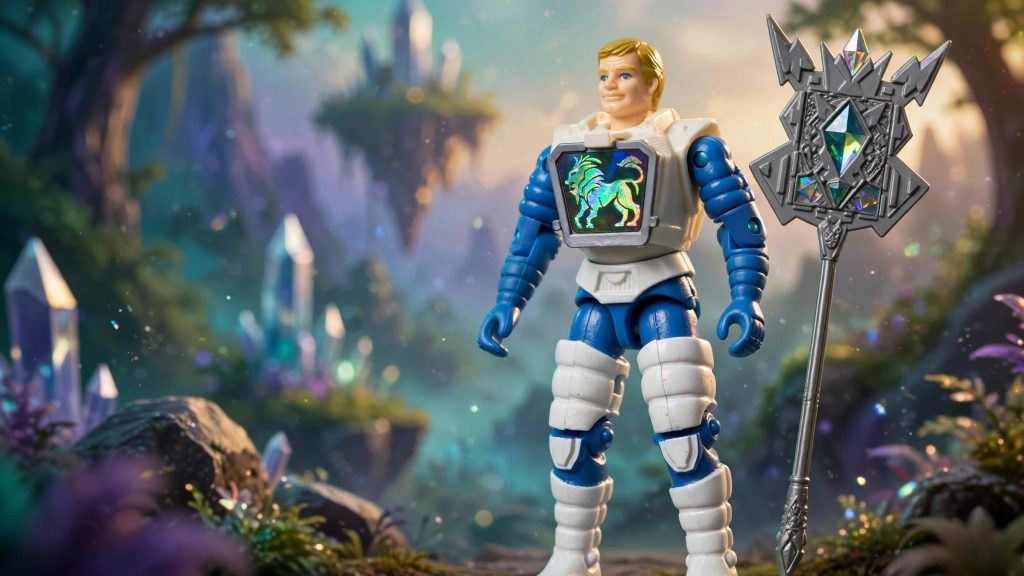
Tilt the knight, and suddenly his chest seemed to hold something bigger than plastic.
Visionaries toys gave us armored action figures, animal identities, and holograms that shimmered into view when the light hit right. The trick was angle-sensitive imagery, with no batteries required and enough mystery to keep you turning the figure in your hands.
Hasbro’s 1987 fantasy line lasted one wave, but that little flash of magic earned a much longer memory. Let’s put those knights back under the light.
Key Takeaways
- Visionaries toys used angle-sensitive holograms that changed in brightness, color, and apparent depth as the light or viewing angle shifted. The figures stayed in knight form; the chest images showed their animal identities.
- Hasbro’s 1987 wave included 12 figures and four vehicles. Eight figures sold individually with power staffs, while four came as vehicle drivers.
- The story takes place on Prysmos, where three suns align and technology stops working. The 13-episode cartoon showed the knights’ animal transformations, which the toys did not perform.
- Collectors should check holograms, accessories, and vehicle parts. The planned 1988 follow-up never reached retail, so prototypes and catalogue images aren’t part of the released toy checklist.
Why Visionaries Toys Changed With the Light
The holograms were the main attraction. A knight could have a handsome helmet and a perfectly respectable weapon, but that glowing animal on his chest? That was the sales pitch.
The Animal That Appeared Inside the Armor
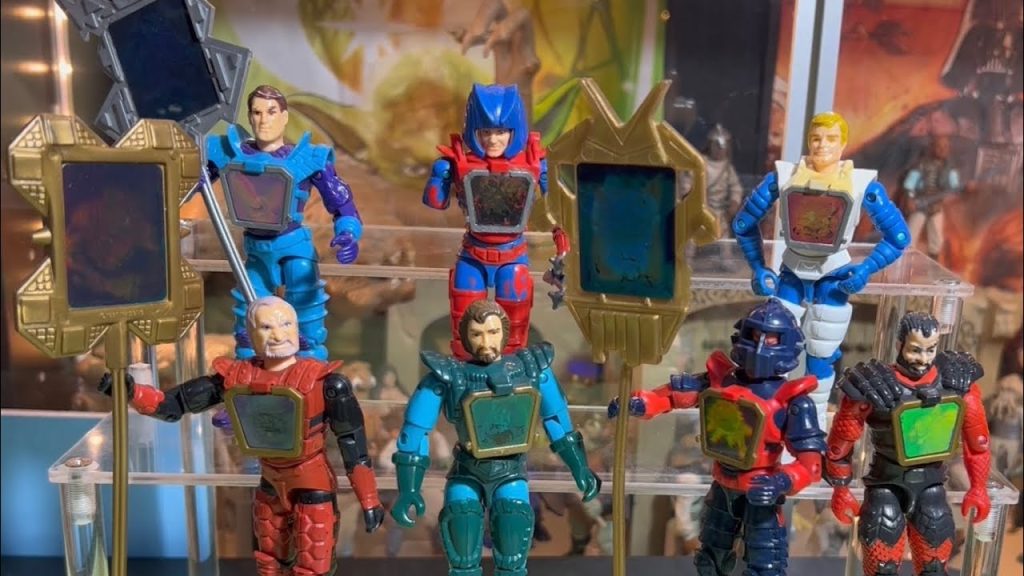
Each figure carried a holographic animal emblem on its chest. Move the figure, your head, or the light source, and the image’s brightness, color, and apparent depth changed.
These holograms used reflected light to reveal an image recorded in the material. Ordinary printed stickers looked much the same across viewing angles. Cindarr’s gorilla emblem could look dull at one angle, then suddenly become clear and wonderfully dimensional.
That distinction matters: the chest image didn’t mechanically transform the figure or cycle through cartoon scenes. It revealed the knight’s animal identity through an optical effect.
Small surface. Big bedroom-floor sorcery.
Staffs Took the Same Trick Further
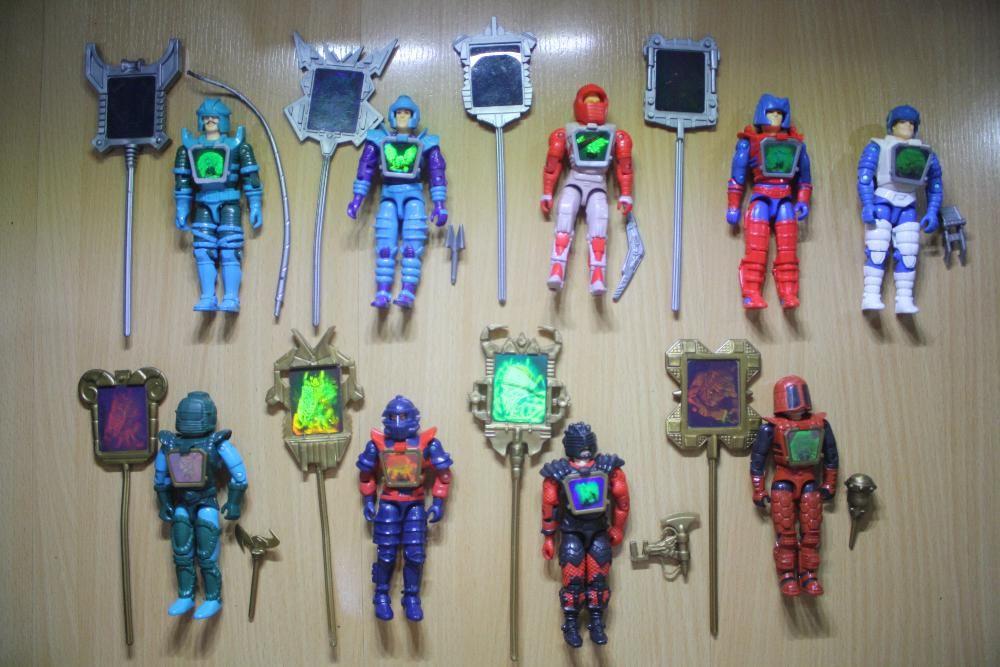
Each of the eight individually sold figures came with a power staff bearing a larger holographic panel. Those images represented magical abilities rather than repeating the chest animals.
Vehicles joined the shiny club, too, with holographic decoration built into the line’s visual identity.
The effect depended on illumination, so a dim room could undersell it. A directional light and a gentle change of angle brought out more detail.
For a decade hooked on hidden weapons, transforming cars, and secret compartments, Visionaries offered a different reveal. You moved the toy, and the light supplied the surprise.
Prysmos: When Technology Lost to Magic
The premise had proper 80s ambition. An entire civilization loses its technology, and armored rivals inherit animal powers.
Naturally, there are vehicles.
Merklynn’s Mountain Challenge
The story takes place on Prysmos, where three suns align and their radiation shuts down technology. Survivors have to rebuild their lives around magic.
The wizard Merklynn stages a dangerous contest inside Iron Mountain. Successful knights receive animal totems and magical abilities. Some wield power staffs; others can energize vehicles.
Leoric leads the heroic Spectral Knights. Darkstorm commands the villainous Darkling Lords, whose approach to rebuilding society includes plenty of bullying.
The first comic issue rewards 14 knights. That number describes the story’s characters, not the number of original retail figures. Hasbro released 12.
The Cartoon Made the Animals Move
Sunbow’s Visionaries: Knights of the Magical Light ran for 13 episodes, airing from September 20 to December 13, 1987.
The series history and episode list capture how brief that television run was. One season gave the knights voices, rivalries, and animated animal transformations.
The toys worked differently. Leoric’s plastic body stayed a knight; his chest hologram represented his lion form.
That familiar toy-and-cartoon partnership gave kids the cast, then left the next adventure to them. The show could stage a magical battle. Your collection could keep it going long after the credits.
The Spectral Knights: All Six Original Heroes
The original wave contained six Spectral Knights and six Darkling Lords. Across both teams, eight figures sold individually with staffs, while four were vehicle-exclusive drivers.
The original Visionaries toy archive separates those releases, a useful distinction when a loose listing looks suspiciously short on equipment.
Here’s the heroic half of the checklist.
| Character | Animal totem | Original release |
|---|---|---|
| Leoric | Lion | Individual figure with staff |
| Witterquick | Cheetah | Individual figure with staff |
| Arzon | Eagle | Individual figure with staff |
| Cryotek | Bear | Individual figure with staff |
| Ectar | Fox | Included with Lancer Cycle |
| Feryl | Wolf | Included with Capture Chariot |
Leoric had leader energy written all over him. Lion emblem, commanding armor, and the responsibility of keeping this magical mess pointed toward something decent.
Witterquick’s cheetah suited his speed, while Arzon and Cryotek supplied eagle and bear identities. A nice spread of airborne elegance and heavyweight muscle.
Ectar and Feryl belonged to the same team, but their packaging changed the buying equation. Their vehicles were part of the original purchase, and neither driver needs a power staff to match his retail release.
The Darkling Lords: All Six Original Villains
Darkstorm’s crew looked ready to make a difficult situation considerably worse.
The Darkling Lords matched the heroes with four individually packaged figures and two vehicle drivers. Their animal choices were also a little stranger, because apparently a lion wasn’t sinister enough.
Here’s the villainous side.
| Character | Animal totem | Original release |
|---|---|---|
| Darkstorm | Mollusk | Individual figure with staff |
| Cravex | Phylot | Individual figure with staff |
| Lexor | Armadillo | Individual figure with staff |
| Cindarr | Gorilla | Individual figure with staff |
| Reekon | Lizard | Included with vehicle |
| Mortdredd | Beetle | Included with vehicle |
Yes, Darkstorm got a mollusk. A wonderfully odd choice for the chief villain, and exactly the kind of detail that makes this line memorable.
Cravex’s phylot was a fictional flying creature native to Prysmos. Lexor’s armadillo and Cindarr’s gorilla gave the team more recognizable animal identities. At a favorable angle, Cindarr’s chest emblem could look brighter and more dimensional, like the line’s other holograms.
Reekon and Mortdredd completed the released roster as drivers. Their vehicle-exclusive status matters when judging completeness: a figure-only sale and a complete vehicle set are different collecting purchases.
Galadria and Virulina appeared in the fiction, but neither received a released figure in this 1987 wave. The stories had room that the toy shelf never filled.
Four Vehicles, Plenty of Fantasy Firepower
The 1987 line gave each faction two vehicles. That kept the range compact while adding bigger pieces for the knights to command.
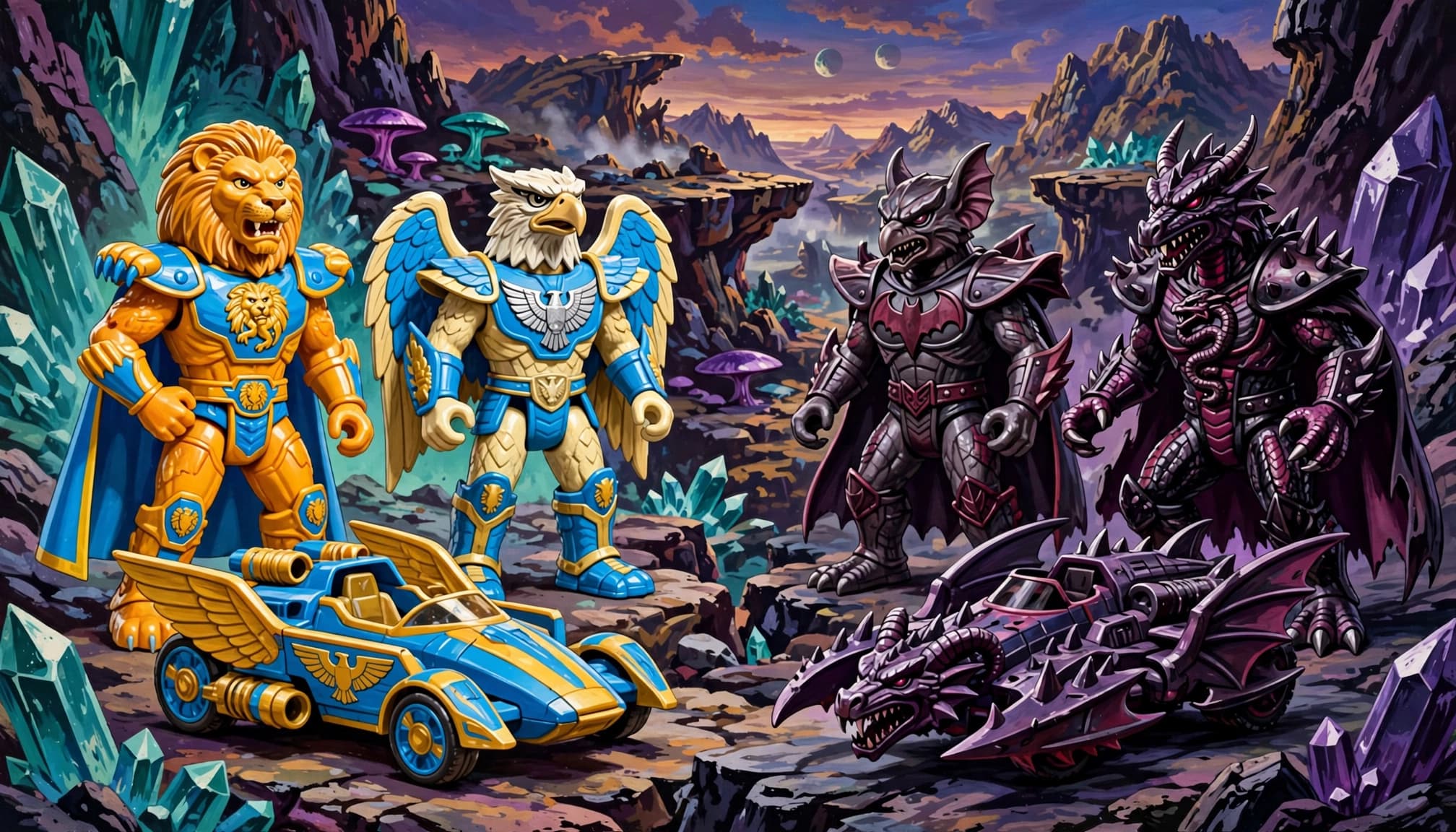
The driver-to-vehicle pairings are straightforward.
| Faction | Vehicle | Included driver |
|---|---|---|
| Spectral Knights | Capture Chariot | Feryl |
| Spectral Knights | Lancer Cycle | Ectar |
| Darkling Lords | Dagger Assault | Reekon |
| Darkling Lords | Sky Claw | Mortdredd |
The Lancer Cycle and Sky Claw offered smaller purchases. The other two brought more substantial hardware into battle.
Dagger Assault also carried the wonderfully villainous concept of a magic extractor. Taking prisoners was one thing; draining their powers was Darkling Lords behavior with extra paperwork.
In the fiction, these machines operated through magic after technology failed. The toys expressed that idea through their designs and holographic decoration, not through functioning supernatural features.
For collectors, four vehicles make the original range look manageable. Then the missing covers, weapons, and drivers enter the conversation.
A vehicle shell can make a fine nostalgia display. Completing its original contents is a separate project, and the smaller pieces often decide how expensive that project becomes.
Buying Visionaries: Holograms, Accessories, and Rarity
A shiny chest emblem can make a tired figure look tempting. Give the rest of the toy equal attention.
Look at the Hologram Across Several Angles
A dark photograph doesn’t automatically mean a dead hologram. The image may simply be outside its useful viewing angle.
Photos under directional light, taken at several angles, distinguish poor lighting from visible damage. Look for scratches, lifted edges, peeling layers, and patches that remain dull.
A reproduction sticker can make a figure look tidier without restoring its original holographic effect. Replacement material also changes what “original” means in a listing.
One straight-on photograph can’t show whether an angle-sensitive hologram still displays clearly.
Keep the surfaces away from abrasive cleaning and prolonged direct sunlight.
Count the Small Parts Before Counting the Bargain
Original staffs deserve close inspection for cracks and repairs. They are easy to lose, and their holographic panels are part of the appeal.
Other completeness checks include helmets, weapons, Witterquick’s boomerang, and Capture Chariot’s pod covers. Reekon’s listed equipment includes a helmet and sword, so check those accessories separately.
Our guide to buying vintage toys without overpaying follows the same principle: missing equipment belongs in the total cost.
Reekon and a Complete Vehicle Set Are the Big Hunt
Reekon with a complete Dagger Assault is one of the line’s most difficult and desirable collecting targets. The Dagger Assault collector review shows why the vehicle commands attention.
Completeness drives much of that appeal. Driver, equipment, vehicle components, and intact holograms all matter.
An ambitious asking price proves little. Completed sales for similarly complete examples make a stronger comparison than a battered shell beside a pristine boxed set.
Why the Second Wave Never Reached the Toy Aisle
The line had a big visual idea and a small window to establish itself.
Hasbro released one wave, and the planned 1988 follow-up never reached retail.
Expensive Shine, Unfinished Plans
Holographic chest pieces, staff panels, and vehicle decoration added production expense. This was more demanding than giving every knight an ordinary printed badge.
Toys ‘n’ Tat’s figure and accessory guide links the cancellation to high costs and weak sales. Those explanations belong together; blaming the holograms alone makes the story too tidy.
Reported prototypes and catalogue images showed plans for additional characters and vehicles. They are evidence of an intended continuation, not another released wave for collectors to complete.
That distinction saves plenty of confusion. The original retail checklist remains 12 figures and four vehicles, however exciting the abandoned plans look.
The Comics Kept a Little More Magic Alive
Marvel’s Star Comics published six Visionaries issues, dated November 1987 through September 1988. The series ended before its storyline was resolved.
So the knights lost their ongoing comic adventure as well as their next batch of toys. A rough deal for a cast that had barely unpacked its armor.
IDW returned to the characters with the five-issue Transformers vs. Visionaries miniseries in 2018. Magic-powered knights meeting Cybertron’s inhabitants was an especially fitting collision of Hasbro ideas.
As with our favorite Transformers toys, the attachment rests on both design and personality. A clever feature gets your attention. A character gives you a reason to keep caring.
Frequently Asked Questions
What made Visionaries toys distinctive?
Each figure had a holographic animal emblem on its chest, and the image changed with the light and viewing angle. The power staffs and vehicles also featured holographic panels or decoration.
How many figures and vehicles were released in the 1987 wave?
The original retail line included 12 figures and four vehicles. Eight figures came with power staffs, and four were packaged with vehicles.
Did the figures transform into their animal forms?
No. The plastic figures stayed in knight form, and their chest holograms showed their animal identities. The cartoon depicted the animal transformations.
What should collectors check when buying Visionaries toys?
Check holograms from several angles for scratches, peeling, or dull patches, and inspect the staffs, helmets, weapons, and other accessories. Vehicle buyers should also check for the original drivers and parts, including Capture Chariot’s pod covers.
Why didn’t a second wave reach stores?
Hasbro’s planned 1988 follow-up never reached retail. Toys ‘n’ Tat’s collector guide links the cancellation to high costs and weak sales.
The Light Is Still the Thing
Visionaries packed a remarkable amount of personality into one released wave. Twelve knights, four vehicles, and animal emblems that rewarded a second look.
For collectors, condition and completeness matter more than a dramatic rarity claim. For the rest of us, the attraction is beautifully simple.
Turn the knight toward the light, find the animal inside the armor, and the whole idea makes sense again. That tiny reveal was enough to make a short-lived toy line feel magical.