She had the red coat, the impossible itinerary, and a knack for making geography feel like classified information. The original Carmen Sandiego game gave us a reason to care about capitals, currencies, and countries: somebody had stolen something spectacular, and we had a criminal to catch.
For 80s kids, that was a pretty irresistible assignment. Today’s versions carry the name in different directions, so let’s open the dossier on the computer classic before choosing our next case.
The 1985 Original and Its 1991 Makeover
The Case That Started Everything
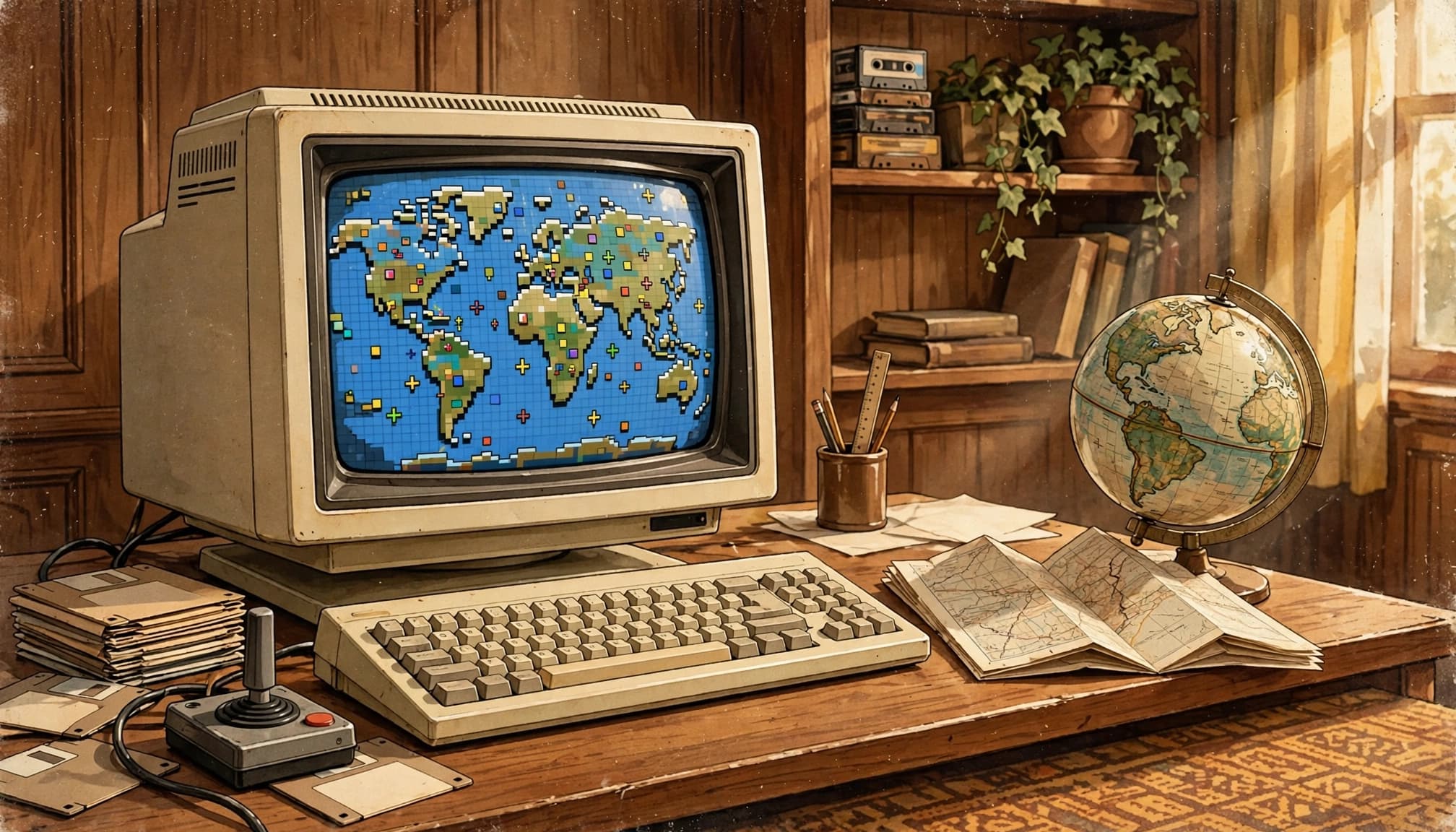
Broderbund released Where in the World Is Carmen Sandiego? in 1985, launching the series. You were a rookie gumshoe working for the ACME Detective Agency, tracking thieves across the globe.
Carmen herself was a former ACME agent turned master criminal. Her operation specialized in outrageous thefts of artifacts and landmarks. Apparently, ordinary jewelry wasn’t dramatic enough.
The Computer History Museum’s account traces the teaching idea to Broderbund co-founder Gary Carlston. The result made research and world knowledge part of the adventure, rather than a separate lesson.
Compared with our favorite 80s arcade games, Carmen rewarded a different skill: thinking before you made your next move.
The 1991 Version Added Color, Not a New Identity
The enhanced 1991 version, often called the 1991 remaster in searches, refreshed the presentation with more colors while keeping the familiar gameplay. The original DOS release’s four-color CGA graphics gave way to a brighter-looking chase.
Witnesses still supplied clues. Destinations still required deduction. Suspects still needed warrants.
That’s the important distinction: the 1991 update was a visual upgrade to the 1985 original. It wasn’t the later story-driven adventure or the modern game where Carmen becomes your playable hero.
Same detective work. Better wardrobe for the pixels.
How Carmen Made Geography Part of the Chase
Every Destination Was a Deduction
You investigated locations, questioned witnesses, and used their information to choose your next destination. References to flags, languages, currencies, and landmarks pointed toward particular countries.
The answer rarely arrived as a giant blinking instruction. You had to connect the clue with something you knew, or something you could look up.
Early packages included The World Almanac and Book of Facts, giving players a reference companion. Research had an immediate payoff, making the chase a form of edutainment: the right answer kept the pursuit moving.
If Penny’s Computer Book on Inspector Gadget appealed to you, the attraction was familiar. Information could solve the mystery. Carmen put that clue-connecting confidence in your hands.
Finding the Crook Was Only Half the Job
Travel clues told you where to go. Descriptions of the suspect helped you determine whom to arrest.
You entered identifying details into the crime computer, narrowed the possibilities, and secured a warrant. Arriving at the right place without the right paperwork could spoil the capture.
Meanwhile, the deadline kept ticking. Extra interviews and unnecessary flights cost precious time, so you had to balance caution with speed.
A destination clue and a suspect clue solved different problems. You needed both the correct route and a valid warrant to finish the case.
Reading clues, understanding details, and eliminating suspects worked together. The learning happened because you wanted the arrest.
The TV Years Changed the Assignment
PBS Gave Us the Chief and Rockapella
The PBS game show Where in the World Is Carmen Sandiego? ran from 1991 to 1995. Greg Lee hosted, Lynne Thigpen played The Chief, and Rockapella gave the show its unforgettable musical personality.
That theme song? Instant mental playback.
Where in Time Is Carmen Sandiego? followed from 1996 to 1997, with Kevin Shinick hosting and Thigpen returning. The show shifted its focus toward history.
The story behind the PBS shows includes Thigpen’s role in both productions. She brought authority, warmth, and theatrical seriousness to every assignment.
These were adaptations of the games, not the source of the 1985 original.
Netflix Turned the Fugitive Into the Hero
The 2019 Netflix animated series made Carmen its protagonist, a super spy who uses her thieving talents against VILE.
That changes the story’s emotional center. Classic players pursued Carmen; Netflix viewers rooted for her.
The red hat survived, but the allegiance shifted. For newcomers raised on the series, heroic Carmen feels natural. For original gumshoes, playing as their old target takes some adjustment.
Both versions belong to the franchise. They simply give us different people to cheer for.
Which Carmen Sandiego Game Are We Talking About?
The name covers several distinct releases, and storefront listings can make them easy to confuse.
| Version | What it is | Main appeal |
|---|---|---|
| 1985 original | Broderbund’s first world-travel detective game | Historical starting point |
| 1991 enhanced version | A more colorful revision of the original | Classic deduction with refreshed visuals |
| 2020 Steam release | A later point-and-click adventure sold by Microids | Child-focused missions and virtual gadgets |
| Carmen Sandiego (2025) | A modern adventure starring Carmen, published by HarperCollins Productions | Nintendo Switch, current consoles, PC, and a retro-style mode |
The 2020 Steam game isn’t the 1985 original, and the 2025 release isn’t a straight remake. Where in Time is Carmen Sandiego is a separate television adaptation, not a game edition.
For nostalgia, the distinction matters. Buying a familiar title doesn’t automatically buy the exact game you remember beside the classroom computer.
The 2025 Game Lets You Wear the Red Hat

A Modern Carmen, With Familiar Detective Work
Developed by Gameloft in collaboration with HarperCollins Productions, Carmen Sandiego launched on March 4, 2025, for Nintendo Switch, Xbox Series X and S, Xbox One, PlayStation 4, PlayStation 5, and PC.
This time, you play as Carmen and pursue VILE. Investigation and globe-trotting remain central, with gadgets and movement adding a contemporary adventure-game feel.
The official launch announcement from HarperCollins Productions details the platforms, editions, and nostalgic extras.
The appeal is clear: a familiar detective formula wrapped around the heroic Carmen of the newer era. The old chase remains part of the design, even with our loyalties reversed.
The ACME Files Bring Back the Pixel Mood
The game includes The ACME Files, a 2D pixel-art classic mode that pays homage to the early games.
For longtime fans, this is a meaningful extra. It reconnects the modern release with the franchise’s clue-solving roots and old-school presentation.
Don’t confuse it with the Deluxe Edition’s Where in the World Anniversary Caper. The ACME Files are part of the base game; the Anniversary Caper is an additional Deluxe inclusion.
That distinction saves us from buying the pricier edition solely for pixel nostalgia.
Standard or Deluxe: What Does Your Money Buy?
The announced US digital prices separate the complete base game from a bundle of extras.
| Digital edition | Price | Included content |
|---|---|---|
| Standard | $29.99 USD | The base game, including The ACME Files |
| Deluxe | $49.99 USD | Base game, two skins, digital art book, full soundtrack, and Anniversary Caper |
The Deluxe cosmetics are Motorcycle Carmen and Classic Carmen. Its extra case is the Where in the World Anniversary Caper.
That makes the Deluxe Edition a $20 step up. The additional case is the gameplay extra; the skins, art book, and soundtrack are collector-friendly treats.
Our pick for a newcomer is Standard. You get the main adventure and the retro-style mode without paying for extras you may never open.
Deluxe makes more sense when Classic Carmen’s look and the Anniversary Caper are part of the attraction. The red coat has sentimental value, but sentiment doesn’t require the larger purchase.
The 2020 Steam Release Is a Different Adventure
Microids released Where in the World Is Carmen Sandiego? on Steam on August 31, 2020, at $9.99.
Despite that release date, it’s a republished older adventure, Treasures of Knowledge, rather than a newly built 2020 reboot. The Steam listing’s game details describe eight missions, 15 virtual gadgets, and facts covering 50 countries.
It’s aimed at ages 8 to 12, with a point-and-click approach and a more explicitly child-focused educational package.
The published requirements list Windows 7, 8, 10 or 11, a Pentium IV 200MHz processor, 512 MB RAM, and 500 MB of storage. Those are legacy specifications, not evidence that it’s the original DOS game.
Its appeal is the lower-priced educational adventure. If you want the modern console experience, choose the 2025 title instead.
And if you’re chasing the precise 1985 experience, this Steam listing won’t deliver that particular time machine.
Is the 2025 Game Worth Buying?
Critic reviews on Metacritic give the game a 68/100 Metascore from eight critics: three positive reviews, five mixed, and none negative.
Metacritic’s critic reviews point to a divided response, with a midrange Metascore and some enthusiastic supporters. GameReactor and GameGrin each awarded it 8/10.
Praise centered on its educational value and affection for the original formula. The educational premise remains central, while classic mode gives returning players a recognizable connection.
Complaints included repetitive minigames, weak graphics, and a story that some reviewers considered unnecessary. Those criticisms matter when you’re paying for a full adventure rather than browsing a nostalgia collection.
For families and fans who enjoy clue-based exploration, the Standard Edition has a sensible audience, especially if repetitive minigames won’t bother you. Players seeking demanding puzzles, lavish visuals, or a gripping spy story have less reason to rush in.
Our verdict: appealing for the right gumshoe, but affection for the franchise shouldn’t erase its limitations.
Key Takeaways
- The 1985 game and 1991 enhanced version share the classic clue, travel, and warrant formula.
- The 2020 Steam release and 2025 adventure are separate games, not interchangeable editions.
- Standard includes the retro-style mode; Deluxe adds cosmetics, collectible digital extras, and the Anniversary Caper.
The buying decision gets much easier once the releases stop masquerading as one big, red-hatted package.
Carmen Sandiego Questions, Answered
Which Game Should a Beginner Play First?
The 2025 Standard Edition is the straightforward choice for current console and PC players. It’s available through the Nintendo, PlayStation, Xbox, and PC digital storefronts, with the main adventure and classic mode included.
Do the Original Geography Clues Still Hold Up?
They remain useful as detective puzzles, but some information reflects the period when the games were made. Countries, borders, and currencies have changed. Treat the old game’s world as a historical snapshot, rather than a current geography reference.
Is the Netflix Carmen Sandiego a Movie?
The 2019 Netflix production is an animated television series, not a movie or the original computer game. Unlike the earlier television adaptation Where in Time Is Carmen Sandiego?, it makes Carmen the heroic lead.
The Chase Was the Lesson
Carmen made an atlas feel like detective equipment. The enduring charm is that knowledge helped you win, one destination and one suspect at a time.
The newer games offer different ways back into that chase. Knowing which version you’re buying keeps the nostalgia attached to the experience you want.
And that red hat? Still excellent at getting our attention.