Identify original Fisher-Price Adventure People sets by matching figure construction, molded markings, vehicle details, and accessories to illustrated collector references. For an alleged 1980s set, the box and every piece inside need to tell the same story.
These little adventurers had rescue missions to run and living-room wilderness to conquer. Before paying collector money for that childhood reunion, check that the box, action figures, and pieces inside agree. Then start with several matching clues and work through the tiny extras.
Key Takeaways
- Original examples measure roughly 3.5 to 3.75 inches, with jointed shoulders and hips and C-shaped hands.
- Molded lettering helps identify a figure, but doesn’t authenticate an entire set.
- Original toys, replacement accessories, and vintage packaging can appear together in one listing.
Recognizing Fisher-Price Adventure People Figures
Start With the Shape and Construction
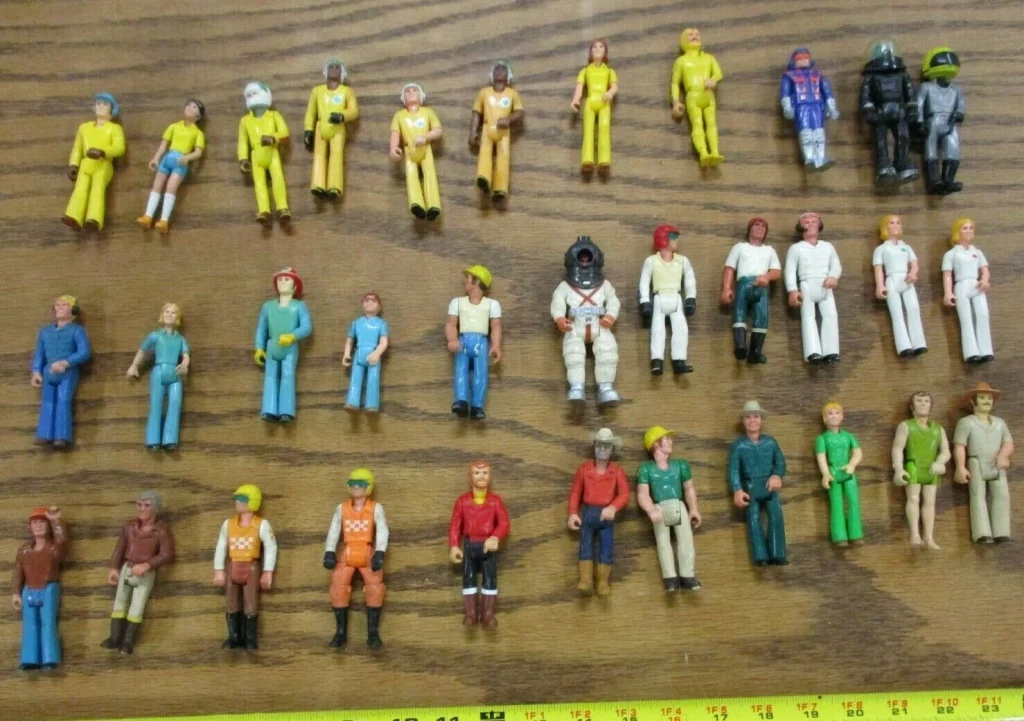
The familiar Adventure People character is compact and sturdy, with straight limbs, shoulder and hip joints, and those signature C-shaped grasping hands. Compare the face, hairstyle, headgear, torso, clothing colors, and boots together.
One green outfit doesn’t identify a ranger. One space helmet doesn’t identify an astronaut’s release.
The Fisher-Price Collectors Club’s illustrated Adventure People figure guide is a useful starting point for matching those combinations. It’s a collector-maintained reference, not an official company authentication service.
Read the Markings Without Overreading Them
Look inside the leg for “FISHER-PRICE TOYS” cast into the plastic. Photograph the lettering alongside the front, back, hands, and feet.
A copyright date can refer to the design rather than the manufacturing year. Likewise, a molded component number doesn’t necessarily identify the retail set.
Markings need company: matching construction, sculpt, and decoration. An original body can still have replacement parts or later paint, and a copied marking alone proves little.
Set Numbers Put the Adventure in Context
Fisher-Price made Adventure People figures and playsets from 1975 to 1985, for children roughly ages 4 to 9. Early sets featured emergency workers, outdoor explorers, and everyday adventurers. Around 1980, space adventures joined the action.
They also helped shape another toy-box legend. Kenner used modified Adventure People figures for early Star Wars concepts, documented in the Star Wars Collectors Archive’s concept-model history. The dates matter: Adventure People arrived in 1975; Kenner’s first Star Wars figures reached children in 1978, about three years later.
These numbers give you a useful starting lineup.
| Set number | Set name | Identification starting point |
|---|---|---|
| #303 | Emergency Rescue Truck | Rescue truck and matching equipment |
| #304 | Wild Animal Safari | Safari vehicle, figures, and animals |
| #305 | Rescue Copter | Helicopter and rescue components |
| #307 | Wilderness Patrol | Plane, six-wheel ATV, pontoon boat |
| #318 | Daredevil Sports Van | Sports van and associated equipment |
| #325 | Alpha Probe | Electronic shuttle and smaller spacecraft |
| #334 | Sea Shark Boat | Boat and matching marine equipment |
Use the club’s set-number inventory to move beyond the headline vehicle. Matching the little pieces is where completeness becomes clear.
Wilderness Patrol #307: Know the Whole Crew
Three Figures, One Very Good Dog
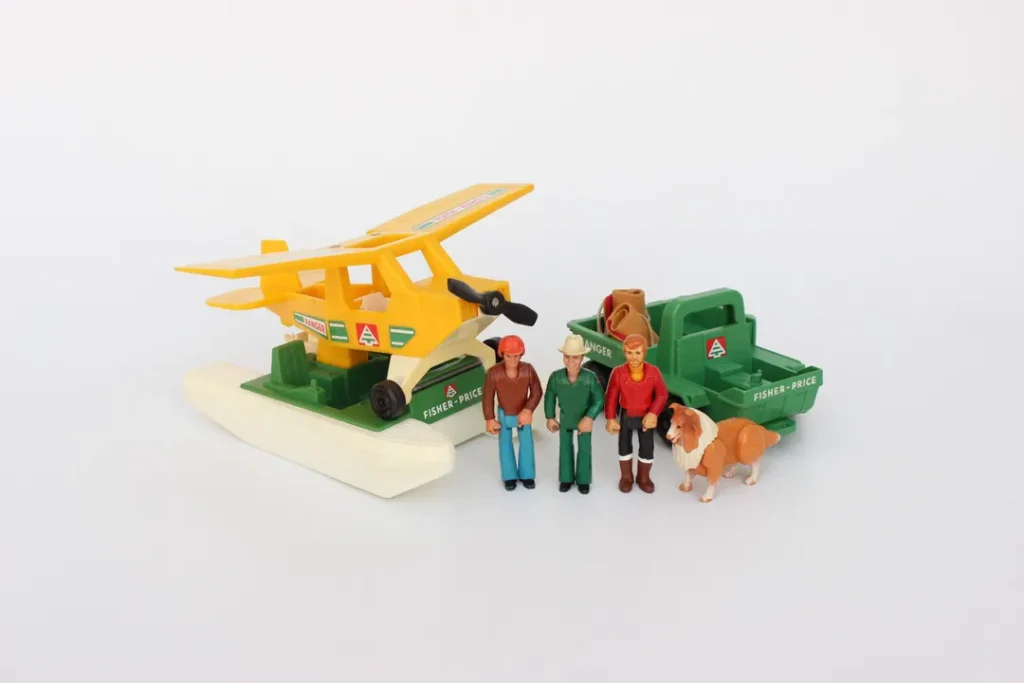
Wilderness Patrol was available from 1976 through 1979. Set #307’s ten-piece lineup includes three figures, three vehicles, Scout the collie dog, two sleeping bags, and one rope with a hook at each end.
The human crew? Scott the Ranger, Greg the Pilot, and Red the Mountain Climbing Woodsman. Tiny people, excellent weekend plans.
Red’s socks need caution. Collector accounts describe yellow socks, while white socks appear on some figures. That disagreement doesn’t establish rarity. Compare the whole figure and documented examples before assigning a variant label.
Three Vehicles With Distinctive Details
The yellow plane seats one person. The green six-wheel ATV seats two in front and has storage behind them. The green-and-white pontoon boat seats two and has a drop-down motor.
The boat also attaches beneath the airplane to create a water-landing combination. Compare the connection points and their condition with reference photographs; don’t force aged plastic into position.
A plane and ATV alone don’t establish a complete Set #307. Count both sleeping bags individually, and check for Scout and the easily vanished hooked rope.
Space-Era Pieces: Alpha Probe and the Alien Pilot
Alpha Probe #325 Has Six Listed Pieces
The electronic Alpha Probe shuttle was sold from 1980 through 1983. Its listed contents are two astronauts, a white tether, the shuttle, the smaller Alpha Recon spacecraft, and a detachable gray engine.
That smaller ship matters. A shuttle can look impressive on a shelf while still missing a substantial part of its original package.
There’s also a naming wrinkle: #360 Alpha Recon is a later, different set. Don’t identify the entire purchase by the smaller craft’s name alone. Compare the complete #325 inventory, including both astronauts and the tether.
Alien Pilot Variations Need a Full Comparison
The figure collectors call the 1979 Alien Pilot combines the X-ray Man head sculpt with the standard astronaut body. Reused sculpts are part of the identification story; they aren’t automatically evidence of a homemade mash-up.
Reported versions include red helmet markings with blue chest detailing, and silver chest detailing without helmet markings. Match both areas together rather than declaring a variant from one paint patch.
The clear dome often looks battered after decades of handling and rubbing against other playthings. Check the dome for scratches or clouding. These figures are sturdy, but heads can loosen with age. Scratches and looseness describe condition; neither proves authenticity.
A Practical Checklist for Loose Figures and Accessories
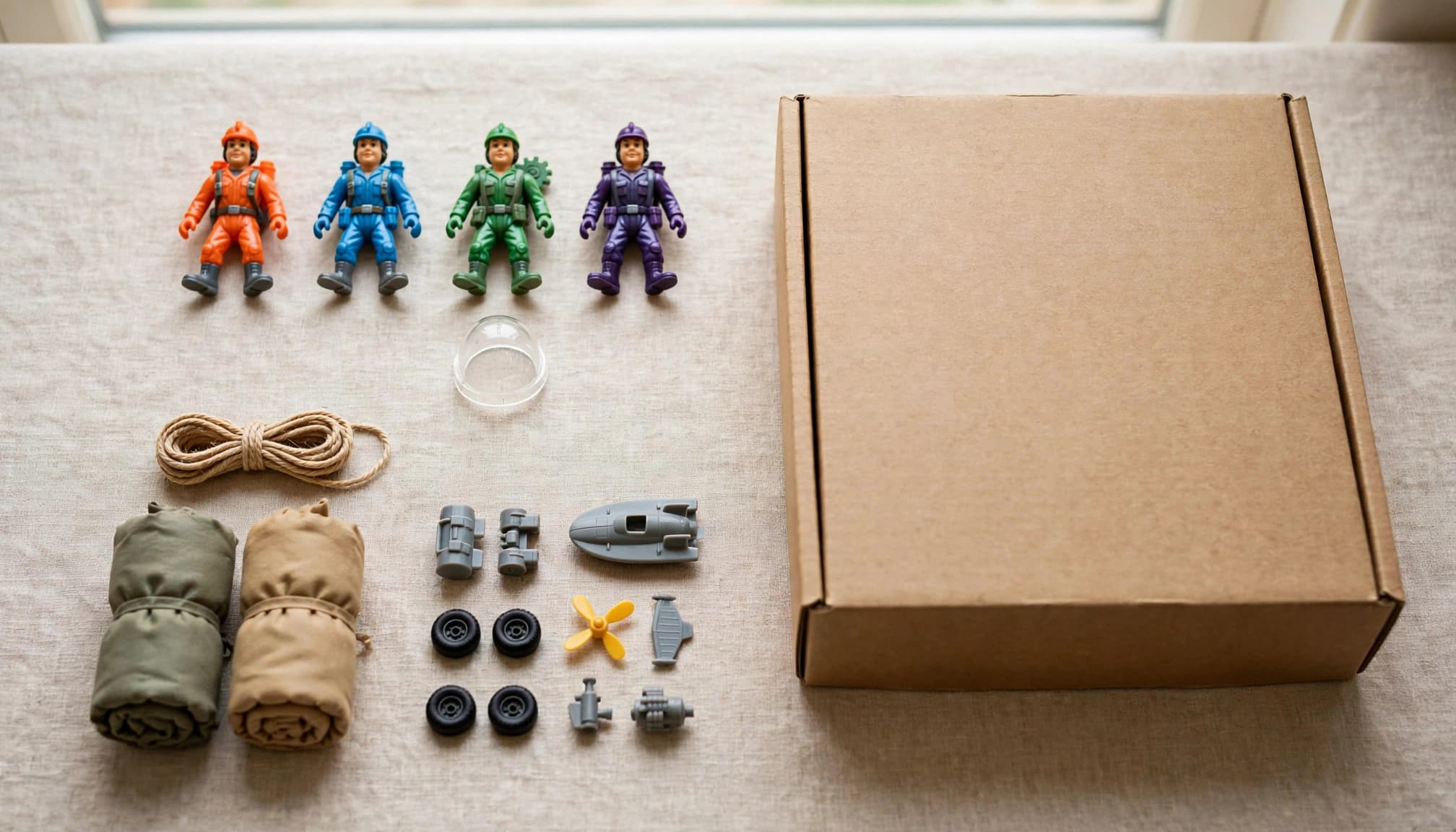
A mixed lot can be a glorious little reunion. It can also contain three unrelated adventures and somebody else’s helmet.
Work through the pieces in this order:
- Collect, separate, and photograph the loose action figures, vehicles, animals, and small accessories before matching pieces into sets. In a Wilderness Patrol lot, keep Scout the dog with the animal pieces.
- Identify each figure through its sculpt, clothing, hair, hands, and molded lettering. Don’t assign a set from outfit color alone.
- Match vehicles through body shape, seating, wheels, motors, decals, and attachment points. Compare several details in the same reference image.
- Compare accessories by shape, color, size, and documented inclusion. A rope that fits a hand isn’t automatically the correct rope.
- Inspect seams, paint edges, glue residue, repaired tabs, and replacement decals. Request disclosure of reproductions, repainting, and repairs.
- Record missing pieces and damaged mechanisms separately. For electronic toys, include battery-contact condition and whether the functions work.
A genuine vintage figure doesn’t make every accessory beside it original.
That distinction applies across small-scale collecting. Our Starcom identification guide separates a correct accessory, an original accessory, and one supplied with a particular release. Those are three different questions.
Boxed Sets Need Two Separate Inspections
Identify the Package First
Match the printed set number and title with the illustrated contents. Examine every panel, flap, insert, and surviving instruction sheet.
Packaging artwork is useful, but an illustrated inventory or instruction sheet can give a clearer account of included equipment. Compare the same release where possible; don’t combine details from different packages into one imaginary checklist.
A vintage box establishes something about the box. Its contents still need their own inspection. Childhood storage bins were enthusiastic about crossovers.
Then Judge the Contents and Seals
For opened sets, lay out every component and compare it individually. An authentic box can contain genuine but mismatched figures, reproduction accessories, or missing equipment.
For sealed claims, inspect tape, flap wear, repairs, and signs of reopening. Fresh adhesive or inconsistent wear deserves attention, but no single glue patch settles the question.
“Boxed” means packaging survives. It doesn’t mean complete or factory-sealed.
Photographs of the contents, packaging, and seals should support the seller’s description. A cheerful “all original!” in the title has considerably less to say.
Condition and Price: Compare Like With Like
Completeness, paint wear, tight joints, intact connections, original decals, and packaging all affect a purchase. For Alpha Probe, working electronics and a clean battery compartment belong in that comparison.
Collect completed-sale examples for the same set or figure, with similar contents and condition. Keep loose, incomplete, complete, boxed, and sealed examples in separate groups. An ambitious asking price isn’t a recorded sale.
Our guide to buying vintage collectibles follows the same full-cost approach: include shipping, tax, and missing accessories. That bargain shuttle can develop an expensive passenger list.
Once home, keep them away from direct sunlight and excessive heat. Avoid solvents, abrasive cleaning, and force on stiff joints. A scuffed original deserves gentle treatment, not an accidental restoration project.
Frequently Asked Questions
Can You Date a Loose Figure to the 1980s?
Sometimes you can narrow its period through a documented sculpt-and-paint combination or its association with a particular release. A molded copyright date alone won’t establish its manufacturing year.
Because the line began in 1975, an Adventure People figure remembered as an “80s toy” may belong to a 1970s release. Childhood memories don’t follow catalog boundaries.
How Can You Spot a Reproduction Accessory?
Compare its dimensions, molding, seam placement, color, and material appearance with documented originals. Ask whether it has been replaced or reproduced.
Age-related wear isn’t a certificate of authenticity, and unusually clean plastic isn’t proof of a reproduction. Clear photographs and a disclosed history are stronger evidence than either assumption.
Bring Home the Adventure, With the Right Pieces
The strongest identification comes from details that agree: figure construction, molded lettering, the right vehicles, and a documented accessory lineup. Assess the box separately, then judge completeness and condition.
A played-with original can make a wonderful shelf companion. It simply deserves an accurate description, a fair comparison, and room for one more rescue mission.