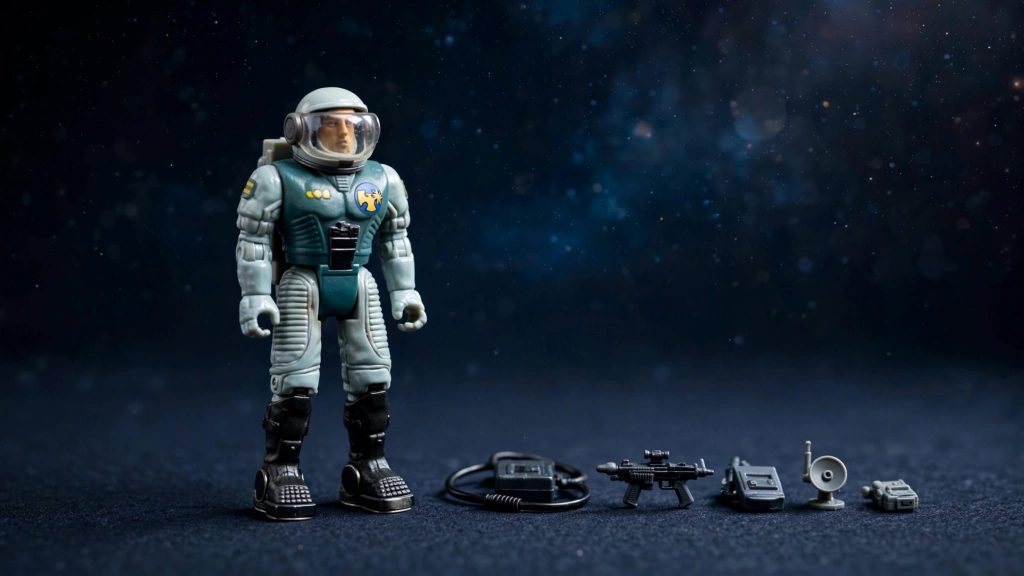
Identify vintage Starcom action figures by their two-inch size, magnet feet, and matching sculpt, paint, and molded markings. Read those clues together, since magnets alone don’t prove authenticity.
These little astronauts packed an outrageous amount of adventure into something small enough to disappear between couch cushions. Start with the figure itself, then work through its equipment, faction, and release history.
Key Takeaways
- Original figures measure about two inches tall and have Magna Lock magnets in their feet.
- Sculpt, paint layout, markings, and documented accessories should agree before you identify a figure.
- Coleco’s U.S. releases and subsequent overseas releases are part of the Starcom story, but international figures weren’t all sold in America.
- Completeness, working mechanisms, and original packaging matter when comparing prices.
Starcom’s Brief, Brilliant Toy-Aisle Moment
Coleco, the Cartoon, and 1987
Coleco made Starcom: The U.S. Space Force, the toy line that reached toy aisles around the cartoon’s 1987 debut. The animated series ran for 13 episodes in one season.
Nostalgia leads some fans to remember ABC and Saturday-morning cereal. The series was syndicated, however, so that memory shouldn’t become a claim that ABC carried it nationally.
The hook was irresistible: tiny space crews, chunky spacecraft, and equipment that moved when you put a figure in the right place. Bedroom command center? Absolutely.
Why Mattel Matters to Identification
Starcom struggled commercially in the United States but performed better in Europe. Later overseas releases came through the international licensee, with some figures and vehicles never sold in America.
That makes a U.S.-only checklist incomplete. It also means a later international release shouldn’t automatically receive an “original 1987 American figure” label.
Claims about exactly why Starcom failed often mix recollection with speculation. Its short American run and longer European afterlife are firmer ground than a tidy cancellation story.
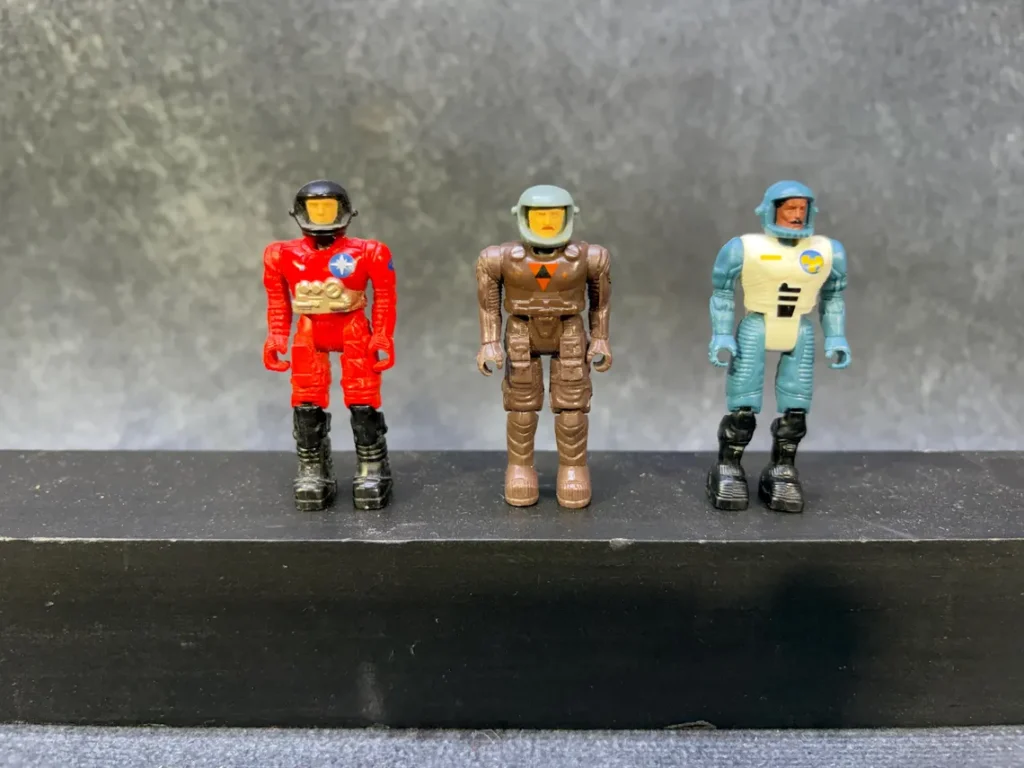
How to Spot Starcom Action Figures
Start With Size, Boots, and Construction
A standard Starcom figure stands about two inches tall. That’s noticeably smaller than the familiar 3.75-inch heroes in our guide to vintage G.I. Joe toys.
Look underneath both boots for the magnetic components. Magna Lock magnets allowed figures to stand on suitable vehicle and playset surfaces, even when ordinary toy gravity had other plans.
A gentle test against clean steel can reveal magnetic attraction. Don’t scrape the soles or prise anything out.
Then examine the helmet, face, torso details, limb shapes, and joints. A spacesuit and tiny boots alone don’t settle the identification.
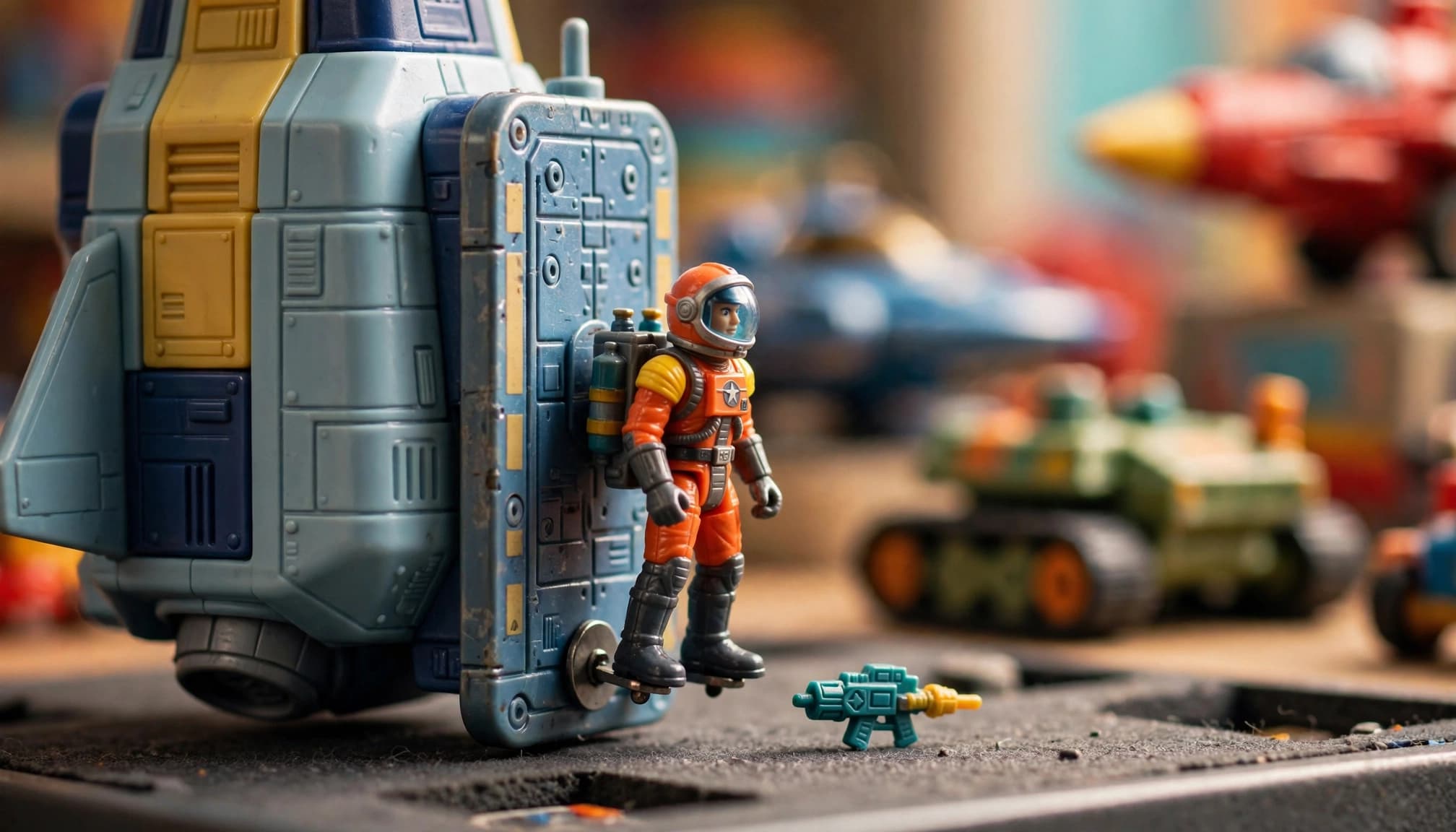
Illustration of the magnetic-foot play concept, rather than a specific Starcom figure.
Match the Whole Figure, Not One Color
Compare the head sculpt, helmet shape, chest decoration, glove colors, and boot details together. Similar colors can hide different characters, swapped parts, or repainting.
Hasbro’s contemporary Air Raiders figures often enter the conversation because they’re similar in scale. Size alone won’t separate a mixed toy-bin lot.
A Starcom identification needs agreement across the sculpt and construction, plus the expected magnetic-foot arrangement. A matching weapon lying nearby helps identify the accessory, but it doesn’t establish that the figure originally came with it.
Childhood toy boxes were enthusiastic about crossovers.
Identify the Faction and Character
Starcom’s heroes include Dash Derringer, Slim Griffin, and Crowbar Corbin. General Von Dar belongs to the opposing Shadow Force.
Use those names as starting points, not shortcuts based on uniform color. Match the figure to character-specific photographs, then compare its gear separately. Cartoon artwork can simplify or alter details, so photographs of documented toys are stronger identification references.
The HobbyDB Starcom catalog gives these totals across the series:
| Faction | Figures | Vehicles | Playsets |
|---|---|---|---|
| Starcom | 23 | 13 | 6 |
| Shadow Force | 15 | 11 | Not specified in this count |
Those totals describe the broader line, not one American store assortment from 1987. Later international releases matter.
For an unidentified loose figure, establish the character before chasing a regional variant. A familiar face wearing unfamiliar gear might simply be a mixed-up purchase.
Read Markings and Accessories Without Getting Fooled
Copyright Dates Are Clues, Not Birth Certificates
Inspect molded lettering wherever it appears on the figure. Record the maker, copyright information, and country marking exactly as shown.
There isn’t one magic stamp position or date that authenticates every Starcom release. A copyright date can refer to the underlying design rather than the year that particular example reached a shop.
Compare markings alongside the body sculpt and paint layout. A copied stamp, replaced component, or custom paint job can muddy the picture.
The Starcom identification archive provides a useful starting point for comparing figures and vehicles visually.
Backpacks, Weapons, and Identification Cards
Starcom action figures came packaged with a backpack, a weapon, and identification cards. Those tiny extras gave each astronaut a proper personnel-file feeling. Naturally, they were also excellent at vanishing.
For a collector assessing loose collectables, separate three questions: Is this the correct accessory? Is it original? Was it included with this release?
An accessory that fits isn’t automatically the correct one. A correct-looking replacement doesn’t become vintage through proximity.
Age, yellowing, and paint wear don’t prove authenticity either. Ask sellers to disclose reproduction parts, repairs, and repainting, especially when the price assumes an all-original example.
Magna Lock and Power Deploy: Two Different Tricks
What the Foot Magnets Did
Magna Lock provided more than a secure stance. The magnets could also trigger mechanisms built into compatible playsets.
Place a figure on the Starbase Station elevator and the lift rose. Put a figure at the cannon’s activation point and the cannon turned and fired its rockets.
The Magna Lock feature description explains the magnetic-foot system behind these actions. The magnet acted as a trigger; it wasn’t a miniature battery powering the entire machine.
Tiny astronaut. Surprisingly busy workday.
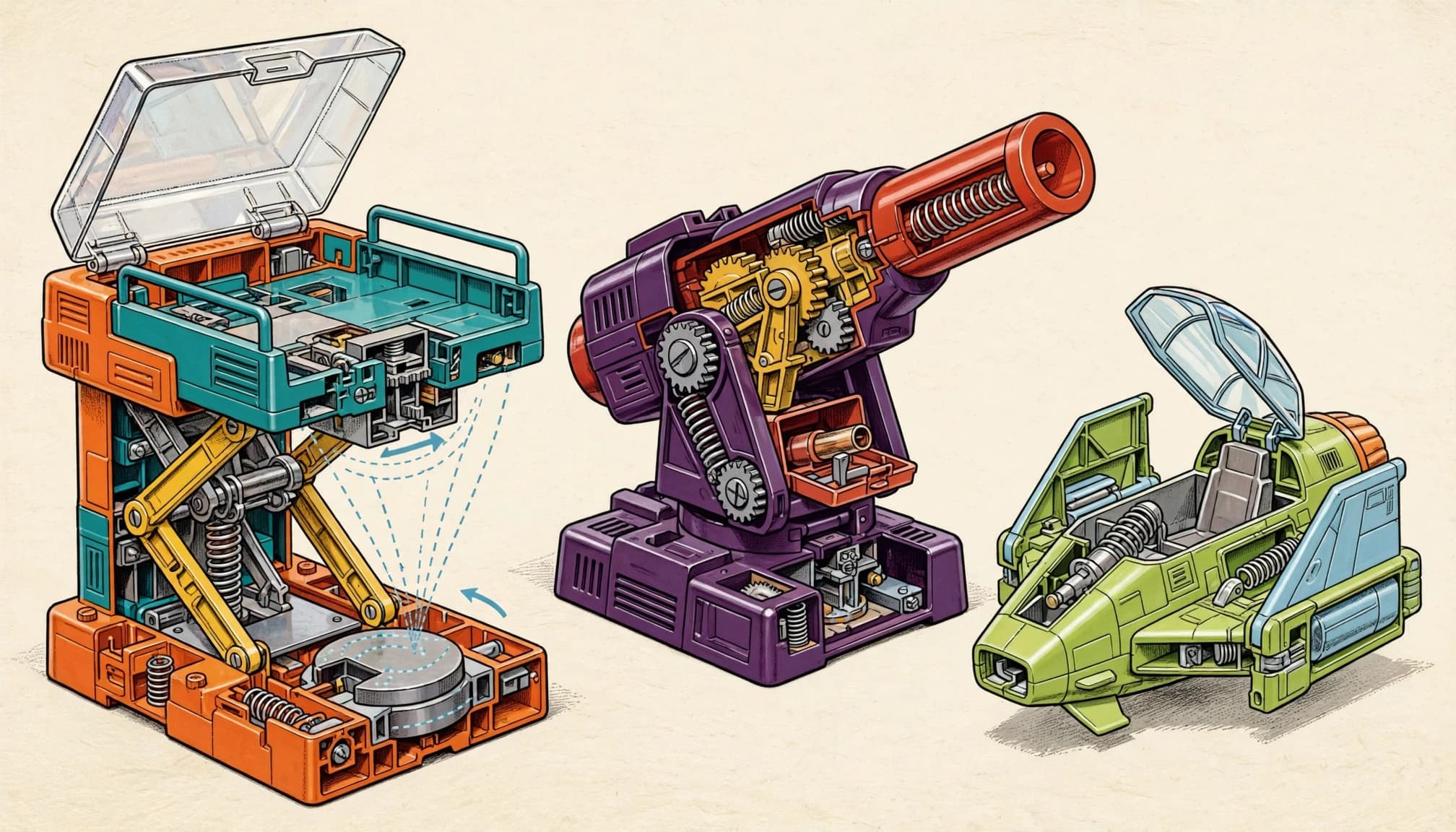
Concept illustration of magnetic activation and mechanical deployment, not a product-identification reference.
What Power Deploy Did
Power Deploy described mechanical actions such as unfolding or extending vehicle sections. Many depended on stored spring energy, wind-up mechanisms, or geared movement rather than batteries.
The exact winding and release sequence varies by vehicle. Don’t force a wing because another Starcom vehicle opens that way.
Collectors report broken or sluggish mechanisms in surviving examples. A vehicle can look gorgeous while its internal gears have retired.
A photograph can show completeness, but it can’t demonstrate a working deployment mechanism. For a purchase priced as working, a short video is stronger evidence.
Recognize the Vehicles Without Forcing Them
The Shadow Bat is a recognizable Shadow Force craft, while the Starcom range includes the Seal Pod and the Starmax Bomber, often remembered by its helocarrier description.
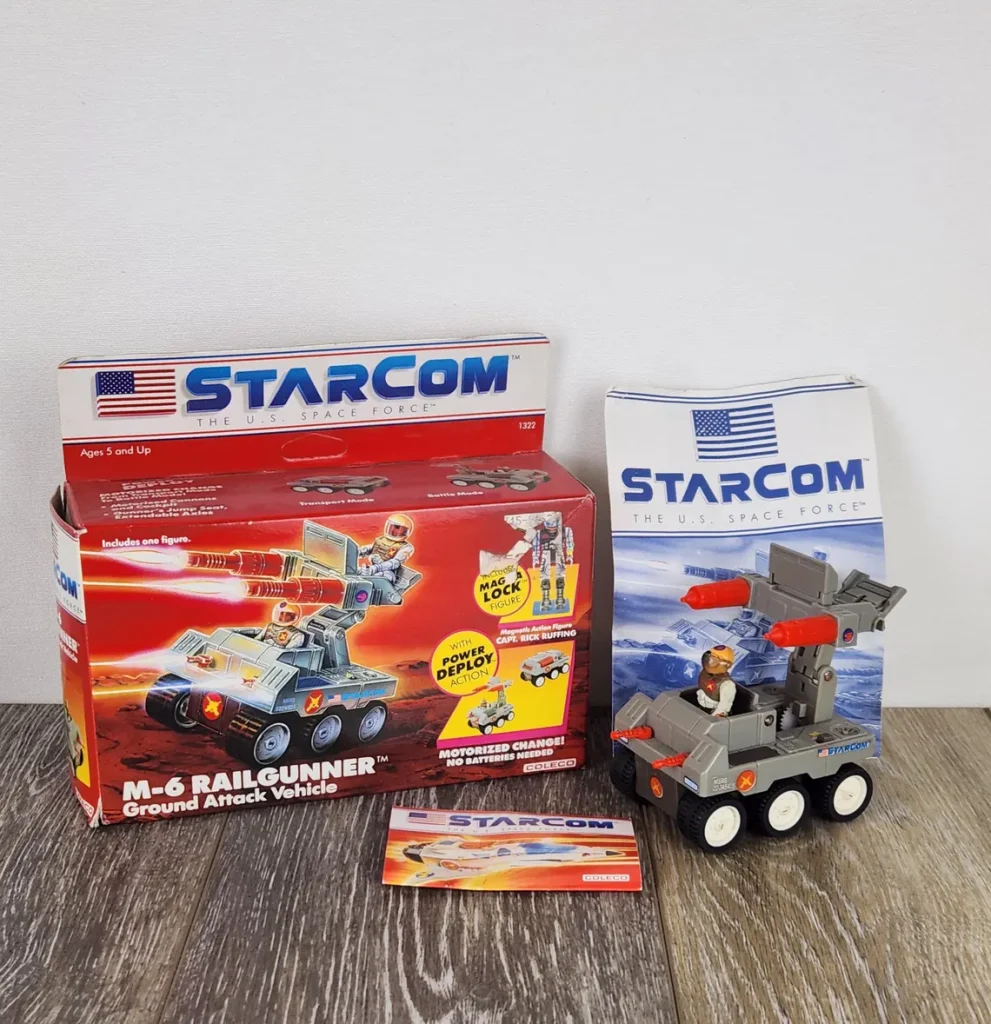
Folding wings, opening or spring-loaded cockpits, and cargo pods that could be carried and dropped helped make this little fleet feel enormous. Those features varied by vehicle, so don’t expect every model to perform every trick.
For identification, compare the overall silhouette first. Follow with wing hinges, cockpit shape, cargo connections, landing equipment, and weapon positions.
For condition, inspect those same areas for cracked tabs and missing pieces. A pod can look complete from above while a damaged connector underneath prevents it from attaching.
Great shelf presence. Slightly less useful for the next rescue mission.
Buy the Figure, Not the “SUPER RARE” Listing
Collectors often describe Starcom as hard to find and expensive on eBay. Sealed examples can attract strong interest, but neither observation supplies a dependable price for your particular figure.
Sold listings beat asking prices. Compare several recent sales for the same character, release, condition, and accessory count. Keep loose, loose-complete, and sealed examples in separate comparisons.
Then add shipping, tax, and missing parts. A cheap astronaut needing a backpack, weapon, and paperwork may become the expensive astronaut surprisingly fast.
Our guide to buying vintage toys covers that full-cost approach beyond Starcom.
For a carded example, inspect the card edges, bubble, attachment points, and accessory arrangement. Fresh-looking glue or an unusual bubble can raise concerns about resealing, but neither is conclusive alone.
Request front, back, boot, marking, and accessory photographs. For vehicles, include hinges and cargo connections. Save the seller’s description of originality and repairs.
An honest seller may still misidentify a toy. Clear photographs protect both sides better than an enthusiastic title.
Frequently Asked Questions
Does a Weak Magnet Mean the Figure Is Fake?
A weak response alone doesn’t establish that. The test surface, damage, or alterations can affect what you observe. Compare the sole construction, sculpt, paint, and markings before reaching a conclusion.
Can a Mattel Starcom Figure Be Original?
Yes. The company released Starcom overseas after Coleco’s American run. An original Mattel release isn’t automatically an American 1987 release, though. Packaging and documented regional differences matter when assigning that narrower description.
Does “Loose Complete” Include the Identification Card?
Ask what the seller includes. Since the original package contained identification cards as well as a backpack and weapon, a listing missing paperwork shouldn’t be treated as equivalent to one retaining everything. “Complete figure” and “complete original contents” can mean different things in casual listings.
Give Your Tiny Space Crew the Right Identity
A convincing identification comes from several matching details: size, magnetic soles, sculpt, paint, markings, and release-appropriate equipment. Wear adds character, but it doesn’t authenticate anything.
Once those details agree, you can enjoy the good stuff: the pocket-sized crew, the unfolding spacecraft, and that wonderfully excessive amount of engineering. Starcom made two inches feel like an entire space program.