Some candy disappears and you shrug. Bonkers candy disappears and grown adults start talking about it like a missing mixtape.
Nabisco turned a fruit chew into a mini event in the mid-1980s. You got the soft chew, the tangy center, the loud name, and ads that acted like fruit flavor had gone gloriously off the rails.
The fun part is figuring out why this one, out of all the candy in that crowded aisle, still feels so vivid.
Why Bonkers candy felt different from the start
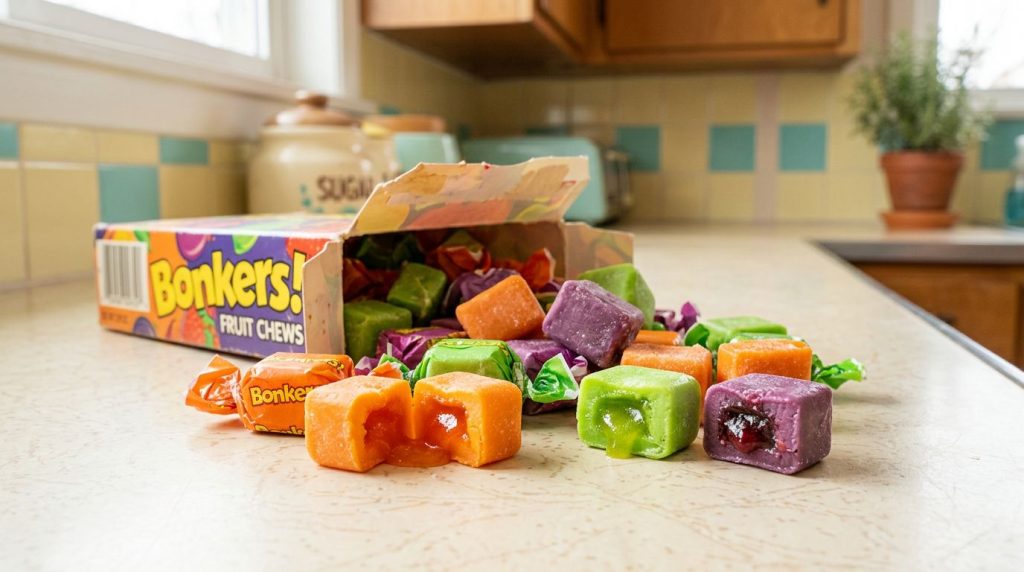
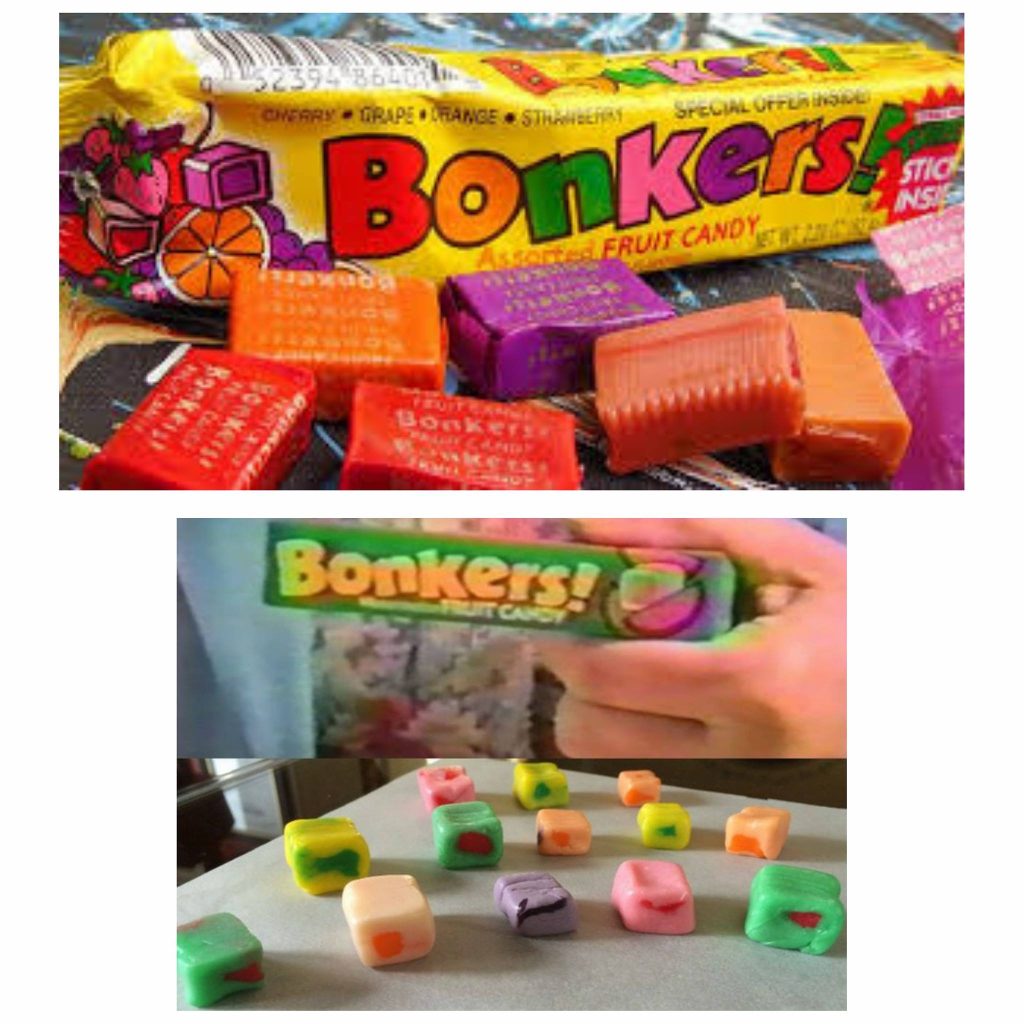
Bonkers showed up in the mid-1980s and didn’t behave like a plain fruit chew. The outside was soft and chewy, but the trick was inside: a tangy filling that changed the bite halfway through. For a kid, that counted as magic.
That two-step texture made Bonkers feel bigger than its size. You didn’t pop one in your mouth and instantly know the whole story. First came the chew, then came the center, and that tiny delay made the candy feel playful.
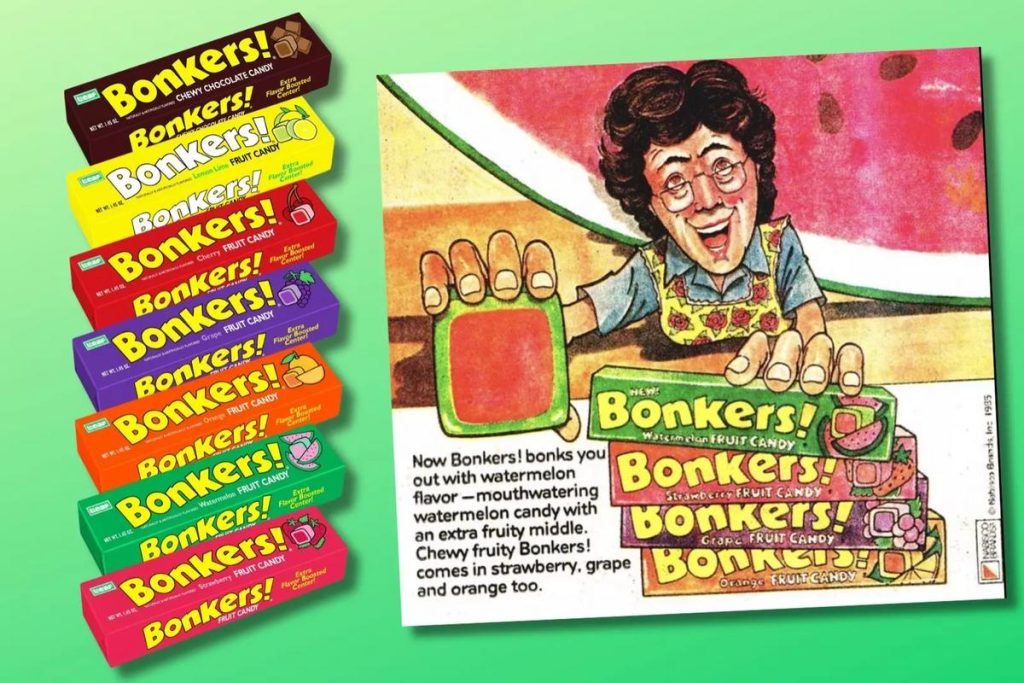
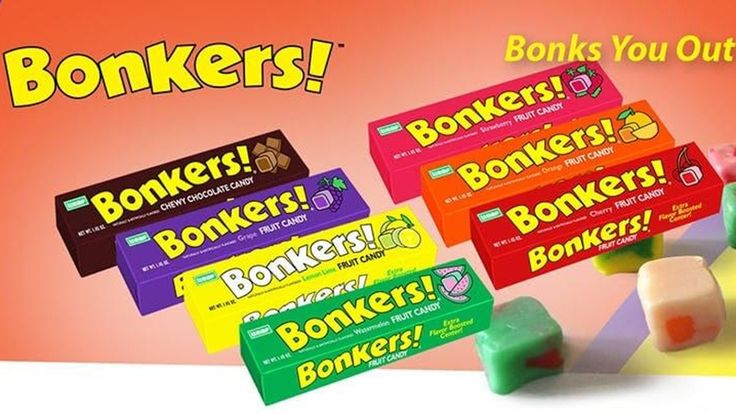
It also helped that the flavor lineup had personality. Most rundowns, including the Bonkers candy entry, point to grape, orange, strawberry, watermelon, and even chocolate. Yes, chocolate. In a fruit chew. That kind of oddball choice is pure 80s candy confidence.
The wrappers mattered too. Bonkers came as small, individually wrapped pieces in bold colors, the kind of candy you could stash in a pocket, trade at lunch, or save for the bus ride home. It looked fun before you even tore one open.
And then there was the name. “Bonkers” is not a word that sits politely on a shelf. It bounces. It grins. It sounds like a sugar rush in one word. Kids noticed that stuff fast, and so did marketers.
A lot of candy was sweet. A lot of candy was chewy. Bonkers had a built-in reveal, a goofy name, and flavors that felt louder than average. That combo gave it instant character, and character is what people remember.
The ads went big, because subtle was never the point
Bonkers wasn’t marketed like a quiet little after-school treat. It was pitched with attitude, speed, and that hypercharged 80s sense that everything should feel one click bigger than real life.
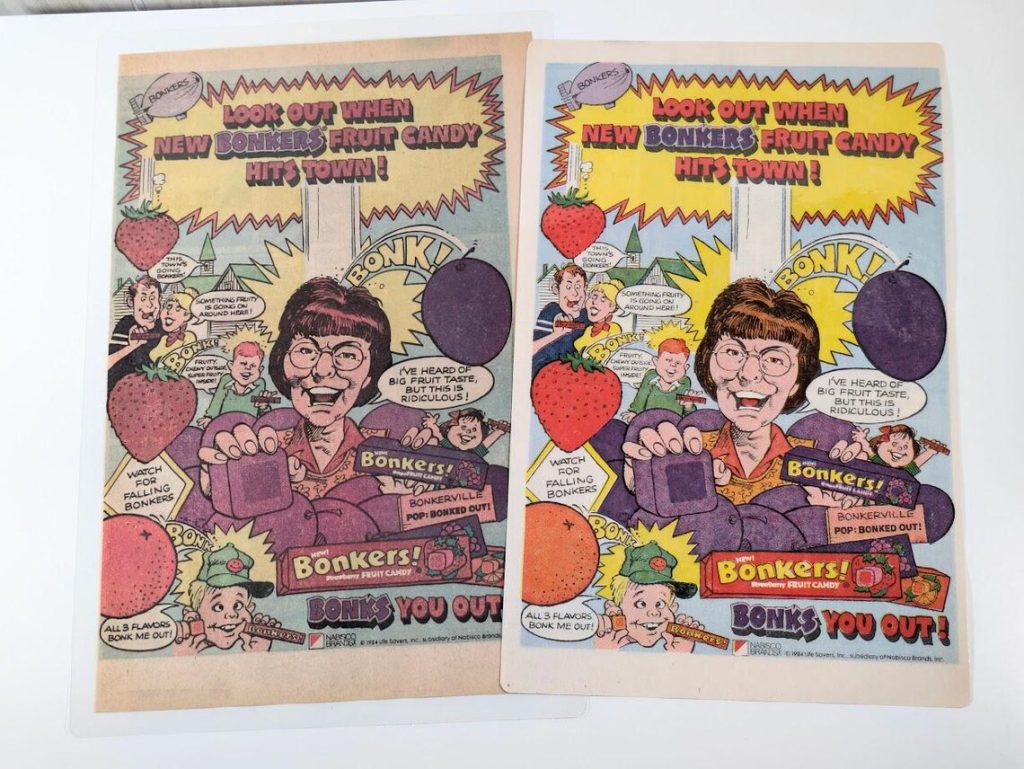
The TV spots sold intensity. Fruit flavor wasn’t treated like a gentle note in the background; it was played like physical comedy. The whole campaign pushed the idea that Bonkers delivered a blast, not a whisper.
Print ads carried the same energy. Bonkers even appeared in DC comic publications in 1986, which feels completely right for a candy this cartoonish. It fit in with capes, crashes, and oversized reactions.
Kids responded because the brand spoke their language. It didn’t ask them to admire craftsmanship or compare tasting notes. It said, in effect, “Here is a weird little fruit chew that goes big.” Sold.
Bonkers didn’t whisper “fruit flavor.” It popped like a cartoon sound effect.
That style gave the candy a social life beyond the wrapper. Even kids who hadn’t tried it yet could recognize the name from television or comics. When a snack becomes part of playground conversation, half the job is already done.
And that is why Bonkers still hangs around in memory. Taste matters, sure. But a candy that makes an entrance has a better shot at staying lodged in your brain for decades.
The chew, the center, and the little drama of the first bite
What many people remember most is the texture. Bonkers had a small built-in plot twist, and kids love plot twists. You bit through the outer chew and waited for the center to show up.
That gave it a different feel from other fruit candy in the aisle. It wasn’t uniform all the way through, and it wasn’t trying to be. Bonkers wanted that moment of payoff.
Here’s the easiest way to picture where it sat in the candy lineup.
| Candy | Texture | Center or surprise | Why kids remembered it |
|---|---|---|---|
| Bonkers | Soft chew | Tangy fruit filling | Two-step bite, louder personality |
| Starburst | Even fruit chew | None | Simple, reliable, easy to share |
| Now and Later | Firmer chew | None | Longer-lasting, tougher chew |
Bonkers landed in a sweet middle zone. Starburst was smooth and dependable. Now and Later could ask a bit more from your teeth. Bonkers gave you an immediate chew and then a second hit, which felt like bonus candy without being bigger candy.
That matters more than it sounds. Kids don’t sit around using food-science terms, but they absolutely clock when a snack has a “wait for it” moment. Bonkers did. The center gave each piece a tiny burst of suspense.
Then came the schoolyard part. Flavors got traded. Favorites got defended. Somebody always wanted grape first. Somebody always treated the chocolate version like either a hidden gem or a dare. Candy that sparks arguments is candy people remember.
If you collect memories of vanished sweets, Bonkers belongs in the same emotional neighborhood as the Marathon Bar caramel candy, another treat people can still describe bite for bite years later. Different candy, same result: one taste, and the whole room comes back.
Why Bonkers disappeared, and why people still ask about it
Bonkers did not stay on shelves forever. Nabisco sold it through the 1980s and into the 1990s, then the candy was discontinued in the late 1990s. For fans, that exit felt abrupt, even if a lot of novelty candy had a shorter shelf life than people remember.
That short run is part of the story. Candy that sticks around for generations becomes familiar background. Candy that arrives with a gimmick, wins kids over, and vanishes before it gets old becomes legend.
Comeback talk has floated around for years, and not without reason. In 2012, Leaf Brands bought the Bonkers trademark, which gave nostalgia fans a fresh jolt of hope. But the latest Bonkers history roundup still doesn’t show an official retail return, and as of June 2026, Bonkers remains absent from regular store shelves.
That limbo keeps the memory warm. Bonkers is not gone in the way some forgotten products are gone. People still search for it, swap ad memories, and ask if it is finally coming back. A candy that keeps generating that question has real staying power.
It also fits neatly into the larger scrapbook of missed sweets. If your nostalgia runs toward short-lived favorites with loyal followings, the classic 80s PB Max bar and the layered BarNone candy bar belong on that list too. Bonkers earns its place there because it wasn’t merely discontinued. It made an impression first.
The simple version is this: a catchy name, unusual texture, bright flavors, and loud ads created a candy people could recall without needing a wrapper in front of them. That’s rare.
Why 80s kids still talk about Bonkers
Some products are remembered because they lasted forever. Bonkers is remembered because it packed a lot of identity into a very small space. It had a name kids liked saying, a look that popped, and a bite that changed midway through.
That is a strong memory recipe.
It also fit the mood of the decade. The 80s liked snacks with personality. Cereal mascots had lore. Soda ads felt like mini movies. Candy did not have to sit there and taste good; it had to perform a little, and few performed louder than Pop Rocks, which popped like a firework in your mouth. Bonkers understood the assignment.
And unlike some old favorites, its nostalgia isn’t built on a fuzzy myth that it was everywhere for ages. It wasn’t. Bonkers burned bright, got noticed, and left before the memory could get dull. That shorter run probably sharpened the affection.
Ask an 80s kid about Bonkers and you usually don’t get a vague answer. You get details. The center. The wrappers. The flavors. The weirdness of chocolate. The commercials. That kind of recall says a lot.
Maybe that’s the whole secret. Bonkers was made for kids, and it respected kid logic. It knew candy should be sweet, yes, but also funny, tradeable, pocket-sized, and slightly outrageous. It knew a snack could feel like a tiny event.
No wonder people still miss it.
Bonkers candy stuck because it gave kids more than sugar. It gave them a reveal, a laugh, and a name they could shout across a lunch table.
That’s why Bonkers still feels bigger than one discontinued fruit chew. For a lot of 80s fans, it is a small, bright reminder of when candy tried hard to entertain you, and usually won.