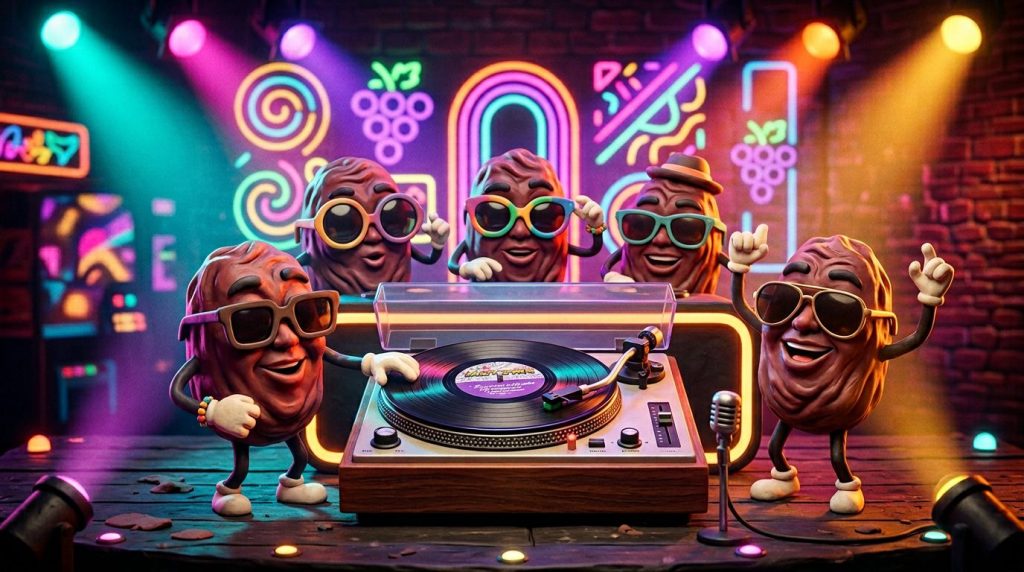
A singing raisin in sunglasses should’ve been a one-joke commercial. Instead, the California Raisins, conceived by the California Raisin Advisory Board, turned into one of the biggest pop-culture curveballs of the late 1980s.
If you were anywhere near a TV set back then, you remember the vibe. Cool voices. Tiny dance steps. That sly “I Heard It Through the Grapevine” hook. Somehow, dried fruit sweet by nature had swagger, and America bought it.
Their rise says a lot about the decade itself, when commercials could become events and Claymation could make a snack look like a chart-topping act.
California Raisins Takeaways
- The California Raisins launched as a 1986 Claymation ad campaign by the California Raisin Advisory Board, transforming wholesome dried fruit into slick, soul-singing band stars with ‘I Heard It Through the Grapevine’ swagger.
- Their handmade Claymation charm—bouncy, textured, and full of tiny imperfections—stood out in the shiny 80s, earning an Emmy and boosting stop-motion into prime-time fame via Will Vinton Studios.
- From commercials, they exploded into albums on the Billboard Hot 100, TV specials like A Claymation Christmas Celebration, a Saturday morning cartoon, and mall-clogging merch, embodying 80s ad-to-franchise mania.
- Peaking in 1988-89 before fading fast in the early 90s due to novelty burnout and shifting culture, they remain an iconic reminder of how the decade turned ordinary snacks into pop fantasies.
- Today, they capture the 80s magic of ironic cool, music-video energy, and toy tie-ins, proving raisins could outshine the era’s biggest gimmicks.
When the California Raisins Hit TV and Stole the Show
The first big California Raisins commercial aired on September 14, 1986, and it landed with perfect timing. The 80s loved personality. They loved music-video energy. They loved anything with a little attitude. A chorus line of anthropomorphized raisins as an animated musical group, dressed like a Rhythm and Blues band with lead vocals by Buddy Miles and singing Marvin Gaye, wasn’t subtle, but that was the point.
The joke worked because it wasn’t played as a joke for long. These characters weren’t cute in a syrupy way. They were slick. They had timing. They moved like seasoned performers. Instead of begging you to eat raisins, they acted like they were already stars and you were lucky to catch the set.
For background on how the successful advertising campaign took shape, the advertising history of the California Raisins lays out how the industry backed the effort and kept it rolling once audiences clicked with it. Hardee’s even played a role in the promotion through toy giveaways.
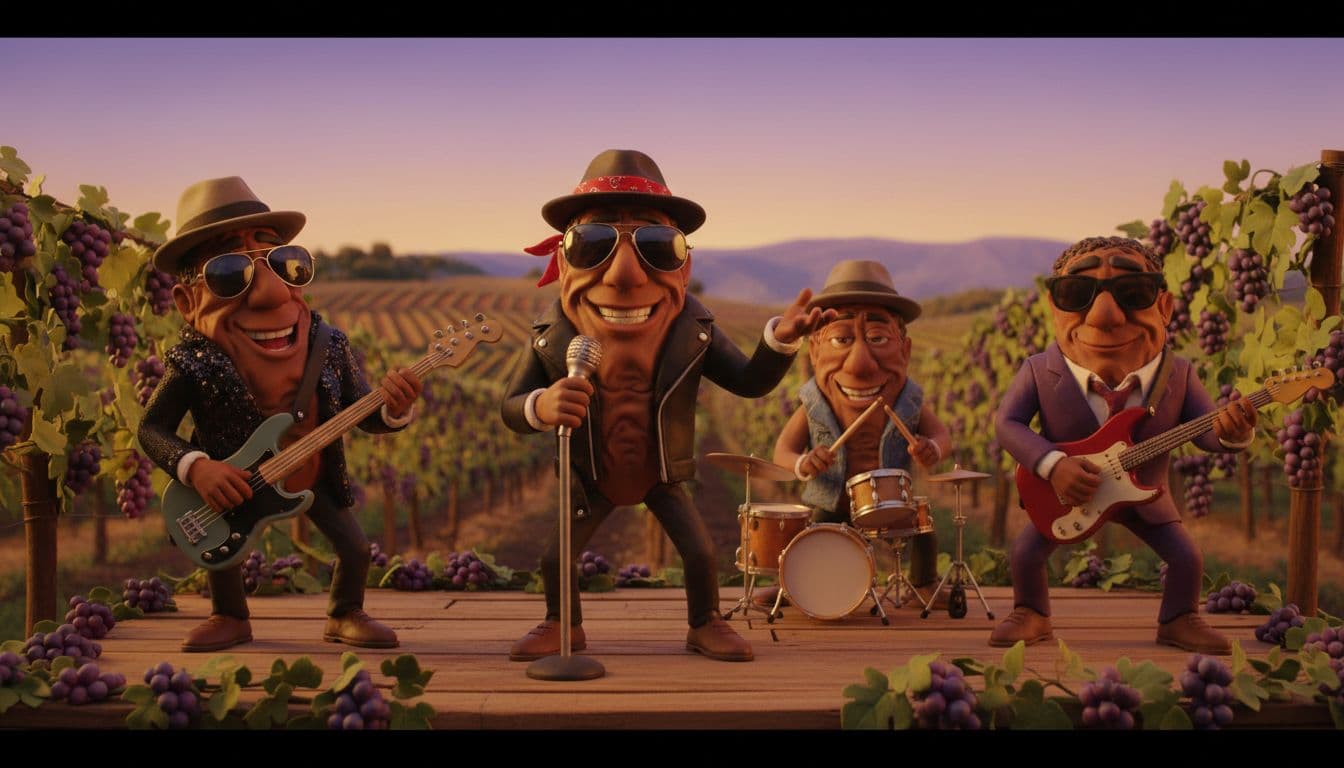
What made the ads so distinctive was the contrast. Raisins were wholesome, plain, almost old-fashioned. The commercials treated them like nightlife royalty. That mismatch created instant interest. It was the same basic magic as a great novelty song. You laugh first, then you catch yourself humming it hours later.
They weren’t selling raisins like a healthy snack. They were selling raisins like a band you wanted an encore from.
That difference mattered. Plenty of mascots were memorable in the 80s. The Raisins felt bigger than a mascot. They had a group identity, recognizable voices, and enough style to feel like characters from a mini-universe. Once viewers connected with that, the campaign stopped feeling like a campaign and started feeling like a franchise.
Why Claymation Suddenly Felt Like the Coolest Look on Television
The California Raisins also arrived at the exact moment Claymation looked fresh, funny, and a little magical. TV animation had plenty of bright colors and loud energy, but clay had texture. It had weight. It had fingerprints, almost. You could sense that these figures existed in real space, under real lights, being nudged one tiny move at a time.
That tactile quality gave the ads a warmth regular cartoons could not match. The Raisins did not glide across the screen. They bounced. They wiggled. Their faces squished in a way that made every grin and eyebrow lift feel handmade. In a decade full of shiny surfaces, that handmade feel stood out.
The craft behind it was intense. Stop-motion meant moving a figure, taking a frame, moving it again, then repeating that process over and over. It was slow work, but it created motion with a strange little spark. Not perfect, not slick, better. The tiny imperfections were part of the charm.
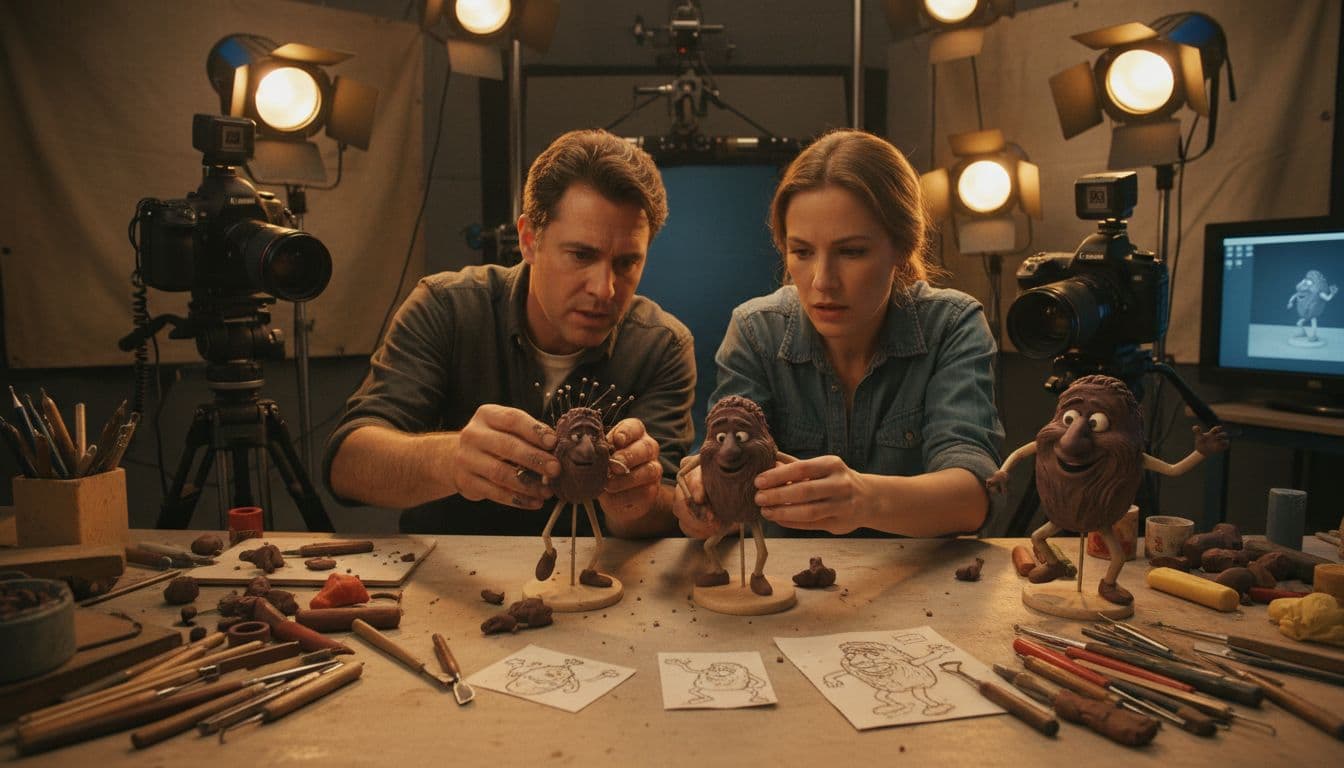
Will Vinton’s Vinton Studios had already built a name in stop-motion, and the technical mastery behind the ads earned an Emmy Award. But the Raisins brought Claymation into everyday living rooms in a huge way. Suddenly, clay animation was not some niche technique you caught in a festival short or a weird late-night special. It was in prime-time commercials. It was funny, musical, and easy for kids to latch onto.
The 80s were primed for this. MTV had trained viewers to expect rhythm and visual punch. Ads were getting bolder and more character-driven. A Claymation band fit right into that mood, while still looking unlike anything else in the commercial break. That is a sweet spot every advertiser wants, and very few ever hit.
From Ad Campaign to Full-Blown Raisin Mania
Once the commercials took off, the California Raisins escaped the 30-second spot. That’s when things got wild. They recorded albums. They showed up in TV specials. They turned into toys, figures, posters, lunchboxes, and the kind of merchandise that clogged mall shelves in the best possible 80s way.
A lot of ad campaigns fade the minute the spot ends. The Raisins kept going because the characters had enough personality to travel. Kids liked the designs. Adults liked the music joke. Parents didn’t mind the old-school soul flavor. Everybody got something out of it, which is harder than it sounds.
The Mental Floss look at how dried grapes became a hit band traces that leap from commercial mascots to pop act, including the albums, their success on the Billboard Hot 100, and the strange fact that a produce promotion basically became show business.
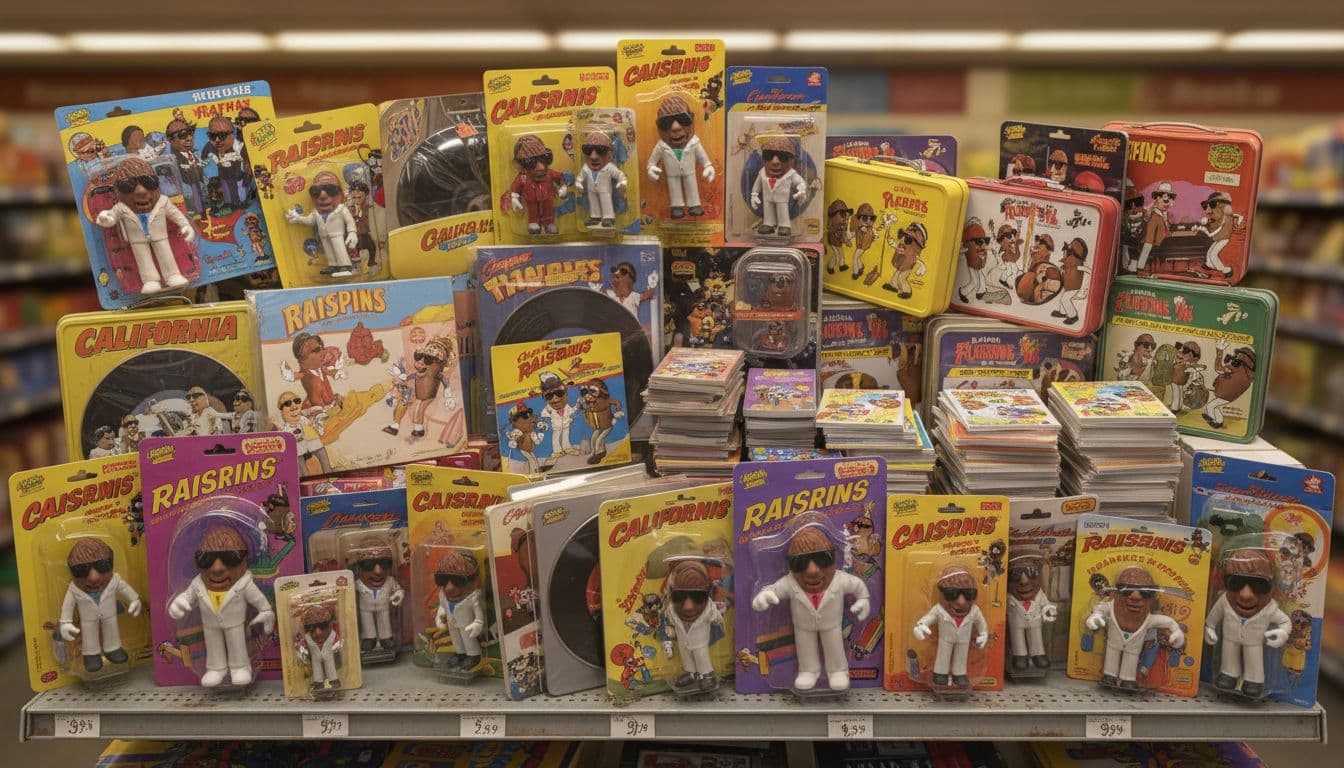
Their 1987 appearance in A Claymation Christmas Celebration helped seal the deal. That wasn’t just another ad. It was a proper TV event in the CBS Specials lineup, and it pushed the Raisins further into family entertainment. Then came Meet the Raisins! in 1988, plus a short-lived Saturday Morning Cartoon run after that. At their peak, they weren’t just selling a snack. They were touring the whole culture.
And honestly, this is why the craze still fascinates people. It wasn’t only about branding. It was about how 80s entertainment worked. If a character caught on, the machine moved fast. Records, specials, toys, greeting cards, whatever the market could hold. The Raisins hit that pipeline at full speed, and for a brief moment they seemed almost everywhere. Some of the original figures are now in the Smithsonian Institution.
The Peak Was Huge, but the Fade Came Fast
The rise happened in a hurry, and the cooldown did too.
| Year | What happened | Why it mattered |
|---|---|---|
| 1986 | First major TV commercial airs | The Raisins debut as a singing Claymation group |
| 1987 | A Claymation Christmas Celebration | They jump from ads into must-see holiday TV |
| 1988 | Meet the Raisins! and merch explosion | The campaign becomes a full pop-culture property |
| 1989 | Saturday morning cartoon era | Peak visibility, but overexposure starts creeping in |
| Early 1990s | Public interest cools | The novelty wears off and the California Raisin Marketing Board shifts ad strategy |
That table tells the story. The California Raisins burned bright because the idea was instantly understandable and instantly repeatable. But that’s also the trap of novelty. Once you’ve seen the joke, bought the figure, heard the song, and watched the special, the next beat has to be stronger. That’s hard for any character, let alone one built to sell a food item.
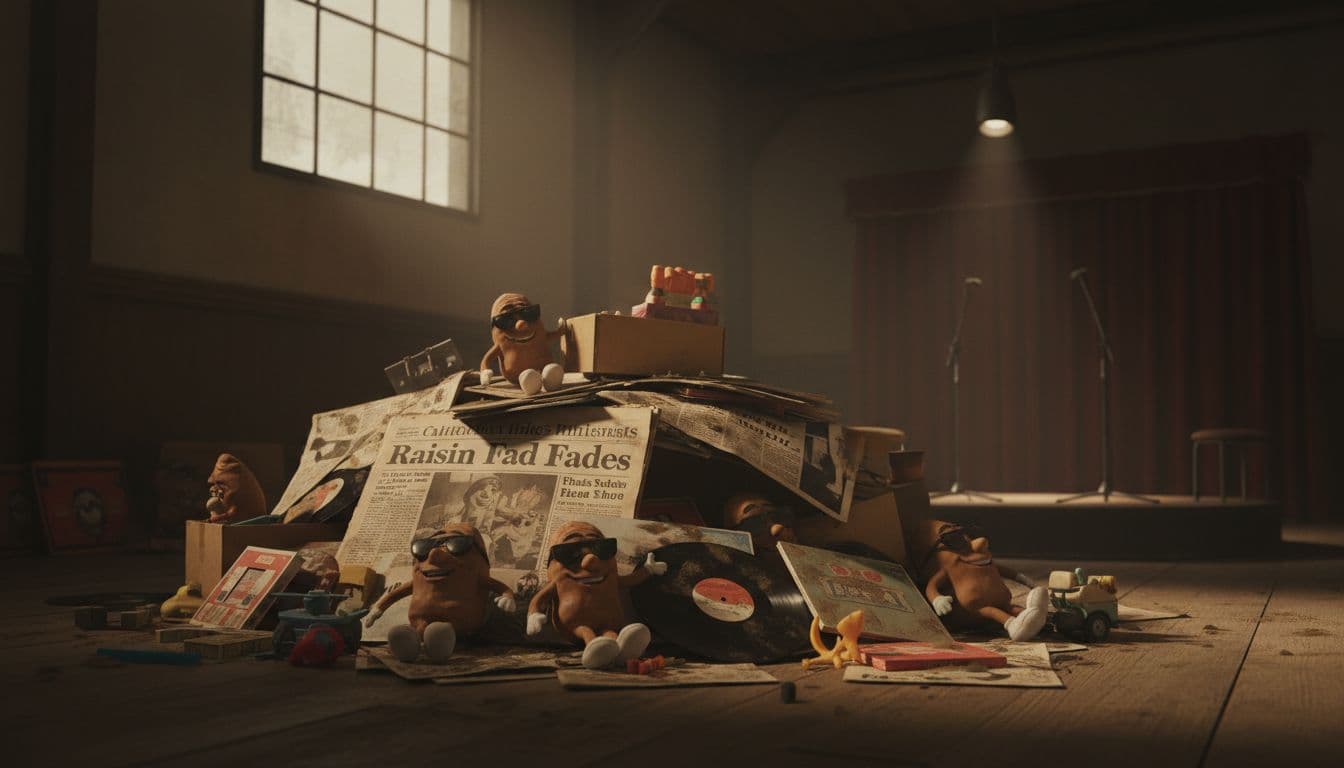
The broader culture was changing too. By the early 90s, the mood felt different. Ads got snappier. Kids’ entertainment moved faster. New mascots and new gimmicks crowded the field. Claymation still had charm, but it no longer felt like a surprise. Once the surprise goes, you’re left with upkeep, and upkeep is never as exciting as discovery.
That doesn’t make the campaign a failure. Far from it. The Raisins had a massive run. They crossed from advertising into entertainment in a way most brands only dream about. Their fade is part of the story, not a footnote. It shows how pop-culture crazes work. They flare, they spread, they overreach a bit, then they settle into memory.
And memory is where these guys still shine.
Why They Still Feel So 80s
The California Raisins stick in your mind because they compressed so much of the decade into one package. Music obsession, character branding, TV-first fame, weird humor, toy tie-ins, and that handmade animation glow, it’s all there.
They also hit a sweet emotional note. The campaign was ironic enough to be funny, but warm enough to be loved. The Raisins weren’t mean. They weren’t edgy in a nasty way. They were playful, polished, and a little ridiculous. That’s a hard balance to pull off, and it’s a big reason people still smile when they pop up.
For 80s fans, they also capture one of the decade’s best tricks: turning something ordinary into something unforgettable. The California Raisins, a whole food packed with fiber, potassium, iron, and natural sugars that acts as a natural sweetener, are tiny. Quiet. They should never have this much charisma. And yet, for a few glorious years, these wrinkled little showmen had America singing along.
Frequently Asked Questions
When did the California Raisins first hit TV screens?
The first major California Raisins commercial aired on September 14, 1986, featuring a chorus line of anthropomorphic raisins as a Rhythm and Blues band singing Marvin Gaye’s ‘I Heard It Through the Grapevine’ with Buddy Miles on lead vocals. It landed perfectly in the 80s vibe of attitude, music-video energy, and personality-driven ads. The slick, non-cutesy style quickly turned viewers into fans, launching the phenomenon.
What made the Claymation style of the California Raisins so special?
Claymation gave the Raisins a tactile, handmade warmth with bouncy movements, squishy expressions, and real-world texture that regular cartoons lacked. Produced by Will Vinton Studios, the stop-motion craft created imperfect, magical motion that felt alive under studio lights. In a decade of shiny surfaces, this fingerprint charm made them pop, earning an Emmy and bringing niche animation to everyday living rooms.
How did the Raisins expand beyond commercials into pop culture?
They jumped to albums that charted on Billboard, TV specials like A Claymation Christmas Celebration and Meet the Raisins!, a short-lived Saturday morning cartoon, and endless merch from toys to lunchboxes. Hardee’s promoted them with giveaways, and their group personality let them tour the culture like a real band. At peak, they clogged mall shelves and felt like a full franchise, not just a snack pitch.
Why did the California Raisins craze fade so quickly?
Novelty burned bright but fast—after the joke, songs, specials, and toys, overexposure hit by 1989, and early 90s culture shifted to snappier ads and new gimmicks. The California Raisin Marketing Board changed strategy as public interest cooled. Yet their flare-up shows how 80s crazes worked: massive run, then memory gold, with originals now in the Smithsonian.
Do the California Raisins still matter today?
Absolutely—they nail the 80s essence of turning ordinary raisins (packed with fiber, potassium, and natural sweetness) into charismatic stars via clay, soul, and commercial confidence. They remind us how ads became events and anything could go viral pre-internet. Honor them with Sun-Maid in recipes like Oatmeal Raisin Cookie Smoothies for that nostalgic kick.
Final Thoughts
The California Raisins worked because they were more than a clever ad. They were a full-on 80s pop fantasy, built out of clay, soul music, and pure commercial confidence.
Their craze didn’t last forever, and it didn’t need to. The fun was in that burst of impossible cool, when a box of raisins could feel like the hottest act on TV. That’s why the California Raisins still matter. They remind you that the 80s could turn almost anything into a star, if it had the right song and enough attitude. Honor their legacy today with Sun-Maid raisins in delicious recipes like Banana Bread or an Oatmeal Raisin Cookie Smoothie.