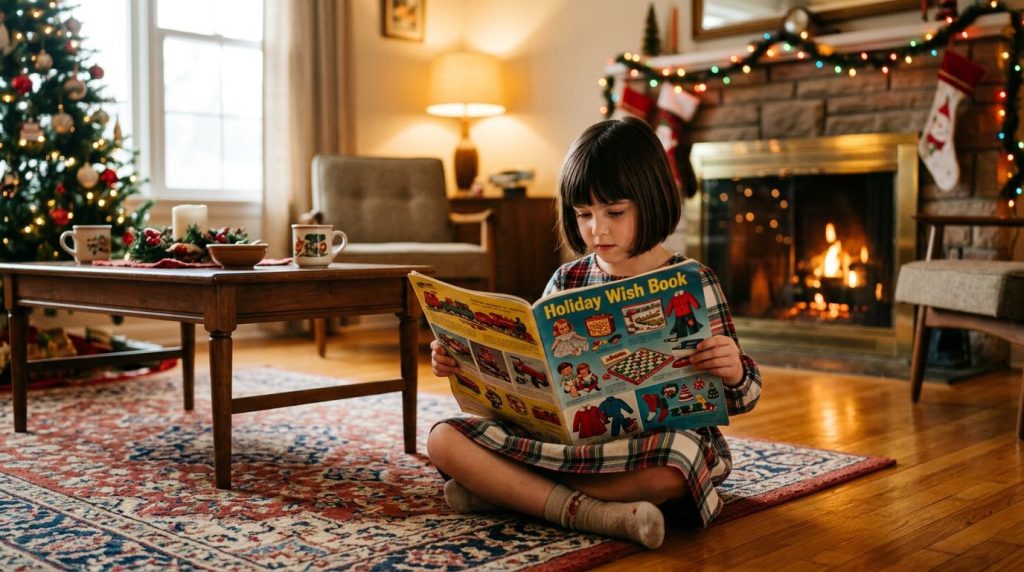
The mailbox used to carry actual suspense. Not bills, not coupons, not junk, but the Sears Wish Book, thick as a winter sweater and loaded with possibility.
If you were a kid in the catalog era, you know the feeling. You didn’t flip through it once and move on. You parked yourself on the floor, circled half the toy section, folded corners, and built whole December fantasies one glossy page at a time. Before online carts and wish-list apps, this was the list.
When the Wish Book Arrived, Christmas Felt Official
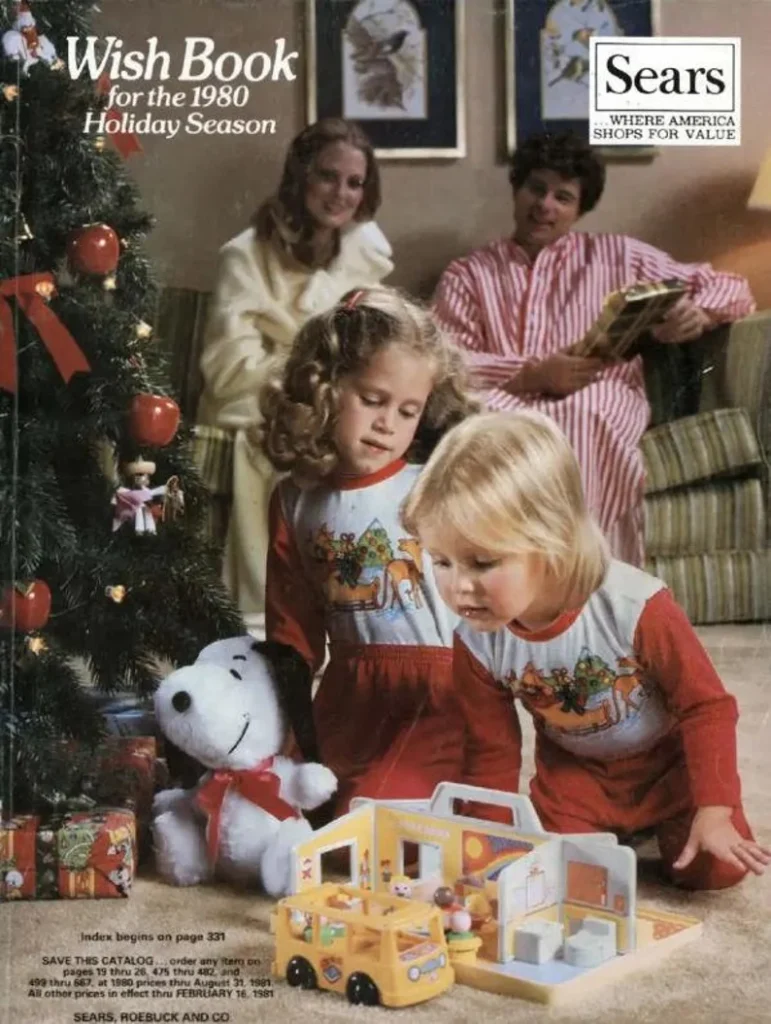
The Sears Wish Book wasn’t just another catalog. It was the catalog, the one that told kids the holiday season had started for real.
According to the Sears Wish Book overview, the holiday catalog began in 1933 as a separate Christmas book. That matters because it explains why it felt different. Sears already had a huge mail-order business, but the Wish Book zeroed in on gifts, toys, fashion, jewelry, and the kind of things that made kids stare at a page longer than any adult ever would. If you wish, you can look through all the Sears Wish Books available online in an archive!
For a lot of families, Sears was familiar in a big, everyday way. It sold appliances, tools, clothes, tires, school shoes, and all the practical stuff. Then the Wish Book showed up and changed the mood. Suddenly, the same company that sold Dad a wrench and Mom a washing machine was offering a Barbie dream setup, a train set, a bike with a banana seat, or the board game everyone at school kept talking about.
That mix is part of the magic. The catalog didn’t feel fancy or distant. It felt reachable. Maybe not everything in it was affordable, but it was there in your house, on your couch, in your hands.
You didn’t need to own the toy yet. For a few weeks, the page was enough.
And unlike a quick walk through a store, the Wish Book let you linger. You could compare dolls. Re-read the blurb for the remote-control car. Debate whether you wanted the big item, the safe item, or the one that felt slightly impossible. It was shopping, sure, but to kids it felt more like scouting the future.
Why Kids Treated the Sears Wish Book Like a Treasure Map
The ritual was half the fun.
You’d start with a casual flip. Then one page stopped you cold. Next thing you knew, you had a pen, a marker, maybe a secret system. Circle for “want.” Star for “really want.” Folded corner for “if Santa is feeling generous this year.”
Kids made those pages personal. They dog-eared the corners. They memorized item numbers. They slid the book across the table and said, “Look at this one.” Siblings negotiated. Cousins compared notes. Parents pretended not to notice how many circles had mysteriously appeared overnight.
That tactile part matters more than people admit. The Wish Book had weight. It smelled like ink and paper. Pages made that soft, slippery sound when you turned them. You could sprawl on the carpet for an hour and still feel like you had more to inspect. Try getting that kind of drama from a search bar.
The catalog also gave kids a rare kind of control. Not over what they got, of course, but over how they imagined it. You could stage a whole Christmas in your head. The action figures would go here. The cassette player would sit on that shelf. The new bike would absolutely transform your social standing by December 26. Logic had left the building, and that was part of the point.
For 80s kids, this hit especially hard. Toys were louder, brighter, more character-driven, more shamelessly irresistible. Entire pages looked like a sugar rush. Somewhere between the dollhouses and race tracks, you could spot the same kind of fever that fueled the Rubik’s Cube craze. Every page had that same message: this is the thing everybody wants.
And because the book stayed in the house for weeks, the wanting stretched out. Anticipation got room to grow. That’s rare now. Back then, the wait was baked in, and kids made an event out of it.
The Toy Pages That Changed With the Times
The Sears Wish Book lasted long enough to mirror whole eras of American childhood. Each decade had its own flavor, and you can almost read the country’s changing tastes by what kids circled first.
Here’s the quick snapshot:
| Era | What jumped off the page | What kids were dreaming about |
|---|---|---|
| 1950s and 1960s | Trains, dolls, bikes, play kitchens | Classic make-believe and backyard freedom |
| 1970s | Action figures, board games, toy vehicles, electronic novelties | Shared play, TV tie-ins, and early gadget excitement |
| 1980s | Cabbage Patch Kids, Transformers, Nintendo, boomboxes, puzzles | Character brands, home gaming, and big-ticket wow factor |
| 1990s | Game systems, talking toys, computers, trend-driven brands | Tech at home and toys with media hype baked in |
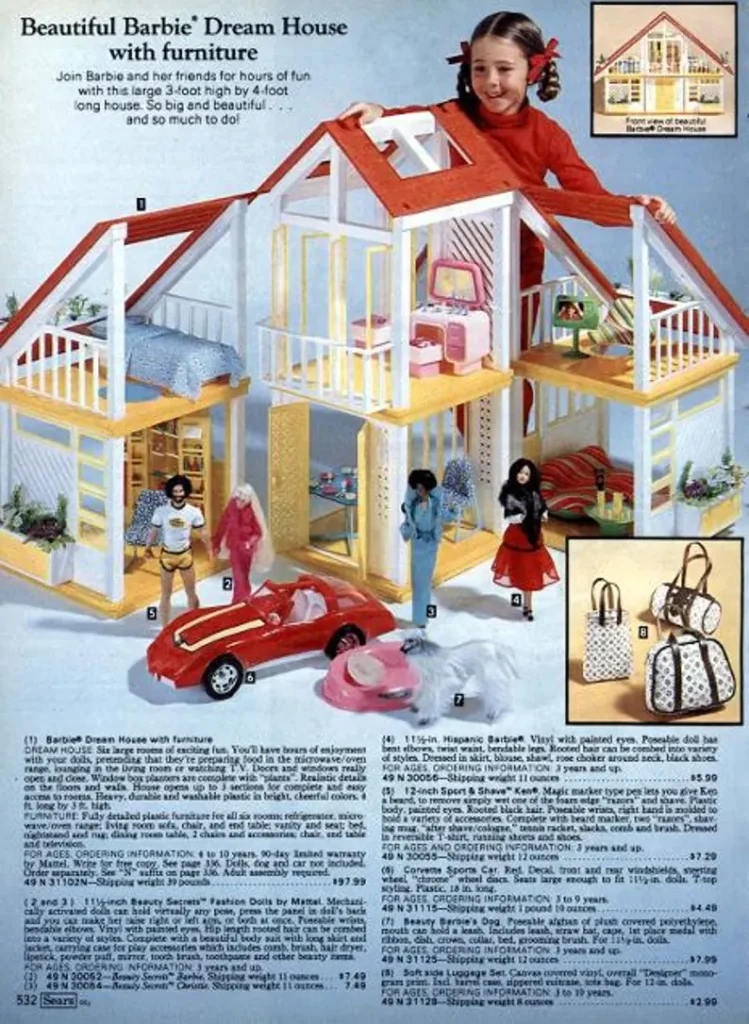
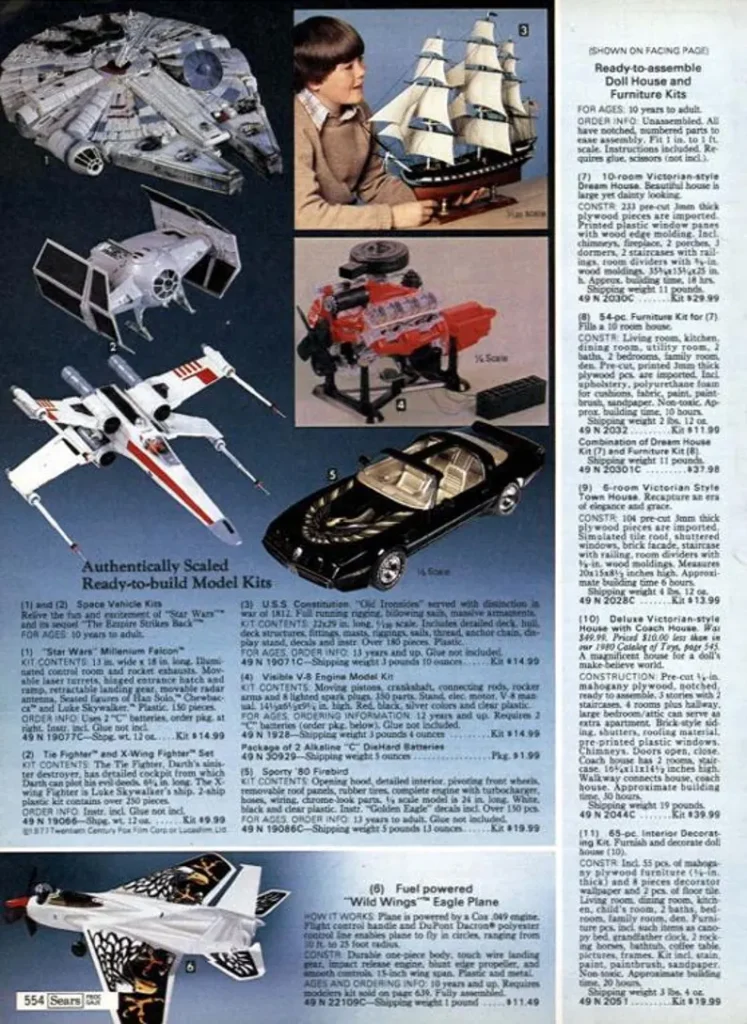
The 80s pages are the ones that still make a lot of grown adults go glassy-eyed. This was peak “sit on the floor and lose track of time” material. One spread might give you action figures and plastic vehicles. Turn the page and there were dolls with full wardrobes, toy kitchens, BMX-style bikes, and electronics that made you feel one gift away from a movie montage.
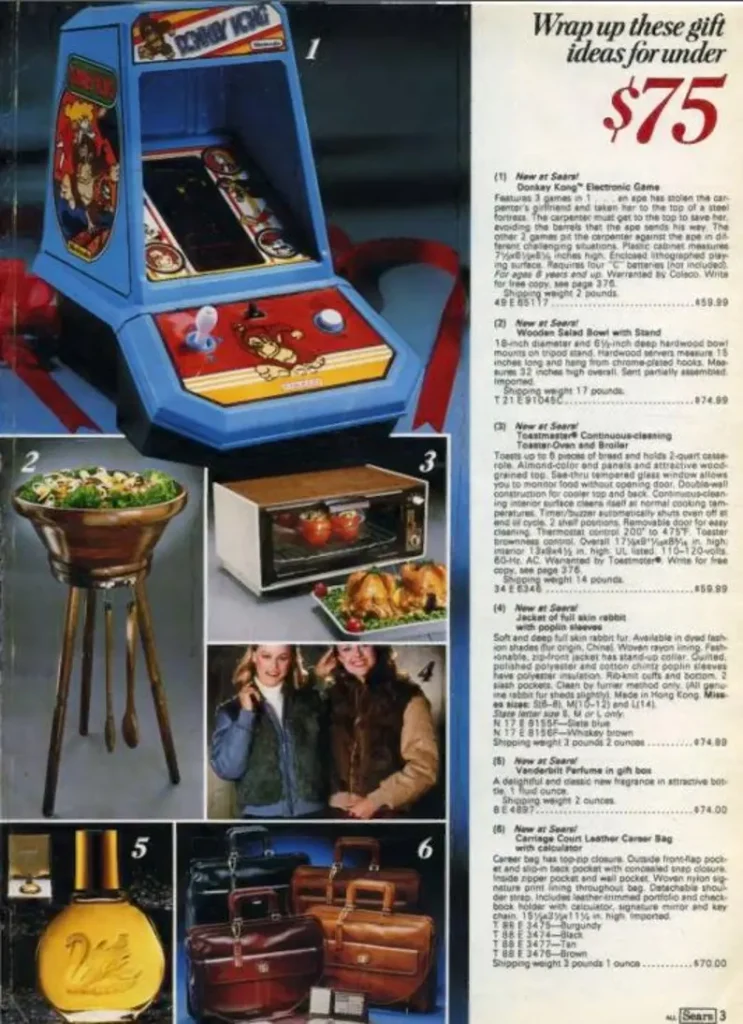
Video games changed the rhythm of the book, too. Suddenly the catalog wasn’t only promising toys you could hold, it was promising worlds. Home consoles, handheld games, cartridges lined up like treasure. If you still love that side of the decade, easy-to-learn 80s arcade classics carry some of that same bright, blippy energy.
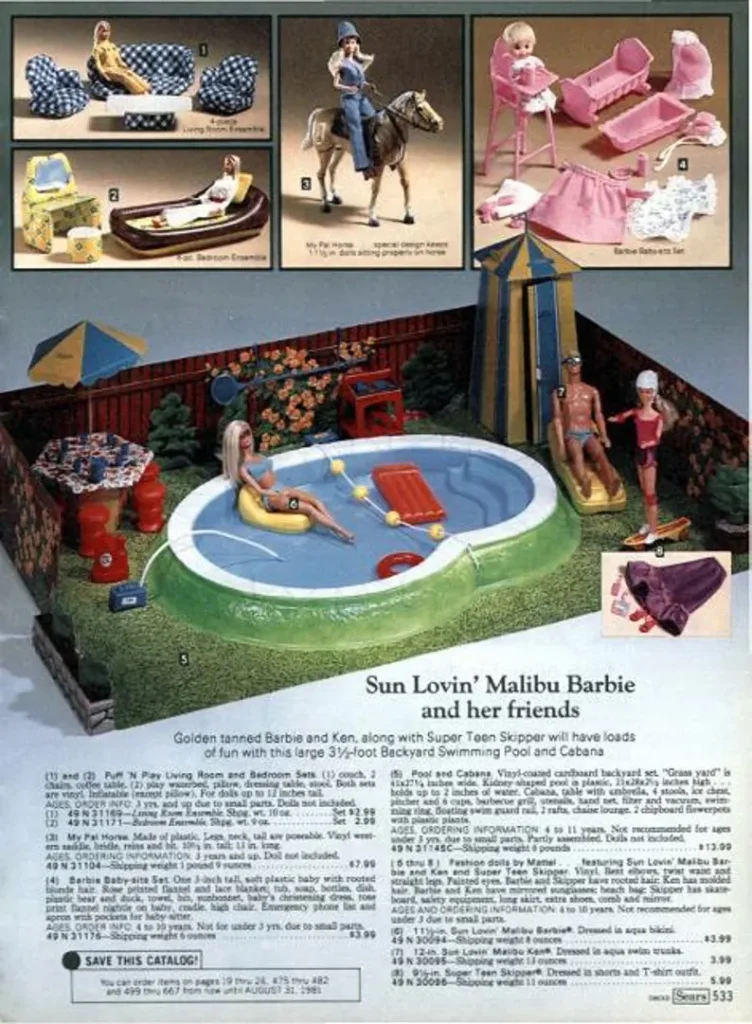
The Wish Book also sold status, in the kid way, not the Wall Street way. The “big present” had its own glow. Maybe it was a telescope. Maybe it was a stereo system for a teenager. Maybe it was the giant dollhouse that seemed to take up half a page. The catalog made those items look mythic.
And yet, the smaller stuff mattered too. Sticker sets. Matchbox cars. Craft kits. Cheap little stocking-stuffer wonders. A lot of families used the Wish Book to balance dreams with reality. Kids circled the giant item, then learned to love the modest pick sitting a few rows below it.
That’s why the book sticks in memory. It held both fantasy and math.
Sears, American Holiday Culture, and the Long Goodbye
The Wish Book became part of American holiday culture because it fit the country that made it. Sears had reach. Mail-order retail could bridge small towns, suburbs, city neighborhoods, and places far from a big department store. The catalog brought the same holiday showroom to everyone who got one in the mail.
That kind of access shaped traditions. Some families passed the catalog around after dinner. Some kids kept it hidden in bedrooms like classified material. Others treated it like a negotiation tool and left pages “accidentally” open where parents would see them.
Good Housekeeping’s history of the Wish Book traces the catalog through changing forms until 2011. By then, the world that made it famous had shifted. Malls had their own pull. Big-box stores changed buying habits. Online shopping sped everything up. The waiting, the circling, the shared family browsing, all of that got chipped away.
That’s the long goodbye. Not one dramatic ending, but a slow fading of a ritual.
Later revivals and nostalgia projects are their own thing, and people clearly love them. They tap into the memory of the old book, and for former catalog kids, that’s a strong pull. But it’s worth separating those later callbacks from the original era. A digital tribute can remind you of the feeling. It can’t fully recreate the thick catalog on the coffee table, the page corners bent from overuse, or the tiny heartbreak of seeing “sold out” after you’ve already fallen in love with something on page 487.
The original Wish Book belonged to a slower holiday rhythm. That wasn’t better in every way, but it was more communal. Families looked at the same pages. Kids learned patience, or at least practiced pretending to.
The Catalog That Let Kids Dream Out Loud
The Sears Wish Book mattered because it turned wanting into a season of its own. It gave kids time to imagine, compare, hope, and picture the exact shape of a perfect Christmas morning.
That’s why people still talk about it with that unmistakable glow. Not because every toy was amazing, and not because every wish came true, but because the book made room for anticipation, and anticipation is a huge part of childhood magic.
Long before wish lists lived on screens, this catalog let kids dream in public, right there on the living room floor. That’s a hard thing to replace, and maybe that’s why it still feels so special.