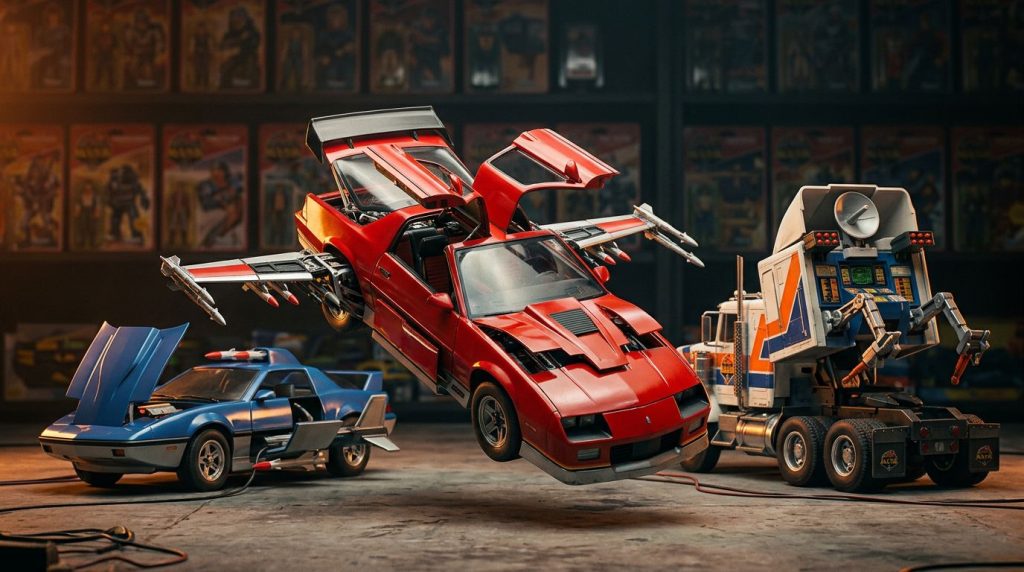
You didn’t just play with M.A.S.K. toys, you sprang them open. A red car became a flying assault machine. A semi truck turned into a mobile command center. A boat looked ready for a chase scene before it even hit the carpet.
That was the hook, and kids felt it fast. In an 80s toy aisle packed with muscle, monsters, and mascots, M.A.S.K. had a trick that never got old: ordinary-looking vehicles hiding extra hardware, secret panels, and full-on mission energy.
Once you got one in your hands, the whole line made sense.
The Big Hook for M.A.S.K. Toys Was the Transformation
What made M.A.S.K. so special? Simple. The vehicles didn’t transform into giant robots. They transformed into cooler versions of themselves.
That difference mattered.
A lot of 80s toys were loud right out of the box. M.A.S.K. played a smarter game. A car still looked like a car. A helicopter still looked like a helicopter. Then, with one satisfying motion, out came wings, armor, missiles, or hidden engines. It felt like discovering a secret, not flipping a gimmick.
Kenner launched the line in 1985, and that timing couldn’t have been better. Kids were already primed for toys that did more than one thing. The decade loved hidden features, surprise reveals, and anything that felt like a magic trick you controlled. That same hunger showed up in other favorites too, from the transforming Popples toys and cartoon to action lines built around spring-loaded parts and secret compartments.
M.A.S.K. took that idea and gave it wheels.
According to The Toy Collector’s Guide overview, the main run landed between 1985 and 1987, which makes its footprint seem short on paper. On a bedroom floor, though, it never felt short. These were the toys you kept near the front of the fleet. They were fast to set up, fun to transform, and easy to work into whatever story your imagination had cooked up that afternoon.
The best part wasn’t the change itself. It was that you could do it again, and again, and still grin.
That’s why kids called them some of the best. They rewarded repetition. Every flip, slide, and snap stayed satisfying.
Why the Vehicles Felt Bigger Than Life
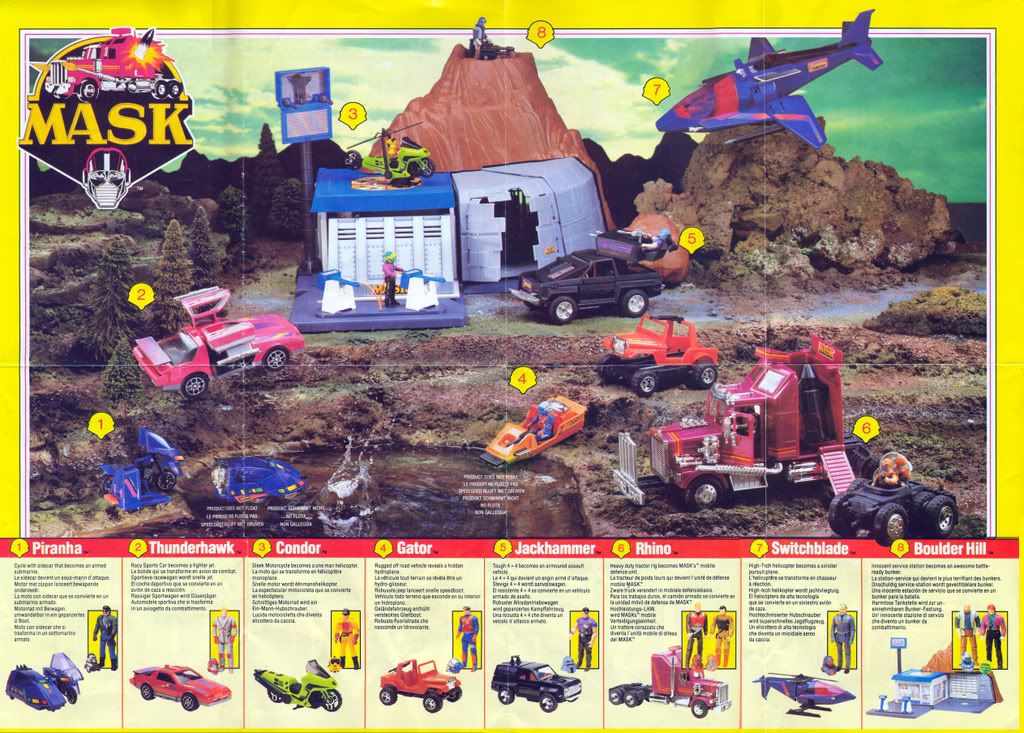
Ask anyone who had a favorite M.A.S.K. vehicle, and you’ll usually hear the names right away: Thunderhawk, Switchblade, Rhino. Not because they were the only good ones, but because they nailed the fantasy in three different ways.
Thunderhawk was the cool-kid pick. Matt Trakker’s red sports car already looked sharp sitting still. Then it opened up into attack mode, with wings and weapons tucked inside that sleek body. It had movie-star confidence. You could park it next to anything and it still stole the scene.
Switchblade had villain energy in the best way. Miles Mayhem’s helicopter felt dangerous before it even transformed. Once the attack features came into play, it looked like the kind of toy designed by a kid drawing in the margins of a math notebook. Wild, fast, a little mean.
Rhino brought heft. A big rig that became a rolling headquarters? Come on. That was catnip for any kid who liked command centers, hidden launchers, and the feeling that the whole operation could move out at any second.
Here’s a quick snapshot of why these vehicles hit so hard:
| Vehicle | What it looked like first | What made kids love it |
|---|---|---|
| Thunderhawk | A red sports car | It turned sleek speed into instant air-attack drama |
| Switchblade | A helicopter | It felt like the villain vehicle with the most swagger |
| Rhino | A semi truck | It packed a base, a vehicle, and a mission starter in one toy |
| Gator | A speedboat | It brought water-play imagination and secret-weapon surprise |
The takeaway is easy: M.A.S.K. vehicles sold the fantasy before and after the transformation.
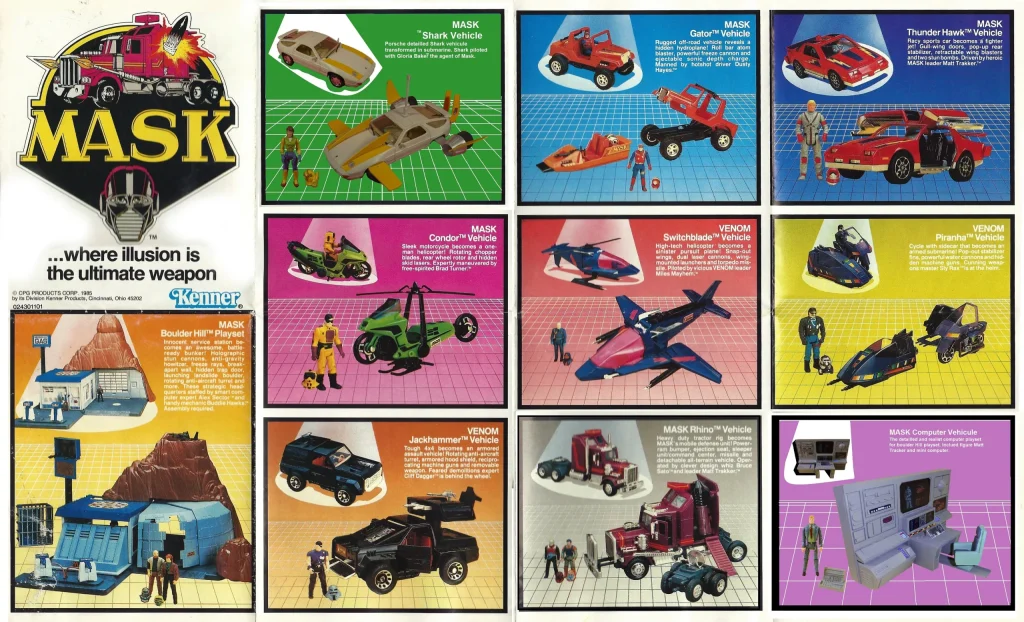
If you want to browse the line vehicle by vehicle, Transformerland’s M.A.S.K. archive is a handy visual rabbit hole. It reminds you how wide the range really was. Motorcycles, boats, race cars, trucks, even oddball favorites that were never the headline stars, the line had shape variety and play variety.
And that mattered too.
A great toy line doesn’t only give you “the main one.” It gives you a world. M.A.S.K. did that with vehicles that each felt like a different flavor of fun.
The Design Was Smart, Fast, and Built for Play
Some toys looked amazing in the package and got fussy once you opened them. M.A.S.K. usually worked the other way around. The real charm kicked in when you started messing with the parts.
The transformations were quick. No long sequence. No manual needed every single time. You learned the move once, then your hands remembered it. That speed made a huge difference on the living room floor, where attention spans bounced and every second counted. A good M.A.S.K. toy didn’t slow the game down. It launched the next scene.
Then there were the figures.
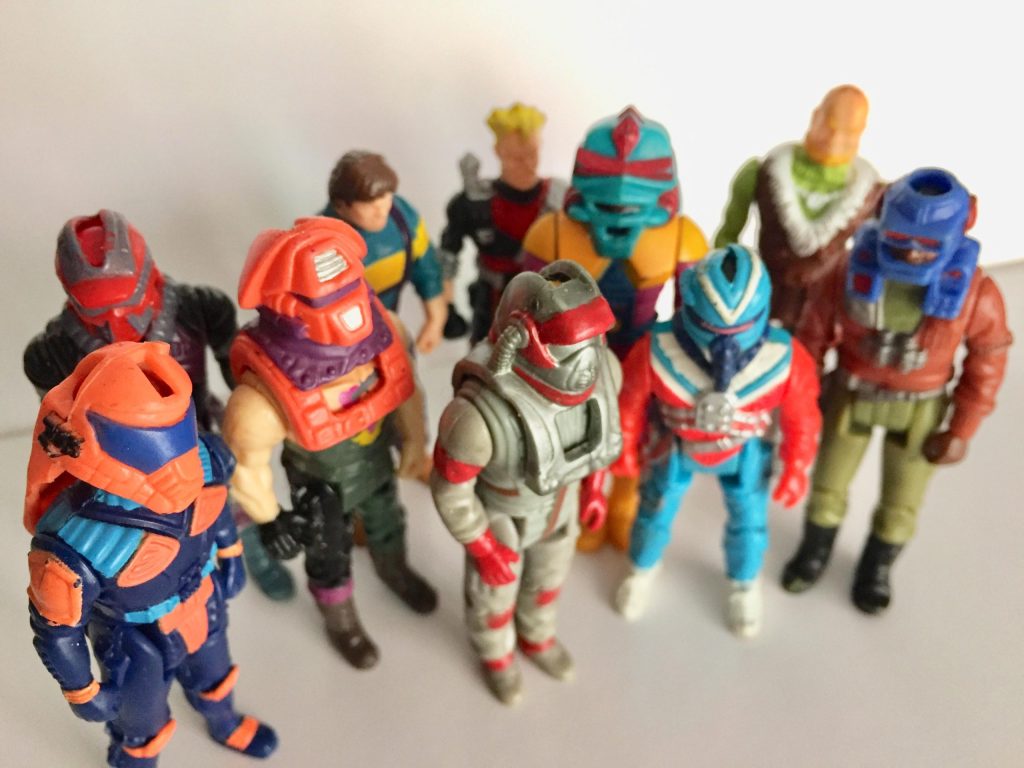
Those tiny drivers and pilots gave the line its extra spark. The masks made each character feel part superhero, part agent, part racer. It wasn’t only “here’s a cool car.” It was “here’s a cool car driven by somebody with a special identity and a power boost.” That mix made the world feel larger than the toy’s actual size.
Like many 80s hits, M.A.S.K. also had TV support, which helped lock in the faces, voices, and rivalries. The decade was full of toy lines that made the jump to animation, and the original Pound Puppies toy line and series followed that same toy-to-cartoon path. M.A.S.K. used that formula too, but its vehicles did more of the heavy lifting. Even if you forgot an episode plot, you remembered the red car that turned into an attack machine.
That’s the heart of it. The concept was easy to explain in one sentence, and even easier to love in motion.
For a lively walk through the whole range, The Complete Toy History of MASK captures the moving parts better than a static photo ever could. You see the same thing kids saw right away: these toys were compact little action scenes waiting to happen.
You could race them. Launch them. Chase them. Stage betrayals. Change the mission halfway through. No wonder they stayed out on the carpet long after other toys went back in the bin.
Why M.A.S.K. Toys Still Hit Collectors Right in the Heart
Collector love for M.A.S.K. isn’t only about scarcity. It’s about memory meeting design.
A lot of 80s toys trigger nostalgia, but not all of them hold up once you pick them up again. M.A.S.K. usually does. The engineering still feels clever. The shapes are still bold. The transformations still have that little snap of satisfaction. You can see why a kid lost his mind over Thunderhawk in 1985, and you can still feel a flicker of that same excitement now.
Of course, collecting them isn’t always easy.
Tiny masks go missing. Missiles vanish into history. Stickers peel. Hinges and tabs can be fussy after decades. Anyone hunting original pieces learns fast that condition matters, and complete examples matter even more. A loose vehicle with working parts still has charm, but a complete one with its figure, mask, and accessories hits differently.
Younger retro fans have started to get the appeal too, which makes sense. M.A.S.K. sits in a sweet spot between action figures, model vehicles, and transforming toys. The same collector energy drove the hunt for M.U.S.C.L.E. figures, another 80s line built on personality and variety. It doesn’t ask you to choose one lane. It gives you all three.
That’s also why the line still gets talked about with real affection instead of polite museum respect. These toys were meant to be handled. You can admire them on a shelf, sure, but they make their strongest case when a panel flips open and the whole machine changes personality in your hands.
And that’s the trick, still working after all these years.
M.A.S.K. toys weren’t beloved because they were merely collectible. Kids loved them because the vehicles felt like secrets on wheels, ready to reveal something cooler every time you touched them.
That’s why the line still glows in memory. The best ones gave you speed, surprise, and story all at once, and that combo still feels like pure 80s magic.