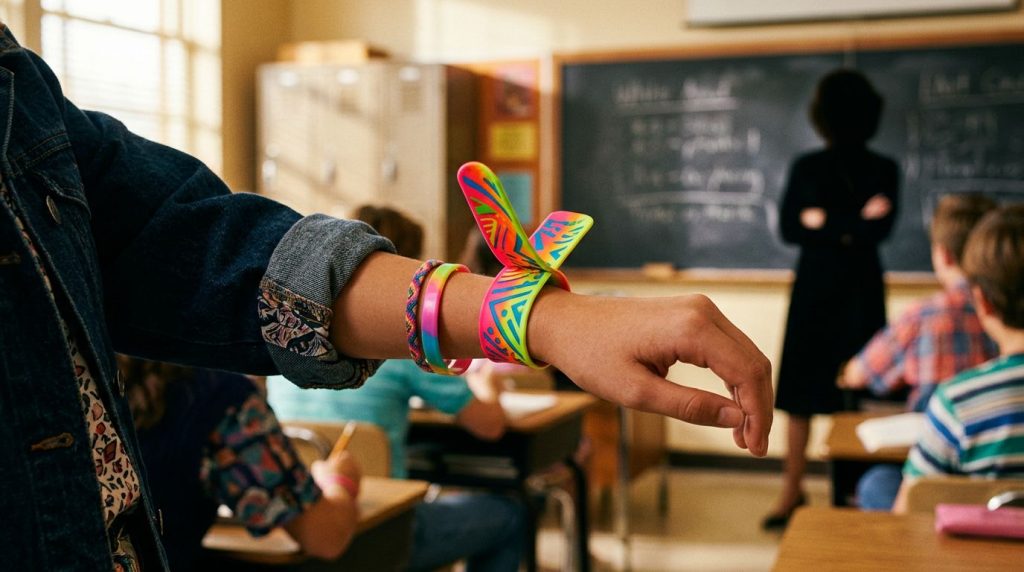
You could hear them before you saw them, that fast little snap in the middle of homeroom. Slap bracelets were cheap, bright, weirdly satisfying, and almost impossible for kids to leave alone.
That was the whole problem. The same thing that made them fun also made them perfect school contraband, half toy, half accessory, all distraction. If you grew up anywhere near the late 1980s or the turn into the 1990s, you probably remember the sound, the colors, and the inevitable adult crackdown.
Why Slap Bracelets Took Over School So Fast
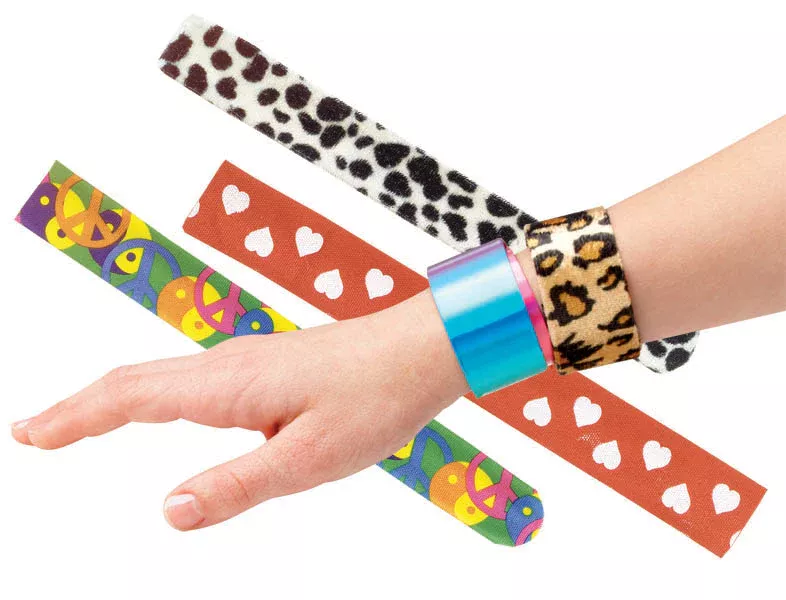
The genius of slap bracelets was how little explaining they needed. You tapped one against your wrist, it curled instantly, and suddenly you had jewelry with a tiny magic trick built in.
That simple mechanism helped turn them into a full-blown school craze. A basic history of slap bracelets traces the idea to Wisconsin teacher Stuart Anders in 1983, when he created the original “Slap Wrap.” Kids didn’t care about the patent story, of course. Kids cared that the thing snapped shut like it had a mind of its own.
It also fit school life perfectly. You could buy one without draining your allowance. You could trade them. You could stack them. You could coordinate them with neon shoelaces, jelly accessories, or one of those classic back-to-school Trapper Keepers that made every binder feel like a fashion statement.
The look was half toy aisle, half school-supply gold rush.
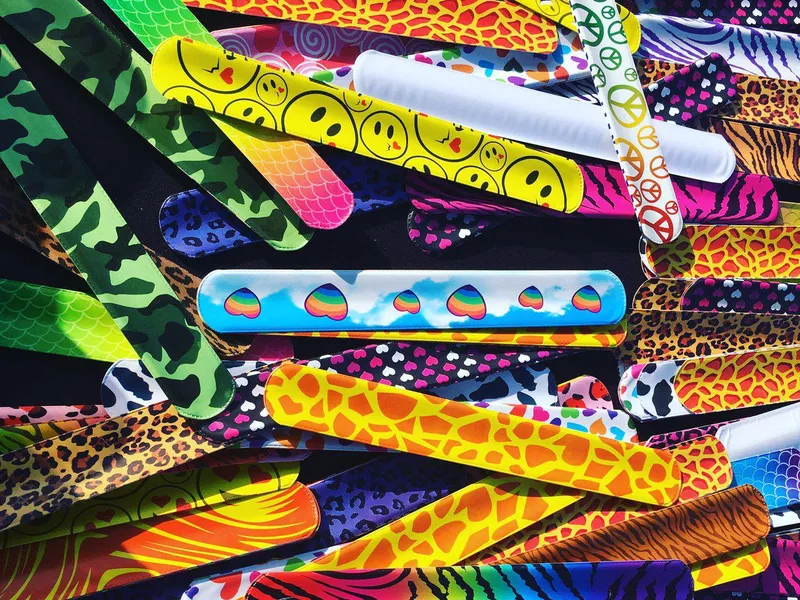
Their design did the rest. Animal prints, fluorescent swirls, metallic finishes, bold solids, fake snakeskin, hearts, stars, checkerboard patterns, the whole glorious rack. They looked like they belonged beside sticker sheets, novelty pencils, and every other colorful thing kids wanted near a desk.
And then there was the sound. That snap wasn’t subtle. It announced itself. In a classroom, that mattered.
A school fad didn’t need batteries or rules. It needed a look, a gimmick, and a reaction.
Slap bracelets had all three. They were wearable, collectible, and a little showy, which is exactly why they spread like wildfire between buses, lunch tables, and after-school hangouts.
Why Kids Couldn’t Get Enough of Them
Part of the appeal was pure sensory fun. You didn’t clasp a bracelet like an adult. You smacked it onto your wrist and let physics do the work. That tiny bit of drama made an ordinary accessory feel alive.
The other part was social. School has always been a place where little objects carry oversized meaning. A folder, a keychain, a pencil case, even the right eraser could say something about you. Slap bracelets fit right into that ecosystem. They let kids show taste without spending big money or breaking major dress-code rules.
That’s why they weren’t just jewelry. They were props. You could swap them with friends, compare colors, line up a bunch on your arm, or keep one looped around a backpack strap until the next class. Even when a kid had only one, it still felt like a statement piece.
They also landed in the same sweet spot as other school-friendly obsessions. Think of the little status jolt that came with carrying a cube, a toy, or some brightly colored accessory that everybody recognized. The same energy powered the 1980s Rubik’s Cube craze, where the object in your hand doubled as a badge.
Slap bracelets were even more democratic. You didn’t have to solve anything. You didn’t need a collection worth bragging about. You only had to make that snap.
There was also a mischievous side to them. Not bad-kid mischief, just classroom mischief. The harmless kind, at least at first. A quick snap during study hall. A friend reaching across the lunch table to wrap one onto your wrist. A pile of them hidden in a desk like treasure. If you know, you know.
For kids, that was the magic. They were silly, stylish, and interactive all at once. A bracelet that behaved like a toy was always going to win.
Why Teachers and Parents Tried to Ban Them
Adults saw the same bracelet and got a very different message. Instead of fun, they saw one more thing pulling attention away from class.
Teachers had reasons. Slap bracelets made noise. Kids fidgeted with them. They traded them in the middle of lessons. They snapped them on and off instead of taking notes. Any trend that spreads through a classroom at lightning speed starts to look less like fashion and more like a management problem.
Then came the safety issue, which gave schools a much firmer case. Not every slap bracelet was dangerous, and plenty were used without any trouble. But some cheaper versions could split over time, exposing the thin metal strip inside. When that happened, cuts were possible. A Mental Floss history of the 1990 phenomenon points to school bans that followed reported injuries, including a case in New York that helped push the story into wider news coverage.
Here’s the split in one glance:
| Kids saw | Adults saw |
|---|---|
| A cool bracelet with a fun snap | A classroom distraction |
| A cheap collectible | One more fad to police |
| A harmless toy-like accessory | A possible safety risk if it broke |
| A way to fit in | A trend that spread too fast |
Once injuries entered the conversation, even in a limited number of cases, the mood changed. Schools don’t like gray areas where something is fun until it suddenly isn’t. The ban hammer comes down fast when a novelty item can also leave a cut on a kid’s arm.
Some of the panic got bigger than the facts. That’s what happens when local incidents meet TV news and word-of-mouth. A few reports can make every bracelet sound dangerous, even if most were fine. But the concern wasn’t invented out of thin air either. Broken bracelets with exposed metal were a real issue for some schools, and administrators responded the way they usually do, by removing the item altogether.
So yes, teachers were annoyed. Parents were wary. Principals were done with it. In school terms, that combo almost always ends the same way.
What the Ban Really Said About School Fads
Slap bracelet bans weren’t only about the bracelets. They were about how schools react when kid culture gets loud, fast, and impossible to ignore.
That had happened before, and it would happen again. The 1980s loved collectible mania, trend cycles, and must-have objects that turned recess into a social marketplace. You can see the same fever in the 1983 Cabbage Patch Kids craze, where a toy stopped being just a toy and became a whole public event.
Schools tend to dislike anything that changes the day’s rhythm. A fad can create haves and have-nots. It can trigger trading, bragging, tears, tattling, and endless side conversations. It can follow kids from the bus to the classroom to the playground without ever letting up. For adults trying to keep order, that matters as much as the object itself.
Slap bracelets also hit a nerve because they blurred categories. Were they jewelry? A toy? A novelty? Something safe? Something annoying? The answer depended on who was holding one. Kids saw delight. Schools saw a moving target.
And let’s be honest, bans often made the fad feel even bigger. Nothing gives a school trend extra sparkle like being told it’s no longer allowed. Confiscation has always been free advertising in the lunchroom. The bracelet in your pocket suddenly becomes legendary.
That’s why this tiny accessory still has such a strong place in memory. It wasn’t only colorful plastic wrapped around a strip of metal. It was a perfect little clash between childhood fun and adult control, between what kids find irresistible and what schools find exhausting.
That quick snap in class still tells the whole story. Slap bracelets were fun because they were immediate, visible, and a little unruly. Schools pushed back for the same reasons, plus the real concern that damaged bracelets could hurt someone.
What lasts isn’t the ban itself. It’s the memory of a small, bright fad that could hijack an entire school week, then vanish into the same time capsule as puffy stickers, binder art, and the sound of sneakers squeaking down the hallway.