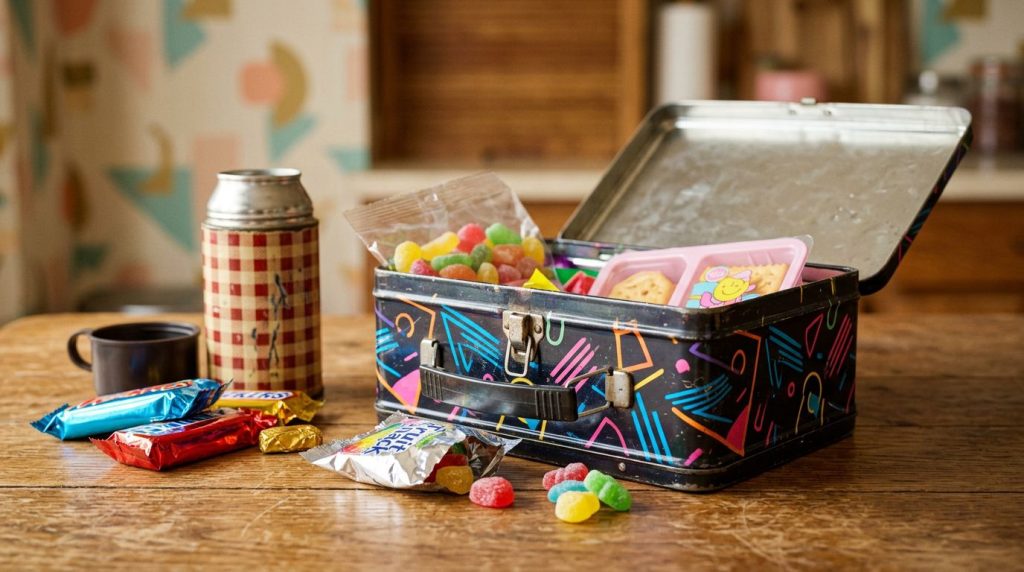
You can forget the sandwich. The real action in an 80s lunchbox happened in the corners, under the napkin, next to the dented Thermos. That was where the 80s lunchbox snacks lived, and they were the whole show.
If you grew up then, you know the feeling. A crinkly wrapper could save a school day. A foil pouch could make you feel rich. And one glorious sugar bomb could turn your lunch table into a trading floor. Let’s open the box and get into the good stuff.
Why 80s lunchbox snacks hit so much harder
A packed lunch was supposed to be practical. Peanut butter sandwich, maybe an apple, maybe some carrot sticks if your mom was on a mission. But the snack tucked beside all that responsibility? That was personality.
It told the table who you were. Or at least who your household grocery budget wanted you to be for one shining afternoon.
A good lunchbox snack had a few jobs. It had to survive the bus ride. It had to look exciting when you pulled it out. It had to taste better than your friend’s plain crackers. And, maybe most important, it had to have trade value.
A great 80s snack wasn’t the healthiest thing in the box. It was the thing everybody noticed first.
That was the magic. You weren’t only eating it. You were revealing it.
The 80s also knew how to package a snack. Shiny foil lids, bright boxes, waxy wrappers, fruit snacks shaped like little gems, drink pouches that required a bit of hand-eye coordination. Nothing felt sterile. Nothing felt bland. Even the snacks that were objectively simple came dressed for the part.
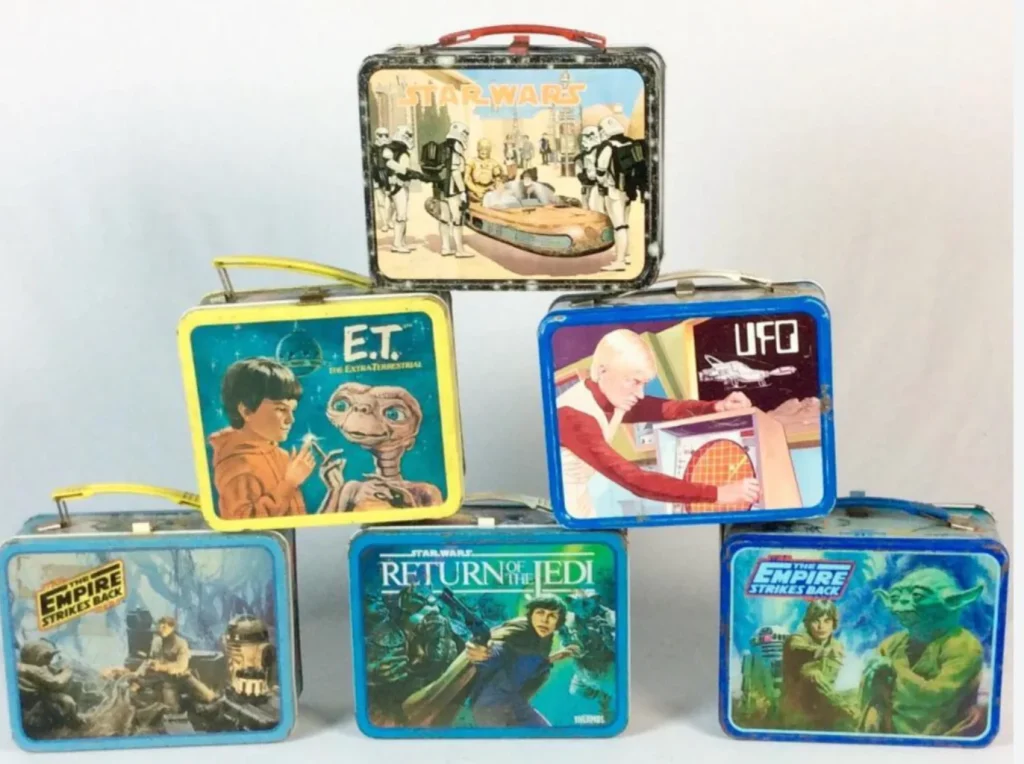
And those lunchboxes helped. Metal lunchboxes with movie tie-ins, cartoon heroes, wrestling stars, neon graphics, big plastic handles, the works. Open one up and it felt like a tiny stage set. Every snack inside had an entrance.
That is why these treats still beat most modern packed lunches in memory, even if the sandwich was forgettable. Nobody gets misty-eyed over two slices of wheat bread. People remember frosting curls. They remember the sound of a Capri Sun straw punching through silver foil. They remember the kid who had the good stuff and knew it.
The sweet stars everyone wanted to trade for
Some snacks didn’t need an introduction. The moment they hit the lunch table, conversation changed.
Fruit Roll-Ups were one of the biggest stars. They weren’t subtle, and that was the point. You peeled them off the plastic sheet like you were handling some rare treasure map, then chewed through that glossy, sticky sweetness at a pace that depended on your self-control. Most of us had none. They still exist, which is nice, but that original lunchroom wow factor belongs to the 80s.
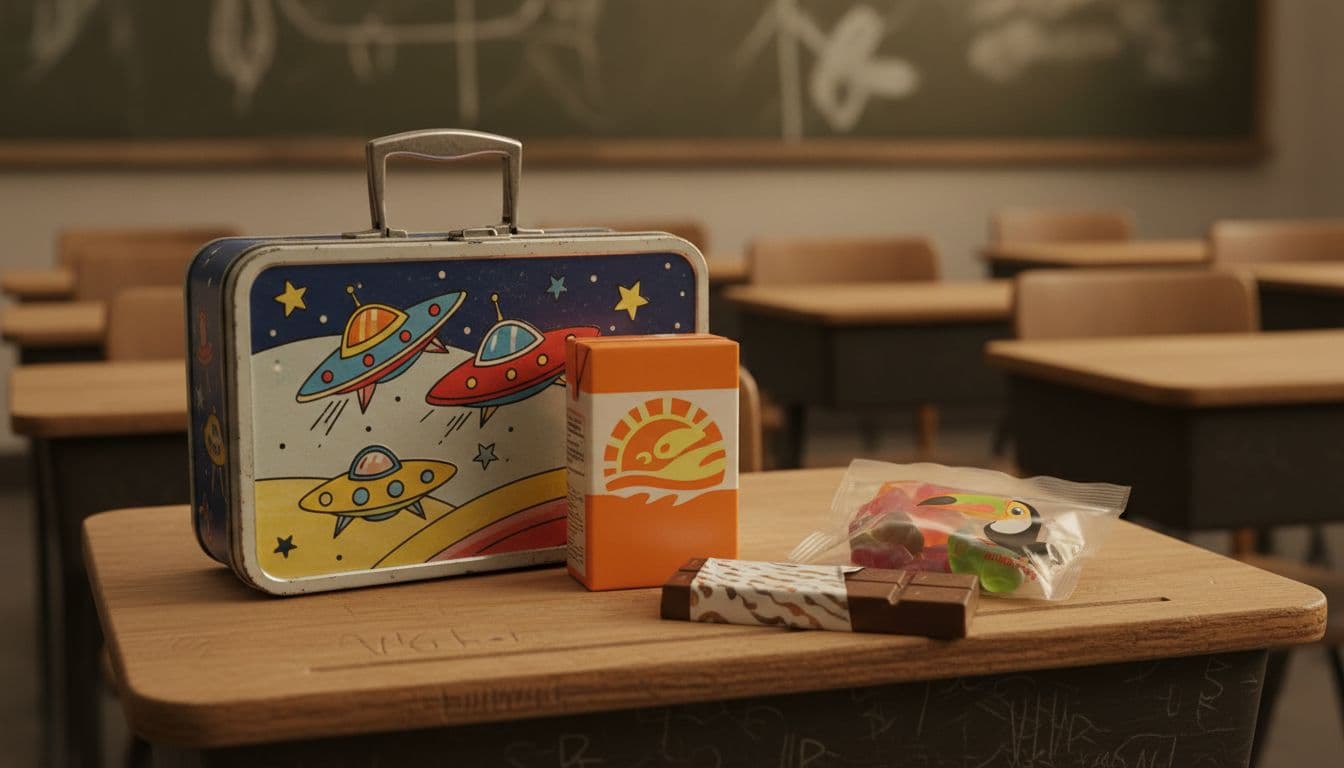
Then there were the snack cakes. Hostess CupCakes, Twinkies, Ding Dongs, Little Debbie Swiss Rolls, Oatmeal Creme Pies, each one had a different social rank, but all of them felt like a win. CupCakes had the squiggle. Swiss Rolls had that spiral reveal. Oatmeal Creme Pies looked humble, then hit with soft cookie comfort and sweet filling that stuck to your teeth in the best way. And for pure spectacle, nothing topped the kid who unwrapped the giant Oreo Big Stuf, one individually wrapped cookie the size of a coaster that made a whole lunch table stop and stare.
Pudding cups had their own drama. Peel back the lid and you had a dessert sitting in your lunchbox like it had no business being there. Snack Pack is still around, but those old-school cups, with the little plastic spoon and that slightly chilled-if-you-were-lucky texture, had elite status.
Late in the decade, Teddy Grahams showed up and instantly felt like a new kind of lunchbox cool. Cute, crunchy, cinnamon-sweet, and snackable by the handful. They were kid-friendly without feeling babyish, which mattered a lot when you were nine and taking your image seriously.
And every now and then, someone brought a candy bar that felt way too glamorous for noon. The discontinued Marathon candy from the 80s was more of an early-80s unicorn, but if it appeared, people noticed. Long, chewy, chocolate-covered, it looked like a prize, not a side item.
The crunchy, chewy, sippable stuff that completed the box
No great lunchbox ran on sweets alone. You needed contrast. Salt, crunch, fruit chew, a sip of something cold-ish. That balance is what made the whole thing feel legendary.
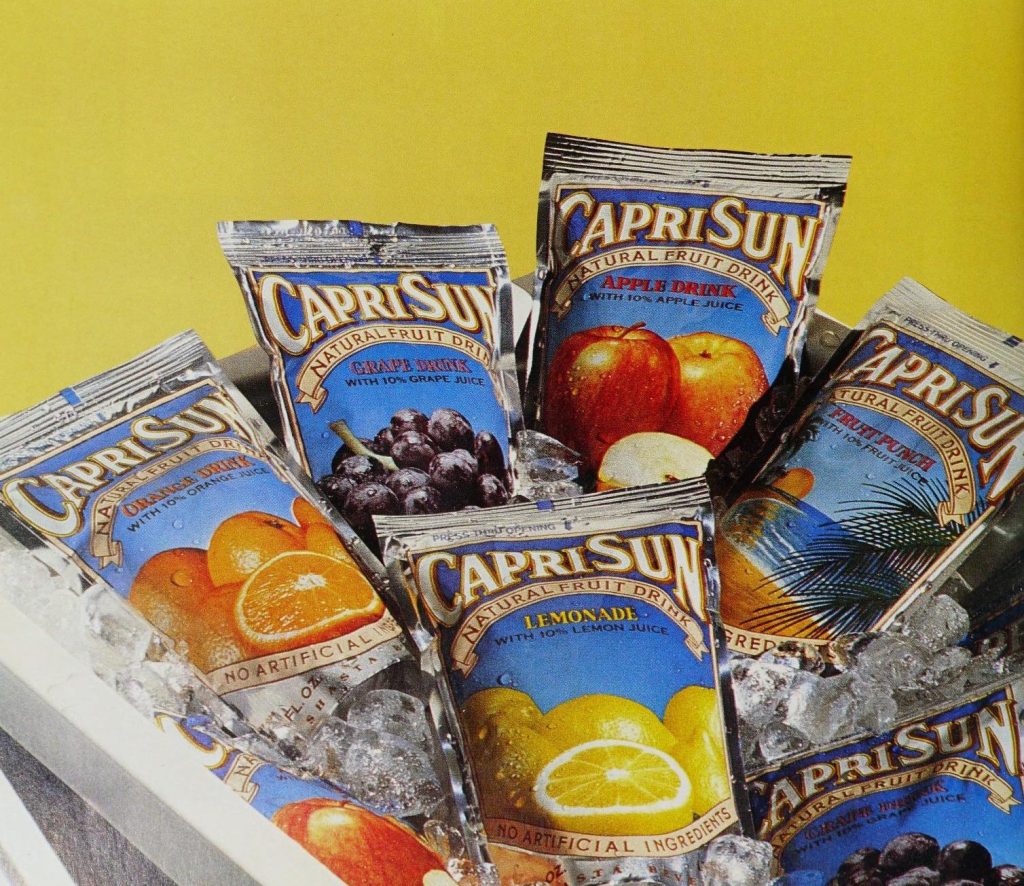
Capri Sun was pure theater. You took the tiny straw, aimed carefully, and hoped you didn’t punch straight through both sides like a maniac. Once you got in, that sweet, slippery fruit drink tasted like recess was coming. Capri Sun is still sold today, but the 80s pouch had a mystique that modern lunch gear can’t fake.
Squeezit drinks were even louder, in every sense. The bottle was fun, the colors were borderline fluorescent, and the flavor names had the energy of a Saturday morning cartoon. It was less elegant than a juice box and far more memorable. Squeezit is gone now, which makes sense emotionally and hurts anyway.
Then came the cracker packs. Peanut butter crackers, cheese crackers, those compact little stacks that somehow tasted better at school than anywhere else. They were dependable, slightly crumbly, and perfect for the kid whose lunchbox needed one thing that could survive until noon without melting into a sticky crime scene.
Fruit snacks had their own lane, too. Before today’s endless options, 80s kids had chewy little pouches that felt novel and a bit futuristic. Shark Bites arrived at the end of the decade and became instant lunchbox currency. Finding the white shark was a tiny event. Sun-Maid Fruit Wrinkles brought a raisin-adjacent chew with more style than plain dried fruit ever had.
And then there was Lunchables. Yes, it was technically the lunch. No, it did not behave like one. When those little compartment trays started showing up in the late 80s, they felt like the future had arrived in processed meat form. Crackers, cheese, tiny assembly line, no sandwich bag in sight. A kid with a Lunchables pack had a full audience.
Kudos bars deserve a mention too. Part granola bar, part candy bar, all lunchbox catnip. Chocolate chips, M&M’s, a sweet chew that made it feel suspiciously close to dessert. They are discontinued now, which explains why people still talk about them like a lost pop song.
Packaging, status, and the lunch table pecking order
Taste mattered, sure. But let’s not pretend packaging wasn’t half the thrill.
The 80s understood that kids ate with their eyes first. Shiny wrappers mattered. Bright colors mattered. Little trays, peel-backs, pouches, and mini compartments mattered. A plain homemade cookie could be delicious, but it couldn’t compete with something that looked like it came from a spaceship or a cartoon tie-in.
That visual punch shaped the lunch table economy. Some snacks were for keeping. Others were obvious trade bait. Fruit Roll-Ups could bring in a solid return. A pudding cup might get you a cookie plus chips. And if someone had a premium candy-bar situation, especially a classic BarNone candy bar, you were looking at high-level negotiations.
There was also a weird kind of prestige in snacks that felt a little grown-up. Cheese crackers in a tidy pack. A granola bar coated in chocolate. A richer candy bar slipped in on a Friday. Those choices said, “My lunchbox has range.”
What lasts from all of this isn’t nutrition trivia. It’s the sensory memory. The smell of chocolate meeting warm lunchbox air. The sticky fingers after fruit leather. The crackle of cellophane. The faint panic of realizing your juice pouch was leaking on your math homework.
Some of these snacks are still here. Fruit Roll-Ups, Teddy Grahams, Capri Sun, Snack Pack, Hostess classics, Lunchables. Others vanished, got reformulated, or live on only in nostalgia-fueled grocery-store daydreams. That’s part of their power. They weren’t only snacks. They were small daily events, wrapped in foil and sugar.
The lunchbox memory that still wins
The sandwich was never the headliner. It was filler between moments of glory.
That is why 80s lunchbox snacks still have such a grip on people. They were colorful, messy, overconfident little treats, and they made an ordinary school day feel upgraded. Some are still on shelves. Some are gone. All of them live on in that same place, the split second when the lunchbox clicked open and you knew whether noon was about to be excellent.
If you remember anything from those lunches, it’s probably not the bread. It’s the wrapper, the pouch, the frosting swirl, and the trade you were either proud of, or still regretting.