Some drinks were swallowed. Squeezit drinks were performed.
You didn’t sip one like a little grown-up. You grabbed the bottle, twisted the cap, squeezed with both hands, and felt like the drink was part snack, part toy, part after-school event. That was the magic.
For a late-80s brand that really caught fire in the 1990s, Squeezit left a giant memory. The bottle did that. The colors did that. The loud, goofy kid energy did that. Let’s talk about why.
The bottle was the whole show
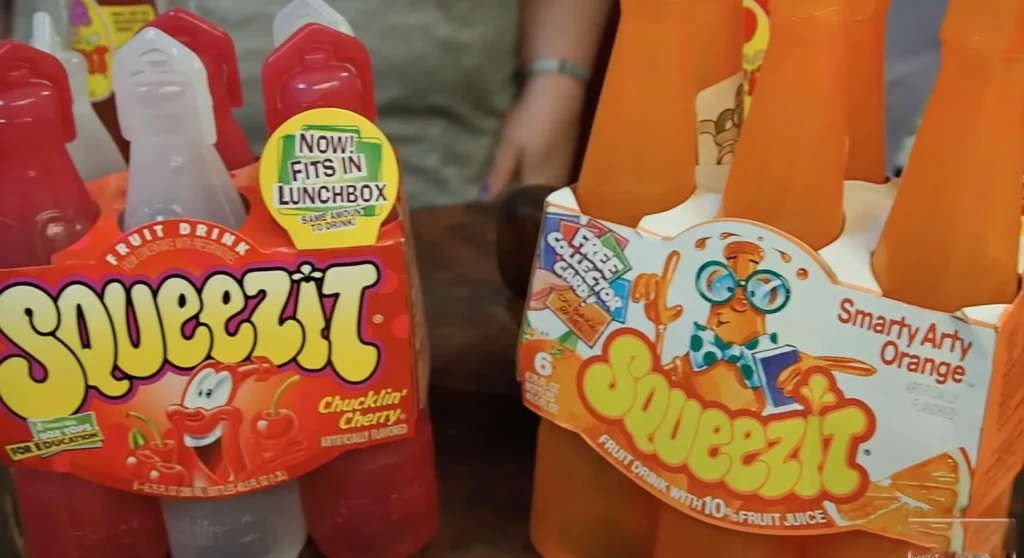
The smartest thing about Squeezit had nothing to do with nutrition labels or fruit content. It was the bottle. Small, plastic, easy to crush in your hand, and built for action, it turned a lunchbox drink into a mini experience.
The bottle wasn’t packaging. It was the pitch.
Most kid drinks sat there and waited. Juice boxes asked for a straw. Pouches needed that careful stab. Squeezit wanted chaos, the good kind. Twist the cap, aim it, squeeze, slurp, repeat. If you were a kid in a kitchen with checkerboard flooring and a cartoon on in the other room, that bottle felt made for you.
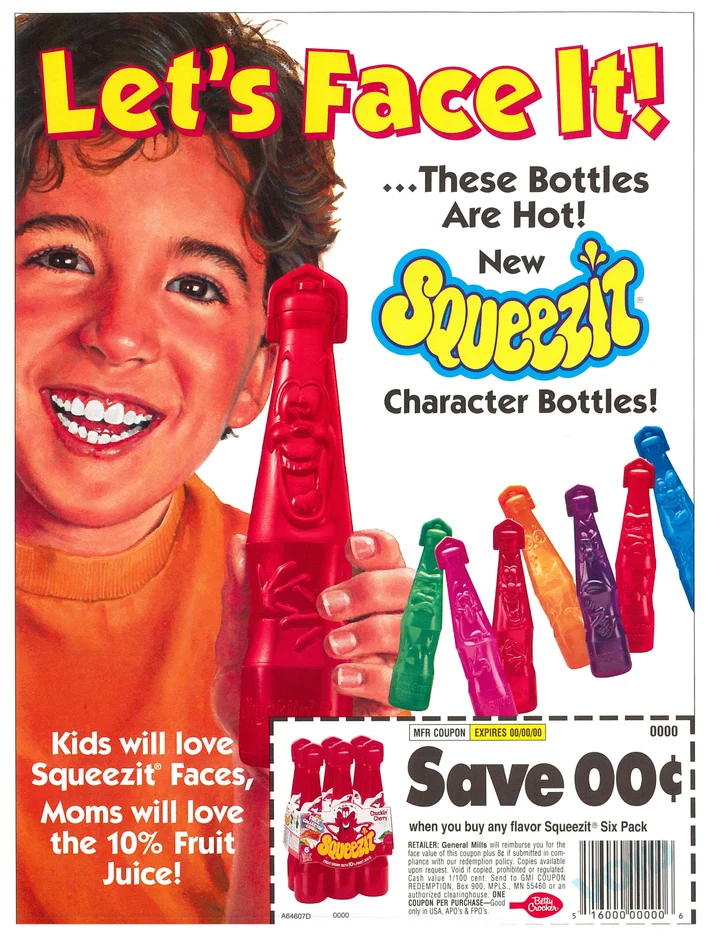
Some versions leaned even harder into character. The plastic itself could look animated, with molded faces and exaggerated expressions that made each bottle feel like a tiny loudmouth. That was a perfect match for the era. Kids loved products with personalities. Toys had catchphrases. Cereals had mascots. Even your drink had a face.
Squeezit didn’t ask kids to sip politely. It asked them to grab, twist, and squeeze.
That tactile part matters more than people admit. Nostalgia isn’t only about taste. It’s about texture, sound, motion. The crackle of the plastic. The way the bottle collapsed in your hand. The tiny sugar rush that felt even bigger because you had to work the drink out of it. That’s why people remember the bottle first, then the flavor.
How Squeezit went from late-80s launch to lunchbox fame
Squeezit was a General Mills brand, and the timing is part of the story. Sources split a bit on the first chapter. Daily Meal’s rollout timeline points to 1987 test marketing in Denver and a national launch in 1988. Mashed’s brand history traces the drink back to 1985. Either way, the broad picture is clear: it arrived in the late 1980s and became a lunchbox fixture in the years that followed.
That timing makes sense. The late 80s loved bright packaging, strong mascots, and products built around kid appeal. Squeezit showed up with all three. It wasn’t trying to be premium or natural. It was trying to be fun, and it knew exactly who it was talking to.
Early reports say the national push moved roughly $25 million worth of product, which put Squeezit near the top of the packaged juice category at the time. That’s a big number for a drink built around goofy energy and squeezable plastic. But then again, kids didn’t need a hard sell. One look at the bottle and the whole concept clicked.
The original flavors were more straightforward than the later lineup. Red Punch, Orange, Grape, and Cherry were part of the early mix. Over time, plain flavor names gave way to louder branding, more cartoon attitude, and bottles that felt closer to toy-shelf logic than grocery-shelf logic.
That shift is why Squeezit feels like a 90s icon even though its roots go back earlier. It was born in the late 80s, then hit its cultural sweet spot when kid marketing got brighter, noisier, and more character-driven.
Flavors got louder, weirder, and more kid-coded
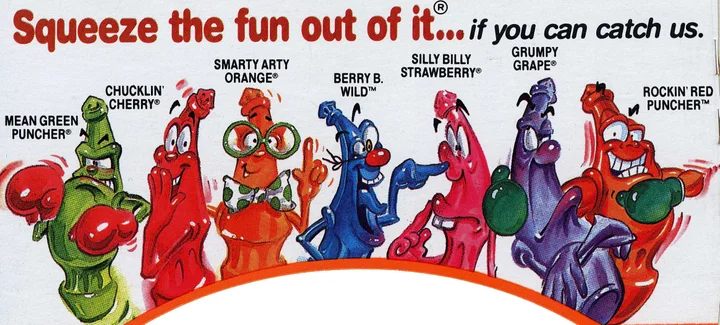
At first, Squeezit was a fruit-flavored drink with a clever package. Then it became a whole little cast of characters. Flavor names got punchier. Bottles got more expressive. The brand moved from “here is your drink” to “here is your weird plastic buddy with a cap.”
If you remember names like Berry B. Wild, Smarty Arty Orange, Silly Billy Strawberry, Rockin’ Red Puncher, or a version of Grape with a grumpy attitude, that wasn’t an accident. General Mills understood that kids didn’t separate flavor from personality. Blue wasn’t only blue. It was the fun one. Grape wasn’t only grape. It was a character.
When competition tightened, the brand got even louder. Ranker’s look at the color-changing era points to the mid-1990s as the moment Squeezit pushed gimmicks harder, including the color-changing line introduced in 1996. That was peak kid-brain magic. Drop in a pellet, watch the drink transform, feel like science class had been hijacked by sugar.
A few of the best-remembered twists included:
- Mystery flavors sold in dark bottles, so you had to guess what you were drinking.
- Color-changing versions that turned snack time into a chemistry trick.
- Licensed flavor tie-ins, including Life Savers-inspired varieties.
- Squeezit100, a later offshoot marketed with 100% fruit concentrate in slightly larger 6.75-ounce bottles.
That last one is a fun footnote. According to Mashed’s summary of the brand, Squeezit100 showed up in late 1993 with flavors like Caped Grape, Acrobat Apple, and Pilot Punch. Even the “better-for-you” attempt still sounded like a Saturday morning cartoon. Of course it did.
No one bought Squeezit for orchard realism. You bought it because the flavors were loud, the colors were louder, and the whole thing felt like a dare from the snack aisle.
Why Squeezit drinks disappeared
The same qualities that made Squeezit a hit eventually made it harder to keep around. Kid food changed. Parents changed. The lunchbox itself changed.
By the late 1990s and early 2000s, sweeter neon drinks were facing more pressure. Capri Sun, Hi-C, Kool-Aid, and a wave of products sold as more wholesome or more convenient crowded the space. Squeezit still had brand recognition, but the market around it looked different. A bottle that once felt playful could also start to feel old-fashioned.
Archived nutrition details often place a regular bottle at around 16 grams of sugar, and that didn’t help once ingredient scrutiny became a bigger part of family shopping. Add artificial colors, a crowded shelf, and changing taste, and the brand’s old tricks stopped carrying the same weight.
Most accounts place the main discontinuation in 2001. After that, Squeezit popped back up in short revivals, around 2006 to 2007 and again around 2011 to 2012, then disappeared again. That pattern tells you something. The memory was strong. The market wasn’t.
It wasn’t a dramatic collapse. It was more like a long fade. Kids who once begged for a bottle at the store got older. New kids had other choices. The product that once felt like a party in plastic became a relic of a louder snack era.
Why people still miss them
Here’s the thing: people don’t campaign for the return of boring drinks. They campaign for the return of feelings.
Squeezit is one of those products that instantly opens a trapdoor in your memory. School lunch. Summer camp. Soccer practice. A friend’s kitchen. That slightly sticky cap. That bright, impossible color. It’s the same emotional lane occupied by discontinued cereals, candy bars, and weird freezer treats that felt huge when you were eight.
If your brain stores Squeezit next to the BarNone chocolate bar, that makes perfect sense. They came from the same vanished universe, the one where packaging had personality and snacks felt like entertainment.
There’s also a reason the bottle overshadows the liquid. The bottle let kids do something. It wasn’t passive. That’s rare. Most food nostalgia comes from flavor alone. Squeezit added a physical memory, and physical memories stick. You can forget an ingredient list. You don’t forget crushing a bottle flat while trying to get the last sweet drop out.
For 80s and 90s fans, that’s why the brand still lands. It captures a stretch of kid culture when products were colorful, a little ridiculous, and completely unafraid to be fun. No minimal design. No calm packaging. No pretending to be adult-approved. Only bright plastic, silly names, and a drink that knew exactly who its audience was.
Why We Still Remember Squeezit
Some drinks disappear because they stop tasting good. Squeezit stayed in people’s heads because it made drinking feel like play. The bottle did half the work, maybe more.
That’s the real legacy. General Mills sold a fruit-flavored drink, but kids remember the squeeze, the faces, the colors, and the little burst of mayhem built into every bottle.
A lot of retro snacks bring back flavor. Squeezit brings back motion, and that’s why it still has such a grip.