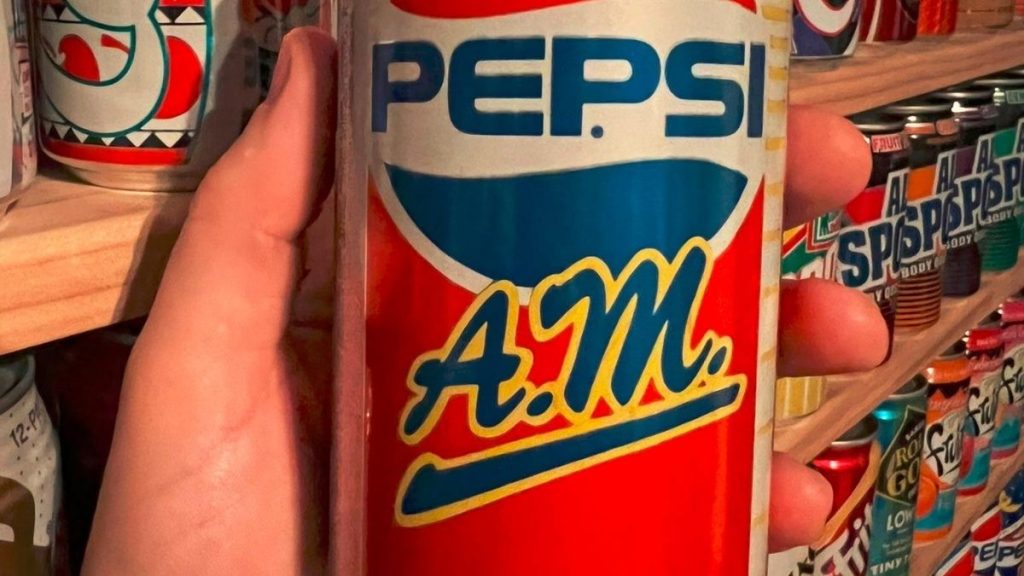
Pepsi AM was PepsiCo’s attempt to put cola beside your toast, with a modest boost, fewer bubbles, and a time-specific name. Introduced in 1989 and gone by October 1990, it chased business usually reserved for coffee and tea.
The pitch had serious late-80s confidence: take a familiar soda, give it a breakfast makeover, and ask America to reconsider its morning habit. I love the nerve, but the story gets more interesting when you separate Pepsi’s actual experiment from the legends that followed.
Key Takeaways
- Pepsi AM was a regional breakfast-cola experiment, not a nationwide replacement for regular Pepsi.
- Its boost was modest: roughly 49 milligrams per 12 ounces, compared with 38 milligrams in regular Pepsi.
- Pepsi dropped the product after insufficient consumer interest. Familiar explanations about flat taste and established consumer routines need more careful handling than the usual “America said no” punchline.
What Pepsi AM Was Supposed to Do
The idea sounds like something dreamed up during an especially ambitious breakfast meeting. But Pepsi had a business question: could a distinct breakfast soda persuade people to drink more cola before lunch?
A Cola Applying for Coffee’s Job
Pepsi AM was positioned as an alternative to coffee and tea, with a familiar cola flavor.
That distinction matters. Pepsi wasn’t offering a canned latte with a pop-star wardrobe. It wanted a cold soft drink to feel like a reasonable breakfast companion.
There was already an audience for soda at that time of day. The challenge was deciding whether those drinkers needed a separate product, and whether everyone else could be tempted into joining them.
A Diet Version Came Along, Too
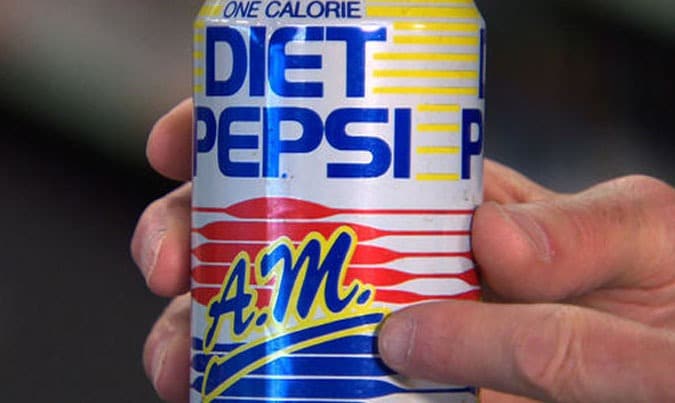
Diet Pepsi AM joined the regular version in the test. A later Beverage World history describes the sugar-free option as a one-calorie drink.
That made the experiment broader than a single sugary novelty. Pepsi was testing a breakfast occasion across regular and diet preferences.
The A.M. name made the assignment unmistakable. This cola had an appointment with your alarm clock.
Whether shoppers wanted that appointment was another matter.
More Caffeine, Fewer Bubbles
The formula changed two familiar parts of the Pepsi experience: its stimulant content and carbonation. Both changes suited the breakfast pitch, although the figures sound more dramatic as percentages than as differences between cans.
What the Caffeine Numbers Mean
The Los Angeles Times launch report gave these historical comparisons:
| Drink | mg per ounce | Equivalent serving |
|---|---|---|
| Pepsi AM | 4.1 mg | About 49 mg per 12 oz |
| Regular Pepsi | 3.2 mg | About 38 mg per 12 oz |
| Typical coffee in the report | 18 mg | About 144 mg per 8 oz |
The cola serving figures are calculated from the reported per-ounce amounts, rather than separate can-label measurements.
At 4.1 milligrams of caffeine per ounce, Pepsi AM had about 28% more than regular Pepsi. In a 12-ounce serving, that meant roughly 11 additional milligrams of caffeine.
The newspaper also described it as having 77% less than coffee or tea. That’s a historical comparison, not a rule for every brewed cup. Its actual numerical benchmark was 18 milligrams per ounce.
So yes, the amount was higher. Comparable strength? Hardly.
A Smoother Sip, With Less Sparkle
Pepsi spokesman Tod MacKenzie said the drink had less carbonation than regular Pepsi to create a smoother taste.
You can see the logic. A gentler cola might seem more comfortable alongside breakfast than the full fizzy production.
But “smoother” is a product intention, not a guaranteed consumer verdict. Later complaints about flatness describe how some people received that change. They don’t establish that every drinker disliked it.
The Breakfast Market Pepsi Was Trying to Reach
Pepsi didn’t invent the idea of drinking soda early in the day. It spotted an existing behavior and wondered whether it could make that behavior bigger.
The numbers offered encouragement, but also a warning.
Coffee Was Slipping, Soda Wasn’t Surging
NPD Group’s National Eating Trends survey found coffee at 38% of home breakfasts, down from 44% four years earlier. The figure covers morning coffee at home breakfasts, not every morning coffee occasion.
That sounds like an opening. Six percentage points of breakfast territory had become available.
Except carbonated soft drinks appeared at only 2% of home breakfasts, unchanged from the 1985 survey.
That decline hadn’t produced a breakfast-cola stampede.
A broader figure reported by UPI put about 10% of soft-drink consumption in the early-day hours. That’s a different measurement: soda occasions during those hours aren’t necessarily breakfasts eaten at home.
Coca-Cola Already Had a Morning Message
Coca-Cola bottlers were using a “Coca-Cola in the morning” marketing campaign, mainly through commuting-hour radio spots. Bottlers serving about 40% of the country were participating.
Pepsi had also tried early-day positioning through campaigns involving Wendy’s and Dunkin’ Donuts.
So this wasn’t one strange can wandering into breakfast alone. Both cola giants were looking at the same clock.
In an era of unforgettable 80s commercial jingles, the ambition was familiar: make the brand part of another daily routine. Pepsi AM went further by giving that routine its own formula and name.
A Small Midwest Test, a Short Shelf Life
Pepsi AM’s history is often compressed into “launched in August 1989, discontinued in 1990.” The broad timeline works, but contemporary reporting is less tidy.
Later histories commonly date its introduction to August 1989. Yet UPI’s September 28 announcement coverage described a Midwest test market set to begin the following month.
The October 2 Los Angeles Times report said testing would begin “next month,” which points to November.
Those accounts don’t establish one clean first-on-sale date. They document a limited late-that-year experiment, rather than a huge national arrival.
The test-market cities usually associated with the drink are Cedar Falls and Waterloo, Iowa, and Fort Wayne, Indiana. Waterloo appears in the Chicago Tribune’s contemporary discontinuation coverage; the fuller three-city list comes from later histories.
That regional footprint helps explain why plenty of 80s kids never encountered it. You could love Pepsi, watch its commercials, and still miss this particular branch of the family tree.
By October 12, 1990, the Chicago Tribune reported that Pepsi had scrapped the products, introduced about a year earlier.
A brief run, then. Long enough to become a curious artifact, short enough to leave an incomplete paper trail.
Why the Idea Was Dropped
Here’s where the story needs a little restraint. A peculiar product invites a perfect explanation, preferably one with a punchline.
The surviving reporting offers a plainer answer.
What Pepsi Actually Said
The Chicago Tribune reported insufficient consumer interest in the A.M. products. Pepsi still believed a market for soft drinks at breakfast existed, but the special brand names hadn’t attracted enough attention.
Regular cola already contained the formula’s key stimulant. Consumers didn’t necessarily need a separate product to get it.
That distinction matters: a market for Pepsi at breakfast didn’t automatically mean a market for Pepsi AM.
At launch, analyst Emanuel Goldman described the relatively small test as a way to learn whether the idea deserved further pursuit. Analyst John C. Maxwell Jr. cautioned that changing daily routines takes years.
A regional test could reveal interest. It couldn’t guarantee a new national ritual.
What Later Explanations Add
Some later accounts emphasize an insipid or flat taste. An ARA retrospective traced complaints among some Iowa consumers to an Associated Press dispatch from that year.
That’s useful evidence of dissatisfaction, but it doesn’t make flatness Pepsi’s documented reason for cancellation.
The branding argument is also plausible: “A.M.” gave the product a clear purpose while making it sound oddly restricted after breakfast. That’s interpretation, rather than a proven consumer verdict.
Our look at why New Coke failed shows how much familiarity can matter in the cola aisle. The situations differed, though. New Coke replaced a beloved formula; Pepsi AM was an additional option trying to earn a place in an established routine.
The Nostalgia and the Collector Story
For nostalgia fans, Pepsi AM has a special kind of appeal. It belongs to that wonderful category of products that sound invented until you discover they existed.
Breakfast cola. Of course the late 80s gave it a shot.
Surviving packaging gives collectors something tangible from an otherwise fleeting experiment. A can can preserve the name, the design, and the confidence of the original pitch.
Later coffee-cola products included Pepsi Cino and Coca-Cola Blak. They were separate experiments, not continuations of Pepsi AM or evidence of why it was discontinued.
Its limited regional run also makes the memory uneven. Some people encountered an actual product. Others discovered it years later as an oddity in Pepsi history.
Both responses fit. Pepsi AM never needed nationwide fame to become an irresistible little footnote in the cola wars.
Frequently Asked Questions
Was Pepsi AM Coffee-Flavored?
No. It was a Pepsi positioned for early-day drinking, with a modestly higher stimulant content and less carbonation.
The association with a hot drink concerned the occasion Pepsi wanted to capture. It wasn’t a promise of roasted beans, café flavor, or a hot drink.
Think familiar Pepsi applying for a different shift.
Was Pepsi AM an Early Energy Drink?
It makes more sense to call it a morning cola. The increase over regular Pepsi was modest, and breakfast positioning defined the product.
For comparison, original Jolt Cola, introduced in 1985, contained roughly 70 to 72 milligrams per 12-ounce can. Pepsi AM’s calculated equivalent was about 49 milligrams.
Jolt made its larger stimulant dose a loud part of its identity. Pepsi AM paired a smaller boost with a smoother formula and a particular time of day. Same decade, different assignment. Pepsi Max is a separate product, not a continuation of this regional test.
A Breakfast Experiment Worth Remembering
Pepsi AM tested a reasonable question with an unmistakably 80s amount of confidence: could a familiar cola earn a special place at breakfast?
The test didn’t attract enough interest to keep the product around. Its story is strongest when we keep that documented outcome separate from the more colorful explanations.
What remains is a charming little relic of the cola wars, when even the breakfast table looked like room for one more Pepsi.