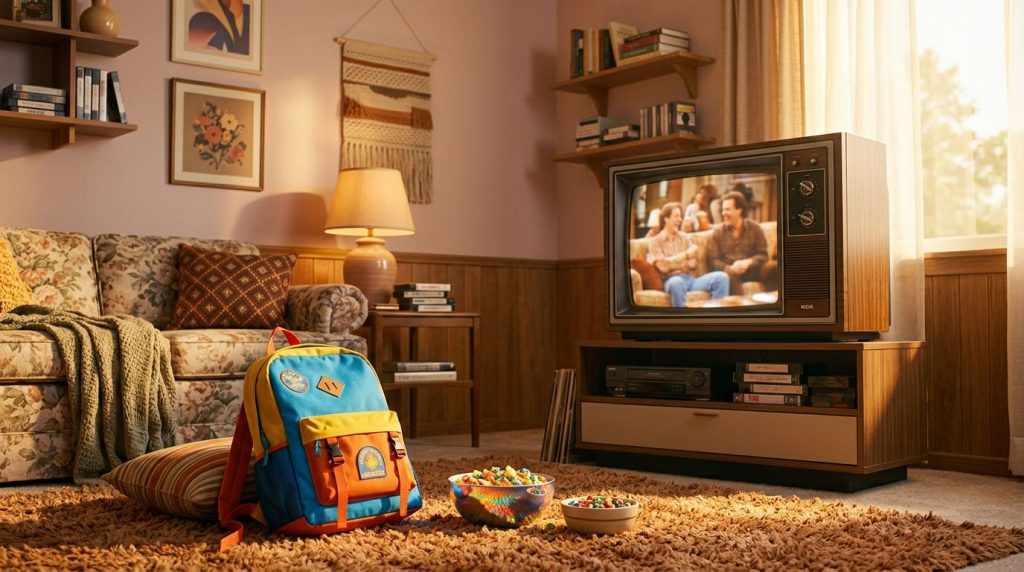
Some shows belonged to Friday night. The Facts of Life sitcom belonged to that strange, perfect stretch after school, when the backpack hit the floor, the snack came out, and the TV took over.
For a lot of kids, this wasn’t network appointment viewing. It was the world of syndicated reruns, local stations, and comfort watching. The show’s charm wasn’t loud or gimmicky. It was steady, and that steady feeling is why it stuck, and had an amazing theme song that stuck in our heads. 80s TV Theme songs just hit differently!
Why it fit the after-school hour
After-school TV had its own rules. You didn’t always want a giant cliffhanger or a show that demanded total concentration. You wanted something warm, funny, and easy to join halfway through. The Facts of Life had that rhythm. It also had volume on its side, because stations had a lot to pull from. As TV Insider’s show guide notes, the series ran for nine seasons and 209 episodes, which is plenty of material for a rerun loop that seemed to go on forever.
It also worked because the episodes were easy to enter. A problem showed up, tempers flared, somebody said the wrong thing, Mrs. Garrett stepped in, and the emotional knot got untangled by the end. You didn’t need a notebook. Miss a few episodes, or a whole season, and you could still slide right back in.
That matters more than people admit. The after-school hour was rarely calm. Somebody needed the phone. Somebody else was fighting over the remote. Homework sat there like a threat. The Facts of Life didn’t make demands. It made room.
Even the mood helped. The theme song kicked in, the Eastland setting appeared, and you knew what kind of world you were entering. Some sitcoms felt like a performance. This one felt like company.
Eastland was a TV home away from home
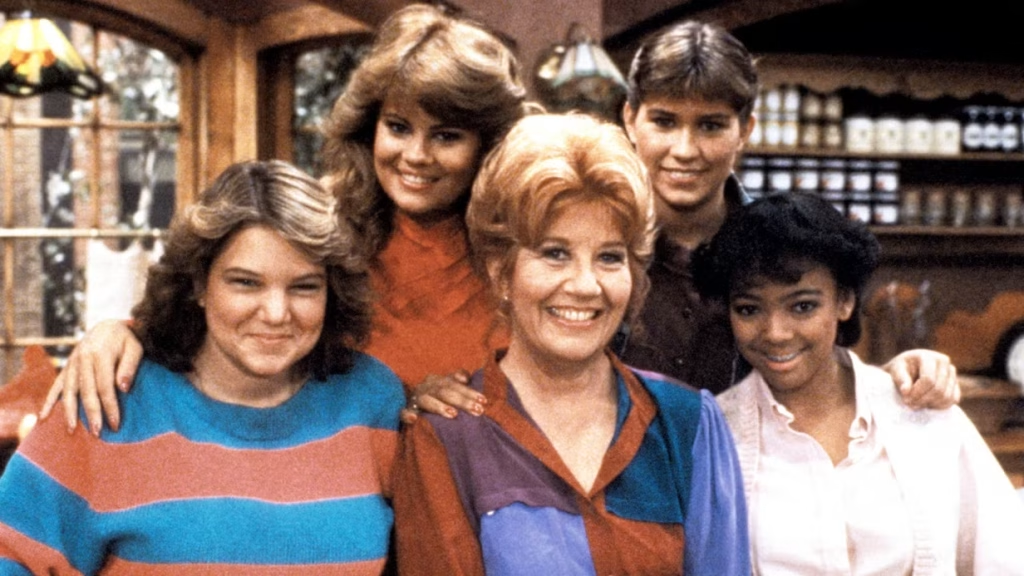
Part of the show’s staying power came from its setup. Eastland School, the fictional all-girls boarding school in Peekskill, New York, felt heightened enough for television and familiar enough for real life. There were cliques, crushes, punishment, jealousy, class tension, and the constant low buzz of trying to figure out who you were. As Wikipedia’s series overview reminds you, the show began as a spin-off of Diff’rent Strokes, with Charlotte Rae’s Edna Garrett moving into a bigger role as Eastland’s housemother, and later dietitian.
Charlotte Rae was the secret sauce. Mrs. Garrett wasn’t a sitcom scold, and she wasn’t some flawless TV saint either. She could be funny, nosy, tired, practical, and loving all at once. Kids trusted her. So did the audience.
Around her, the cast sharpened into the version most people remember best. Lisa Whelchel played Blair Warner with just the right mix of polish and sting. Mindy Cohn made Natalie Green funny without turning her into a cartoon. Kim Fields gave Dorothy “Tootie” Ramsey energy, curiosity, and those unforgettable early-season roller skates. Then Nancy McKeon arrived in season two as Jo Polniaczek, and the whole show snapped into clearer focus.
That tighter group gave the series its pulse. The first season had a larger ensemble, and yes, that included a young Molly Ringwald, which still makes rewatchers do a double take. Later, when the setting expanded beyond Eastland to Mrs. Garrett’s business ventures like Edna’s Edibles, the sitcom let its characters grow up a little without losing its cozy center. For kids watching in reruns, that growth felt natural. The girls weren’t frozen in place. They changed, and you could feel it.
Blair, Jo, Natalie, and Tootie made the formula sing
Here’s where the Facts of Life sitcom really earned its spot in the after-school memory bank: the character mix was terrific. Nobody blurred into the wallpaper. Nobody existed to do only one thing.
- Blair was rich, polished, competitive, and much sharper than the spoiled-girl label suggested.
- Jo was blunt, guarded, street-smart, and impossible to ignore once she arrived.
- Natalie had the best comic timing, the quickest wisecracks, and a wonderfully human awkwardness.
- Tootie was expressive, curious, and often the emotional spark plug in the room.
Put Blair and Jo together, and sparks flew almost on contact. Blair had money, manners, and confidence. Jo had edge, skepticism, and a short fuse for phoniness. That contrast gave the series its best friction. Then Natalie could cut through the tension with a joke, while Tootie reacted with open-hearted honesty. It was a clean sitcom engine, but it never felt mechanical.
What made it click is that the friendships weren’t neat. The girls could be loyal and petty, loving and annoyed, supportive and competitive, sometimes all in one episode. That’s how real teenage friendships work. You don’t sort people into “best friend” and “enemy” bins and call it a day. You orbit each other. You clash. You make up. You keep going.
Mrs. Garrett completed the circle. She didn’t erase the conflict. She translated it.
The show never needed a giant gimmick. Four distinct girls, one wise adult, and the mess of growing up were enough.
That emotional pattern is a big reason the series landed so well with younger viewers. You might not have lived at a boarding school, but you knew the Blair in your class. You knew the Jo. You probably knew a Natalie. And if you were lucky, you had a Tootie around to say what everyone else was too nervous to admit.
The Facts of Life sitcom mixed laughs with real growing pains
What helped the show last was its willingness to treat younger viewers like they could handle more than punch lines. Beneath the jokes, The Facts of Life sitcom dealt with insecurity, money differences, dating stress, peer pressure, family trouble, and the general confusion of becoming yourself. A Common Sense Media review still describes it as a wholesome coming-of-age sitcom that takes on serious issues, and that balance is exactly what made it feel bigger than a simple dorm comedy.
The series wasn’t subtle every single time. This was network TV, and sometimes the lesson arrived with a little extra polish. But the show usually grounded those lessons in character. Blair’s pride would get in the way. Jo’s defenses would shoot up. Natalie would hide pain behind humor. Tootie would cut to the heart of the problem. Because the conflicts came through personalities you already knew, the message never felt completely pasted on.
That made it especially strong in the after-school slot. Kids didn’t only want noise. They wanted something that understood embarrassment, loneliness, and the weird theater of being a teenager. The Facts of Life had jokes, yes, but it also had room for hurt feelings, bad choices, apologies, and second chances. It gave viewers a soft place to land before dinner, before homework, before the rest of the day started again.
Its cultural impact sits right there. The show helped prove that a female ensemble sitcom could be funny, durable, and emotionally grounded without flattening everyone into types. It also became part of that larger rerun ecosystem that shaped so many 80s childhoods. Fresh episodes mattered, sure. But reruns were where habits formed. That’s where a show became yours.
Why It Still Feels Like 3:30 P.M.
The reason people still remember The Facts of Life isn’t hard to spot. It understood that growing up is awkward, funny, bruising, and easier to handle when somebody is beside you.
For a lot of 80s kids, that somebody was Mrs. Garrett, with Blair, Jo, Natalie, and Tootie close by. In reruns, in syndication, in that fuzzy after-school hour, the show became comfort television in the best sense.
Some sitcoms were background noise. This one felt like a place you could walk into and stay awhile.