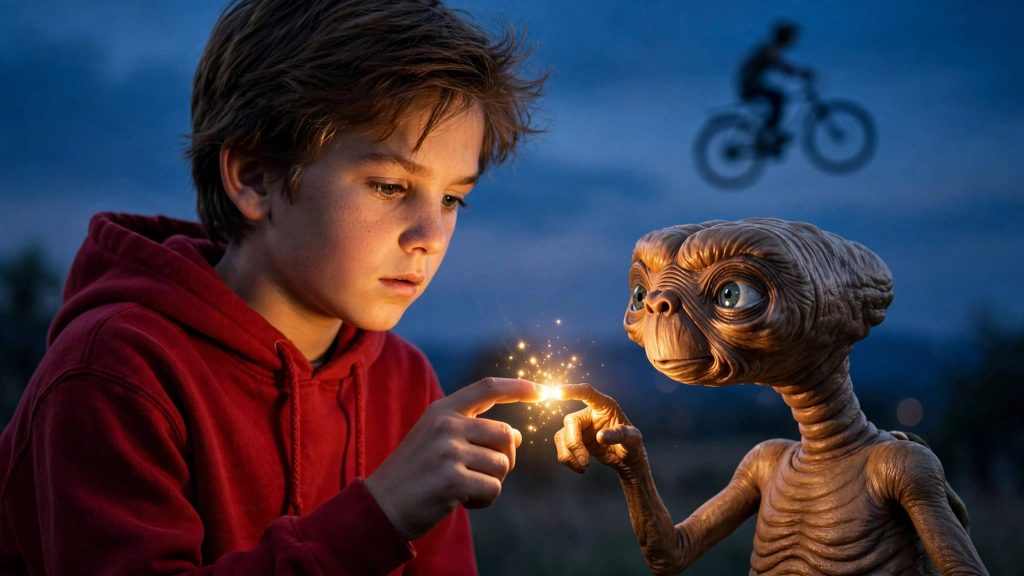
E.T. the Extra-Terrestrial gave us a flying bicycle, a glowing finger, and a goodbye that still requires tissues. Steven Spielberg turned a science fiction premise into an alien friendship that feels as precious, and as fragile, as childhood itself.
If you grew up with Elliott and his wrinkly little houseguest, you know the heartbreak waiting beneath the adventure. But this famously tender movie began with an idea that sounded much more likely to keep you awake at night.
The Highlights
- Spielberg’s childhood experience of divorce helped shape the friendship at the center of the film.
- Henry Thomas, Drew Barrymore, and a remarkably expressive creature made that friendship believable.
- Released on June 11, 1982, the movie became a box-office record-breaker and won four Academy Awards.
How E.T. the Extra-Terrestrial Began With a Scare
Night Skies Had Very Different Visitors
After Close Encounters of the Third Kind, Spielberg wasn’t eager to make a conventional sequel. His next alien idea had considerably sharper teeth.
While researching Close Encounters, he’d encountered the story of the 1955 Kelly-Hopkinsville incident, when a Kentucky family claimed strange creatures had besieged their farmhouse. That account inspired Night Skies, a proposed horror film developed with screenwriter John Sayles.
Think frightened family, isolated house, unwelcome visitors. Nobody was inviting these aliens into the toy cupboard.
As JoBlo’s production history recounts, the project contained the seed of something sweeter: a friendly alien’s connection with a child.
Melissa Mathison Found the Heart
The threatening home-invasion material helped feed Poltergeist. The lonely child and sympathetic visitor pointed toward another movie altogether.
During the production of Raiders of the Lost Ark, Spielberg discussed that gentler idea with Melissa Mathison. She wrote the screenplay that became E.T., with the project eventually finding its home at Universal rather than Columbia.
Spielberg reportedly called her first draft the best he’d ever read.
Mathison gave the extraordinary visitor wonderfully ordinary needs. He was hungry. He was frightened. He wanted to go home.
That’s a character a child can understand before anyone explains a spaceship.
The Missing Dad Behind the Space Visitor
The spaceship arrives in a household already dealing with an absence.
The boy’s father has left. His mother, Mary, is trying to keep the family moving. The children joke, squabble, and carry on, but the hurt keeps slipping into conversation.
Spielberg drew on his own parents’ divorce. As he later discussed at the TCM Classic Film Festival, the film’s family story was personal.
Elliott needs somebody who understands feeling stranded. E.T. needs exactly the same thing.
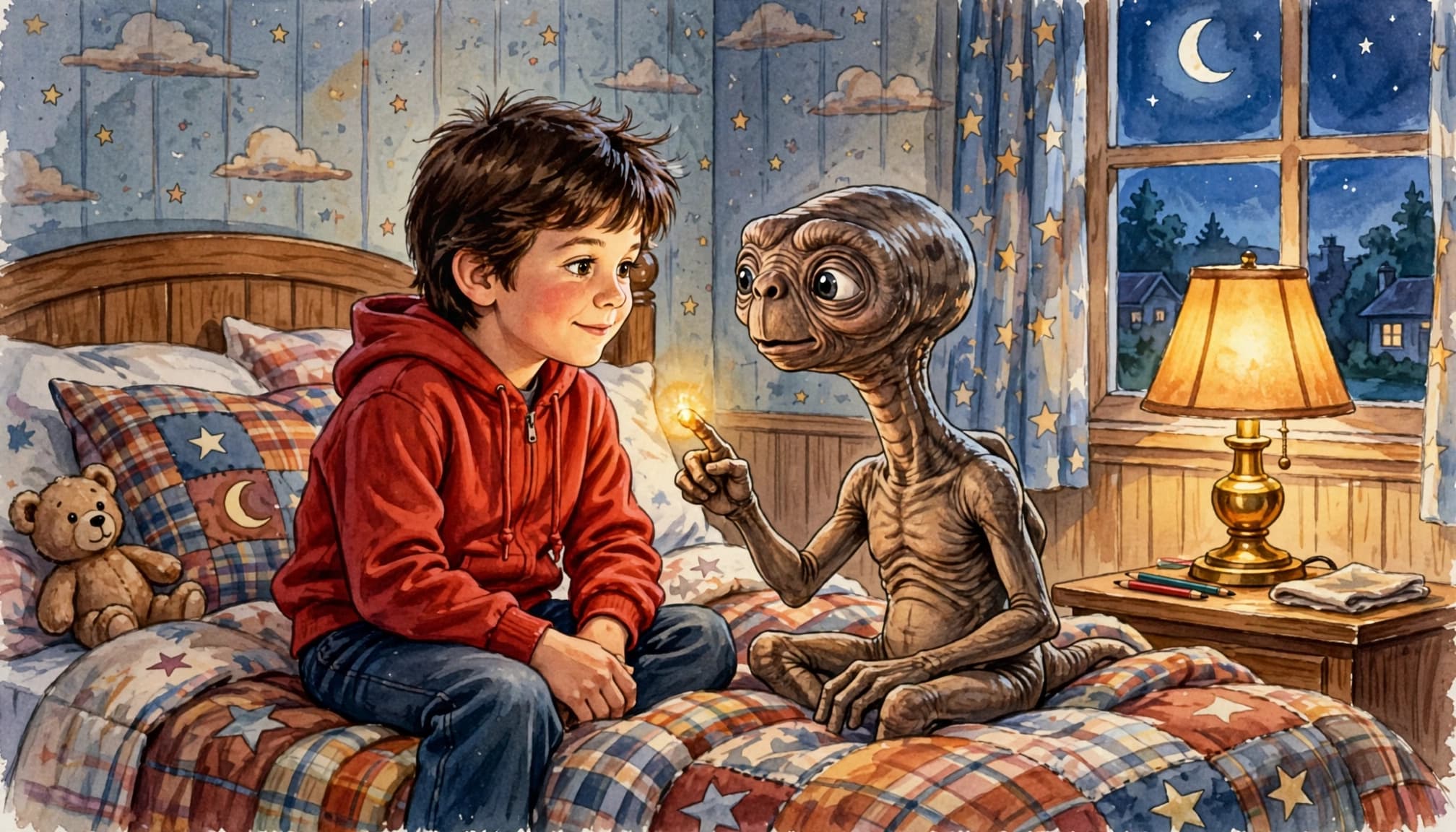
Dee Wallace gives Mary the exhaustion and affection of a mother with too much on her plate. Robert MacNaughton’s Michael has that older-brother mixture of teasing and unexpected loyalty.
Together, they make the house feel occupied before anything magical happens. There are toys, arguments, interruptions, and people who love each other without always knowing what to say.
Then an alien moves in. Naturally, the kids handle this development better than the grown-ups.
Casting Kids Who Made Us Believe
Henry Thomas Brought the Tears
Henry Thomas won Elliott with an audition that remains almost unfairly moving.
Asked to improvise a scene about losing his best friend to the authorities, he broke down. The attachment felt immediate. Spielberg had found the boy who could make audiences care about an alien before they’d properly met him.
Thomas gives the boy a believable mixture of loneliness, irritation, courage, and childish certainty. He can be selfish. He can be stubborn. His devotion never feels rehearsed.
That matters when the movie asks him to carry its most painful scenes. We already believe this friendship belongs to him.
Drew Barrymore Brought the Spark
Drew Barrymore arrived with a different sort of audition magic: a fabricated story about being in a punk band.
Little Gertie, apparently, had an imaginary rock career before she had an extraterrestrial houseguest.
Barrymore’s confidence charmed Spielberg, and her performance gives the film its glorious little-sister energy. Gertie screams, asks inconvenient questions, and accepts the impossible on her own terms.
Barrymore later said she believed E.T. was real during filming. You can feel that unguarded affection onscreen.
Spielberg also shot much of the film in story order. The children’s attachment had room to grow before they reached the goodbye.
Building a Creature With a Face You Could Love
Carlo Rambaldi Had Six Months
Carlo Rambaldi designed E.T., turning an unusual collection of wrinkles, limbs, and enormous eyes into somebody we’d worry about.
He asked for nine months. Spielberg gave him six.
No pressure, then. Only the emotional credibility of the entire movie.
The finished creature could look ancient in one moment and helplessly young in the next. His awkward body made him vulnerable, while small movements around the eyes gave him curiosity and feeling.
Those expressions had to work opposite children whose reactions were immediate and wonderfully unforgiving.
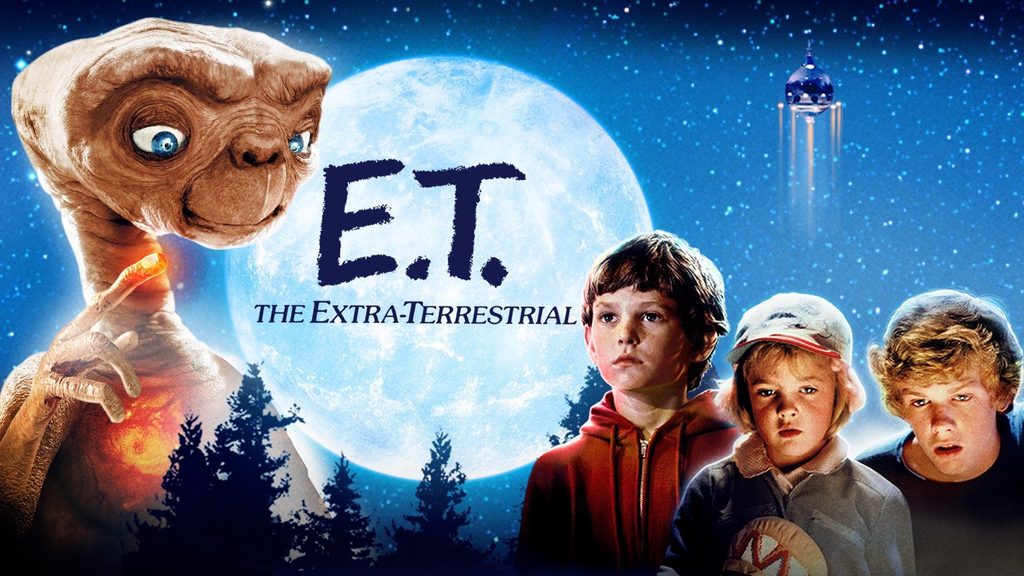
Practical Effects Gave Him Weight
E.T. was brought to life through mechanical puppetry and performers working inside creature suits.
That physical presence gave the actors something to watch, approach, and react to. The creature occupied their space.
Sometimes the movement looks unmistakably handmade. For plenty of us, that’s part of the affection.
He’s an awkward visitor learning his way around a human house. A little wobble belongs there.
Why the Goodbye Hits So Hard
First, the movie lets us enjoy him.
There’s the trail of Reese’s Pieces, the television discoveries, the improvised communication equipment that helps E.T. phone home, and the Halloween disguise. E.T. becomes a funny, troublesome member of the household.
Then Spielberg makes that familiar body frighteningly frail.
The medical scenes can be genuinely upsetting. White protective suits invade the home. The child loses access to his friend. The bedroom adventure becomes a crisis he can’t control.
Peter Coyote’s government agent, known as Keys, eventually reveals compassion, but we initially experience that adult world through the child’s fear.
By the time E.T. needs saving, we’ve already watched him become part of the family.
John Williams gives the escape its soaring release. The bicycles rise, the orchestra opens up, and ordinary suburban kids suddenly have the sky.
But the ending asks for something harder than a rescue.
The boy has to let his friend leave.
E.T.’s farewell, “I’ll be right here,” offers comfort without pretending distance doesn’t hurt. Children understand the separation. Adults may recognize every goodbye they’ve carried since.
Yes, it’s sentimental. Its sweetness has been earned through specific, funny, messy moments of affection. That’s why the tears arrive before we can talk ourselves out of them.
The Summer E.T. Took Over the Box Office
A Hit That Kept Growing
Universal Pictures released E.T. the Extra-Terrestrial on June 11, 1982.
Its opening weekend brought roughly $11 million. Then came the kind of staying power studios dream about.
The film held first place for its first six weekends. Its fourth, the Independence Day holiday weekend, brought about $16 million, a weekend record at the time.
This was an audience finding a movie, loving it, and sending other people back to the theater.
E.T. eventually passed Star Wars as the highest-grossing film worldwide in unadjusted dollars. Spielberg’s Jurassic Park took that crown in 1993.
Across its original release and subsequent re-releases, E.T.’s worldwide earnings have approached $800 million. Those historical rankings aren’t adjusted for ticket-price inflation.
Four Oscars, One Famous Loss
The film received nine Academy Award nominations and won four.
As Britannica’s film history records, those wins recognized original score, visual effects, sound, and sound effects editing.
Williams received the music Oscar. The technical teams were honored for making an impossible visitor feel present and his world sound alive.
Best Picture went to Gandhi, which also brought Richard Attenborough the directing award over Spielberg.
E.T. lost the evening’s biggest contest. Its place in family movie history was already looking pretty secure.
The Re-Releases and the Walkie-Talkie Fuss
Theaters welcomed E.T. back in 1985 and again for its twentieth anniversary in 2002.
That later edition included digital alterations, most famously the replacement of government agents’ guns with walkie-talkies. A tense pursuit suddenly had noticeably different props.
Spielberg later regretted tampering with the film. The original imagery returned for the thirtieth-anniversary release, as NBC News reported.
For a rewatch that preserves the 1982 version, choose the original theatrical cut rather than the altered anniversary edition.
The fortieth-anniversary home-video editions included Blu-ray releases with a digitally remastered presentation, but E.T.’s life outside theaters had started decades earlier.
His face appeared on toys, clothing, and even breakfast packaging. Our look at the story behind E.T. cereal catches that wonderfully 80s collision of movie affection and grocery-aisle excitement.
The appeal was easy to understand. Kids wanted another encounter with a character they’d grown attached to. Sometimes that meant another movie ticket. Sometimes it meant asking for a particular cereal box.
E.T. Questions We Still Ask
Was E.T. Played by a Child?
Some scenes involved child performer Matthew DeMeritt inside a creature suit, but E.T. wasn’t the work of one performer.
The production combined suit performances with mechanical puppets. Different techniques handled different movements and expressions, while the finished film made them feel like one continuous character.
Is E.T. Too Scary for Young Children?
It can be. The opening pursuit, E.T.’s illness, and the medical intervention may upset younger viewers, even though the film is rated PG.
That reaction doesn’t mean a child has missed the movie’s warmth. Its fear and sadness are part of the experience. The reassurance arrives after some genuinely difficult scenes.
The Goodbye We Grew Up With
E.T. the Extra-Terrestrial gives us the joy of finding somebody who understands us, then asks us to survive saying goodbye. That’s a big feeling inside a movie full of bicycles, candy, and bedroom clutter.
The effects make the visitor possible. The performances make him beloved.
And when that little finger rises one last time, the years between 1982 and now don’t offer much protection.