You didn’t eat a push pop candy the way you ate an ordinary lollipop. You clicked it up, took a few proud licks, snapped the cap back on, and carried it around like it was a tiny piece of treasure.
That was the magic. The flavor mattered, sure, but the little plastic tube changed the whole experience. If you ever found one in a lunch box or bought one with crumpled dollar bills at a convenience store, you probably remember the click before you remember the taste.
The Click-Up Lollipop That Felt Like a Toy
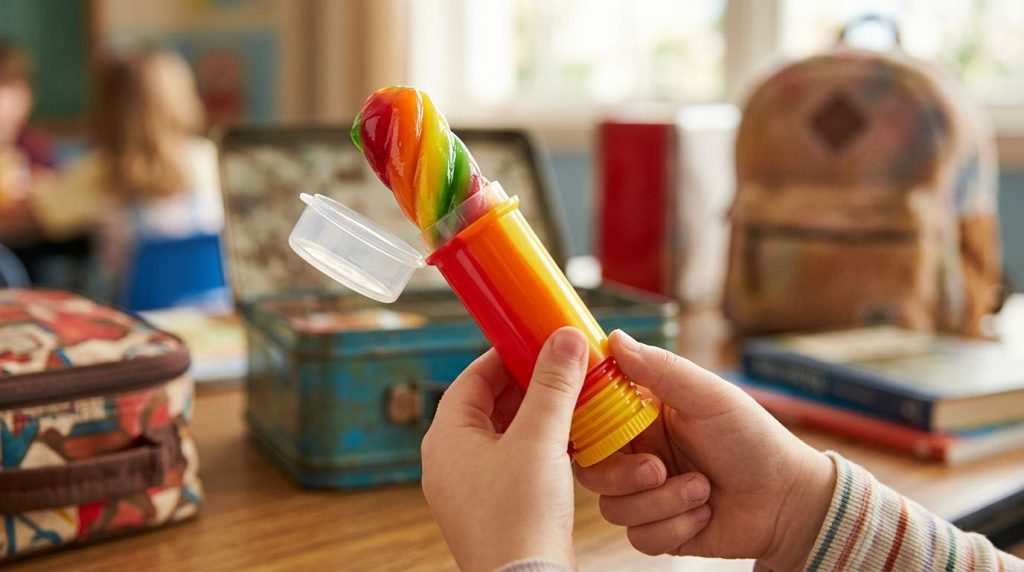
A regular lollipop asked one thing of you: unwrap it and commit. A Push Pop had better ideas. It rose with your thumb, disappeared back into the tube, and came with its own cap like it had someplace important to be.
That tiny bit of motion made it feel less like candy and more like a gadget. Kids love anything with a mechanism, and this one was perfect. No batteries. No rules. Just push, lick, cap, repeat.
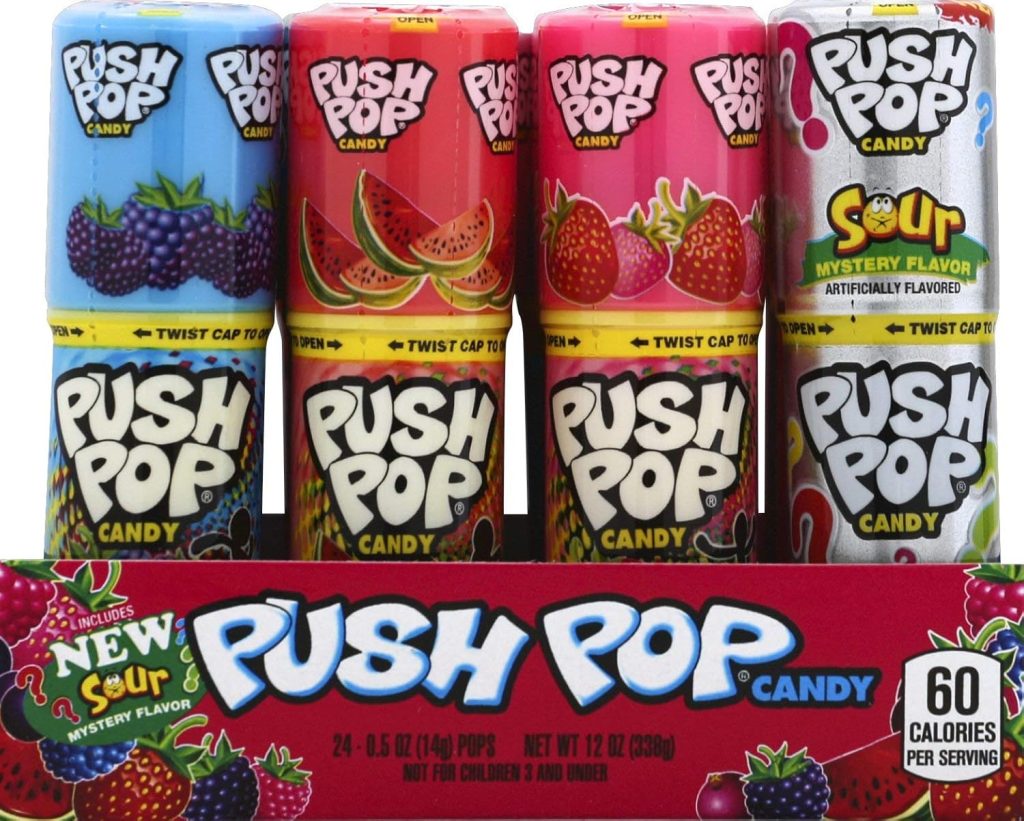
According to Push Pop’s official history, the candy launched in 1986 with cherry and grape as its first flavors. That timing makes sense. The late 80s loved plastic, bright colors, and snacks with a gimmick. Push Pop fit right in, but it also had something extra: it let you control the pace.
The genius wasn’t the sugar. It was the ritual.
You could eat a little now and save the rest for later, at least in theory. In practice, a lot of kids clicked it up and down several times before making any progress at all. That was part of the fun. It gave candy a built-in fidget factor years before anybody used that phrase.
The shape helped, too. A stick lollipop always felt temporary, flimsy, halfway to getting dropped on the sidewalk. A Push Pop felt protected. Self-contained. It had a shell, a cap, and a weird little dignity. Even when it got sticky, it still seemed more civilized than a loose lollipop rolling around in a backpack next to pencil shavings and a crumpled permission slip.
Basic brand details in Wikipedia’s Push Pop entry line up with the broader story: this was a fruit-flavored candy brand with a simple idea and a lot of staying power. Sometimes the smartest snack hook is the smallest one. In this case, it was a thumb press.
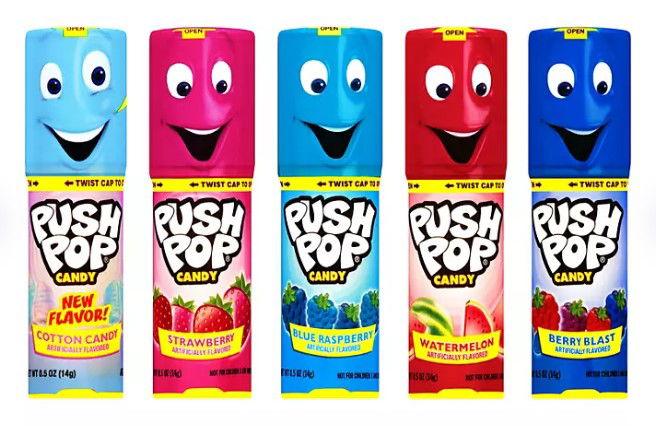
Why Push Pop Candy Owned the Lunch Box
Picture the school lunch lineup for a second. Peanut butter sandwich, baggie of chips, bruised banana, juice box, maybe a napkin if somebody was feeling organized, and then one bright little tube of candy tucked in like contraband. Push Pop looked exciting before you even opened it.
It also fit kid logic perfectly. You didn’t have to finish it in one sitting. You could have a few licks before the bell, cap it, and bring it back out after school like some unfinished business. That made it feel bigger than it was. A normal lollipop vanished fast. A Push Pop felt like it lasted.
The convenience-store angle mattered, too. This was prime pocket-change candy. You could buy one after Little League, after a bike ride, after an afternoon at the arcade, or on the walk home when the sun was still high and everything smelled like hot pavement. The cap meant you could stash it in a pocket or cup holder and pretend you’d save some for later.
Of course, that cap also disappeared all the time. Then the whole thing got fuzzy or sticky or both. Nobody cared much. The appeal survived a little chaos.
Push Pop also landed in the same loud, novelty-happy snack culture that gave us oversized sweets and bold packaging. If you miss snacks that were half spectacle, half sugar, the vibe sits right beside Oreo Big Stuf giant cookies. The late 80s and early 90s were full of treats that wanted your attention from the shelf. Push Pop didn’t whisper. It practically bounced.
And unlike some candies that felt like pure sugar bombs from the first second, this one had a small performance built in. There was a beginning, a middle, and a tiny plastic encore every time your thumb hit the base.
What Set It Apart From Other 80s and 90s Candy
A lot of candies tasted good. Push Pop felt interactive. That difference is why people still remember it so clearly.
This quick comparison gets to the heart of it:
| Candy | How you ate it | What made it memorable | | | | | | Push Pop | Clicked it up, licked it, capped it, came back later | It felt like candy with a pause button | | Ring Pop | Wore it on your finger and ate around the gem | It looked funny and made your hand sticky | | Blow Pop | Worked through the shell to reach the gum center | It had a built-in payoff at the end | | Standard lollipop | Unwrapped it and kept going until it was done | Simple, classic, no gimmick |
The takeaway is simple: Push Pop made the process part of the appeal. You weren’t racing to the center or wearing the candy like jewelry. You were operating it. That sounds small, but for a kid, it was huge.
The container changed behavior. You took smaller bites at the experience, not just the candy. You showed it to friends. You clicked it absentmindedly. You compared colors. You checked how much was left. It turned a cheap sweet into a little object with personality.
That also helped it stand apart from the heavier hitters in the snack world. If you wanted richness, a retro PB Max peanut butter bar had the whole layered, chocolate-loaded thing covered. Push Pop wasn’t trying to outdo candy bars on heft. It was playing a different game, one built on motion, color, and control.
And then there was the mood. Ring Pops were goofy. Blow Pops were a mission. Regular lollipops were dependable. Push Pops had attitude. They felt a touch futuristic, a touch silly, and completely kid-friendly. Like a toy from the drugstore candy aisle that happened to taste like cherry.
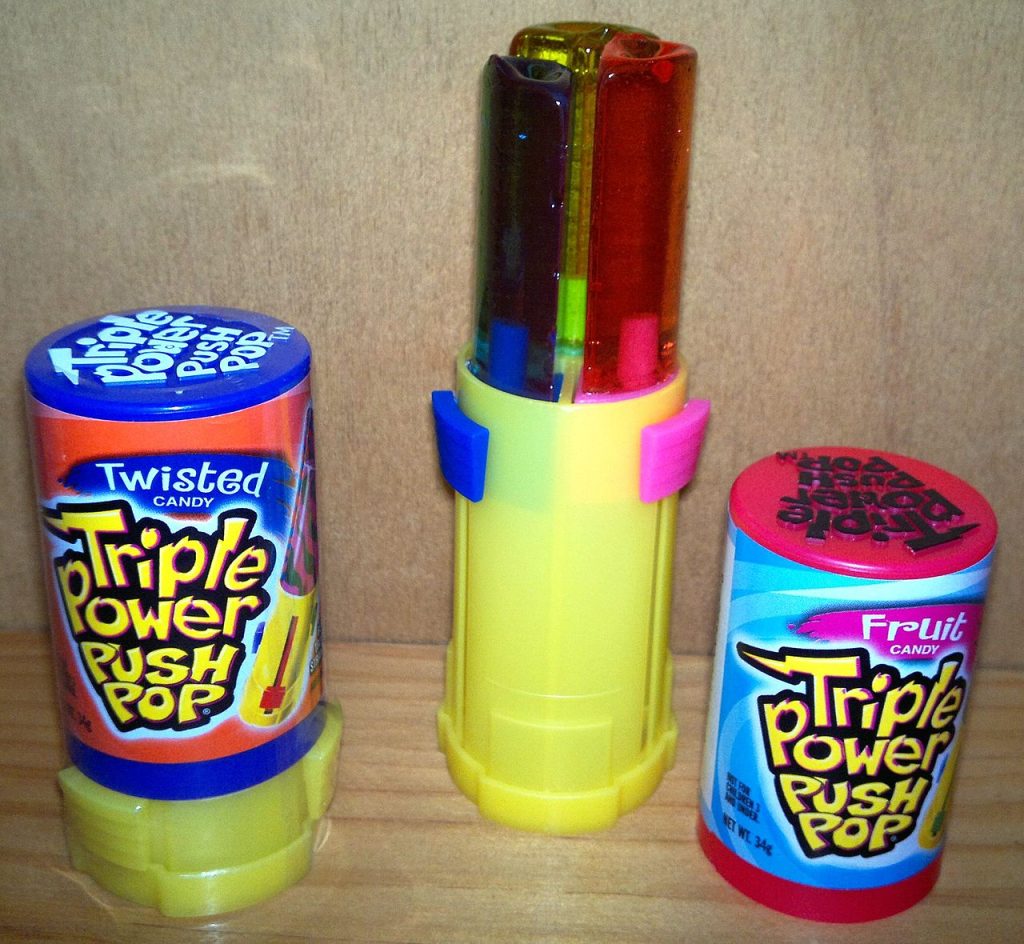
The Little Plastic Tube Became a Pop-Culture Memory
Some candy fades because the flavor wasn’t special enough. Push Pop stuck because the physical memory is so easy to replay. You can probably mime the thumb motion right now without even thinking about it.
A quick look at Push Pop commercials and flavor history brings back the brand’s whole energy. Bright colors. Motion. A little swagger. The word “push” did a lot of work on its own. It sounded active, playful, slightly mischievous, which is exactly how the candy felt in your hand.
That’s a big reason the brand stayed lodged in people’s memory while plenty of other sweets blurred together. Long before every desk toy clicked, spun, or snapped, this candy already understood a basic truth: your hands wanted in on the fun. You didn’t simply eat it. You handled it.
That tactile hook is why Push Pop still comes up in nostalgia conversations alongside lost favorites and aisle legends. It belongs in the same emotional scrapbook as the classic 80s braided chocolate candy, even though the experience was totally different. One was all chew and stretch. The other was click and cap. Both gave kids something to talk about.
And that might be the real secret. Push Pop wasn’t only a taste memory. It was a prop, a habit, a tiny stage piece. When people remember it, they rarely start with “it was sweet.” They start with the motion.
Why the Click Still Echoes
Push Pop lasted in memory because it turned a lollipop into an event. The candy was good, but the format was better. It gave kids a small sense of control, a little ceremony, and one more reason to play with their food.
That’s why the click stays with you. You could stop, start, save, show off, and carry it around like it mattered.
Some treats delivered a sugar rush and disappeared. Push pop candy came with stage presence, and that little performance is still hard to forget.