Some cereals gave you flakes. Some gave you marshmallows. Donkey Kong cereal gave you barrels.
That was the hook, and what a hook it was. In the early 1980s, when arcades felt electric and Nintendo’s ape was everywhere, a bowl of sweetened corn puffs based on an arcade game made perfect sense. Strange? A little. Glorious? Absolutely. This was also the rise of the Nintendo Cereal system…it was a battle of the 80s cereal!
If you remember the box, the shape, or that goofy thrill of seeing a game jump onto the breakfast table, this one still hits. Let’s get into why this short-lived cereal made such a lasting little dent in 80s memory.
Why Donkey Kong ended up in the cereal aisle
Timing did a lot of the work.
Donkey Kong exploded in arcades after its 1981 debut, and it didn’t take long for the character to move beyond the cabinet. The game had bright visuals, a simple setup, and one unforgettable obstacle: rolling barrels. That made it tailor-made for a food tie-in.
By late 1982, Ralston had a cereal on the market tied to the game. Fan documentation such as Super Mario Wiki’s cereal entry places production in late 1982, with the cereal discontinued in 1984. That gives it a pretty tight shelf life, which may be one reason people remember it so vividly.
A few hard facts help separate memory from foggy Saturday-morning nostalgia.
| Detail | What we know |
|---|---|
| Manufacturer | Ralston |
| Release window | Late 1982 |
| Cereal type | Sweetened corn cereal |
| Piece shape | Barrel-shaped puffs |
| License | Based on Nintendo’s Donkey Kong arcade game |
| Discontinued | By 1984 |
That’s the clean version. The bigger story is cultural.
Early 80s cereal boxes were mini billboards aimed straight at kids. Cartoons sold cereal. TV characters sold cereal. So why not video games, especially one of the biggest arcade hits in the country? Donkey Kong cereal is often remembered as one of the first cereals built around a video game license, and that alone gives it a special place in 80s food history.
It also came from a moment when pop culture categories were still bumping into each other in fun ways. Arcades were hot. Saturday mornings were sacred. The cereal aisle was loud, colorful, and shameless. Put all that together and, yes, an ape with barrels could end up next to your orange juice.
The barrel-shaped corn puffs were the whole point
Let’s be honest, the shape is why this cereal still gets talked about.
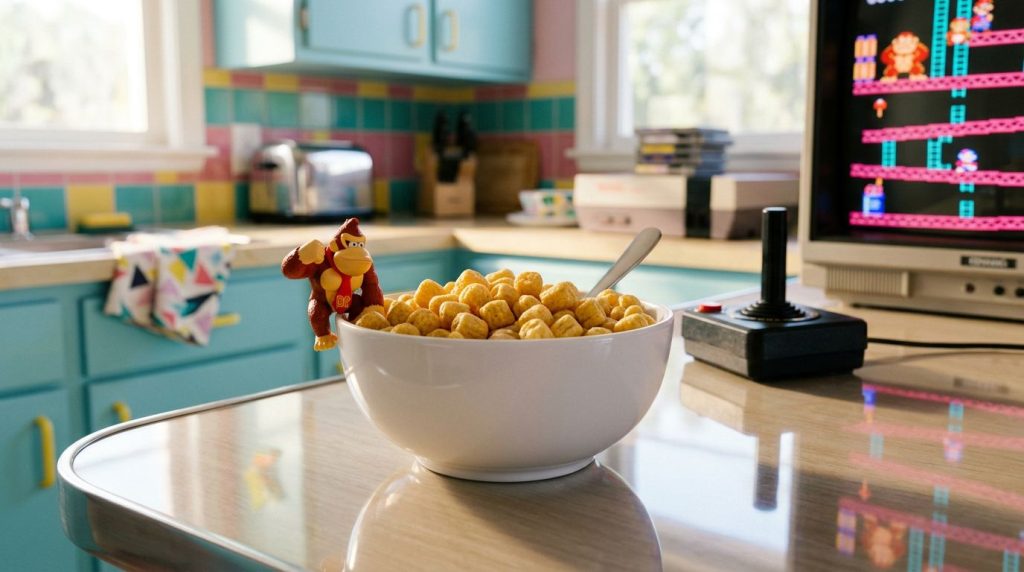
Donkey Kong cereal wasn’t just a box with a familiar character slapped on the front. The cereal pieces were barrel-shaped corn puffs, a direct nod to the arcade game’s most famous hazard. That detail did the heavy lifting. Kids didn’t have to read copy on the box to get the joke. One glance and they knew exactly what game it came from.
The whole gimmick fit in a spoonful: tiny barrels, floating in milk, straight out of the arcade.
That kind of design choice matters more than it sounds. Plenty of licensed foods coast on the name. This one made the license visible in the food itself, which is a lot more fun, and a lot more memorable.
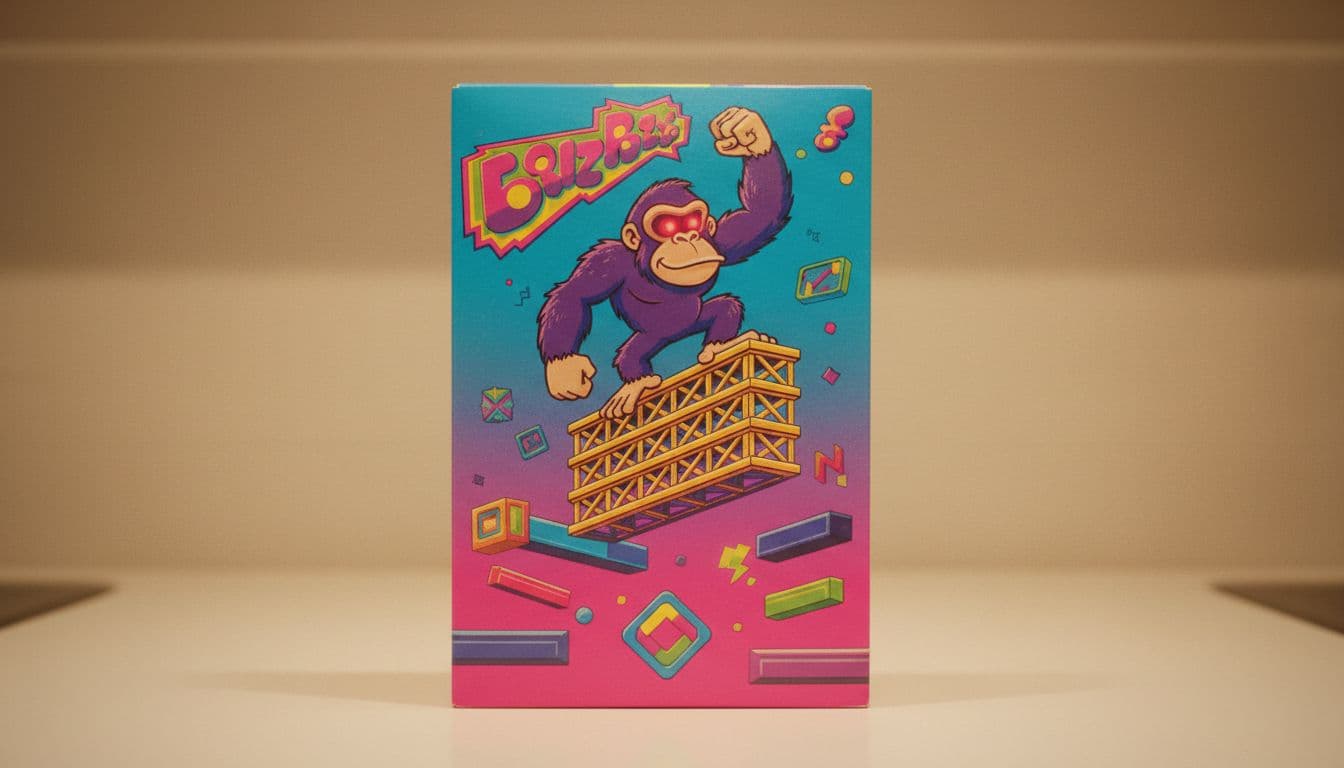
The barrel idea sold the whole fantasy before breakfast even started.
The cereal itself was sweetened corn cereal, which puts it in familiar kid-cereal territory. Think puffed, crunchy, easy to snack on by the handful. It wasn’t trying to be fancy. It was trying to be fun, and it knew exactly what lane it was in.
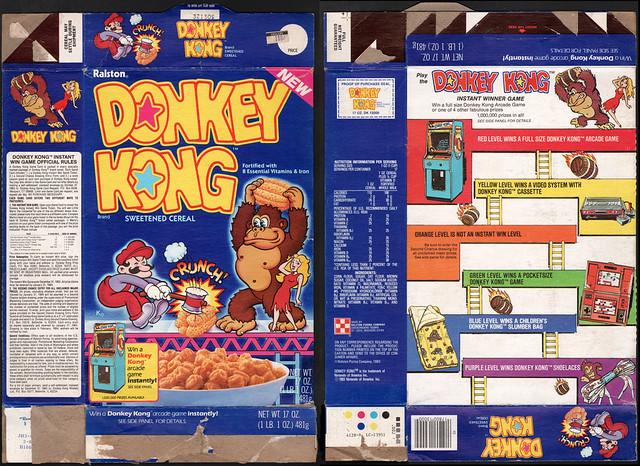
That same clarity carried into the packaging. In surviving photos and clips, the presentation leans hard into arcade action, with bright color, cartoon energy, and a pitch aimed squarely at kids who already knew the game. A cereal like this didn’t need subtlety. It needed instant recognition from six feet away in the supermarket.
And here’s the sneaky genius of the barrel shape: it tied the cereal to gameplay, not just branding. In Donkey Kong, the barrels weren’t background decoration. They were the thing you dodged. They were the problem. So turning them into breakfast was a clever little flip, the kind of licensed-food logic that only the 80s could make feel completely natural.
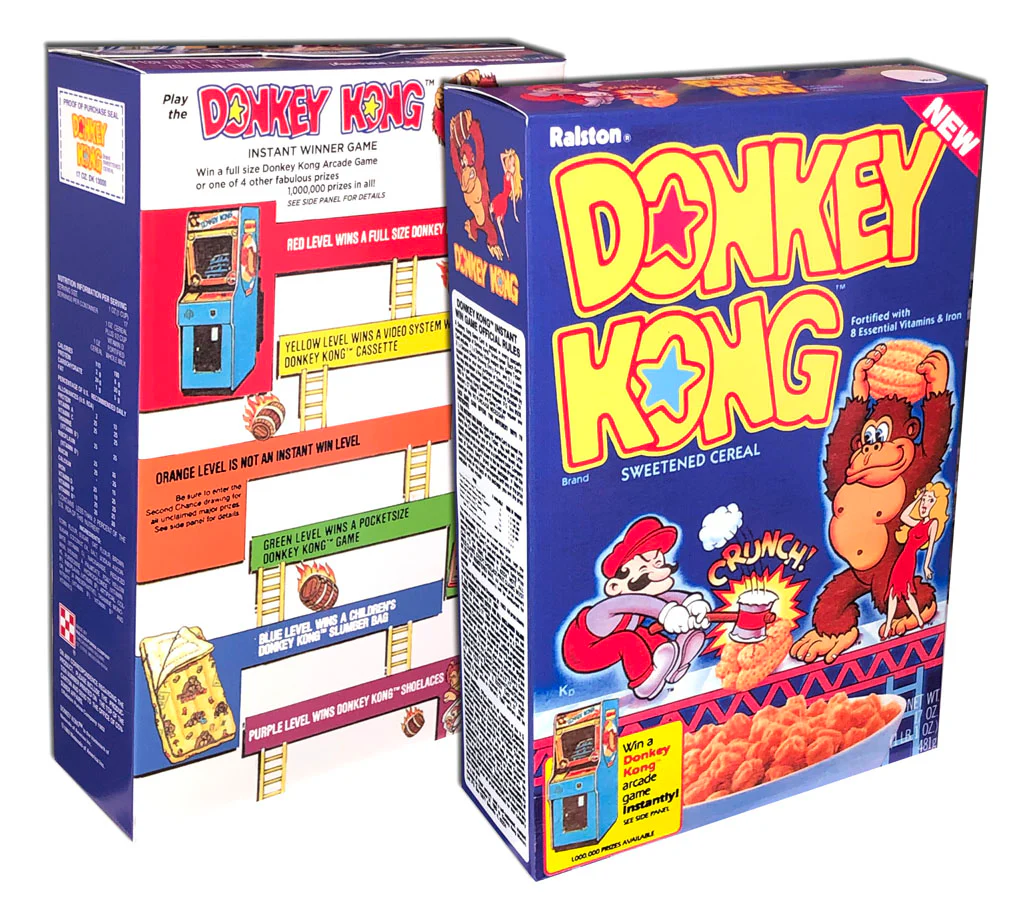
Ralston and Nintendo caught the early 80s at exactly the right moment
This wasn’t a random crossover.
Ralston put Donkey Kong cereal on shelves when video games still had that fresh, high-voltage novelty. Home consoles were growing. Arcades were packed. Kids didn’t see a hard wall between games, toys, cartoons, and food. It was all one giant universe of stuff you wanted.
A preserved TV commercial on YouTube captures that pitch nicely. The cereal isn’t framed as a serious breakfast choice. It’s framed as an extension of play. That’s the key. The box wasn’t only selling taste. It was selling more Donkey Kong time, or at least the feeling of it.
There is something charmingly literal about that strategy. You played the game after school. You watched cartoons on Saturday. Now the same energy showed up at breakfast. No friction, no subtle branding exercise, no wink at grown-ups. Just pure kid logic.
The Nintendo connection also gave the cereal a built-in spark. Donkey Kong was already a recognizable arcade property, and it had crossover appeal beyond hardcore players. Even if you weren’t dropping quarters every weekend, you probably knew the ape, the girders, and the rolling barrels. That’s gold for a cereal company.
What makes this tie-in feel early, and very 1982, is how direct it was. Later licensed cereals like Smurf-Berry Crunch sometimes felt crowded with mascots, gimmicks, and brand mash-ups. Donkey Kong cereal had a cleaner concept. Big game. Big icon. Barrel-shaped pieces. Done.
That simplicity is why people can still describe it in one sentence decades later.
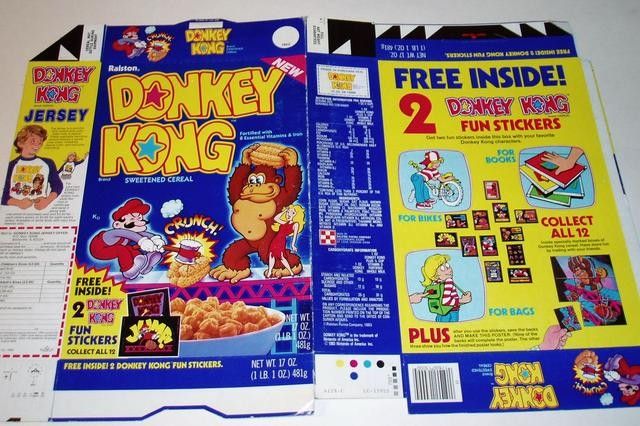
Why collectors still talk about it, and what “rare” really means
Short run plus strong nostalgia usually equals collector chatter.
Because Donkey Kong cereal was discontinued by 1984, original boxes don’t show up the way mass-market cereals from longer-running brands do. That said, claims about rarity and value tend to come from collector circles, auction listings, and fan recollection. They can be interesting, but they aren’t always consistent.
So here’s the grounded version: sealed boxes, flattened boxes, ads, and commercial recordings have become little memory anchors for fans of 80s food and game history. People want them because they connect two huge nostalgia lanes at once, breakfast cereals and classic arcade culture.
A nice example of that memory-preservation side is this 1982 Donkey Kong cereal clip from Foodnservice’s YouTube channel. It’s less about hard market data and more about the vibe, the visual proof, the “oh wow, I forgot this existed” feeling. And that feeling matters.
The collector appeal also comes from how specific the cereal was. This wasn’t a generic sugar cereal with a licensed puzzle on the back. It had a distinct look, a short window, and a built-in story. You can explain it in ten seconds to anyone who grew up in the era, and they’ll either light up or wish they had tried it.
There’s another reason it sticks: Donkey Kong cereal feels like a snapshot of an experimental moment. Companies were still figuring out how far a video game brand could travel. A bowl of barrel puffs turned out to be one answer.
Not every nostalgic product deserves a halo. Some are remembered because they were everywhere. Others are remembered because they were weird in exactly the right way. This one lands in the second group, and that may be why people still bring it up with such affection.
Donkey Kong cereal worked because it understood the assignment. It took one of the most recognizable parts of the arcade game, the barrels, and turned that into the breakfast itself.
That is why the cereal still pops in memory. Not because it lasted for years, but because it had a sharp idea, a hot license, and a very 80s sense of fun.
Tiny barrels in a bowl. That is the kind of pop-culture logic people don’t forget.