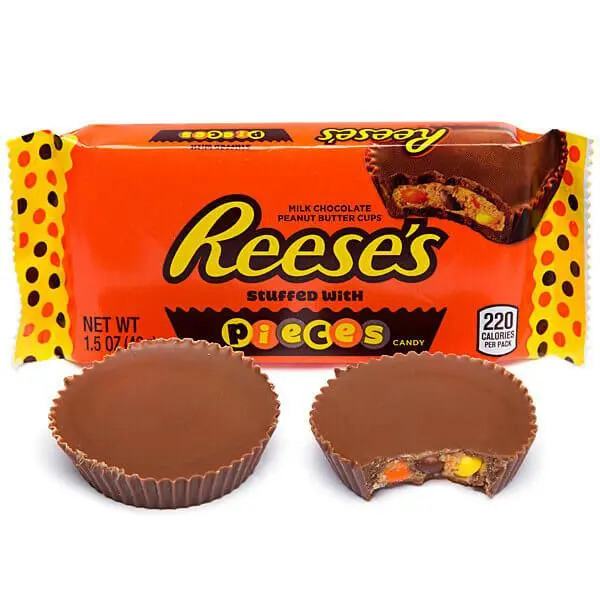
Some candies disappear because nobody cared. Others disappear because they were too specific, too extra, or too locked into one snack aisle moment. Reese’s Pieces Peanut Butter Cups fall into that second category.
If you were an 80s kid, or an honorary one, the idea still sounds perfect. H.B. Reese built a legacy on iconic snacks, and this product felt like the logical next step. By taking the soft, milk chocolate and peanut butter comfort of a classic Reese’s Peanut Butter Cup and adding the crunchy candy shell pop of Pieces, the brand created a sugar rush with built-in bragging rights. This unique candy bar style mashup was remarkably innovative for its time, yet the funny part is that a flavor combination this obvious still could not stick around.
Key Takeaways
- The Reese’s Pieces Peanut Butter Cup was a bold 1980s experiment that combined the creamy, soft texture of a classic cup with the crunchy, candy-coated snap of Reese’s Pieces.
- The candy represented a “mashup” era in snacking, aiming to offer a more complex, multi-sensory experience than the original, dependable peanut butter cup.
- Its eventual disappearance is likely due to the difficulty of balancing competing textures and the fact that it occupied a niche space that overlapped with existing, separate product lines.
- Despite its limited shelf life, the product remains a nostalgic touchstone, highlighting the brand’s willingness to innovate through texture and experimental flavor crossovers.
Why this Reese’s combo felt like such a big deal
The basic Reese’s cup already had decades of goodwill behind it. The classic Reese’s Peanut Butter Cups have been a staple since 1928, and by the time The Hershey Company was producing these iconic treats in Hershey, Pennsylvania, the candy was firmly established as comfort food. The winning combination of roasted peanuts and a signature peanut butter filling had achieved taste perfection, making the original product feel dependable and almost impossible to improve upon.
Then Reese’s Pieces came along and changed the mood.
Reese’s Pieces were younger, brighter, and poppier. After E.T. the Extra-Terrestrial turned them into movie candy royalty in 1982, they were not just another snack. They were a cultural phenomenon that felt louder, more playful, and more suited for an arcade than a lunch pail.
When the brand started combining these two ideas, it felt less like a random product extension and more like a high-profile crossover episode. The classic cup carried a sense of history, while the candy shells of the Reese’s Pieces added a sense of sparkle. Put them together and you had a candy that promised more movement, more crunch, and a unique sensory experience.
For fans, the appeal was instant before the wrapper even came off. You could already imagine the bite. You got the familiar cup and the creamy peanut butter filling, followed by that tiny candy-shell crackle that regular cups never provided. It promised contrast, and the eighties candy market was obsessed with contrast.
That mattered in a candy aisle packed with attitude. This was the same shelf space that made room for the nostalgic BarNone chocolate bar, which offered layers of richness and zero restraint. Candy was not shy during that era; it wanted to impress you before you even tore the wrapper.
Having Reese’s Pieces paired directly with peanut butter cups sounded like a slam dunk. Since they shared the same flavor family but offered two very different textures, it was, on paper, pure candy chemistry.
What Reese’s Pieces Peanut Butter Cups were like in real life
Here is where the record gets a little fuzzy, and it is better to say that up front. Official archives on this mashup are thin. What survives is more scattered: product mentions, advertising traces, collector memory, and the broader pattern of Reese’s spin-offs. So the broad picture is solid, while some release and packaging details are harder to pin down with total confidence.
Still, the appeal of Reese’s Pieces Peanut Butter Cups is easy to understand.
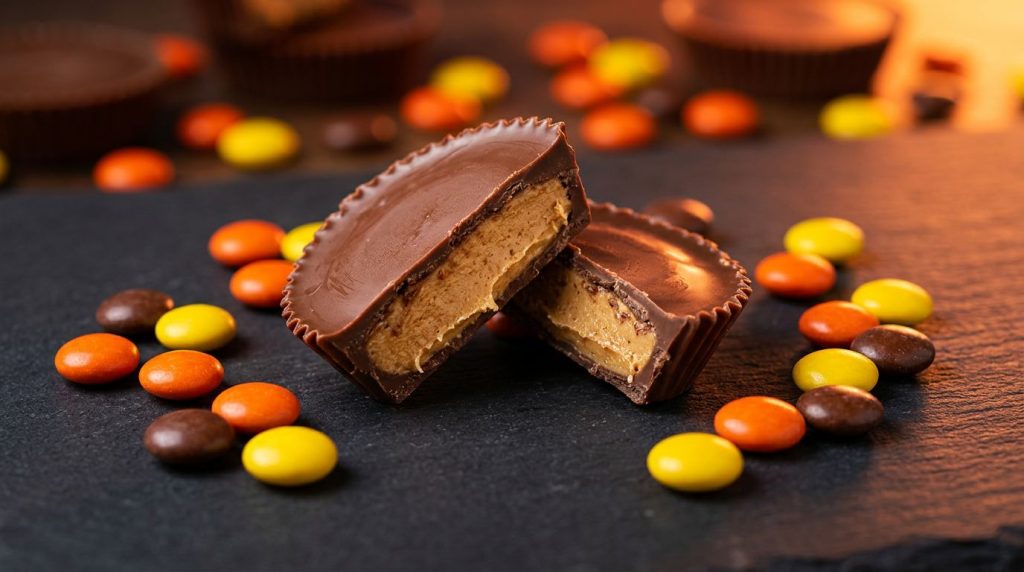
A regular Reese’s cup is soft-edged in every sense. The chocolate coating, which relies on a precise balance of cocoa butter and soy lecithin, gives way first. The peanut butter filling follows, and the whole thing melts together fast. A Reese’s Pieces and peanut butter cup mashup interrupts that rhythm. You get the familiar cup, then little candy-coated bumps and snaps. These Pieces, derived from a mixture involving corn syrup to create that signature crunch, add a different sensory profile to the experience. It is a cup with static in the signal, in the best possible way.
Think of a standard Reese’s cup with a handful of tiny peanut butter pebbles worked into the party.
This quick side-by-side shows why it stood out:
| Candy | Main texture | Flavor feel | Personality |
|---|---|---|---|
| Regular Reese’s cup | Soft, creamy | Rich and balanced | Classic |
| Reese’s Pieces | Crisp shell, firm center | Sweeter, brighter | Playful |
| Pieces-and-cup mashup | Soft plus crunchy pops | Busier, louder | Novelty-driven |
The key difference was not the ingredient list alone. It was the pacing of the bite. Loose Pieces provide repetition, one pop after another. A cup gives you one smooth, unified payoff. The mashup tried to do both at once, which made it feel more like a mini event than a standard candy break.
That also helps explain why fans remember it so vividly. Texture is memory fuel. You might forget a wrapper color. You do not forget the moment a candy surprises your teeth.
Packaging likely leaned hard on that promise. Complete wrapper documentation is limited, so it is safer not to pretend every visual detail is settled history. But the Reese’s branding of the period already had a strong orange, yellow, and brown identity, and the Pieces angle would have been the obvious hook. You did not need a long sales pitch. You needed one glance and one thought: “Wait, they put those in that?”
That kind of instant recognition is half the magic of candy marketing.
What made it different from other Reese’s products
This was not just another size change, holiday shape, or a simple “same candy, different wrapper” move. That is what made it memorable.
Most Reese’s variations start with the classic cup and tweak the edges. We are used to the Big Cup, the bite-sized Miniatures, or even the Thins for those who want less chocolate. The brand has also experimented with flavor profiles like Dark chocolate and White creme, or even Sugar free versions for those watching their intake. However, the Reese’s Pieces mashup changed the mouthfeel, and that is a bigger deal than it sounds. Candy lives or dies on the first second of the bite.
The standard cup is smooth and dependable. Reese’s Pieces bring a distinct crackle, a sugar shell, and a more candy-forward sweetness. When those two identities meet, the result is less mellow than the original cup. It feels more restless and playful, almost like the candy version of a movie sequel with a bigger effects budget.
There is also a brand-story angle here. As The Nibble’s history of the peanut butter cup shows, the cup itself came from a much older, simpler candy tradition. The mashup belongs to a different era, when familiar brands started multiplying into spin-offs, mix-ins, and special formats.
That makes this candy feel like a bridge product. It is part old-school Reese’s, part modern brand extension, and part checkout-lane impulse buy that knew exactly how to catch your eye.
If you look through lists of discontinued Reese’s flavors and products, you can see how often the company tested new textures, fillings, and ideas. The Pieces cup fits that pattern perfectly. It feels like an early sign of the “what if we stuffed this into that?” mindset that later became normal for the brand.
It also felt right for its moment. The 80s and early 90s loved the idea that more could be more. More crunch, more colors, more layers, and more reasons to beg for one at the checkout line.
And yet, even then, there was a catch.
Because the closer a candy gets to “everything at once,” the more it can lose the clean charm that made the original great.
Why the mashup probably didn’t survive the decade
There does not seem to be a neat public corporate explanation for why these items disappeared, so any answer here must stay grounded. Still, the likely reasons are familiar if you have watched enough limited run candy come and go.
First, the mashup may have been too close to products people could already buy separately. If you wanted the creamy simplicity of a cup, you bought a cup. If you wanted the candy shell crunch of Pieces, you bought a bag of Pieces. Furthermore, those seeking a textural contrast often opted for standard crunchy peanut butter varieties instead. The hybrid had a narrow lane, and narrow lanes do not always win long shelf battles.
Second, novelty can pull you in once and stall on repeat. The first bite likely felt exciting because it broke the expected Reese’s texture. After that, some fans went right back to the regular cup. That is not a knock; it is a reminder that interesting and must have are not the same thing.
Third, texture mashups can be tricky. A peanut butter cup asks for softness, while Pieces ask for snap. Put those elements together and the balance becomes difficult. Too many Pieces made the cup feel busy, while too few made the concept feel half committed.
Shelf space also played a significant role. Major brands prioritize King Size and snack size options that offer high turnover, often leaving little room for experimental items. Additionally, holiday themed candies and seasonal sales consistently take priority over niche mashups during peak shopping windows. When a product is not a core offering, it struggles to compete with established items that occupy prime real estate.
The thin archival trail says something, too. When a product gets heavy, long term support, it leaves a bigger paper trail, more ads, and more easy to find mentions. This one feels more like a quick flare than a flagship release.
Candy history is full of beloved departures, whether you are talking about a Reese’s offshoot or the long Marathon candy bar. The ones that last usually have a clean identity. This one had two.
That was the attraction, but it may also have been the problem.
A Reese’s Pieces peanut butter cup was a remix, not a standard. It was a fun side quest, not the main game. For a while, that was enough to make it stand out. It just was not enough to make it permanent.
Frequently Asked Questions
Why did Reese’s decide to combine Pieces with standard cups?
The brand wanted to capitalize on the popularity of both products by creating a high-profile crossover that offered a new textural experience. By integrating the crunch of a candy shell into the creamy classic, they aimed to create a more dynamic, “louder” snack for the competitive 1980s candy market.
Can I still find these in stores today?
No, this specific mashup was a limited-time innovation that faded from the market years ago. While Reese’s continues to release new, limited-run variations, the original Pieces-infused cup is no longer a core offering on store shelves.
Why was the mashup difficult to sustain long-term?
The product struggled to maintain a unique identity because it competed directly with the standalone versions of its components. Additionally, the challenge of perfectly balancing the soft, melt-in-your-mouth experience of a cup with the hard snap of Pieces meant the treat sometimes felt like it had too much going on at once.
Is the memory of this candy just a result of nostalgia?
While nostalgia plays a major role in how we remember discontinued snacks, this item was genuinely distinct due to its specific sensory profile. Because texture is a major driver of snack memory, the unique “pop” of the candy shell against the soft peanut butter left a lasting impression that standard cups could not replicate.
Conclusion
Some lost candies fade because they were forgettable. This one lingers because it was not. Reese’s Pieces Peanut Butter Cups felt like a bright, slightly rowdy twist on an old favorite, and that made it catnip for 80s snack fans.
What keeps the memory alive is the contrast. You had a soft cup paired with a crisp shell, offering a familiar flavor with an entirely new texture. That little jolt made these iconic peanut butter treats feel special, even if that novelty did not translate into a long shelf life. While dedicated fans often try to recreate the experience with homemade Reese’s recipes in their own kitchens, the original factory versions, which are certified kosher, still possess a unique appeal that is hard to replicate.
Maybe that is the whole charm. It did not necessarily aim to be the world’s largest success in terms of longevity. It simply made a classic feel brand new for a minute, and sometimes that is exactly why a candy gets remembered as a beloved part of history.