Some candy disappeared the second you tore open the wrapper. A Ring Pops candy stayed on your hand like you’d just won the sugar lottery.
That was the whole magic. Ring Pop candy wasn’t only a treat. It was costume jewelry for kids, part snack, part prop, part lunch-table showmanship.
And that’s why people still remember it so vividly. To get why it hit so hard, you have to look at the candy itself, the timing, and the pure playground theater behind it.
Why Ring Pops Felt Bigger Than Candy
A normal lollipop asks for one job: eat me. A Ring Pop asked for attention first.
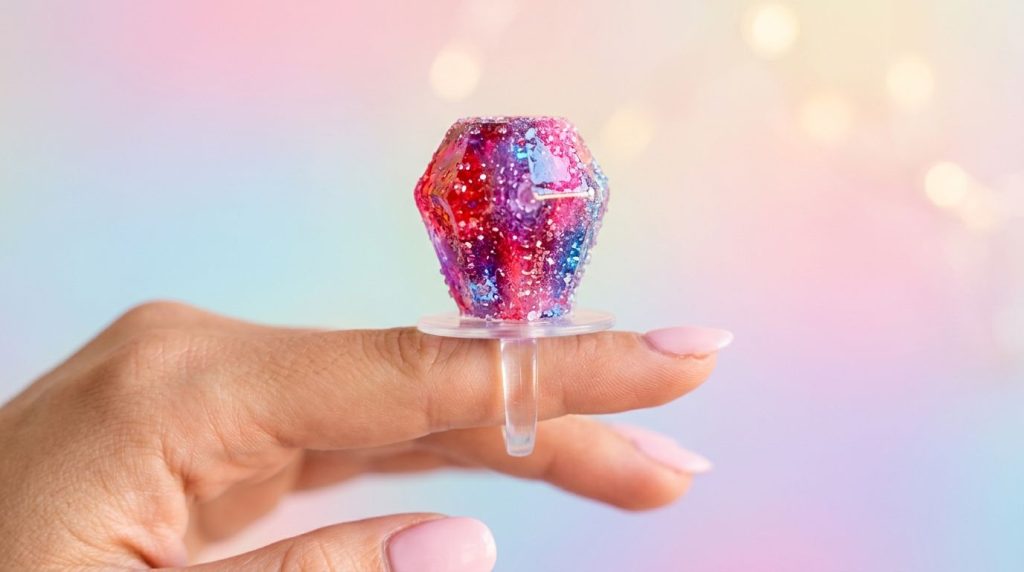
The shape did most of the work. You slipped it on, held up your hand, and suddenly your finger had a giant fake gemstone sparkling back at you. Red, purple, blue, pink, it didn’t matter. Every color looked a little outrageous, and that was the point.
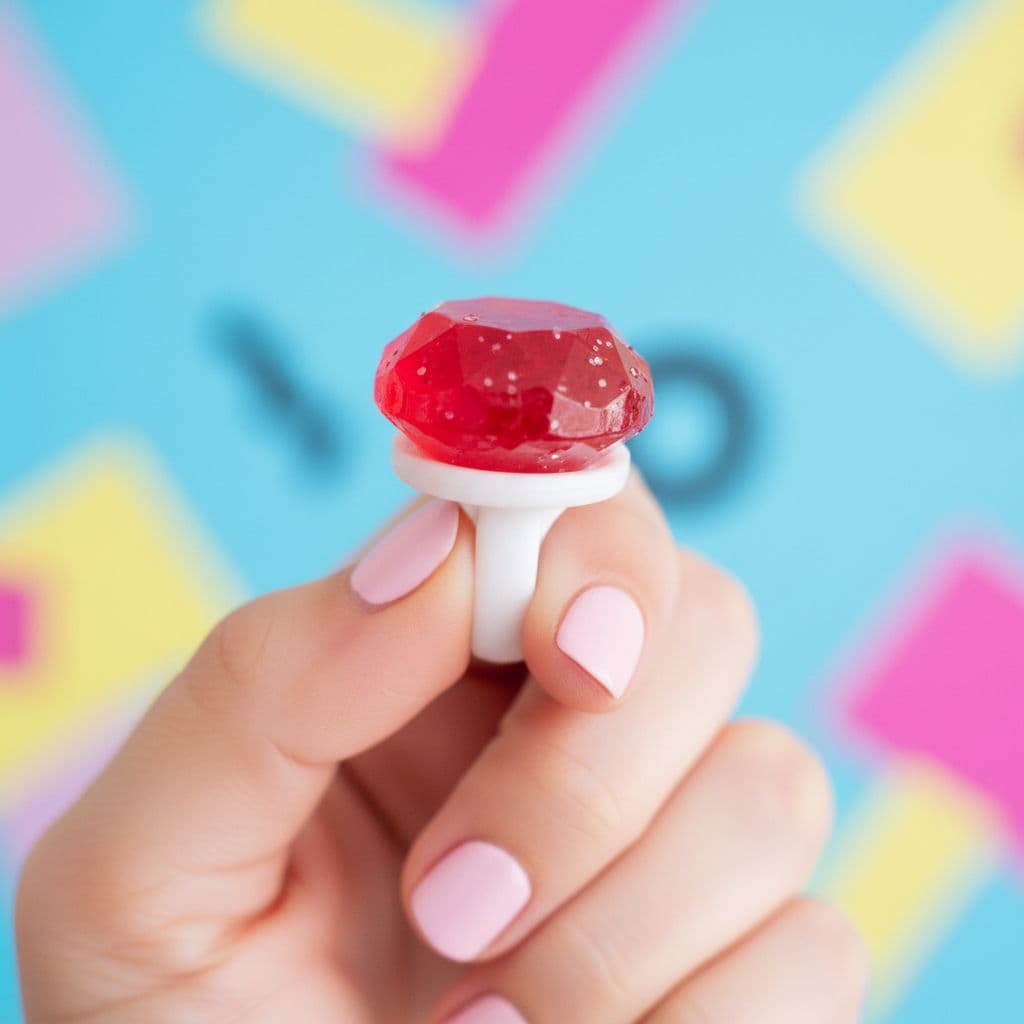
Unlike a candy bar, it didn’t vanish into your fist. Unlike a stick lollipop, it didn’t need to be carried around like a tiny baton. A Ring Pop sat right out in the open. It turned your hand into a display case.
That simple move changed the whole experience. Kids weren’t only tasting sugar. They were wearing it. Showing it off. Pretending, for a few sticky minutes, that they had something glamorous on their finger.
A Ring Pop didn’t wait to be noticed. It arrived pre-noticed.
That jewelry angle mattered more than people give it credit for. Kids love borrowing pieces of the grown-up world, especially the flashy pieces. Costume heels, toy makeup, plastic sunglasses, clip-on ties, anything that says, “Look at me, I’m doing the big-kid version.” Ring Pops fit right into that fantasy.
And there was a built-in joke everyone understood. It looked like a giant diamond, but it was candy. Fancy and ridiculous at the same time. That mix made it memorable. A chocolate bar could be delicious. A Ring Pop could be delicious and theatrical.
That’s a different category of fun.
The Origin Story Was Smart, Simple, and a Little Sweet
Ring Pops candy history has one of those origin stories that sounds almost too neat, but it holds up across the usual candy histories.
According to Candy Favorites’ Ring Pop history, product engineer Frank Richards came up with the idea in 1979 while working at Topps. The goal was personal, not corporate poetry. He wanted to help his daughter stop sucking her thumb.
That explains why the earliest idea had a pacifier feel to it. A candy shape you could focus on, wear, and lick made more sense than a standard sucker. History of Candy’s Ring Pop overview also traces the concept back to Richards and the pacifier-inspired design, with the hard candy jewel mounted on a plastic ring.
Then came the part that made it stick: timing.
Ring Pops arrived right as candy was getting more playful about packaging and shape. Companies already knew sugar alone wasn’t enough. The wrapper mattered. The gimmick mattered. The story mattered. Kids wanted candy that did something, or at least looked like it did.
Topps understood that kid logic cold. This was a company tied to trading cards, bubble gum, and the kind of small collectibles kids loved to swap, carry, and show off. A wearable lollipop fit that sensibility perfectly.
The candy hit stores in 1980, and early flavors included cherry and grape. That’s a modest starting lineup by modern standards, but it didn’t need a giant menu. The shape was the star. Flavor got you in the door. The ring kept you talking about it.
That’s often how novelty candy wins. Not by being the richest or the fanciest, but by giving the eater a role to play.
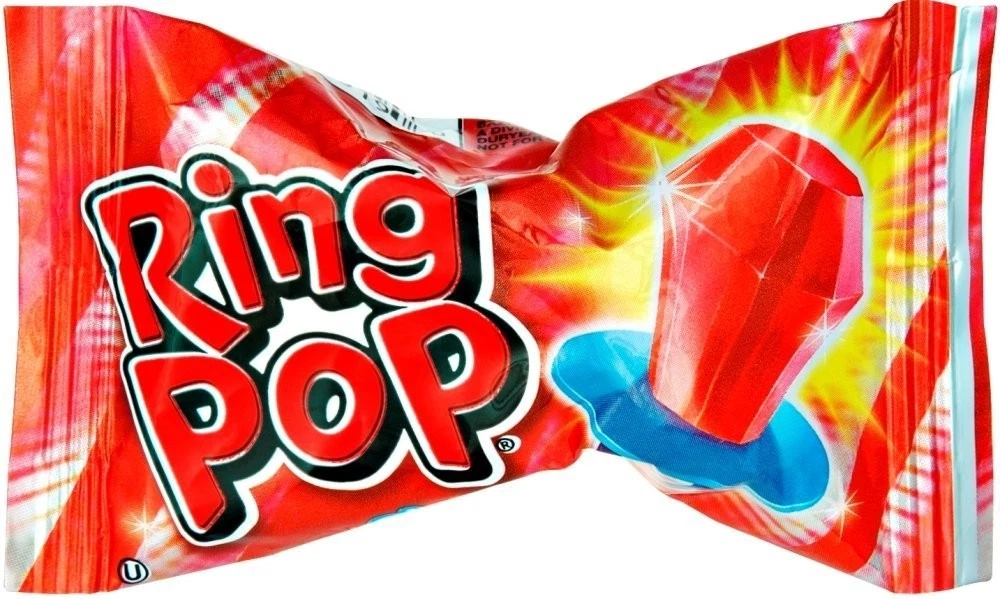
The 80s Turned Ring Pops Candy Into a Style Statement
If Ring Pops had shown up in a quieter, plainer era, they still might have worked. In the 1980s, they felt custom-built.
This was a decade that loved visible fun. Loud sneakers. Plastic accessories. Neon everything. Toys with attitude. Snacks with mascots. A candy that looked like a gemstone didn’t have to fight for attention. It fit right in with the visual noise, and then shouted a little louder.
Ads helped lock in the idea. A History Oasis look back notes the catchy line, “a lollipop without a stick,” which was a perfect little piece of salesmanship. Short, clear, impossible to miss. The ad pitch didn’t need a complicated setup. Kids saw the ring, got the joke, wanted in.
That jewelry angle also gave the candy a social life beyond taste. Ring Pops invited pretend proposals, fake royalty, mock treasure hunts, and a hundred lunch-table bits. You could flash one across the cafeteria and get an instant reaction. It was edible bragging rights.
And because it sat on your finger, it left your hand mostly free. You could keep talking, trading stickers, flipping through cards, or reaching for your backpack while the candy stayed part of the outfit. Small detail, big effect.
The 80s candy aisle had room for straightforward heavy hitters too. You had rich bars like the iconic BarNone chocolate bar, all crunch and chocolate excess. You had chewy legends like the nostalgic Marathon candy bar, long enough to feel like a challenge. Ring Pops were playing a different game.
They weren’t selling heft. They were selling spectacle.
The Candy Aisle Became a Toy Box
Ring Pops didn’t invent novelty candy, but they perfected one branch of it: candy as accessory.
Once that idea clicked, it sat alongside a whole family of sweets that blurred the line between snack and toy. Some were wearable. Some were mechanical. Some were basically candy with a prop attached. All of them understood the same truth: kids love participation.
Here’s the quick scoreboard:
| Candy | The gimmick | Why it stuck |
|---|---|---|
| Ring Pop | Hard candy jewel on a plastic ring | You could wear it and show it off |
| Candy Necklace | Sugar beads on elastic string | It turned candy into a goofy accessory |
| Push Pop | Retractable lollipop tube | It felt like a gadget, not just a sweet |
| PEZ | Candy bricks with character dispensers | The dispenser had as much appeal as the candy |
Candy necklaces came closest to the same wearable charm, but they had a messier fate. Sooner or later they became a sticky rope around your neck, half-eaten and slightly tragic. Ring Pops were cleaner, bolder, and easier to stage-manage.
Push Pops went in a different direction. They turned the lollipop into a little machine, something you could pop up, cap, and pocket for later. PEZ had a similar toy-first energy. The candy was fine. The dispenser was the hook.
Ring Pop’s genius was simpler than either one. It made you look rich for the price of pocket change.
That sounds silly, but kid culture runs on tiny transformations. A paper crown makes you royalty. Cheap sunglasses make you a movie star. A faceted candy gem on a plastic ring makes you feel like you’ve got treasure on your hand.
That’s why the candy-jewelry idea lasted. It wasn’t only edible. It was performative. You didn’t consume it in private. You debuted it.
Why the Memory Still Feels So Sharp
Some nostalgia is blurry. Ring Pops aren’t.
You remember the size of the candy jewel. The way the plastic ring hugged your finger a little too tightly. The glossy surface before the first lick. The sticky shine after a few minutes. Even the slight absurdity is part of the memory. Who thought this up? Why did it feel so cool? Why did every kid want one?
Because the candy made the eater part of the ad.
A chocolate bar stays in the wrapper until the moment you bite it. A Ring Pop announces itself the whole time. One kid wears it, five other kids notice it, and suddenly the product is doing live promotion in the middle of recess. No billboard needed.
That’s also why it keeps showing up in nostalgia conversations. Not because it was the most refined candy ever made. It wasn’t. Ring Pops stick in your head because they had personality. They made ordinary sugar feel like an event.
And for 80s kids, that matters. The decade loved anything that crossed categories. Toys that looked like cartoons. Cereal tied to characters. Fashion that felt half costume, half attitude. Ring Pop candy fit that mood exactly. It tasted sweet, looked flashy, and gave you a tiny role to play.
A snack that doubled as jewelry? Come on. That’s catnip for memory.
A Ring Pop worked because it did more than taste good. It gave candy a costume.
That’s the part people still carry with them. Plenty of sweets were tasty. Far fewer let you wear the fun on your hand and turn a sugar hit into a little performance.
That is why wearable candy still sparkles in memory. It wasn’t only what you ate. It was what you got to be while you were eating it.