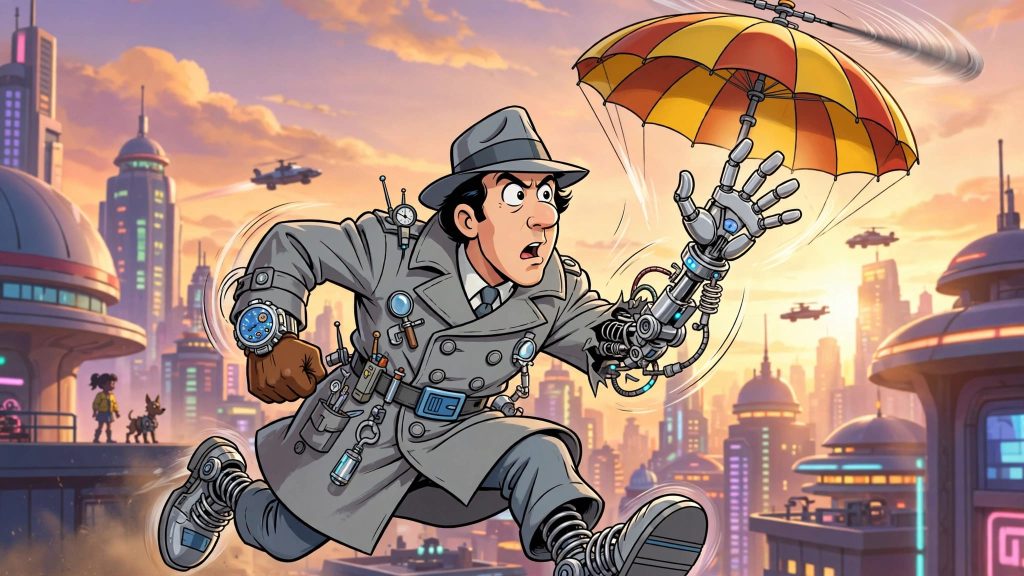
A plain old trench coat had no business being this exciting. Yet this animated hero made a hat, a wristwatch, an umbrella, and a pair of shoes feel like the hottest technology on television.
For 80s kids, Inspector Gadget’s world was a retro-futuristic place where anything might pop out, stretch upward, spin into the sky, or send a secret message. The gadgets were ridiculous. That was the whole beautiful point.
Key Takeaways
- The original Inspector Gadget cartoon premiered in 1983 and ran for two seasons and 86 episodes, following a gadget-filled police inspector against Dr. Claw and M.A.D.
- Gadget’s wearable inventions made futuristic technology feel playful, impractical, and wonderfully unpredictable.
- Penny and Brain were the real investigative team, solving cases while Gadget stumbled into accidental victories.
- Don Adams’s comic voice, the mysterious Dr. Claw, and the unforgettable mechanical theme helped give the series its lasting 80s identity.
The Inspector Gadget Cartoon Arrived Like a Toy Box Explosion
The original television series premiered in the United States on September 12, 1983, then reached new viewers through syndication. Its premise was easy for kids to understand in seconds. Inspector Gadget was a police inspector rebuilt with a spectacular collection of mechanical add-ons. He was brave, polite, and almost never aware when schemes from M.A.D., led by Dr. Claw, wrecked his latest gadget.
Created by Andy Heyward, Jean Chalopin, and Bruno Bianchi, the show was produced through DIC Audiovisuel, with Nelvana involved in the first season. The second season completed the two-season, 86-episode run. That is a lot of collapsing bridges, suspicious disguises, and startled pigeons.
The Inspector Gadget series listing still captures the central magic: Don Adams voiced the animated series protagonist, a detective outfitted with bizarre gadgets who pursued the M.A.D. crime organization.
A Hero Who Wasn’t the Sharpest Tool
Gadget’s genius was never the point. He’d charge into danger with sunny confidence, pull the wrong tool, and somehow remain convinced he had everything under control.
That made him different from the usual square-jawed action hero. He was less James Bond and more your well-meaning uncle trying to fix the television with three remote controls and a flashlight.
Kids didn’t need Gadget to be cool in the traditional sense. His mistakes made the cool stuff more fun. When an extendable arm tangled with a chandelier, the gadget had personality. It wasn’t sleek. It was alive, unpredictable, and ready to embarrass its owner.
Gadget’s technology looked powerful because it could do anything, including the exact wrong thing at the exact worst moment.
Why the Gadgets Felt So Far Ahead of Their Time
The Inspector Gadget cartoon took ordinary objects and gave them a secret second life. That trick landed hard in the 80s, when home electronics already felt a little magical. A cordless phone? Fancy. A calculator watch? Pure future.
Inspector Gadget carried the fantasy several levels higher. His cartoon bionic gadgets made wearable technology feel futuristic, even without predicting real devices.
Wearable Tech Before Anyone Called It That
A watch that communicates with someone far away, a built-in camera, a personal tracking device, a gadget-filled coat. Sound familiar?
The show didn’t predict a particular smartwatch or phone. It did make the basic idea feel instantly cool: technology could travel with you. You didn’t have to sit at a giant computer console. The console could be in your sleeve, your shoe, or tucked under your hat.
Gadget’s tools were wildly impractical, of course. His helicopter blades could spring from his hat. His limbs could extend like a metal tape measure with a mind of its own. Still, the visual message was clear. The future wasn’t locked in a laboratory. It could be worn on the way to work.
Every Device Had a Job, Sort Of
The animated series used a wonderfully direct visual language. Need to see over a wall? Periscope. Need to cross a gap? Extendable legs. Need to investigate in bad weather? Umbrella. Need to reach something high? Go-Go Gadget arms.
You could understand the function before anybody explained it. Bright colors, spinning parts, springs, knobs, and sudden motion did all the work. It was like watching a classic cartoon version of a Swiss Army knife after three cans of soda.
That love of animated tech fantasy also showed up elsewhere in the decade. Jem’s holographic transformation technology gave 80s kids another gloriously impossible machine to wish for.
Penny and Brain Made the Real Tech Team
Here is the delicious twist: Inspector Gadget got the credit, but Penny and Brain usually solved the case.
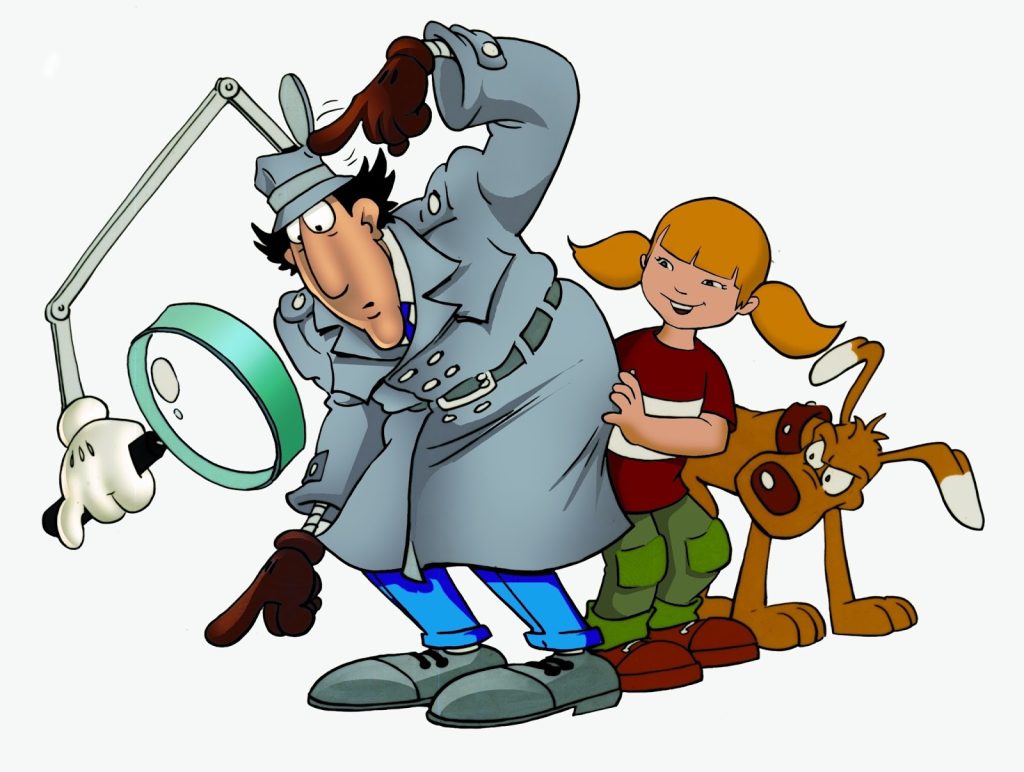
Gadget’s niece had a computer book and a sharp little investigator’s brain. Brain, her shaggy dog partner, stopped Dr. Claw’s plans with disguises, chases, and dangerous work before Gadget understood the danger. Frank Welker gave the shaggy dog expressive vocal sounds, while Cree Summer voiced the young investigator early in the run.
Penny’s Computer Book Was Peak 80s Future
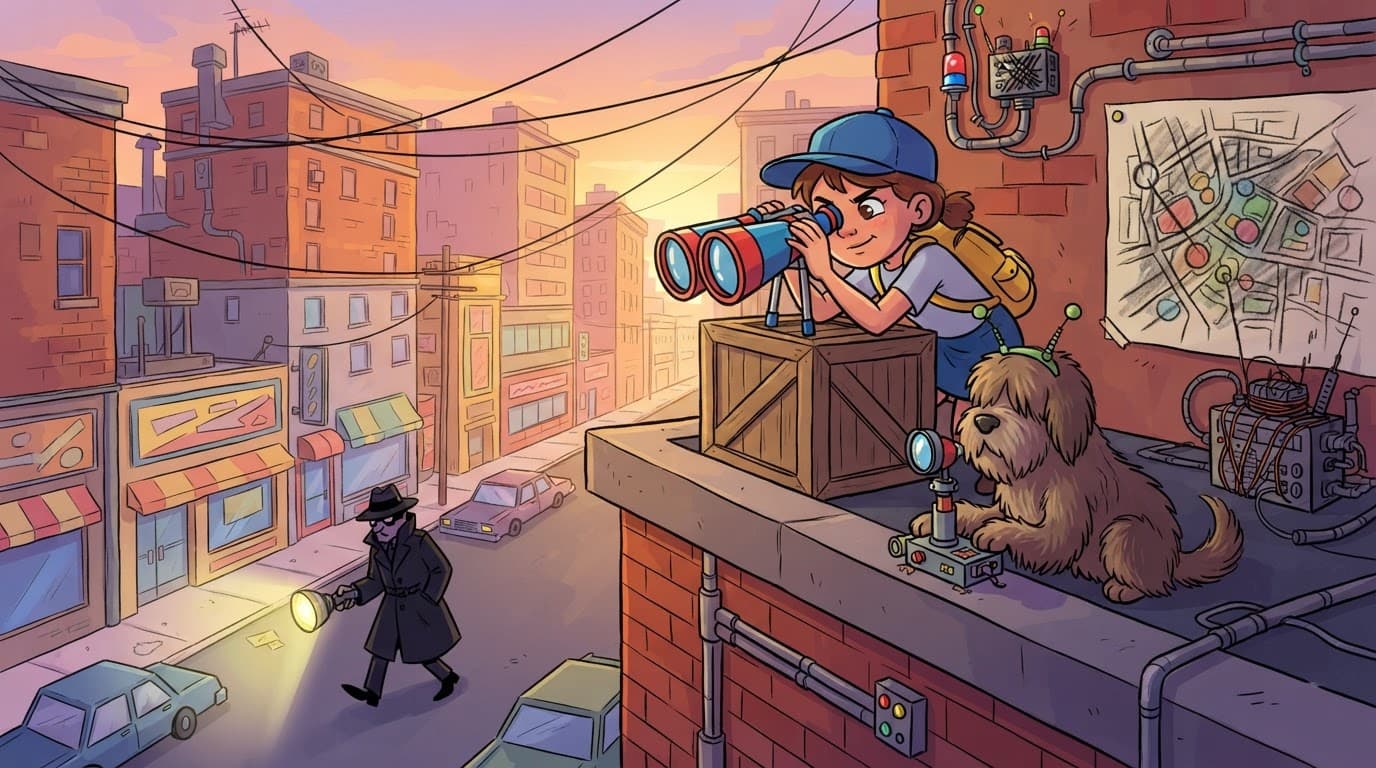
That book was compact, portable, and packed with information. It helped Penny communicate, investigate, and keep tabs on trouble while the grown-ups bumbled around. It felt like an early portable information device, not a modern computer or smartphone. No giant machine filled an entire room. No lab coat required.
For a generation that watched personal computers show up in classrooms, shops, and bedrooms, that little helper made perfect sense. It looked like a secret notebook, but it could do serious detective work. That was catnip for kids.
Penny also had the kind of calm that Gadget lacked. She watched. She connected clues. She acted before the villain’s plan could land. The series never turned that into a lecture. It let her competence do the talking.
Brain Sold the Spy Fantasy
Brain was always one costume away from trouble. He could blend into a crowd, tail a suspect, or get dragged into Gadget’s latest accidental rescue. Sometimes he wore a disguise so goofy that only a cartoon criminal could miss it.
Yet that was part of the charm. The action needed a human, or canine, pulse. Penny supplied the planning, Brain supplied the spy-story tension, and Gadget supplied the springs, collisions, and accidental victory lap.
Dr. Claw Knew How to Be Scary Without Showing Much
Dr. Claw, leader of M.A.D., was the villain at the other end of every mission. He plotted M.A.D. schemes, robberies, and takeovers from behind a desk, usually with his white cat nearby. Dr. Claw’s face stayed hidden, which made him more memorable than a dozen fully animated bad guys.
The Mystery Was the Point
You saw the metal glove. You heard the threat. You watched the M.A.D. Mobile carry him away yet again. That was enough.
Keeping the villain mostly offscreen gave the show a tiny jolt of danger without ruining its bright, goofy mood. He was a villain built from fragments: a creepy hand, a shadowy chair, an angry voice. Kids filled in the rest.
The real joke was that Dr. Claw kept losing to Inspector Gadget, who rarely understood what was happening. The plan collapsed before Gadget stumbled through the final stretch, and Chief Quimby got another headache. Order returned to Metro City, more or less, while Chief Quimby prepared for the next disaster.
The formula never needed fancy changes. M.A.D. plans, a spy soundtrack, and Dr. Claw’s frustration against Gadget’s accidental success made the show comfort food.
Don Adams and That Theme Did Half the Heavy Lifting
Don Adams gave Inspector Gadget a voice that was friendly, confident, and just a little too sure of itself. Fans who knew Don Adams from Get Smart could hear the comic timing right away. His delivery made Gadget’s gadget commands sound like the most sensible thing in the world.
The classic series credits also list Maurice LaMarche as Chief Quimby and credit Shuki Levy and Haim Saban for the show’s unmistakable theme music.
A Theme Song With Springs in Its Shoes
You hear those opening notes and the picture arrives instantly. The coat. The gears. The arm. The hat. The feeling that your cereal was getting soggy and you did not care.
The theme music had a brisk, bouncy, mechanical sound that fit the show perfectly. It wasn’t trying to make Gadget heroic in a deadly serious way. It made him sound like a runaway machine, which was much better.
That opening sequence showed how the television series established its identity: a gadget is more fun when you can see how silly it is. The exposed wheels and whirling attachments were not flaws. They were the whole show, and the final theme music gave that silliness its sonic identity.
How to Watch the Original Series Today
The original Inspector Gadget cartoon is still available, though streaming menus love rearranging themselves when nobody’s looking. Paramount Plus (currently branded Paramount+) lists all 86 episodes with a subscription in the United States.
You may also find episodes through ad-supported streaming platforms such as The Roku Channel, Tubi, Xumo Play, Pluto TV, and Hoopla. Syndication and library licensing can shift local availability. Digital storefronts, including Fandango at Home, Apple TV, and Google Play, can also carry it. Availability changes by region and service bundle, so check before planning a full nostalgia marathon.
Historical aside: The 1999 live action film starring Matthew Broderick is a separate take on the original show.
Start With the Opening, Then Let the Formula Work
You don’t need a giant viewing plan for this television series. Start with the first season, hear the theme music, and give it ten minutes; the rhythm comes back fast.
For a broader trip through the era’s animated imagination, the classic 1980s ThunderCats series makes a perfect next stop. Different vibe, same electric feeling that Inspector Gadget and other cartoons could build a whole universe before lunch.
Frequently Asked Questions
When did the original Inspector Gadget cartoon premiere?
The original television series premiered in the United States on September 12, 1983. It later reached more viewers through syndication.
How many episodes of Inspector Gadget were made?
The original series ran for two seasons and 86 episodes. That gave the show plenty of room for collapsing bridges, M.A.D. schemes, disguises, and accidental rescues.
Who were Penny and Brain in Inspector Gadget?
Penny was Inspector Gadget’s clever niece, while Brain was her shaggy dog partner. Together, they usually solved the cases and stopped Dr. Claw’s plans before Gadget understood what was happening.
Who was the villain in Inspector Gadget?
Dr. Claw was the hidden leader of M.A.D., the criminal organization behind the show’s schemes. His face was rarely shown, making his metal glove, angry voice, and mysterious presence even more memorable.
Where can you watch the original series today?
Availability changes by region, but the series may appear on Paramount+, ad-supported services such as Tubi, Pluto TV, and The Roku Channel, or digital storefronts. Check current listings before planning a full nostalgia marathon.
The Gadget Fantasy Still Works
Inspector Gadget made futuristic technology feel playful instead of distant. Its best trick was simple: take something familiar, hide a miracle inside it, then let the miracle go hilariously wrong.
Penny and Brain gave Inspector Gadget its brains. Dr. Claw gave it a shadowy villain, with M.A.D. lurking behind the chaos. But the gadgets gave it that special 80s spark.
A police inspector’s coat became a command center. A hat became an aircraft. And for 22 minutes, every ordinary object in the house looked like it might be hiding something spectacular.