Most soft drink brands wanted to be refreshing. Jolt wanted to keep you awake through algebra homework, a midnight movie, and one more round at the arcade.
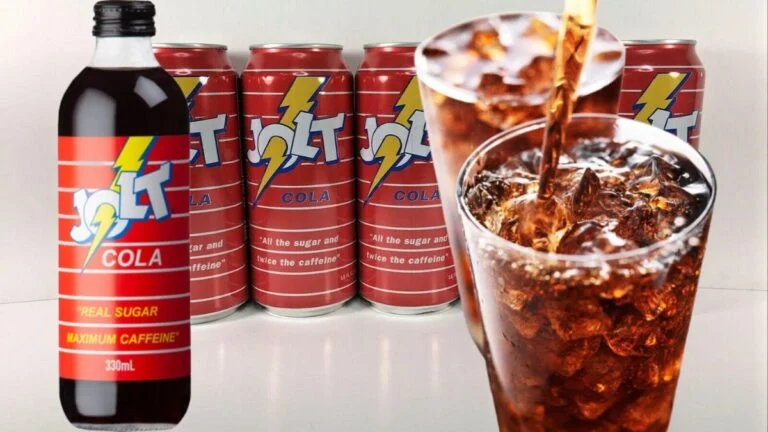
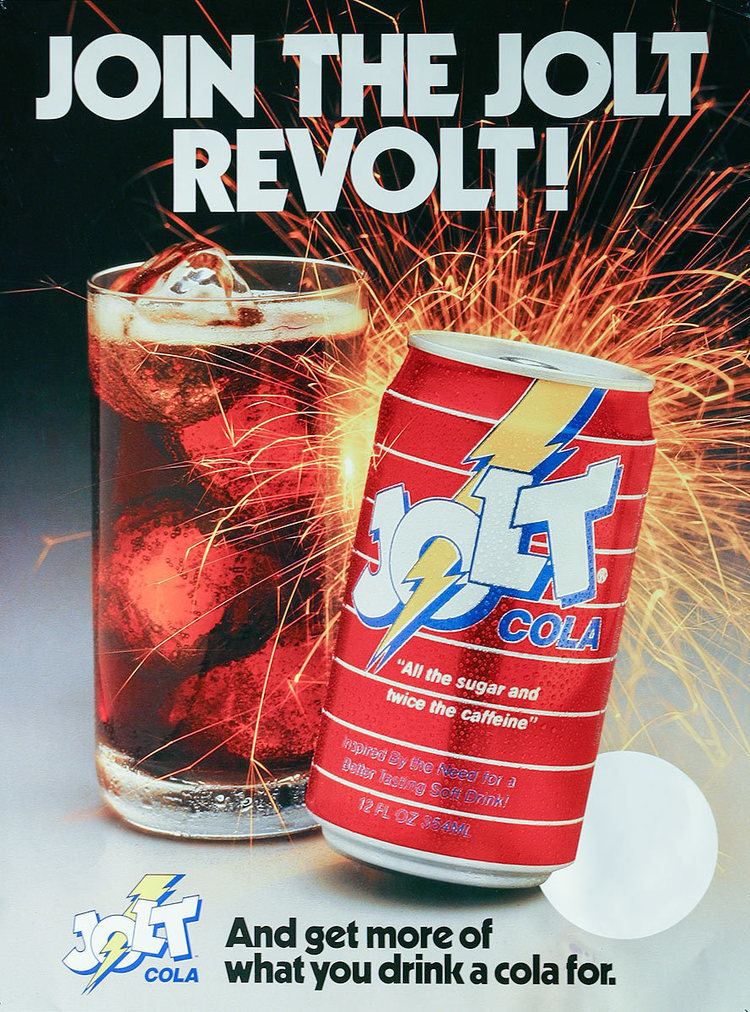
Jolt Cola hit shelves in 1985 with a black can, a red-and-yellow lightning-bolt attitude, and a slogan promising extra sugar and caffeine. It sounded like it had been shouted through a convenience-store loudspeaker.
It wasn’t the most caffeinated drink ever made. It was something better for an 80s kid, a soda that felt a little forbidden. Here’s how it got that reputation, why it became a late-night legend, and what happened when the name came back.
Key Takeaways
- Jolt Cola launched in 1985 with a simple promise: all the sugar and twice the caffeine, wrapped in a loud black can.
- Its roughly 70 to 72 milligrams of caffeine per 12-ounce can made it unusually strong for a cola, helping it become a favorite of students, programmers, and gamers.
- Jolt’s rebellious image, school-ban stories, and appearances in films like Jurassic Park and Hackers turned it into a cult soda.
- The original brand collapsed around 2009, returned briefly through Dollar General in 2017, and came back again as a different, zero-sugar energy drink from REDCON1.
- Modern JOLT contains 200 milligrams of natural caffeine in a 16-ounce can, making it more powerful than the original but not the same nostalgic soda.
Jolt Cola Landed in 1985 With a Dare
C. J. Rapp created Jolt Cola with his father, Joseph Rapp, after the family began developing the drink in 1979. The Rochester, New York, entrepreneurs had a simple idea: make a full-sugar soft drink for people who wanted more caffeine than the usual can offered.
The result arrived commercially in 1985, a year already packed with noisy soft drink drama. Coca-Cola was dealing with the 1985 New Coke backlash, while Jolt went in the opposite direction. No reformulation. No soft sell. More sugar, more caffeine, louder packaging.
A slogan built for the snack aisle
C. J. Rapp’s launch strategy centered on one blunt line: “All the sugar and twice the caffeine.”
The slogan gave kids a forbidden-fruit thrill. It gave parents a reason to squint at the can. It gave every teenager with a term paper a new best friend.
Jolt wasn’t pretending to be sophisticated. It was a soda with the volume turned all the way up.
The can did half the talking
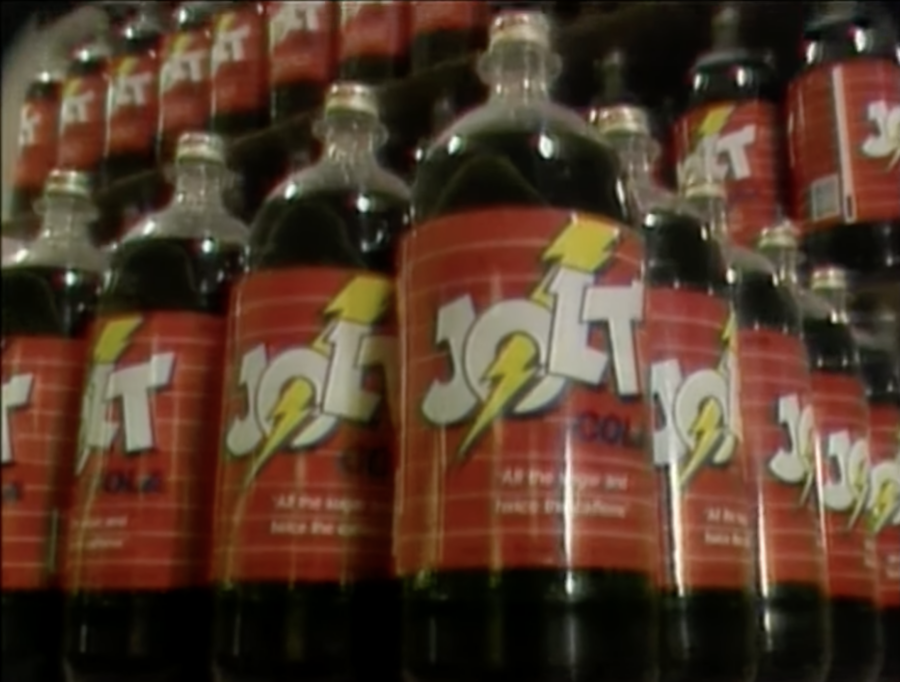
That original black packaging looked sharp beside cheerful red Coke cans and blue Pepsi labels. Jolt looked like it belonged near a rack of cassette tapes, a stack of horror VHS boxes, and an arcade cabinet with a sticky joystick.
It had the look of a drink for people who were not planning to go to bed early. That was the whole deal.
The Caffeine Was Big for a Cola, Not Magic
Jolt’s caffeine content and reputation can get a little fuzzy after four decades of nostalgia. People remember it as rocket fuel in a can. The numbers tell a more interesting story.
What “twice the caffeine” meant
The original formula had roughly 70 to 72 milligrams of caffeine in a 12-ounce can. Typical mainstream colas sat around 25 to 50 milligrams per can, depending on the brand.
So yes, the promise was real. Jolt had far more caffeine than a standard soda. Still, it wasn’t stronger than every coffee, later energy drink, or caffeinated gum product.
Original Jolt was outrageous for a mid-1980s cola aisle. By modern energy drink standards, it was the opening act.
A history of Jolt’s launch, collapse, and comeback traces that original formula and the brand’s long run of reinventions. The basic fact remains deliciously simple: in 1985, no other big soda brand made caffeine its whole personality.
Sugar was part of the point
The caffeine got the headlines, but sugar made the slogan work. Jolt did not come from the diet-soda school of restraint. It was a full-flavor cola, aimed at people who thought a soda should taste like a treat.
That combination was the spark. A regular cola could be a lunch-counter companion. Jolt felt like an accessory for a mission.
Finish the science project. Beat the next level. Stay up for Letterman. Maybe regret it at 7 a.m.
Why Students, Programmers, and Gamers Claimed It
Jolt’s best-known fans were students, young professionals, and computer people. That connection makes perfect sense, even if the legend has grown taller over time.
The pre-Wi-Fi all-nighter
Before laptops, streaming, and phones in every hand, late-night computer time had a certain glow. You were parked beside a beige desktop, staring into a CRT monitor, listening to a fan hum, and hoping the floppy disk would cooperate.
Jolt fit that scene. It was cheap, easy to find, and its label practically dared you to keep typing.
Programmers adopted it as an all-nighter mascot. Students did too. The drink became shorthand for anyone trying to outrun sleep with a can opener and stubbornness.
LAN-party fame came later
Jolt did not invent the LAN party, and it wasn’t the official drink of every basement full of linked-up PCs. That part is mostly memory, jokes, and gamer folklore.
Still, the match was perfect. By the 1990s, Jolt was tied to overnight coding, Doom sessions, and LAN parties. The black can looked right at home next to pizza boxes and tangled cables.
The brand had the same oddball appeal as the Nintendo Power Glove. One was a drink, one was a controller, but both promised a future that felt louder, faster, and a little ridiculous.
Parents Worried, and Schools Took Notice
For kids, Jolt was a badge of independence. For many parents, it was a bright warning label disguised as a soda can.
The debate centered on caffeine, sugar, and who was buying it. Jolt had kid-friendly soft drink packaging, but it advertised an adult-style need to stay alert. That made some adults uneasy.
The school-ban stories need context
Stories about schools banning Jolt have been passed around for years. Individual restrictions and parental pushback were real, but claims that it was banned everywhere are hard to pin down.
The better-documented history is broader. Jolt became a regular target in arguments about caffeine-heavy sodas. A Canadian class-action lawsuit also challenged how caffeine-related risks were disclosed.
The panic sometimes outpaced the facts. Yet the tension was real. Jolt had put a grown-up stimulant conversation right next to candy bars, comic books, and Big League Chew.
A soda that loved bad publicity
The controversy helped the brand. Jolt wasn’t trying to look wholesome, and it never had to.
Every worried headline made the can seem more daring. That was pure 80s marketing magic, the same decade that sold us slime-green juice boxes, monster cereals, and toys that looked dangerous before breakfast.
Pop culture made the can feel even bigger
Jolt’s screen history is small but memorable. The drink appears in the 1993 blockbuster Jurassic Park and the 1995 hacker movie Hackers, two very different films with plenty of computer-world energy.
Brief appearances, lasting associations
Jolt did not get a heroic close-up or a plot twist of its own. It was a prop, a little black can sitting in the right place at the right time.
But props can carry a lot of meaning. In Hackers, Jolt belonged naturally among rollerblades, loud clothes, fast typing, and a gleefully exaggerated vision of computer culture. In Jurassic Park, it helped sell Dennis Nedry’s cluttered, junk-food-powered workspace.
That is why its film appearances feel larger than their actual screen time.
It became a symbol, not a superstar
Jolt was never Coke-level universal. Plenty of people who grew up in the 80s never drank one. Others only remember the commercial, the can, or a friend who swore it could keep him awake forever.
That limited reach is part of the charm. Jolt became a cult soda, a shortcut to a particular kind of memory: pizza at midnight, joystick blisters, homework panic, and a refrigerator light glowing after everyone else went to sleep.
Bankruptcy, battery bottles, and a short-lived return
The original company couldn’t keep the ride going forever. Tastes changed, newer products took more shelf space, and Jolt’s ownership history got messy.
The 2009 collapse
By 2009, the company behind the brand, Wet Planet Beverages, filed for bankruptcy protection after sales dropped. Ownership disputes and legal fights complicated the story, and secondary accounts sometimes describe the court outcome differently.
The central fact is less murky: the classic Jolt Cola disappeared when its business ran out of steam.
Later versions tried to extend the legend with huge, resealable 23.5-ounce battery bottles. Some accounts also place Cherry Bomb among those later flavor extensions. The container looked like it belonged in a garage, not a lunchbox. Very Jolt.
For anyone trying to untangle the dates, the brand’s stop-start release timeline separates the original run from later ownership changes and relaunches.
Dollar General gave it another shot
Jolt returned briefly through Dollar General in 2017. For nostalgia fans, seeing Cherry Bomb in the later lineup felt like finding an old Trapper Keeper in the attic.
The revival did not last. By 2019, it had mostly disappeared again, leaving behind empty shelves and the usual question: why can’t they bring it back for good?
Jolt Cola in 2026 Is a Different Beast
The current comeback is not a replica of the 1985 soda. REDCON1, a supplement company, licensed the name and brought JOLT back as a modern energy drink.
That choice makes sense. REDCON1 recognized that the brand was always built around extra energy. It simply arrived before the category had a name, a cool can, and an entire refrigerator section.
REDCON1’s zero-sugar formula with 200 milligrams
REDCON1’s new 16-ounce JOLT has 200 milligrams of natural caffeine from green coffee beans. It is also zero sugar and includes 200 milligrams of Alpha GPC, plus one gram each of L-carnitine and taurine.
That natural caffeine comes from green coffee beans, giving the formula a clearly identified source. Alpha GPC and L-carnitine round out the functional-ingredient profile.
Those ingredients put it in today’s functional-energy territory, with nootropic caffeine positioned for focus. The formula makes no guarantee of cognitive or medical benefits. It’s built for workouts, workdays, and focus-chasing adults, not a kid with quarters for Gauntlet.
As coverage of the 2025 Jolt return made clear, the familiar name came back with a very different formula. Current flavor references also list Cherry Bomb, linking the brand’s loud legacy to a lineup built around nootropic caffeine.
| Version | Serving size | Caffeine source | Sugar approach | Functional ingredients |
|---|---|---|---|---|
| 1985 original | 12 ounces | About 70 to 72 mg from cola caffeine | Full sugar | No functional additions listed |
| Current JOLT | 16 ounces | 200 mg, natural caffeine from green coffee beans | zero sugar | 200 mg additional active, 1 g L-carnitine, 1 g taurine |
The current REDCON1 can has about twice the caffeine per ounce of the old one. Same name. Same loud spirit. Totally different era.
Nostalgia has limits, and that’s okay
If you want the exact taste of a 1985 Jolt, the current drink won’t be a time machine. It isn’t trying to be.
The original sold soda rebellion. The current version sells focus through a sugar-free energy drink. Both use Jolt’s old promise of staying awake, but each speaks to its own generation.
Frequently Asked Questions
When did Jolt Cola first come out?
Jolt Cola arrived commercially in 1985 after being developed by C. J. Rapp and his father, Joseph Rapp. Its launch centered on extra sugar, extra caffeine, and an intentionally rebellious image.
How much caffeine did the original Jolt Cola contain?
The original formula had roughly 70 to 72 milligrams of caffeine in a 12-ounce can. That was far more than many mainstream colas at the time, although it was not stronger than every coffee or modern energy drink.
Why did Jolt Cola become popular with gamers and programmers?
Jolt fit the culture of late-night homework, overnight coding, computer sessions, and arcade or LAN-party gaming. Its black can and caffeine-focused slogan made it feel like the unofficial fuel for people trying to stay awake.
Is Jolt Cola still available?
The original company collapsed around 2009, and a short Dollar General revival appeared in 2017 before fading again. REDCON1 later licensed the name for a modern zero-sugar JOLT energy drink with 200 milligrams of caffeine per 16-ounce can.
Is the current JOLT the same as the 1985 soda?
No. The current version is a functional energy drink with zero sugar, natural caffeine from green coffee beans, and added ingredients such as Alpha GPC, L-carnitine, and taurine. It carries the same loud spirit but is not an exact recreation of the original cola.
The Lasting Jolt
For anyone chasing the classic Jolt Cola flavor, the current REDCON1 drink is a different experience.
The original can mattered because it treated soda like a dare. It was sweet, caffeinated, a little controversial, and wonderfully unsubtle.
Its caffeine count no longer looks shocking beside today’s high-stimulant drinks. But its attitude still does. Jolt made staying up late feel like a lifestyle, and for a certain kind of 80s kid, that black can will always look like midnight.