At 4 p.m., the TV set could be a battlefield. Cartoons, sitcom reruns, local game shows, Mom’s soap opera, Dad’s news. Then MTV arrived as a new music channel, with a video countdown, a sharp-tongued VJ, and somebody in leather pants staring straight into the camera.
MTV music videos changed the deal. Music television made a song more than something you heard on the radio or copied onto a cassette. It had a face, a hairstyle, a story, and, if the stars aligned, a video you needed to see again before dinner.
MTV didn’t invent music videos, and it didn’t own every 80s afternoon. Cable television access varied wildly. Still, it gave young viewers a new shared ritual, one packed with sound, style, commerce, and more hairspray than any household was prepared to handle.
Key Takeaways
- MTV launched on August 1, 1981, and turned music videos into a daily television ritual built around VJs, countdowns, and repeat viewing.
- The channel made visual identity part of the music industry, helping artists sell not only songs but also hairstyles, clothes, stories, and entire personas.
- MTV’s 1980s grammar favored ambitious short films, animation, surreal effects, and bold direction, with videos such as “Thriller” and “Take On Me” becoming events in their own right.
- The network’s early rock bias limited representation, but artists including Michael Jackson and the arrival of “Yo! MTV Raps” helped widen the definition of mainstream music television.
- MTV eventually expanded into awards, original shows, and reality programming, while streaming replaced its old shared sequence with instant, on-demand access to music videos.
The Signal That Changed the Channel Dial
The first video was the perfect joke
On August 1, 1981, MTV launched with a moon-landing-style countdown, a flag planted on the lunar surface, and the words “Ladies and gentlemen, rock and roll.” Then came “Video Killed the Radio Star” by the Buggles.
That title was deliciously on the nose. The song wasn’t a prophecy, but it announced a new pecking order. Radio still mattered. A lot. Yet visual identity had become part of how a record could catch fire in the music industry.
History’s account of MTV’s first broadcast captures a small piece of broadcast history that millions of nostalgia lovers can now recite without taking a breath.
It began small, then became a habit
MTV launched under Warner-Amex Satellite Entertainment as a television network, initially reaching only a small cable audience in New Jersey. That matters. It didn’t tumble from the sky and instantly occupy every teenage bedroom in America.
Cable systems added the music channel market by market. The five video jockeys gave the new music television outlet a human pulse between clips. Nina Blackwood, Mark Goodman, J.J. Jackson, Alan Hunter, and Martha Quinn sounded less like distant announcers and more like the cool older sibling who knew what was coming next.
Britannica’s MTV history traces the channel’s rise from a cable curiosity to a pop culture force.
People often call 1981 through roughly 2001 MTV’s golden era. For pure video fever, though, the 1980s were the white-hot center. MTV gave the decade’s pop culture a nonstop stage.
Why Music Videos Had to Become Events
Labels started selling pictures with the songs
Promotional clips existed before MTV. The Beatles made them. David Bowie made them. Artists in the United Kingdom had already used filmed performances to reach shows they couldn’t visit in person.
MTV changed the frequency and the stakes through music television. Its music programming gave labels repeat exposure, and viewers learned an artist’s look as quickly as their chorus. In the music industry, a clip became a marketing expense with a much bigger prize at the end: radio requests, album sales, tour tickets, posters, and a place in the conversation at school.
J. Banks’ study of music video’s place in the recording industry shows how heavily labels kept investing in the format, even when the cost of those clips caused plenty of grumbling across the music industry.
A four-minute clip could build a whole persona
Before the channel, a new act might have had a hit single and a blurry publicity photo. After MTV, fans expected a world. Clothes mattered. Sets mattered. The way a singer moved through a hallway, held a guitar, or smirked at the camera mattered.
Madonna’s videos made image part of the product. Duran Duran put luxury travel, yachts, and movie-star danger into pop. Bon Jovi sold sweat, denim, and stadium-sized release. Those Bon Jovi videos that defined MTV were not quiet little promos.
MTV music videos made artists easier to recognize, imitate, and argue about. The song was the engine. The visual was the paint job, spoiler, fog machine, and vanity plate.
The New Grammar of 80s Music Videos
Songs became short films, fantasies, and fever dreams
“Thriller” wasn’t content between commercials. It was a full-blown event, with a horror story, a theatrical premiere, and Michael Jackson turning into a monster in a red jacket. John Landis directed it like a movie. By 1983, music television could give a four-minute clip movie-level attention.
A-ha’s “Take On Me” pulled its hero through pencil-sketch animation. Peter Gabriel’s “Sledgehammer” made stop-motion clay and surreal faces feel like hit-radio material. Dire Straits’ “Money for Nothing” put early computer animation right beside a hard-rock guitar riff.
Directors became part of the magic
The best clips announced themselves before the first chorus through bold creative direction. Russell Mulcahy brought speed and glossy drama. Mary Lambert helped shape Madonna’s early visual world. Steve Barron gave A-ha’s “Take On Me” its paper-and-pencil romance. Stephen R. Johnson made “Sledgehammer” look like a strange little art gallery that had swallowed a pop star.
That variety turned visual storytelling into a compact, repeatable form. MTV didn’t force every artist into one style. It rewarded the ones who could grab your attention before you reached for the remote.
Even kids’ television caught the bug. The performance breaks in Jem and the Holograms felt like tiny MTV fantasies with neon hair, rival bands, and enough glitter to clog a VCR.
Race, Rock Bias, and the Michael Jackson Breakthrough
The early playlist had a real blind spot
MTV’s early sound was heavily tilted toward white rock acts. Black artists weren’t completely absent, but regular rotation didn’t match the range of talent already thriving in R&B, funk, disco, soul, and pop.
Prince, Donna Summer, Tina Turner, Grace Jones, Herbie Hancock, and Eddy Grant all appeared on MTV in its early years. Still, the channel’s gatekeeping had cultural impact because airplay became a form of commercial approval. If MTV treated an artist as essential, record stores, radio programmers, and audiences noticed.
Calling Michael Jackson’s arrival a single “color barrier” breakthrough can make a long-running exclusion problem sound solved overnight.
Jackson made the narrow formula impossible to defend
“Billie Jean,” “Beat It,” and “Thriller” did not merely perform well. Michael Jackson’s videos fused pop, rock, dance, fashion, Black musical traditions, and blockbuster ambition. They became unavoidable, making the narrow formula impossible to defend.
Britannica’s overview of the music-video revolution points to Jackson as one of the artists who helped turn MTV into a much larger cultural force.
His success widened the channel’s definition of mainstream, but it didn’t make representation fair by magic. Hip-hop still had to fight for room. When “Yo! MTV Raps” arrived in 1988, it gave rap a dedicated national platform. It brought rap and rap-adjacent acts, including the Beastie Boys, to broader audiences and reshaped what many suburban viewers thought music television could be.
After-School Television Got a New Option
The remote had one more destination
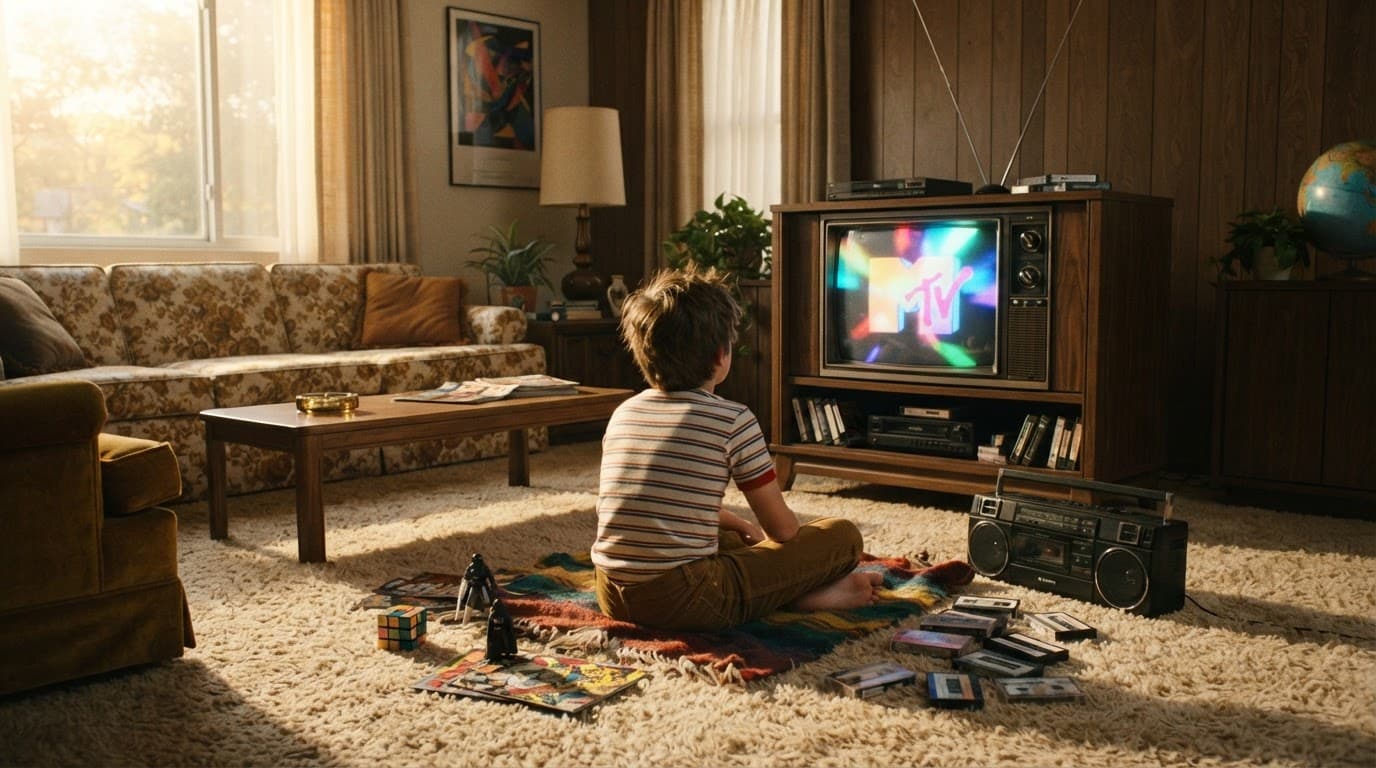
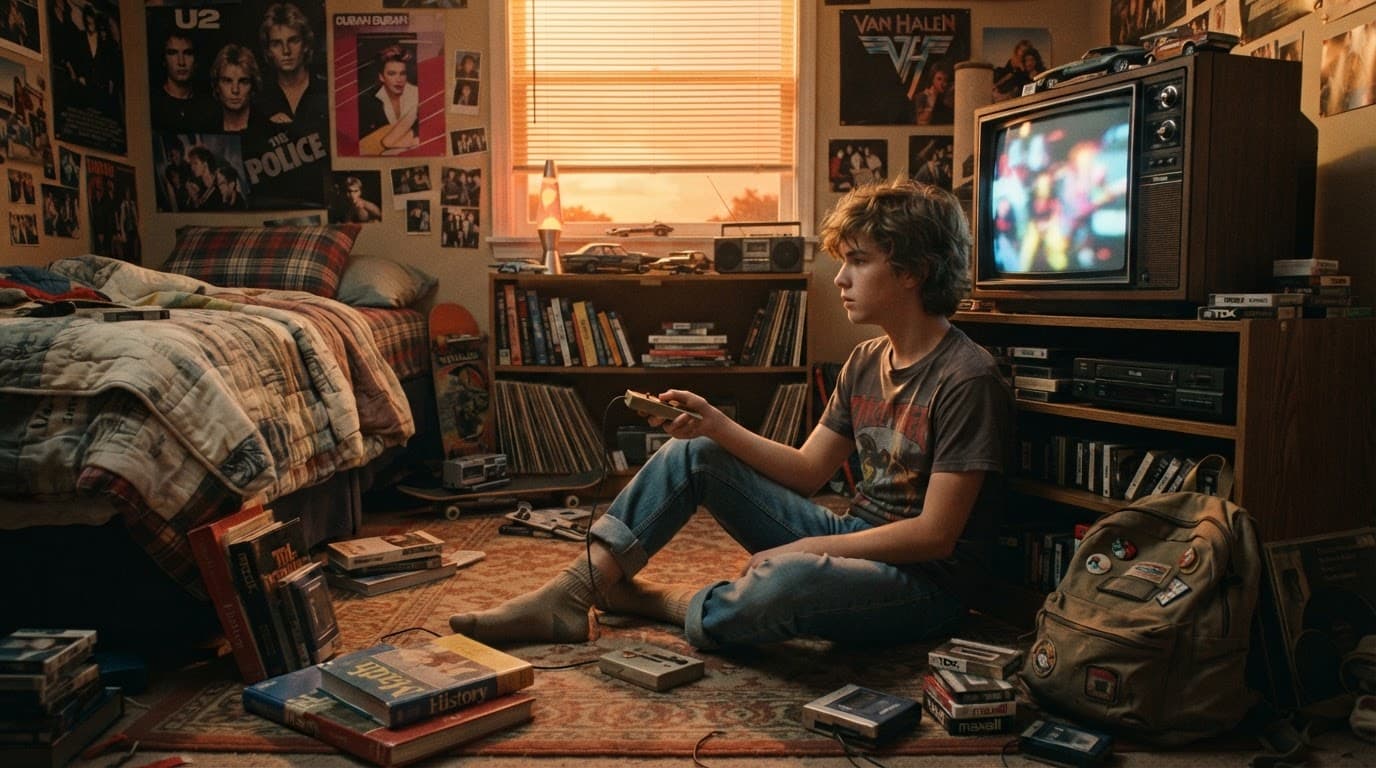
If your home had cable television, MTV could slide into the afternoon routine fast. You dropped the backpack, raided the kitchen, and landed wherever the dial took you. Maybe it was cartoons. Maybe it was a sitcom rerun. Maybe Martha Quinn was about to introduce the new Prince clip.
Music television fit the rhythm of after school perfectly. Videos were short and easy to interrupt. You could sample the music programming while doing homework, then get pulled into three more. A great opening image did the job without requiring a half-hour plot.
MTV lived beside cartoons and reruns
MTV did not replace the rest of 80s television. It joined a crowded, glorious pile. Local stations ran syndicated comedies. Network affiliates carried game shows. Cartoons owned plenty of weekday afternoons.
For many kids, ThunderCats and 80s weekday afternoons were still non-negotiable. Others found comfort in The Facts of Life after-school reruns. As a music channel, MTV offered another mood: older, louder, cooler, and often just a little forbidden.
The channel also trained viewers to read quick images. A flashy opening, a close-up, a costume reveal, a sudden cut to a dance routine. That visual rhythm soon felt normal across youth entertainment.
The Video Music Awards Turned Promotion Into a Spectacle
The trophy went to the video itself
On September 14, 1984, MTV held its first Video Music Awards. The Cars won Video of the Year for “You Might Think,” a clever effects-heavy clip that looked built for the channel.
The Video Music Awards gave music videos their own awards night, red carpet, and mythology. The ceremony gave music television its own stage and created a separate arena for visual concepts. The music industry could now judge a song as more than a record, including its visual concept.
Madonna made the night impossible to ignore
Madonna’s “Like a Virgin” performance at that first ceremony, complete with a wedding dress and a giant wedding cake, helped make the Video Music Awards impossible to ignore.
That was MTV’s special sauce. The channel took promotional material and made it feel like live pop history. An artist’s next video, look, or performance could become breakfast-table gossip and part of pop culture by morning.
MTV Became More Than a Video Jukebox
Original shows widened the channel’s personality
By the late 1980s, MTV had begun mixing videos with audience-focused programs and making the Video Music Awards appointment viewing. “Remote Control,” which debuted in December 1987, was the network’s first game show. “Club MTV” brought dance-floor energy. “Headbangers Ball” gave metal its own clubhouse. “120 Minutes” fed the college-rock crowd.
This music programming was still music-adjacent, but it changed the channel’s rhythm. MTV wasn’t only a stream of clips anymore. It had appointments, hosts, punchlines, and recurring characters. Its new music channel identity included recurring events such as the Video Music Awards.
Business changes helped widen the schedule
Ownership shifted, too. Warner-Amex gave way to a public MTV Networks company, and Viacom bought MTV Networks in the mid-1980s.
Today, Paramount Media Networks provides MTV’s corporate context and home. Paramount Media Networks now places the brand within a broader entertainment portfolio. That modern name shouldn’t be projected backward onto 1980s Warner-Amex or Viacom operations. Paramount Media Networks reflects continuity in MTV’s network legacy, not 1980s ownership.
Bigger corporate backing meant a bigger cable operation, more channels, and more pressure to keep audiences around after the latest hit ended.
Original programs offered something a video rotation could not: viewers had to return at a certain time. That didn’t erase the music, but it showed how music television could grow beyond a continuous video stream.
Reality TV and Censorship Changed the Mix
The all-video era did not end in one afternoon
MTV’s move toward reality programming happened later, especially after “The Real World” debuted in 1992. By then, the network had learned that ongoing series could create loyal viewers and headline-making moments without depending on record labels’ latest clips.
That shift changed what music television meant on MTV. Videos moved into blocks and countdowns, as well as sister channels such as MTV2. Music programming became one part of a larger schedule. The broad golden era, often dated through about 2001, faded because the channel had become a youth-entertainment brand rather than a music-only outlet.
The 2004 Super Bowl tightened daytime standards
The Janet Jackson and Justin Timberlake halftime controversy also changed the mood around MTV programming. In February 2004, the Los Angeles Times reported that MTV moved at least eight videos into late-night rotation. The affected videos were sexually explicit or political.
That wasn’t the sole reason MTV stopped centering videos. It was one clear reminder that cable’s rebellious posture came with corporate limits, advertisers, and public pressure.
For present-day context, MTV is associated with Paramount Media Networks, a later corporate umbrella. Paramount Media Networks wasn’t the name used for MTV’s 1980s or early-2000s structure, which was known as MTV Networks.
MTV’s Global Echo and Digital Afterlife
MTV Europe launched in 1987, proving the format could travel. Yet each local music channel had a different cultural impact, shaped by stars, regulations, cable systems, languages, and youth cultures.
The old music television model also depended on scarcity. You waited for “Sweet Child o’ Mine,” “Faith,” or “I Think We’re Alone Now” because you couldn’t summon them at will. Streaming platforms, including YouTube, blew that arrangement apart. Now the viewer chooses the clip, the version, and the exact moment.
The Video Music Awards remain a shared, time-specific event that on-demand viewing can’t fully replicate.
Today, MTV remains part of Paramount Media Networks, though music programming no longer defines the brand alone. The broader Paramount Media Networks portfolio places the channel within a wider entertainment identity, even as its music catalog remains searchable.
That freedom is great, but something changed when the VJ stopped being your guide. MTV gave viewers a shared sequence, a network legacy that still matters. Everybody had a chance to see the same bizarre new video and ask, “Did you catch that?”
Eight Videos That Explain the MTV 80s
These iconic videos don’t cover every genre or every great artist. They do show why the decade’s videos still feel so alive.
| Video | What made it MTV-perfect |
|---|---|
| Michael Jackson, “Thriller” | A horror short with a dance routine nobody forgot. |
| A-ha, “Take On Me” | Rotoscope animation turned a love song into a comic-book escape. |
| Peter Gabriel, “Sledgehammer” | Stop-motion weirdness, soul, and visual invention in one package. |
| Madonna, “Like a Prayer” | A bold collision of pop, religion, race, and controversy. |
| Prince, “When Doves Cry” | Glamour, mystery, and a visual world that belonged only to Prince. |
| Dire Straits, “Money for Nothing” | Early computer animation made technological novelty part of the hook. |
| Cyndi Lauper, “Girls Just Want to Have Fun” | A joyful, colorful invitation that felt made for a bedroom sing-along. |
| Guns N’ Roses, “Sweet Child o’ Mine” | Rock-star charisma with enough grit to balance MTV’s glossy pop. |
The Video Music Awards later formalized this kind of visual competition, giving ambitious clips a bigger stage.
The common thread is not one sound. It is commitment. Every one of these artists gave the camera something to remember. Together, they helped shape the broader visual legacy celebrated by the Video Music Awards.
Frequently Asked Questions
When did MTV launch?
MTV launched on August 1, 1981, with a countdown, the words “Ladies and gentlemen, rock and roll,” and “Video Killed the Radio Star” by the Buggles. It initially reached only a small cable audience before expanding market by market.
How did MTV change music videos?
MTV made the visual presentation of a song part of its commercial identity. Artists now needed memorable clothes, sets, choreography, characters, and stories alongside a strong single.
Why was Michael Jackson important to MTV?
Michael Jackson’s “Billie Jean,” “Beat It,” and “Thriller” fused pop, rock, dance, fashion, and blockbuster filmmaking. Their success made MTV’s narrow focus on white rock acts increasingly impossible to defend, even though representation did not become fair overnight.
Did MTV replace cartoons and sitcoms in the 1980s?
No. MTV joined a crowded after-school television schedule that still included cartoons, syndicated comedies, game shows, and reruns. For viewers with cable, it offered a louder, cooler, and more music-focused alternative.
What happened to MTV’s all-video format?
The all-video era faded as MTV added original shows, awards programming, and eventually reality television such as “The Real World.” Streaming later made videos available on demand, ending the old ritual of waiting for a favorite clip to appear in rotation.
The Channel That Made You Watch the Song
MTV didn’t kill radio, invent youth culture, or control every television set in America. Its network legacy is simpler and more lasting: it made visual style part of the daily language of popular music.
The Video Music Awards helped turn visual promotion into shared pop memory. Today, MTV sits within Paramount Media Networks, but for 80s kids, the memory is still instant: the CRT glow, the VJ intro, the first few seconds of a favorite song, and that feeling that anything could happen before the next commercial.