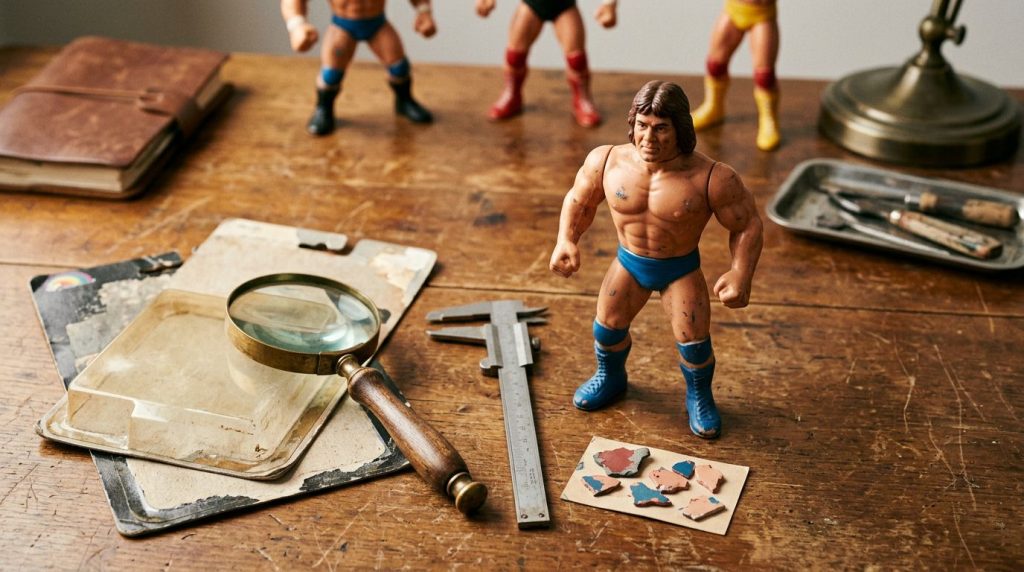
An original LJN wrestler can feel like a small dumbbell with a headlock. These chunky, rubbery action figures were built for bedroom ring wars, couch-cushion cage matches, and the occasional flying elbow off the dresser.
That same tough look can fool a buyer today. WWF LJN figures have been repainted, re-carded, recast, and copied for decades. A great find starts with knowing what an original should look, feel, and age like.
Here’s how to spot the real deal before Hulk Hogan, Randy Savage, or Rowdy Roddy Piper takes a costly bump in your collection.
Key Takeaways
- Original WWF LJN figures were produced from 1984 through 1989 and are typically about eight inches tall, heavy, rubbery, and limited in articulation.
- Authenticity depends on the complete picture: sculpt, paint, material, molded markings, condition, and packaging should all fit the period.
- Recasts, customs, reissues, and repaints can copy familiar details, so a copyright stamp alone is never proof of an original.
- Black-card Grand Toys packaging from the Canadian Series 6 release is especially desirable because the packaging, not the loose figure, establishes that designation.
- Before buying, request clear photos, compare several documented originals, check completed sales, and get a second opinion on expensive or suspicious pieces.
How to Identify Original 80s WWF LJN Figures at a Glance
The original World Wrestling Federation LJN Wrestling Superstars line ran from 1984 through 1989. These weren’t tiny, poseable action figures with ten joints and a pile of weapons. They were roughly eight-inch-tall, colorful rubber figures, made to look larger than life because, well, these guys were larger than life.
Pick one up and it should have real weight. The body is firm and heavy, with limited movement. A standard LJN figure isn’t supposed to twist at the waist, bend at the knees, or strike a superhero pose. If a seller calls a fully articulated figure an LJN original, the bell has already rung.
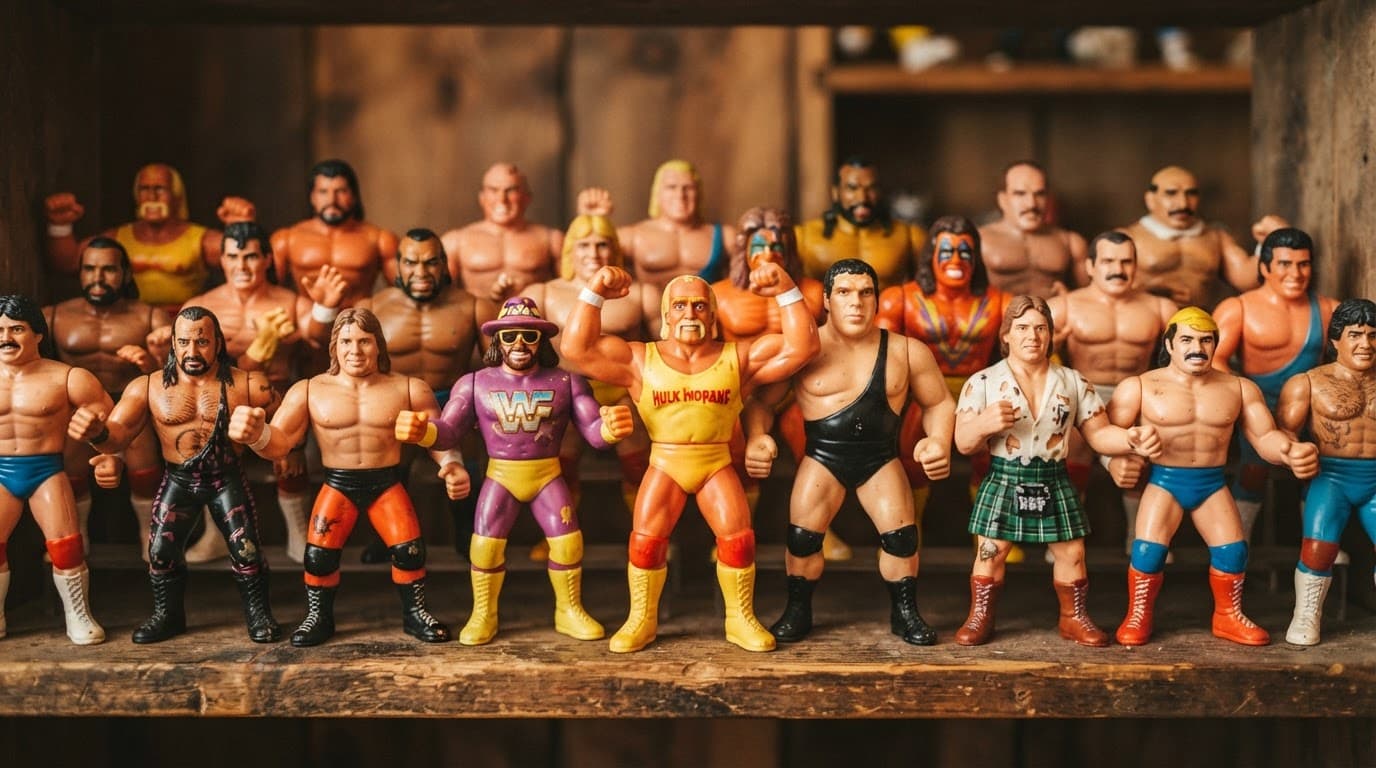
Look for molded copyright information on the body, usually around the back, lower torso, or leg area. Placement varies by sculpt, so don’t reject a figure because the stamp isn’t in one exact spot. The mark should be part of the mold, not something printed on top.
A fast first pass comes down to four things:
- The figure should stand around eight inches tall and feel dense in the hand, not hollow or lightweight.
- Paint should show age in a believable way, with small scuffs or wear rather than glossy fresh patches.
- The sculpt should match a known wrestler from the 1984 through 1989 run, not a superstar who arrived much later.
- Molded LJN markings are encouraging, but they aren’t proof by themselves because a recast can copy them.
For a quick roster check, compare names such as Andre the Giant, Iron Sheik, Junkyard Dog, Hillbilly Jim, Bret Hart, and Jake Roberts.
The commonly used Wrestling Superstars checklist counts 64 distinct figure releases across the six main series. Tag-team packs, Bendies, Stretch Wrestlers, rings, and other side items sit outside that main figure count. A detailed LJN checklist and buying guide is handy when a familiar face has you staring at a boot color for twenty minutes. It happens.
A copyright stamp helps confirm a mold family, but the full story comes from the sculpt, paint, material, and packaging working together.
Date the Figure by Its Packaging
A loose Andre the Giant is fun. A sealed Andre the Giant with the correct card, bubble, insert, and color scheme is a whole different animal. A sealed Hulk Hogan deserves the same careful comparison.
Original LJN packaging used the WWF Wrestling Superstars branding and period artwork. Earlier releases, including Series 1, have recognizable card styles, while the final Canadian releases are famous for their black card presentation. A modern seller may use “WWE LJN” as casual shorthand, but historical packaging from the 1980s says WWF.
Check the Card, Bubble, and Seal Together
A mint-looking bubble attached to a battered, faded card should make you pause. It may be genuine, but the pieces need closer inspection. Old packaging usually shows matching age: gentle yellowing, edge wear, slight cardboard dullness, or a bubble that has lost its crystal-clear shine.
Look at the bubble seam and adhesive line. Factory sealing tends to look even around the edge. Re-seals can show fresh glue, cloudy adhesive, uneven lifting, or a bubble that sits awkwardly over the card art. A neat re-card isn’t automatically a scam if it’s disclosed, but it isn’t a mint-on-card original.
Card backs also matter. The pictured wrestlers, including King Kong Bundy, Iron Sheik, Bret Hart, and Jake Roberts, plus the logo style and promotional copy, should fit the release period. Compare both front and back images with reputable reference photos. Don’t rely on one auction photo shot in a dark basement with the flash blasting off the plastic.
Don’t Forget the Paper Inside the Box
Original LJN packages sometimes included folded promotional posters, bio-style cards, collector inserts, or catalogs tucked beneath the tray or in the base area. Contents changed by release and market, so there isn’t one universal paper insert for every figure.
Those paper pieces add charm and can influence carded value when clean and complete. Still, don’t call a figure incomplete because it lacks accessories. The Sling ‘Em-Fling ‘Em wrestling ring and Cage Match set were separate products, not standard figure gear. Products featuring tag teams had their own releases.
Tell Originals Apart From Reissues, Customs, and Reproductions
An original figure was made during LJN’s 1984 through 1989 WWF run. A later LJN-style release, a custom-painted figure, and a reproduction are different things. They can all look cool on a shelf. They just shouldn’t carry the same price tag.
Modern LJN-inspired wrestlers often have cleaner paint, brighter colors, sharper details, and softer or lighter material. That doesn’t make them bad. It makes them modern. A character outside the original line can’t become an 80s LJN release because somebody used an old-style body.
Customs Can Be Clever, Which Is the Point
Customizers have produced convincing alternate attires, fantasy versions, repaired bodies, and long-lost-looking custom variations for years. Many are clearly sold as customs and take serious skill. Trouble starts when a custom gets passed off as a scarce factory piece.
Fresh paint is the usual giveaway. Check the eye lines, facial hair, trunks, boots, kneepads, and wrist tape. Factory paint can be imperfect, but it should still have a consistent finish. Thick paint in creases, uneven brush marks, or colors bleeding onto sculpted lines suggest a repaint.
Recasts raise a different red flag. They may copy the original sculpt and even the copyright stamp, yet feel too light, too soft, too smooth, or strangely waxy. Seam lines can look fuzzy, and fine facial details may seem melted down. If the price is high, ask for close photos of the face, back stamp, hands, boots, and feet before buying a suspected Jake Roberts recast.
For a fun detour into another oddball corner of the toy aisle, those chunky wrestlers shared a lot of playtime energy with M.U.S.C.L.E. figures, the tiny pink brawlers that somehow turned every desk into a battle arena.
Character Variations Need More Than a Quick Glance
Variations are where WWF LJN collecting gets spicy. They are also where wishful thinking can turn an ordinary figure into a “rare variant” in somebody’s listing title.
Match the Whole Figure, Not One Detail
Hulk Hogan is the classic example. Shirt colors, boot details, paint differences, and clothing pieces get plenty of collector attention. Some variations are accepted parts of the original line. Others involve swapped accessories, faded paint, later touch-ups, or full-on custom work.
A different boot color doesn’t prove a factory variation. Neither does a loose shirt that happens to fit. Look at the entire figure, including the sculpt, paint style, material, molded stamp, and packaging history. Then compare it with multiple known originals.
The same advice goes for Randy Savage, King Kong Bundy, Rowdy Roddy Piper, and Andre the Giant. Compare several known examples of Iron Sheik, Hillbilly Jim, and Jake Roberts, too. These names bring big nostalgia and strong demand, so they also attract casual misidentifications. A figure may be authentic but assembled with the wrong clothing. It may have original paint on the face and a repaint on the boots. Vintage collecting gets messy fast.
Use clear reference photos from established collectors, auction archives, and a respected checklist. For a high-dollar figure, talk with experienced vintage-figure collectors before the money changes hands. One message can save you from buying a “rare” Hulk Hogan who had a craft-paint makeover last Tuesday.
Grade Loose Figures by Collector Condition, Not Nostalgia
A loose LJN can look great with some battle damage. Most were played with hard, and that history adds personality. Collector condition still guides how carefully you assess a character.
Start with the rubber body. Check the neck, wrists, ankles, fingers, ears, and thin details for cracks or splits. Inspect Hulk Hogan for paint loss, rubber damage, and softened sculpted details. Look for warping, hardening, sticky residue, odd odors, and brittle spots. The figure should feel solid, not ready to crumble during a bodyslam.
Paint, Color, and Mold Integrity Matter Most
Paint wear on the nose, beard, chest hair, trunks, and boot laces is common. Light, honest wear is better evidence than a clumsy repaint. Check for sun fading too. White gear can yellow, bright colors can dull, and one side may fade faster near a window.
A carded figure needs its own report card. Carded value depends partly on card corners, creases, price stickers, punch holes, bubble dents, yellowing, cracks, and lifting. “Unpunched” cards often draw more attention, but a clean punched card can still look fantastic.
A numeric grade or acrylic case can make a display piece look sharp. It doesn’t turn a suspicious figure into an original. Authentication starts before any plastic case enters the picture.
Treat Rubber Like an 80s Relic, Not a Garage Sale Toy
Keep figures away from direct sun, hot attics, damp basements, and radiator shelves. Stable, moderate temperatures help preserve paint and material. Store vintage toys so they aren’t crushed against each other, and don’t wrap rubbery bodies with old rubber bands.
For valuable figures, use acid-free tissue and archival polyethylene or polypropylene storage bags. Avoid harsh cleaners, bleach, solvents, and mystery “restoration” products. If a figure is sticky, cracking, or leaking material, don’t experiment on it. Photograph it and ask a seasoned collector or conservator before cleaning.
Rubber figures such as Andre the Giant need extra care, especially when their material has aged. Bendies can split around their wire cores, while Stretch Wrestlers can crack, leak, harden, or lose their shape. A pristine example is scarce because kids did exactly what the packaging invited them to do: bend, stretch, twist, and launch.
Why Series 6 Packaging with a black card Brings Bigger Money
The final series is the one that makes collectors sit up straighter. In Canada, Grand Toys handled the late Series 6 WWF Wrestling Superstars release, and its black-card packaging became one of the line’s great prize pieces.
Its scarcity comes from a short late-run distribution window and lower survival rates for sealed examples. The black-card figures were never everyday toy-store stock in the same way as earlier releases. Plenty were opened, damaged, or disappeared into childhood collections before anyone thought of calling them investments.
The Card Is the Rarity
Loose figures such as Ultimate Warrior, Rick Rude, Akeem, Haku, Red Rooster, Big Boss Man, or a Demolition member may be original late-series LJN figures. Without the package, though, a figure can’t be identified as a black card release. The card, not the loose body, establishes that designation.
That distinction matters a lot.
Here are broad secondary market ranges, not fixed appraisals of market value; carded value often exceeds the price of a loose example. Recent completed sales, condition, regional demand, and original packaging determine market value.
| Type of item | Typical collector range |
|---|---|
| Common loose figure with visible play wear | $20 to $60 |
| Clean loose figure with strong paint | $75 to $250 |
| Standard mint-on-card original | $250 to $800 |
| Grand Toys black-card release or rare sealed set | $1,000 and up |
Hulk Hogan variations, Canadian black-card packaging, rare packaging for tag teams, and pristine Stretch Wrestlers can all move beyond these ranges. A video roundup of valuable original LJN figures can help put names such as Jake Roberts in perspective, but sold listings still beat hype every time.
A Smart Way to Buy Vintage LJN Wrestling Superstars
When a listing looks promising, slow down. The best vintage purchases rarely come from rushing through blurry photos and a breathless “SUPER RARE!!!” title.
- Ask for clear, complete photos showing the face, molded stamp, boots, hands, back, card edges, bubble seams, and accessories. Request a full description of everything included.
- Compare the figure against several documented originals with a simple checklist, not only the seller’s description.
- Confirm whether paint, clothing, packaging, or repairs are original, replaced, restored, or custom. If the listing includes separately packaged products, ask whether tag teams, a wrestling ring, or a Cage Match set have all their original parts.
- Check completed sales for the same character in similar condition to estimate market value across the secondary market before making an offer. Compare sealed examples separately, since their carded value may differ from opened examples.
- Get a second opinion from veteran collectors when the figure is expensive or the story feels fuzzy.
Use documented sales for Hulk Hogan, King Kong Bundy, Rowdy Roddy Piper, and Andre the Giant as practical comparisons. Apply the same approach to Iron Sheik, Junkyard Dog, Hillbilly Jim, Bret Hart, and Jake Roberts, checking condition and packaging before judging a price.
A seller who knows the item will usually welcome sensible questions. A seller who avoids basic photos, pushes urgency, or calls every small paint difference “one of one” is telling you plenty.
Frequently Asked Questions
How can I tell if an LJN figure is original?
An original LJN figure should be roughly eight inches tall, dense and rubbery, with limited movement and a sculpt that fits the 1984–1989 WWF line. Check the paint, molded markings, material, and packaging together rather than relying on one feature.
Does a copyright stamp prove that an LJN figure is authentic?
No. Recasts can copy the original sculpt and even reproduce the copyright stamp. The figure’s weight, texture, seam lines, paint quality, and overall construction also need to match known originals.
What makes black-card LJN figures valuable?
The black-card releases were late Canadian Series 6 figures distributed by Grand Toys and are scarce in sealed condition. A loose wrestler may be an original late-series figure, but only the original card proves it was a black-card release.
Are paint differences always rare LJN variations?
Not necessarily. A different boot color, shirt, or accessory can result from fading, a repaint, a clothing swap, or a custom rather than a factory variation. Compare the complete figure with several documented examples before calling it rare.
How should vintage LJN figures be stored?
Keep them away from direct sunlight, heat, damp areas, harsh cleaners, and crushing pressure. Acid-free tissue and archival polyethylene or polypropylene bags can help protect aging rubber, paint, and packaging.
The Real Main Event
From Hulk Hogan to any favorite, the best original LJN figures have a look you can’t fake for long: heavy rubber, bold sculpts, period paint, and the battle scars of a thousand imaginary main events.
Trust the complete picture, not one copyright mark or one exciting claim. With a careful eye, a good checklist, and a little collector patience, you can spot an original 80s LJN wrestler before the bell rings.