A cardboard box could be a rocket ship. A blanket could become a royal cape. Miss Piggy could rule the room, while Baby Animal made every toy feel alive. And a nursery could hold the whole universe before lunchtime.
That’s why the Muppet Babies cartoon hit kids with such force. It understood that childhood play isn’t small-scale. It is loud, heroic, ridiculous, and one pillow fort away from a full-blown adventure.
For 80s kids, Saturday morning cartoons meant cereal, pajamas, and that unforgettable theme song kicking the day into gear.
Key Takeaways
- The Muppet Babies cartoon transformed a nursery into an endless adventure space where ordinary toys became rockets, pirate ships, and entire movie worlds.
- The original series grew from the younger-Muppet fantasy sequence in The Muppets Take Manhattan and ran for eight seasons and 107 episodes under Marvel Productions.
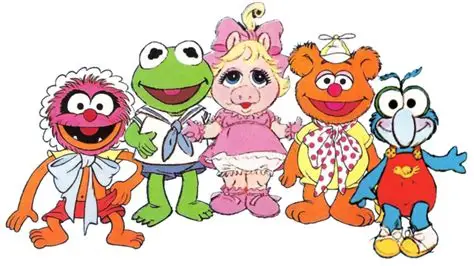
- Its memorable cast included baby Kermit, Miss Piggy, baby Fozzie, baby Gonzo, Baby Animal, Scooter, Rowlf, and Skeeter, with each character bringing a distinct kind of comic energy.
- The show’s mix of animation, live-action footage, movie clips, imaginative storytelling, and strong voice performances helped it win four Daytime Emmy Awards for Outstanding Animated Program.
- Although the classic series remains difficult to find on major streaming services, its central message still feels timeless: childhood play can make the whole world feel bigger.
Why the Nursery Felt So Big
The idea began with a fantasy sequence in 1984’s The Muppets Take Manhattan, where younger versions of the Muppets appeared on screen. Jim Henson saw more than a cute movie moment. He saw a whole television show.
The project was created by Henson and developed for television by Jeffrey Scott. Marvel Productions oversaw development with Jim Henson Productions, while Marvel Productions held the production credit for the animated television series on CBS. Marvel Productions’ animation workflow carried episodes from storyboards to screen. The show later earned recognition at the Daytime Emmy Awards, while its broadcast record under Marvel Productions covers eight seasons and 107 episodes.
You can find the full broadcast run and episode count in the original series listing. The show also earned a place in television history through its long run.
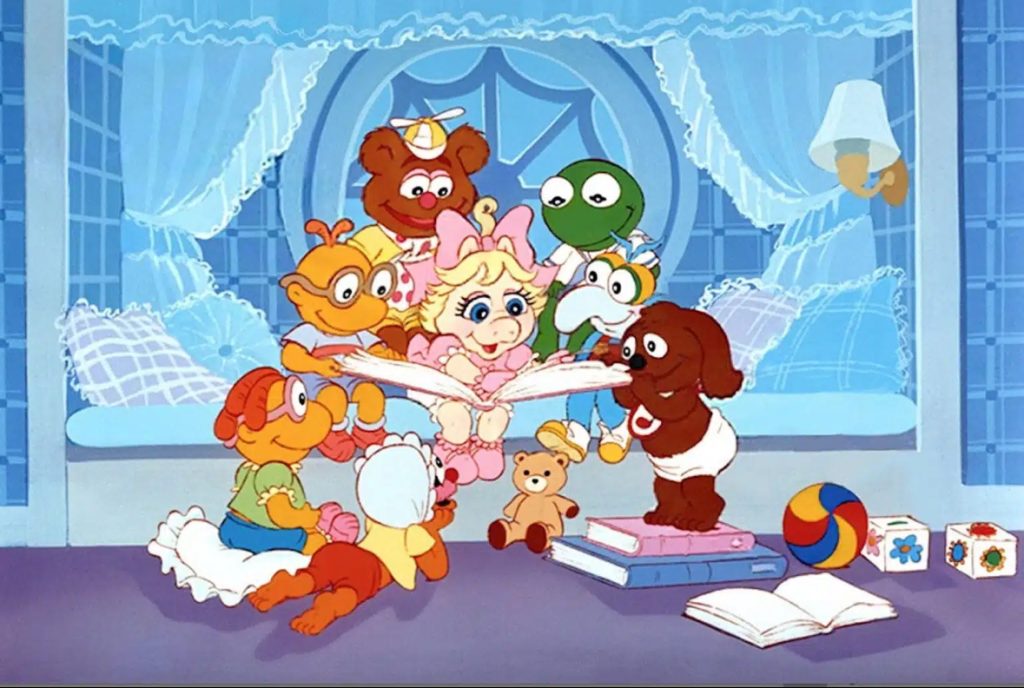
What made the premise work was its honesty. baby Kermit, Miss Piggy, baby Fozzie, baby Gonzo, Baby Animal, Scooter, Rowlf, and Skeeter lived in a nursery under Nanny’s watch. Yet the nursery never felt limiting. It was the launchpad.
One minute, the gang was playing with toys. The next, they were explorers, detectives, superheroes, pirates, or space travelers. Their make-believe adventures were enormous because childhood imagination is enormous. No passport required.
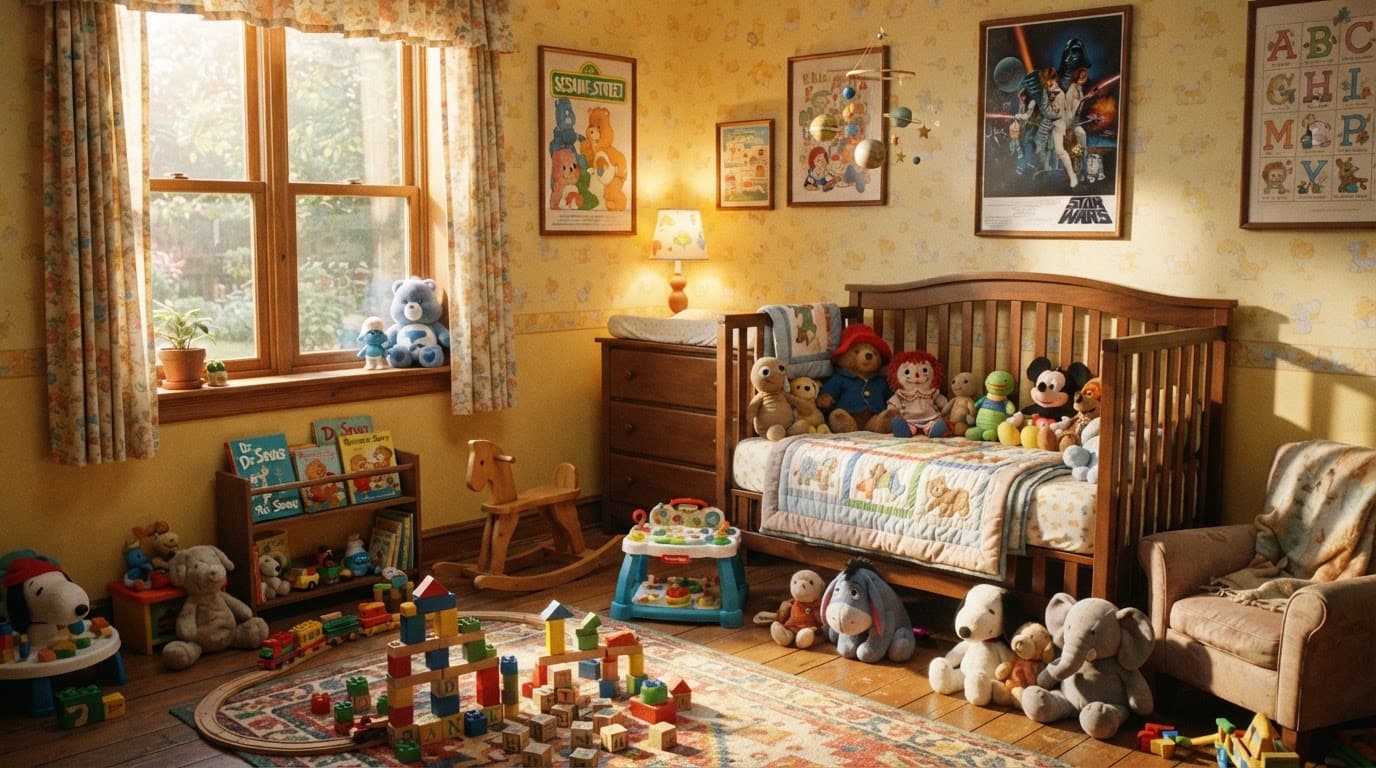
The theme song said it all: “Muppet Babies, we make our dreams come true.” That was not subtle. It didn’t need to be. Children’s television could put the mission statement right in the chorus.
A Nursery Full of Make-Believe and Mayhem
The Muppet Babies cartoon had a clever visual trick. Marvel Productions shaped its production approach around animation colliding with live action footage, old movie clips, stock shots, and real-world imagery. The effect made a child’s pretend game feel bigger than the TV screen.
Marvel Productions pushed that visual experimentation further, turning a cardboard spaceship into a passport through familiar movie worlds. Imaginary games could snap into a fast-moving montage. For a kid watching in 1986, it felt like the cartoon knew every cool thing you had ever seen and invited it into the playroom.
The show also kept its character designs wonderfully recognizable, from Miss Piggy’s confident silhouette to each friend’s distinct comic rhythm. Together, the roster made the nursery feel crowded with personalities: Miss Piggy, baby Fozzie, baby Gonzo, and Baby Animal each brought a different kind of energy.
- baby Kermit was the calm center, usually trying to keep a wildly off-track plan on the rails.
- Miss Piggy brought glamour, big feelings, and enough confidence to fill three nurseries.
- baby Fozzie made the jokes, whether anyone had asked for them or not.
- baby Gonzo turned oddball instincts into a lifestyle choice.
- Baby Animal was pure joyful chaos, often with a drumbeat close behind.
- Skeeter, Scooter’s athletic twin sister, was created for the animated series and became part of the gang from day one.
Skeeter matters because she wasn’t a miniature copy of a familiar adult Muppet. She was a new kid in the room, energetic, capable, and game for whatever came next. Her athletic confidence could challenge Miss Piggy for the spotlight, adding a fresh spark to the group. A Muppet Babies character guide is a fun refresher if her bright sneakers and can-do spirit just popped back into your head.
The nursery was never a cage. It was a place where every ordinary object had a secret second job.
The stories had conflicts, but they rarely needed a supervillain. A disagreement, a fear, a messy plan, or a bruised feeling could power the adventure. The gang used imagination and creative problem solving to work things out, giving kids the excitement before a gentle landing as the credits rolled.
The Voices That Made the Babies Feel Real
The characters looked like toddler versions of icons, but the voice actors had to honor Jim Henson’s legacy. They couldn’t simply be adorable; they had to sound like kids with giant personalities.
Barbara Billingsley gave Nanny her warm, patient voice while the show kept her face out of view. Those striped socks became a cartoon landmark all by themselves. Marvel Productions shared the animation production credit, while the rest of the cast gave the nursery its spark.
| Performer | Characters voiced in the 1984 production |
|---|---|
| Frank Welker | baby Kermit and Baby Beaker |
| Laurie O’Brien | Baby Piggy, the younger counterpart to Miss Piggy |
| Greg Berg | baby Fozzie and Baby Scooter |
| Russi Taylor | baby Gonzo and Baby Robin |
| Katie Leigh | Baby Rowlf |
| Howie Mandel and Dave Coulier | Baby Animal and Baby Bunsen at different points in the run |
That cast could make a squabble over a pretend mission feel dramatic, then flip into a punch line without missing a beat. The performances were broad, musical, and wonderfully elastic. Exactly right for Muppets.
Recognition followed for the production team, including Marvel Productions. The animated television series won four Daytime Emmy Awards for Outstanding Animated Program, proof that this was more than a colorful time-filler between cereal commercials. Those Daytime Emmy Awards reflected smart writing, sharp comic timing, and a visual style no other cartoon could quite copy.
Saturday Mornings, Happy Meals, and the Toy Box
The original series belonged to a particular kind of 80s morning. You watched because the schedule told you when to show up. Miss an episode, and you had to wait for syndication reruns. Brutal stuff.
But it also made the show feel like an event, the kind that sticks in childhood memories. You could not scroll past it. You had to be parked in front of the wood-grain TV, bowl in hand, while the theme song announced that the fun had officially started.
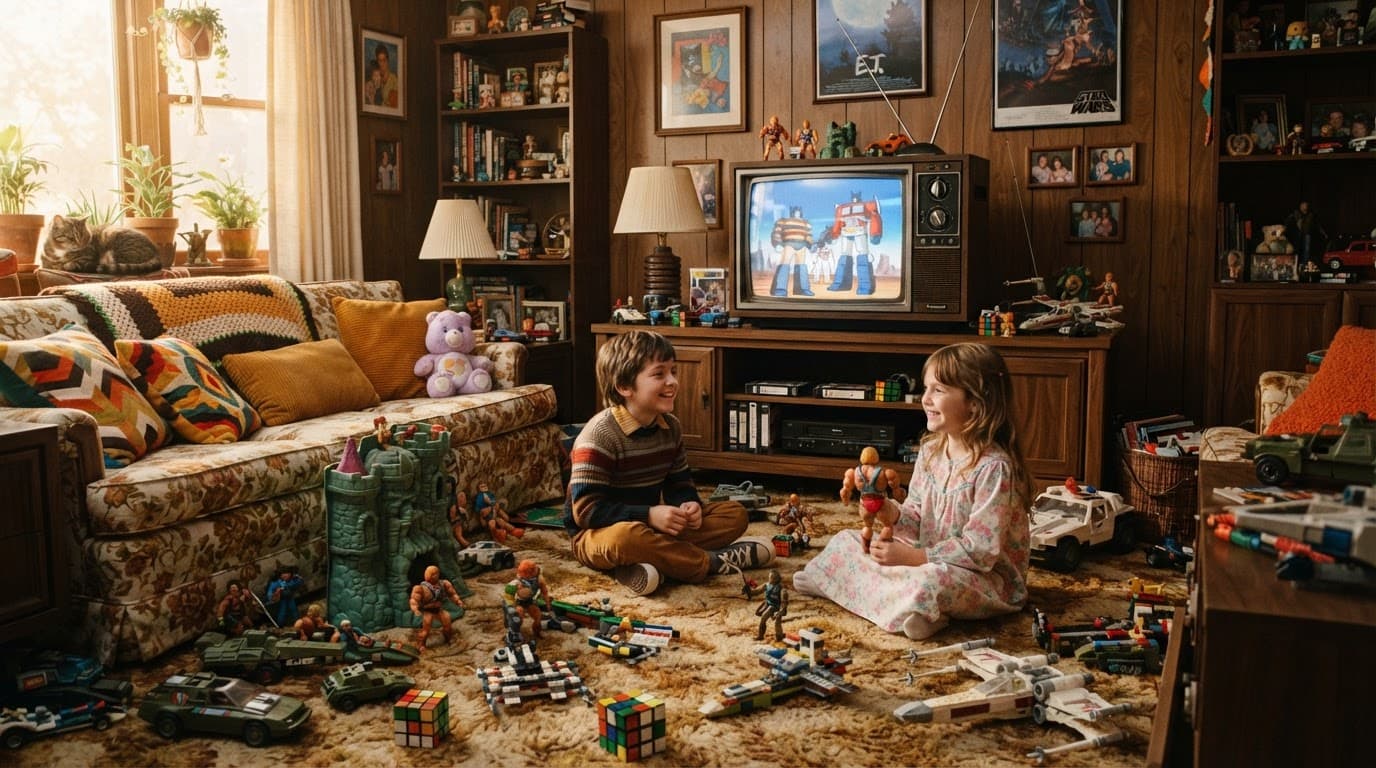
In the Marvel Productions era, McDonald’s Happy Meal toys carried the gang beyond the screen, turning baby Kermit, Miss Piggy, baby Gonzo, and baby Fozzie into pocket-sized prizes. They were part of that glorious 80s loop: watch the cartoon, spot the toys, beg for the meal, arrange the figures on the carpet, repeat.
That ritual sits right alongside other Saturday morning cartoon memories, where Saturday morning cartoons, pajamas, commercials, and toys all blurred into one bright set of childhood memories.
Disney Junior launched a 2018 reboot for a new generation. It had its own look and its own rhythm. Still, the first version has a scrappier, more collage-like charm. It feels like a classic cartoon made by kids’ minds, not merely about kids.
Why the Original Series Is Hard to Find on Streaming Services
Here comes the frustrating part. The classic series isn’t consistently listed as a current offering on major streaming services. Disney Plus availability can vary by region and time, despite the show’s long run and strong fan nostalgia.
The likely complication is baked right into the episodes. Their imagination sequences used live action footage and outside references, including famous movies such as Star Wars. A modern official release may require rights clearance for those clips, music, and film material tied to the Marvel Productions catalog and older broadcast agreements.
That can mean sorting music, footage, film clips, territories, and the terms of old contracts. One episode might be simple. A full remaster of 107 episodes is another story.
The missing piece is not fan nostalgia or interest. It is a public answer about which clips and agreements must be cleared for a complete official release.
No public statement has laid out one definitive reason for the classic show’s absence from a major streaming library. That distinction matters. Possible copyright issues are a sensible explanation for the hurdle, but they don’t prove that an official release is impossible.
It also means fans should be careful with unofficial uploads. A video appearing online isn’t the same thing as a licensed, restored release. Older home video releases can help, but until the series gets that kind of treatment, memory does a lot of the heavy lifting.
The Cartoon Adventures Kids Wanted
Kids didn’t watch the show for legal clearances, production credits, or Daytime Emmy Awards. They watched because Miss Piggy, baby Fozzie, baby Gonzo, and Baby Animal could turn a dull afternoon into a pirate quest, a monster movie, or a trip to another galaxy.
That was the show’s secret sauce. The Marvel Productions team made ordinary childhood feel like the first draft of an epic blockbuster.
The series had a big imagination, a bigger heart, and no interest in telling kids to sit still. It told them the toy box was full of possibilities. We believed it.
Frequently Asked Questions
What was the Muppet Babies cartoon about?
The series followed younger versions of the Muppets as they played in a nursery under Nanny’s care. Their toys and everyday surroundings became the starting points for huge adventures involving pirates, superheroes, detectives, space travel, and more.
When did the original Muppet Babies series come from?
The idea grew from a fantasy sequence in the 1984 film The Muppets Take Manhattan. The animated television series was developed by Jeffrey Scott and produced through the Marvel Productions and Jim Henson Productions partnership.
How many episodes of the original Muppet Babies cartoon were made?
The original series ran for eight seasons and 107 episodes. It also won four Daytime Emmy Awards for Outstanding Animated Program during its television run.
Why is the classic Muppet Babies cartoon hard to find on streaming services?
The show’s imaginative sequences used live-action footage, music, and references to outside films, which may require additional rights clearances. No single definitive public explanation has confirmed why the complete classic series is not consistently available on major streaming services.
Was there a newer version of Muppet Babies?
Yes. Disney Junior launched a reboot in 2018 for a new generation. The reboot has its own visual style and rhythm, while the original remains especially remembered for its collage-like animation and 80s Saturday morning charm.
The Nursery Still Has Room for Us
The classic cartoon remains a glowing piece of 80s childhood. Its Daytime Emmy Awards recognition is part of the record, but the emotional legacy matters more.
Its best idea still lands: play is not an escape from reality. For a kid, play is how reality gets bigger.
Those babies made dreams come true every Saturday morning. That feeling has never needed a remaster.