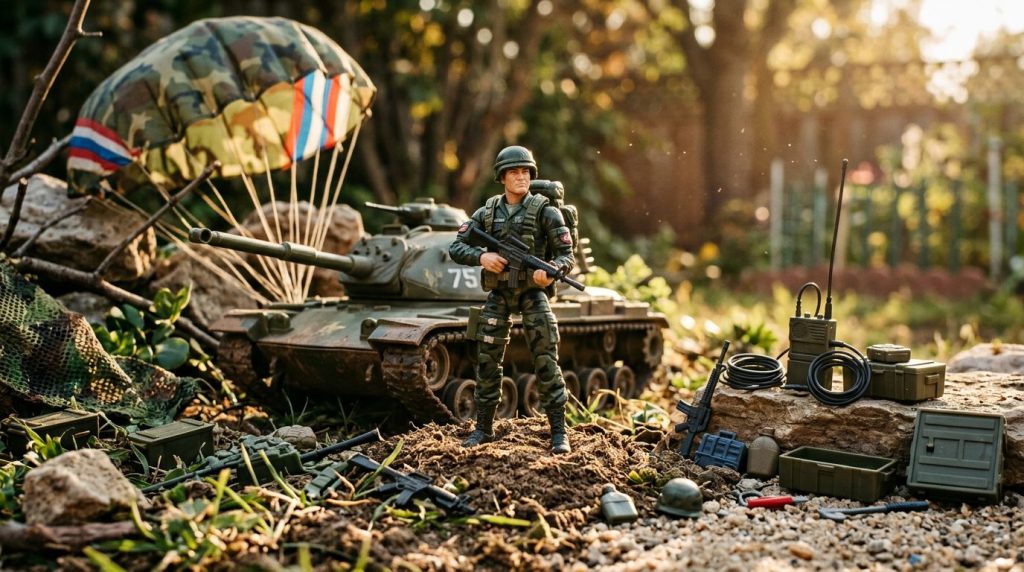
Before Cobra was a household name, a 3.75-inch soldier could turn a patch of backyard dirt into a full-blown battlefield. G.I. Joe toys did not ask kids to sit still. These iconic action figures, meticulously designed by Hasbro, came with parachutes, secret files, tank treads, shark submarines, and a whole lot of imagination.
For 80s kids, Joe was never only a toy line. It was Saturday-morning excitement, a crumpled comic book, and that one tiny accessory your vacuum cleaner somehow swallowed forever.
Here is why the era of A Real American Hero hit so hard, and why the old battle cry still lands.
Key Takeaways
- Hasbro revolutionized the industry in 1982 by shifting from 12-inch dolls to a 3.75-inch scale of action figures.
- The creation of the G.I. Joe: A Real American Hero universe, complete with intricate backstories and a formidable enemy faction, turned simple toys into a living world.
- Marvel comic books and the beloved animated series gave each character a unique personality, making them feel essential to any toy collection.
- Iconic characters such as Cobra Commander, Snake Eyes, Storm Shadow, and Duke evolved into permanent fixtures of pop culture.
- The market for vintage G.I. Joe collectibles continues to thrive today because these figures hold a special place in the hearts of those who grew up during the golden age of play.
The 1982 Relaunch Changed the Toy Aisle
G.I. Joe toys had been a staple since the 1960s. The original 12-inch figures were iconic, representing a level of detail that could wear a uniform better than most adults. By the early 80s, however, the toy market had evolved significantly.
Star Wars had shown Hasbro something vital. Kids were drawn to smaller action figures that could fit in pockets, cars, and the massive plastic vehicles that would have looked awkward beside the larger, older versions.
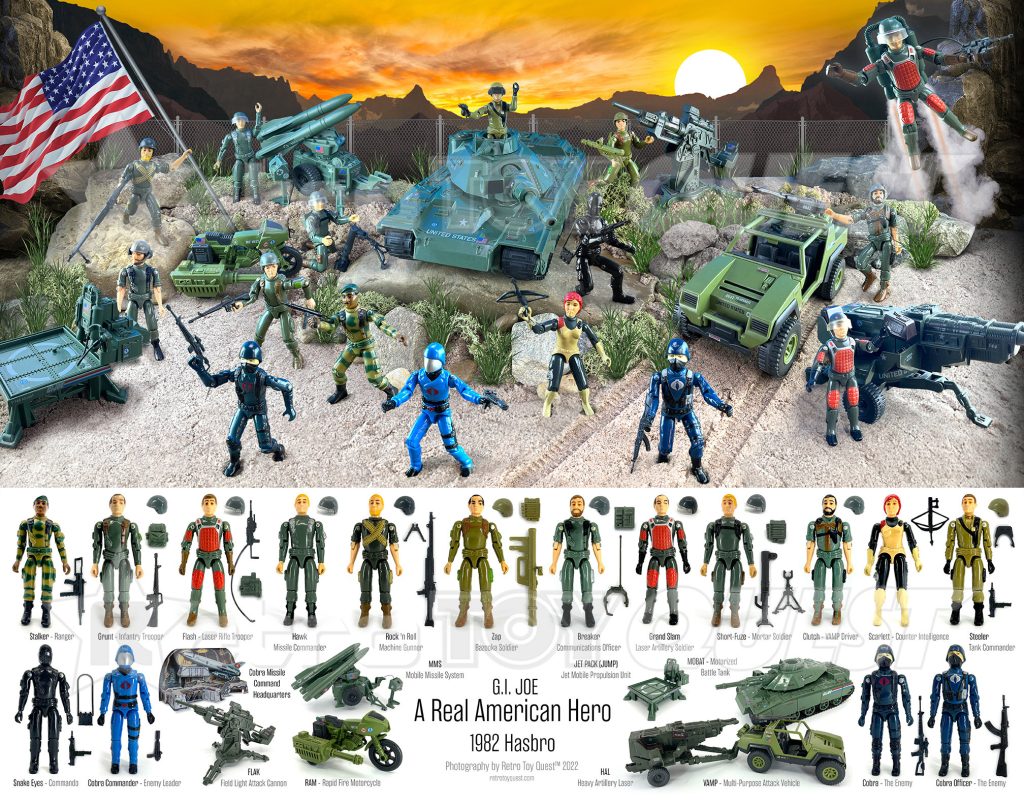
In 1982, Hasbro responded by introducing the G.I. Joe: A Real American Hero line.
The brand pivoted to a 3.75-inch scale, but the ambition remained larger than life.
Early releases such as Grunt, Stalker, Scarlett, Breaker, Flash, Rock ‘n Roll, Clutch, Hawk, Snake Eyes, and Short-Fuze arrived with accessories that looked like they meant business. They came with helmets, backpacks, rifles, and those iconic file cards printed on the package backs. You did not merely own Breaker; you knew he was a communications specialist with a distinct personality.
That was the hook. Every character felt like a real person.
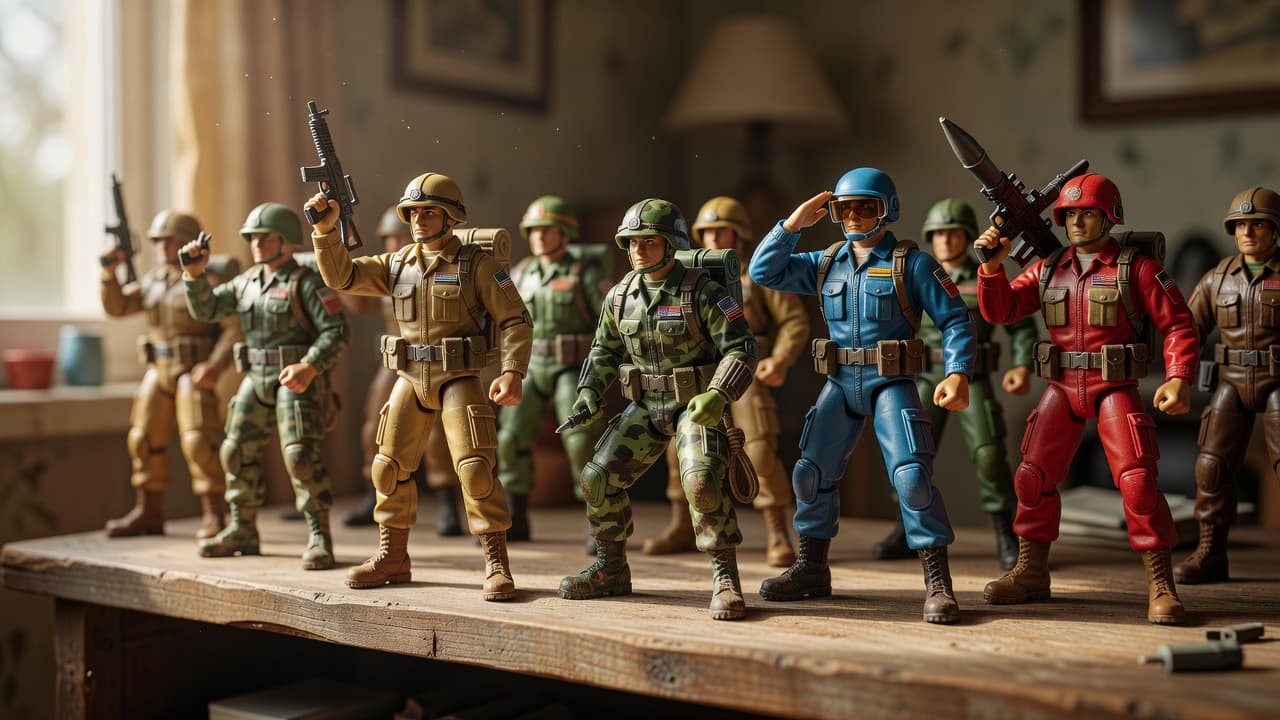
The figures also featured a construction innovation that kids could feel. The famous O-ring kept the waist and hips flexible. Add the swivel-arm battle grip, and suddenly a tiny soldier could hold a rifle, drive a VAMP, or hang on for dear life from a Skystriker cockpit.
That poseability mattered. These were action figures in the most literal sense.
The original run lasted until 1994 and produced an enormous roster of characters and sets. A helpful overview of the G.I. Joe: A Real American Hero toy line shows the sheer scale of what the designers achieved. It is no wonder bedroom floors across the country became miniature war zones.
G.I. Joe made every kid the director, stunt coordinator, and voice cast of a very loud action movie.
Cobra Made Every Mission More Fun
A hero is fine, but a hero with a spectacularly strange enemy is much better.
Cobra was never subtle. The organization featured blue uniforms, chrome masks, crimson guards, weather machines, secret island bases, and a leader who dressed like he planned to rule the world before lunch. It was glorious.
Cobra Commander acted as the wheezing, hooded voice of bad-guy mayhem. Destro brought a metal head and an iron-fisted family business to the table, while the Baroness provided a mix of black leather, glasses, and pure cool. Zartan changed his face at will and commanded the Dreadnoks, a chaotic biker gang that looked like they had wandered out of a post-apocalyptic music video.
Then there was Storm Shadow. The white-clad ninja appeared in 1984 and instantly shifted the whole line. He was not a standard military villain, as he brought mystery, elite martial arts skills, and a deeply personal connection to Snake Eyes. Kids who had never heard the phrase “complicated backstory” understood the emotional stakes immediately.
Cobra also provided the best hardware. The HISS tank looked like a sleek black machine built for the highway, while the Rattler attack plane featured aggressive forward-swept wings. Even the Trouble Bubble was absurd in the exact way a great 80s toy should be. Could a single soldier safely pilot a flying bubble into combat? Don’t overthink it; Cobra simply needed reliable air support.
These two sides gave children instant, compelling stakes. Your Joes always needed a mission, and Cobra always had a scheme. A simple trip to the backyard sandbox could easily become a high-stakes assault on a secret base by 10:15.
Comics and Cartoons Turned Figures Into Friends
Packaging gave G.I. Joe toys characters a file card, but Marvel comic books gave them souls.
Writer Larry Hama shaped much of the line’s personality through the A Real American Hero series. Hama’s military knowledge and crisp dialogue made the Joes feel like a team with real jobs, friendships, arguments, and scars. Snake Eyes barely spoke, yet he became one of the most magnetic characters in the whole franchise.
That is some comic-book magic.
The series did not treat readers like they were too young for tension. There were betrayals, rescue missions, rivalry, loss, and the ongoing saga between Snake Eyes and Storm Shadow. Kids came for the cool cover, but they stayed because these plastic figures had become characters worth following.
Meanwhile, the animated series blasted into living rooms across the country. The early miniseries, including The MASS Device and The Revenge of Cobra, supplied cartoon spectacle by the truckload. Lasers flew, vehicles exploded, and nobody seemed permanently injured. Every episode closed with a public-service announcement that lodged itself in a generation’s brain.
“Now you know.”
The cartoon and the toy shelf fed each other beautifully. You could watch Duke lead the team on TV, then put Duke in the driver seat of the MOBAT tank. Watch Shipwreck wisecrack beside Polly, then recruit him for a bathtub rescue mission. The toys were props, but the stories belonged to you. The depth of this lore created an expansive universe that eventually paved the way for modern live action movies.
For a fan-friendly time capsule, this 1982 G.I. Joe history video revisits the launch-era figures and the big idea behind the relaunch. It is a reminder of how much world-building fit inside a blister card.
The Vehicles Were Half the Obsession
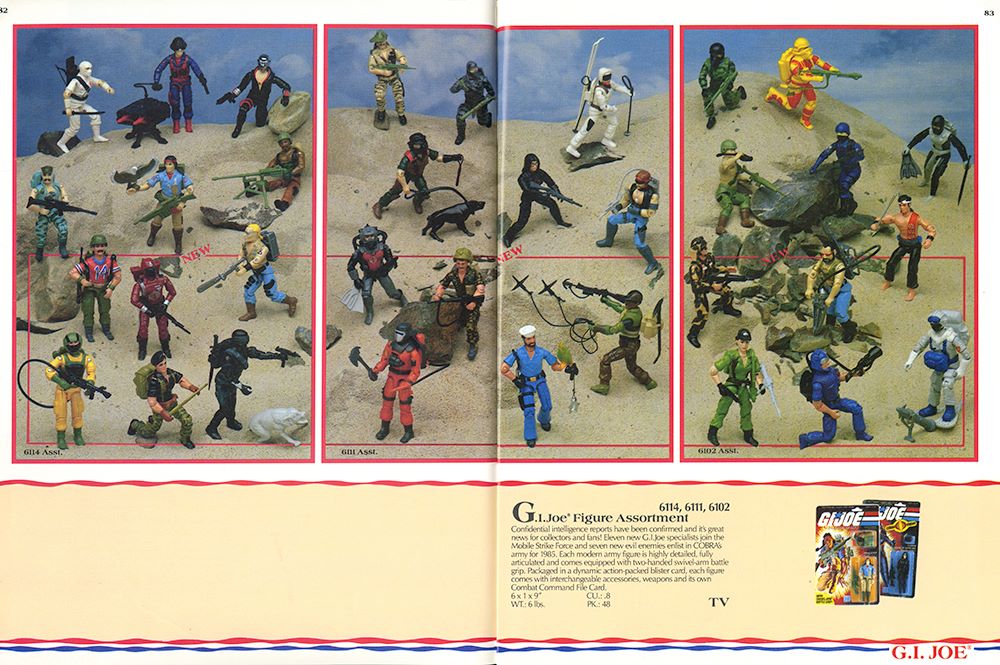
Ask any former G.I. Joe kid about their favorite toy, and there is a decent chance they will name a vehicle before an action figure. These vehicles provided the essential backdrop for every backyard adventure, turning simple play sessions into complex tactical operations.
The VAMP was a rugged four-wheel-drive ride that gave Clutch somewhere to go. The Dragonfly XH-1 attack helicopter made backyard missions feel cinematic, while the Sky Striker jet seemed built to make bedroom furniture look like jagged mountain ranges.
Then Hasbro went completely big.
The USS Flagg aircraft carrier was nearly seven and a half feet long. It had a flight deck, a control tower, a microphone, and enough presence to claim a whole room. If you owned one, you were not just playing G.I. Joe; you were running a full scale naval operation.
The best vehicles had moving parts and small surprises. Seats opened, wheels rolled, and missiles launched, often vanishing forever under a couch. A vehicle did not just sit there looking pretty; it had a specific job to perform in the field.
Here are a few machines that still make collectors eyes light up:
- The Sky Striker gave the Joes their signature fighter jet, with Ace ready in the cockpit.
- The HISS tank gave Cobra a sleek, instantly recognizable armored threat.
- The Killer WHALE was a massive hovercraft packed with guns, compartments, and room for a squad.
- The Terror Drome was Cobra’s intimidating headquarters, complete with a Firebat launch bay.
- The USS Flagg was the giant of giants, a toy so enormous it became a staple of family furniture.
A quick G.I. Joe fan post on the cartoon’s origins captures the key truth: the animated series and the toy line arrived as a package deal. One made you want the other.
Why Vintage G.I. Joe Toys Still Matter
Nostalgia is a powerful force when it comes to vintage G.I. Joe toys. Pick up a battered 1984 Roadblock, and you might suddenly remember a friend’s kitchen floor. Find a loose Snow Job backpack, and you are instantly transported back to your childhood, staging an Arctic mission on a shag carpet.
Beyond the memories, these toys hold up because the design was consistently strong. Each figure had a distinct look you could spot across the room. Torpedo had his iconic wetsuit, Gung-Ho featured his unmistakable marine uniform and mustache, and Firefly looked like a walking classified file. The line also rewarded curiosity. You might buy a figure because the sculpt looked cool, then read the file card to discover a detailed biography. That is how a generation learned about military roles and faraway places, plus the fact that ninjas somehow belonged in every good 80s adventure.
Today, the collector market remains vibrant. Enthusiasts chase mint figures, complete accessories, clean decals, and unbroken O-rings. For serious investors, finding unpunched carded figures in pristine condition is the ultimate goal. Yet, a lovingly played-with vintage G.I. Joe can feel just as special as a sealed one. A scuffed helmet and worn thumbs tell a story because somebody used the toy exactly as intended.
The legacy of these figures continues to evolve. Modern collectors can bridge the gap between past and present with the highly articulated 6-inch Classified Series, while those craving a classic aesthetic can look to the nostalgic Retro Collection. Whether you are hunting for original treasures or starting a fresh display, the spirit of the Real American Hero remains as strong as ever.
Frequently Asked Questions
Why did Hasbro switch from 12-inch figures to the 3.75-inch scale?
Hasbro realized the toy market was shifting after the success of smaller, more portable action figures. The 3.75-inch scale allowed kids to easily fit their figures into vehicles and carry them anywhere, making the play experience more dynamic and expansive.
What was the purpose of the file cards on the back of the packaging?
File cards provided essential backstories and personality details for each character, transforming a simple piece of plastic into a relatable individual. They gave kids a sense of who these soldiers were, helping them build deeper narratives during their backyard missions.
What made the G.I. Joe vehicles so iconic to the line?
These vehicles were central to the play experience, often featuring complex moving parts and realistic tactical designs that set the stage for epic adventures. From the massive USS Flagg to the sleek HISS tank, they offered unmatched immersion that turned a living room floor into a full-scale battle zone.
Why is the vintage G.I. Joe market still so active today?
Collectors remain drawn to the line because of the high-quality design, deep lore, and strong nostalgic connection to childhood play. The combination of unique character aesthetics and the thrill of tracking down elusive, original accessories keeps the passion for these classic figures alive.
G.I. Joe toys hit the sweet spot between military adventure, comic-book drama, and full-tilt toy-box chaos. They gave kids heroes worth cheering, villains worth booing, and vehicles that could swallow an entire afternoon.
The A Real American Hero craze was built on plastic, paper, and cartoon cells. What people remember most is the play: the missions, the arguments over who got Snake Eyes, and the joy of seeing these action figures bring a familiar battle cry to life in the living room. G.I. Joe toys defined a generation, and their legacy continues to resonate with collectors and fans who still cherish those classic adventures.