Some desserts disappeared because they tasted good. Jell-O 1-2-3 stayed in people’s heads because it looked like a trick.
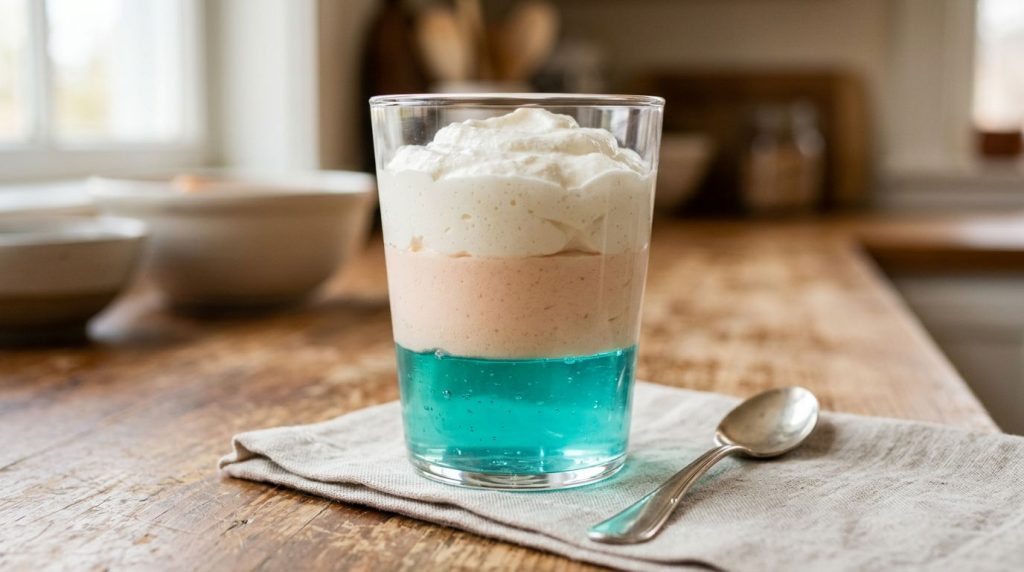
You beat one powder mix with cold milk, slid it into the fridge, and came back to a dessert with three neat layers, a foamy top, a creamy middle, and a clear gelatin bottom. For kids, that felt less like pudding and more like a kitchen experiment that somehow ended in whipped sweetness.
The Dessert With a Built-In Plot Twist
Regular Jell-O was already fun. It jiggled, it shimmered, it showed up at potlucks in colors no fruit had ever naturally worn. But Jell-O 1-2-3 had suspense.
You didn’t get the whole show the second you stirred it. You had to wait. That was part of the spell.
At first, it looked like one bowl of pale liquid. Then the fridge did its thing. Hours later, there it was, stacked like a tiny edible geology lesson, only a lot cuter and a lot sweeter. The top looked almost mousse-like. The center had a soft, cloudy creaminess. The bottom had that classic Jell-O glow.
Every spoonful gave you contrast. Light, rich, wobbly. Airy, smooth, jelled. It was one dessert, but it acted like three.
Jell-O 1-2-3 didn’t just sit on the table. It made an entrance.
That mattered more than people sometimes admit. Kids love a reveal. Adults do too, even when they pretend they don’t. A dessert that changed shape on its own had instant dinner-table theater built in.
It also fit right into Jell-O’s larger lineup of playful treats. The brand had a real gift for turning texture into a selling point, which is part of why people still miss iconic 80s Jell-O Pudding Pops. Different dessert, same basic appeal: cold, creamy, a little extra, and impossible to confuse with something generic.
Jell-O 1-2-3 wasn’t fancy. That was the charm. It came from a box, but it still felt like you had pulled something off.
How Jell-O 1-2-3 Split Into Three Layers
Here’s the whole trick in one line: air went in, gravity took over, and gelatin locked the result in place.
When you whipped the mix with milk, you weren’t only combining ingredients. You were also beating in lots of tiny air bubbles. That made parts of the mixture lighter than other parts. Once the bowl went into the fridge, those lighter, foamier bits drifted upward, while the heavier liquid stayed lower down.
Then the gelatin started to set.
That part is the key. If the mixture had stayed liquid, it would have kept shifting around. But as it chilled, the gelatin firmed up and froze each zone where it had landed. The airy layer stayed on top. The in-between portion settled in the middle. The densest part became the clear bottom.
The science is simple enough to picture:
| Layer | What was happening | What it felt like |
|---|---|---|
| Top | The foamiest part, full of air, rose upward | Light and fluffy |
| Middle | The partly aerated mix stayed between top and bottom | Creamy and soft |
| Bottom | The heaviest liquid settled low and set there | Clear and gelatin-like |
So the “magic” was mostly density. The light stuff floated. The heavy stuff sank. The refrigerator made the arrangement stick.
That’s why Jell-O 1-2-3 felt like a science fair project you could eat with a spoon.
It also explains why the dessert felt so satisfying. The layers weren’t only different colors or shades. They had different textures, and texture is half the memory with a food like this. Plenty of desserts are sweet. Fewer give you a little physics lesson before the first bite.
If you grew up staring through the side of a glass dish to see whether the layers had formed yet, you already understood the concept. You may not have called it density at the time. You probably called it “Whoa.”
Why It Fit So Perfectly in the 70s and 80s
Jell-O 1-2-3 arrived in 1969, according to Food52’s history of the dessert, and that timing makes all kinds of sense. America was in a full-on packaged-dessert romance. Convenience mattered. Color mattered. A little kitchen wizardry mattered a lot.
This was the age of foods that promised fun with almost no fuss. Open the box. Add milk. Beat. Chill. Done. No gelatin molds hanging in suspense over the sink. No layered trifle assembly line. No pastry-bag business.
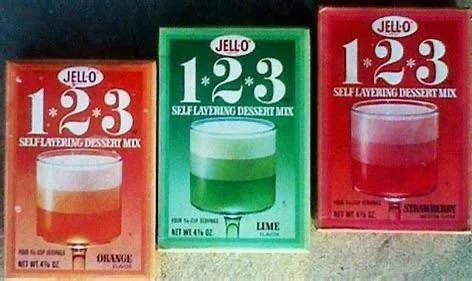
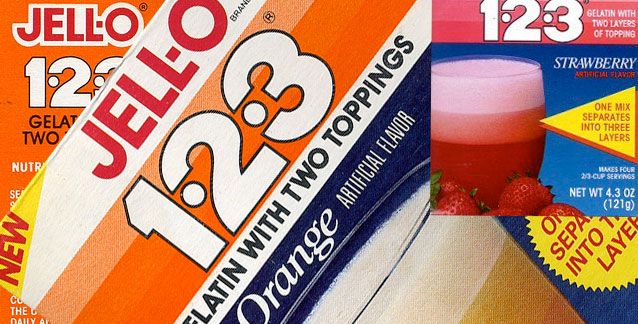
The packaging sold that promise hard. You weren’t buying an abstract idea. You were buying a photo of three clean layers in one bowl, proof that the trick would happen in your own fridge too. That was catnip for kids and a nice little shortcut for parents.
The flavors helped. Jell-O worked best when it went bright, fruity, and cheerful, and Jell-O 1-2-3 looked great in the pinks, reds, oranges, and yellows people remember from the era. It wasn’t subtle food. It was happy food.
And it belonged to a bigger moment in snack history, one built on reveals, surprises, and dramatic textures. If you loved treats that turned snack time into a small event, Jell-O 1-2-3 sat comfortably beside retro Magic Middles cookies, pudding pops, and all the other grocery-store extroverts that made the late 20th century such a weirdly glorious time to be a kid.
That’s a big reason the dessert lingers in memory. It wasn’t only a flavor. It was a performance.
You mixed it and watched it transform. You served it in clear bowls because hiding the layers would have missed the whole point. And if you were a kid, you probably felt a tiny burst of pride when it worked, as if you had helped create something more impressive than a box mix had any right to be.
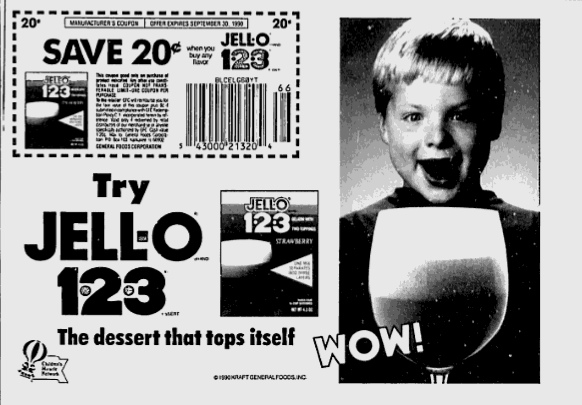
Why It Disappeared but Never Left Memory
Like a lot of novelty foods, Jell-O 1-2-3 didn’t vanish because people forgot it overnight. It faded as tastes changed and sales softened.
The timeline isn’t perfectly tidy in every retrospective, but the broad story is clear. Food52 notes that the product started disappearing from American shelves in the mid-1980s as sales dropped, while The Daily Meal’s look back at its discontinuation places the final end in 1996. That’s not unusual for a grocery item that can linger in some markets longer than others before it’s fully gone.
The bigger point is that Jell-O 1-2-3 belonged to a style of supermarket fun that had a shelf life of its own. Novelty is strongest when it feels new. Once the grocery aisle filled up with more ready-to-eat puddings, cups, yogurts, and refrigerated desserts, a mix that needed whipping and waiting had a tougher sell.
But memory doesn’t work like a sales chart.
People remember the desserts that had a point of view. Jell-O 1-2-3 had one. It wasn’t the richest sweet on earth. It wasn’t the most elegant. It didn’t need to be. It gave you a visible payoff, a tactile payoff, and a little hit of wonder from a cardboard box.
That’s why it still comes up in nostalgic conversations. Not as a random old product, but as a very specific experience. You can still picture the layers. You can still remember the spoon cutting through the top and dropping into the wobblier base. You can still hear someone calling everyone to the kitchen because “it’s ready.”
That kind of food memory sticks.
Jell-O 1-2-3 lasted because it did two jobs at once. It was dessert, and it was a trick you could watch happen in real time.
The science behind it wasn’t mysterious at all, just air, density, and gelatin setting in the cold. But that plain little explanation doesn’t make the memory less magical. If anything, it makes the whole thing better.
The bowl in the fridge, the three layers, the first scoop, that’s why Jell-O 1-2-3 still feels bigger than a box mix. It turned physics into pudding, and for a lot of 70s and 80s kids, that was more than enough.