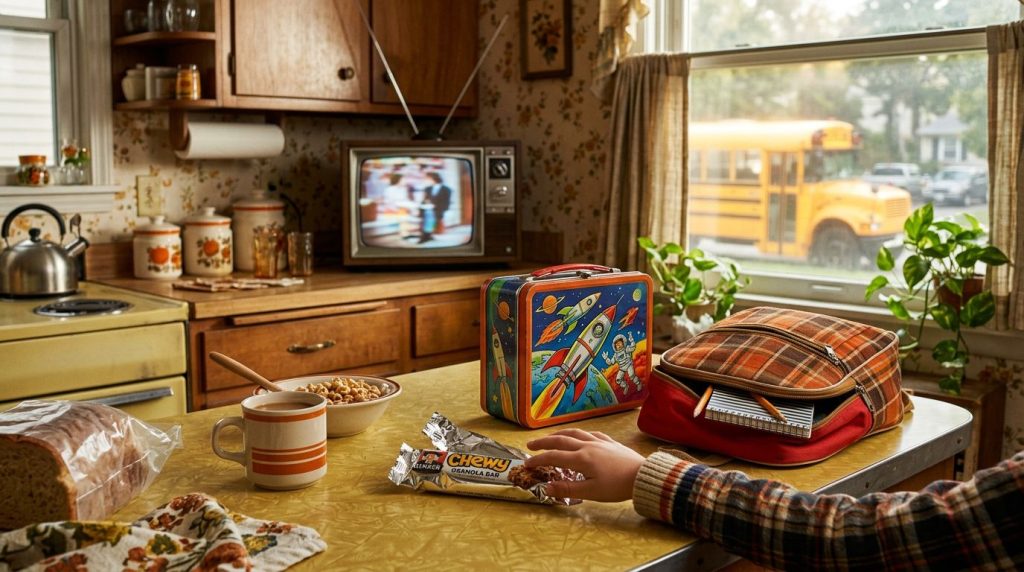
There was a special kind of school morning chaos in the 70s and 80s: one shoe on, a backpack half-zipped, the TV still on in the other room, and somebody yelling that the bus was coming. In that blur of convenience breakfast requirements, Carnation Breakfast Bars felt like a tiny household miracle wrapped in foil.
They were sweet enough that kids did not fight them, fast enough that parents could toss one across the kitchen, and tidy enough to eat without a bowl, a spoon, or a full sit-down moment. Looking back at this unique piece of snack history, it is easy to see why those who remember them fondly also remember the entire scene that played out around the kitchen table.
Key Takeaways
- Carnation Breakfast Bars successfully bridged the gap between kid-friendly snacks and parent-approved breakfast, offering a convenient, portable solution to hectic school-day mornings.
- The bars thrived by avoiding the ‘joyless’ reputation of health foods, instead offering delicious, treat-like flavors that kids actually looked forward to eating.
- Their unique appeal relied on balancing ‘rebellious’ sweetness with enough perceived nutritional value to satisfy parents, all without the mess and time required by traditional cereal.
- The bars became deeply embedded in 80s nostalgia not just for their taste, but because they were a reliable, consistent part of family morning rituals during a chaotic era.
Why Carnation Breakfast Bars Hit the Sweet Spot
A lot of nostalgic foods were fun in theory and chaos in practice. Carnation Breakfast Bars were one of the rare exceptions. They fit the morning people actually had, not the morning cereal commercials pretended everybody had.
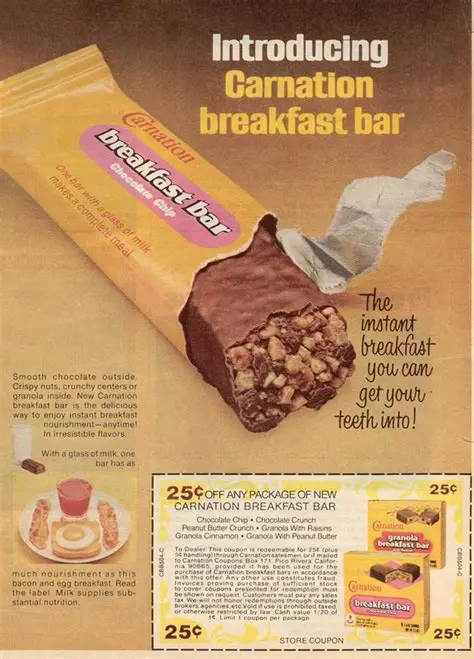
Most product histories trace the bars back to 1975, and that timing makes sense. The country was already getting used to grab-and-go food, and the Nestle brand already had name recognition from its Instant Breakfast drink mix. A solid bar version was a natural next move, the breakfast equivalent of taking the blender out of the equation.
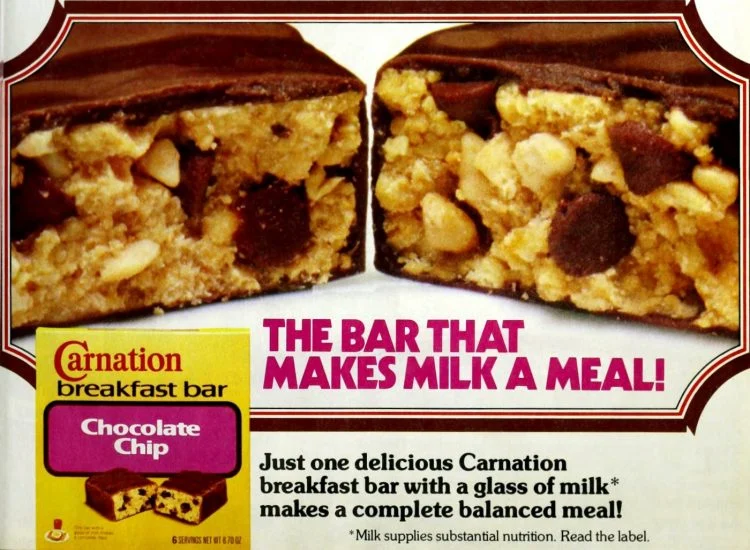
That was the magic: they felt a little rebellious, but not too rebellious. They looked close enough to a candy bar to be exciting, and they sounded close enough to breakfast to get parent approval. Because these bars were marketed as containing vitamins and minerals, parents felt comfortable handing them out. That is a powerful combination when you are nine years old and suspicious of anything that is supposed to be good for you.
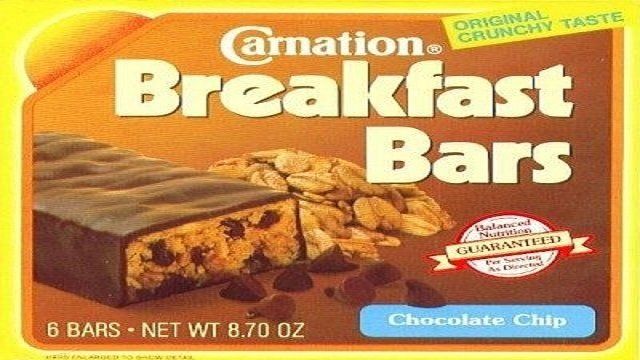
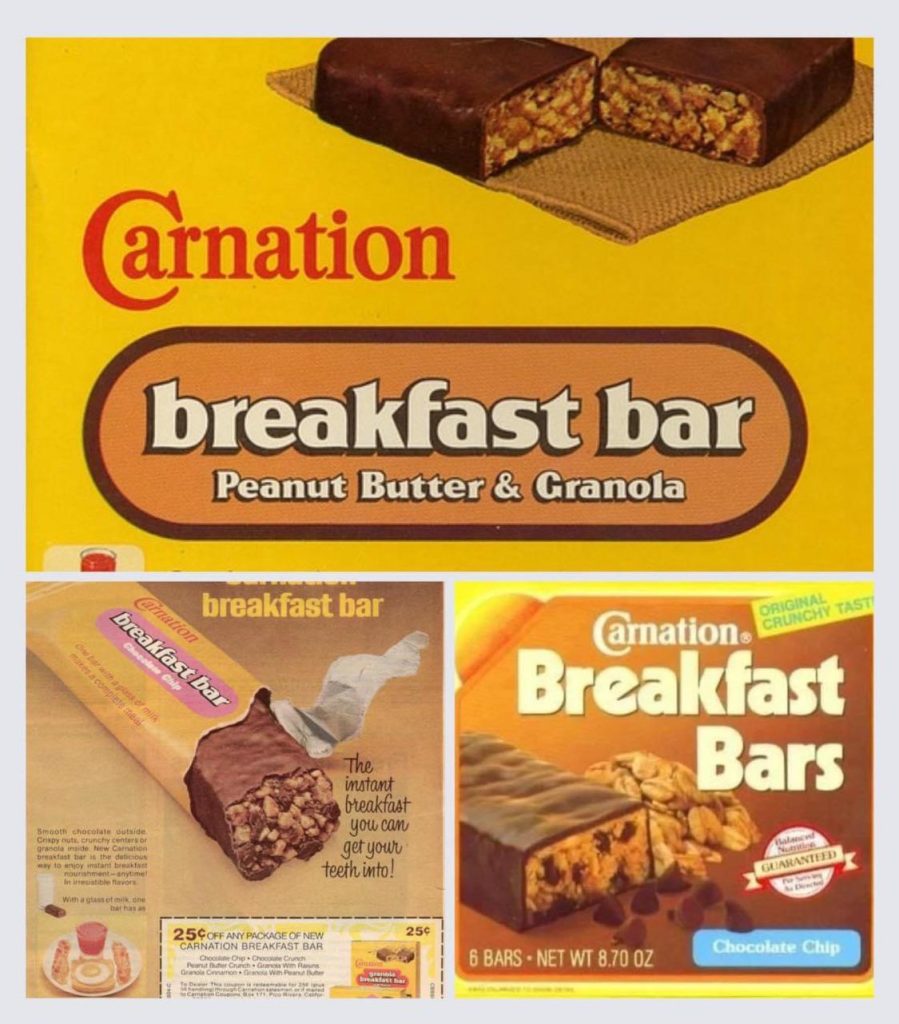
The flavor lineup helped, too. With options like Chocolate Chip, Chocolate Crunch, Peanut Butter, Granola with Raisins, and Granola Cinnamon, these were not joyless diet bars. Unlike the standard granola bars of that era, which often felt like compressed birdseed, these were built to tempt you first and explain themselves second.
And that explains why so many people remember them so vividly. They were not trying to be solemn health food. They were a breakfast loophole. A parent could say, “Here, eat this on the way,” and a kid did not feel punished.
Plenty of quick breakfast products have come and gone, but few nailed that balance so neatly. Carnation Breakfast Bars did not ask kids to become better eaters before 8 a.m. They met them where they were, half awake, mildly grumpy, and more interested in chocolate than fiber.
The Morning Routine They Fit So Perfectly
The best nostalgia lives in details. It is not about the ad copy or the product sheet, but the feeling of peeling back that wrapper while the kitchen still smelled faintly like toast and coffee.
Kids tasted chocolate. Parents saw breakfast. Everybody made the bus.
If you had one cold from the pantry, you remember the texture. It was dense and chewy, not crumbly in a disastrous way. When parents brought home a variety pack from the local grocery store, the chocolate covered versions were always the first to go, giving off that rich cocoa smell the second the wrapper opened. The granola options had that toasted, oaty profile that made them feel more like a substantial meal.
They also solved a problem that cereal never could. Cereal demanded time, milk, a clean bowl, and a place to sit. Carnation bars needed one hand and maybe a napkin if you were being fancy. For families racing through weekday mornings, that mattered.
There was also less drama. No soggy flakes, no sugar milk left at the bottom, and no younger sibling hogging the spoon you needed. If your morning looked like a relay race between the bathroom, the kitchen, and the front door, this was food that understood the assignment.
That is why they felt like a win for both sides of the kitchen table. Parents got something marketed as breakfast that was portable and easy. Kids got a sweet, satisfying bar that felt closer to a treat than a lecture. Nobody had to pretend it was farm fresh granola made at sunrise. It was factory made convenience, and that was the point.
For a lot of us, that memory is tied to little family rituals. A lunchbox on the counter, a note from mom, local weather mumbled from a TV set, and sneakers squeaking on linoleum. The bar itself was only part of it. The real nostalgia is the whole five minute scene.
In a Cereal-Crazy Era, These Bars Felt Strangely Practical
The 80s breakfast aisle was a circus, and that was part of the fun. You had cartoon tie-ins, mascot cereals, neon marshmallows, and sugar levels that would have made a dentist wince. A quick look back at Smurfberry Crunch or the swaggering spectacle of Mr. T Cereal tells you everything you need to know about the mood of that era.
Carnation Breakfast Bars came from that same culture, but they played it cooler. There was less cartoon mania and more of a focus on getting breakfast ready so everyone could move on with their day. They still had kid appeal, obviously. Chocolate sells, peanut butter sells, and a foil wrapper that looks a little bit sneaky definitely sells. However, the pitch was more grounded.
That is what makes them interesting in hindsight. They were not as loud as the cereal stars, and they were not pretending to be pure health food either. They occupied a clever middle ground, acting as one of those healthy snacks that actually tasted like a treat. In a market crowded with options, they functioned almost like a quick meal replacement that felt more substantial than a bowl of sugar-coated cereal.
They also belonged to that fuzzy 80s category where snack food and meal food kept borrowing each other’s style. A breakfast bar could look like dessert, while a candy bar could feel weirdly substantial. If that whole foil-wrapped era still hits you right in the nostalgia center, those BarNone 80s snack memories live in a nearby corner of the brain, right alongside favorites like Kudos bars or the protein-focused Tiger’s Milk bar.
There is something funny and kind of perfect about that. The decade gave us giant personalities, loud packaging, and breakfast products that wanted to be entertainment. Carnation’s bars were not boring, but they were usable. That may be why they stayed so beloved. They were not only fun to remember, they were handy at the exact moment you needed them.
Why They Faded, and Why Modern Bars Aren’t Quite the Same
By the early 1990s, the original formula seemed to lose some ground. Tastes were shifting, nutrition discussions were changing, and many once-reliable packaged foods started getting reworked, rebranded, or left behind. Carnation attempted a relaunch in 1994, but the iconic bars were ultimately discontinued by 1997.
That timeline rings true to many people. The bars felt perfectly tuned to one era of family life, then suddenly seemed a little out of step with the next. Breakfast culture was evolving, and the idea of something being good enough for the car ride stopped sounding as charming to marketers as it once had.
A later Breakfast Essentials Nutrition Bar version arrived years after that. Fans who tried it often treated it like a distant cousin rather than a true reunion. It was the same family, but with a different personality. When you look at the landscape today, the difference between the past and present is stark. Modern energy bars and protein snacks are built for functional efficiency, whereas the original bars were designed for taste. Many modern options are SNAP EBT eligible, reflecting a shift toward accessible nutrition, but they often lack the nostalgia of the past. Furthermore, the modern obsession with gluten free labels and strict macro tracking was non-existent during the original bar’s heyday.
Here is the simplest way to see the difference between then and now:
| Breakfast option | Kid appeal | Parent appeal | What changed |
|---|---|---|---|
| Carnation Breakfast Bars | Sweet, chocolatey, easy to say yes to | Portable, no prep, less mess | Felt like a treat that still counted as breakfast |
| Sugary 80s cereals | Huge mascot energy, fun shapes, bright colors | Familiar and easy, but messy | More about spectacle than convenience |
| Modern protein snacks | Often less fun, more functional | More protein, more nutrition claims | Better stats, less can’t wait to eat it energy |
| Breakfast drinks today | Fast and simple | Great for rushed mornings | Drinkable convenience, but missing that foil wrapper satisfaction |
The takeaway is simple: today’s energy bars may be more polished on paper, but they do not always hit the same emotional note. Carnation Breakfast Bars felt personal. They were part snack, part shortcut, and part peace treaty between what kids wanted and what parents could live with.
Frequently Asked Questions
When were Carnation Breakfast Bars discontinued?
The original formula was discontinued in 1997 after a brief relaunch attempt in 1994. While other ‘Breakfast Essentials’ products have existed since, fans generally agree that those modern versions lack the specific texture and nostalgic magic of the 80s original.
What made them different from modern protein bars?
Modern bars are typically engineered for functional efficiency, focusing on strict macros and health claims. In contrast, the original Carnation bars were designed primarily for taste and convenience, functioning more like a satisfying breakfast treat than a specialized supplement.
Why do people have such strong memories of these bars?
They weren’t just food; they were a staple of the morning routine that solved the conflict between what kids wanted and what parents expected. Because they were woven into the daily ritual of getting to school, the physical act of opening the foil wrapper triggers a powerful sense of childhood nostalgia.
Why These Bars Still Stick in Memory
Some foods vanish and barely leave a trace. Others stay lodged in the brain because they were woven into a daily ritual. Carnation Breakfast Bars belong in that second group.
People remember the taste, sure. They also remember the rush, the wrapper, the bargain being made at the kitchen counter, and the way one small bar could smooth out a hectic morning. Because the original product is gone, nostalgia has sparked a high demand for a reliable copycat recipe. Fans often experiment with DIY versions using ingredients like Karo syrup for texture, Rice Krispies for that signature crunch, and rolled oats for a heartier base.
While many devoted fans still check Amazon results to see if any modern alternatives can fill the void, nothing quite matches the original foil-wrapped experience. That is why the memory still lands. It is not only about breakfast; it is about a whole slice of growing up, packed into one little win.