Some characters stayed on the screen, but the Care Bears climbed right off it and onto our beds. Before they became icons of children’s television, these lovable characters were born as greeting cards for American Greetings, brought to life through the distinct and colorful artwork of Elena Kucharik.
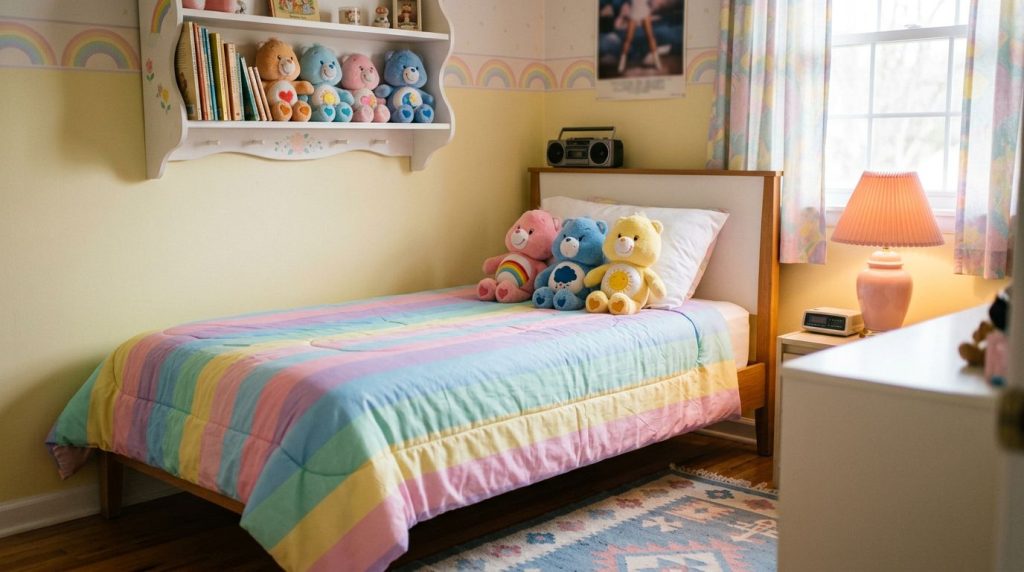
If you were there, you remember the look. Plush bears were lined up on a shelf, and a bright comforter was pulled tight across a twin bed. Maybe a pillow featuring a belly badge was smiling back at you before the lights went out. The Care Bears 80s wave was not just a cartoon craze; it was a full room takeover. And let’s face, if we didn’t have a Teddy Ruxpin, we had a slew of cheerful
And that is why they lasted. They were not only something you watched on Saturday mornings. They were something you hugged, collected, and fell asleep next to every single night.
Key Care Bears 80s Takeaways
- Beyond the Screen: Care Bears successfully bridged the gap between television and home decor, with plush toys and branded items becoming permanent fixtures in 80s bedrooms.
- Emotional Branding: Unlike many action-oriented 80s franchises, the Care Bears focused on kindness, comfort, and friendship, creating a lasting emotional connection with children.
- Cohesive Ecosystem: Through a strategic loop between the animated series produced by Nelvana and a consistent line of Kenner merchandise, the brand ensured that characters were part of a child’s morning routine and nighttime comfort.
- Design-Led Identity: The iconic belly badges and distinct color palettes allowed for instant recognition, making the characters both highly collectible and personalized tools for self-expression.
When Care Bears 80s Kindness Took Over the Room
A lot of 80s bedroom icons were loud. Neon posters, plastic boom boxes, and glossy lunchbox art dominated the landscape. Care Bears had their own kind of power, softer and sweeter, but no less visible. Created by American Greetings, these multi-colored bears fit bedrooms perfectly because they already looked like decor. With round faces, candy colors, and cloud-soft shapes, the bears were iconic. Their belly badges, or tummy symbols as many kids called them, were designed to read instantly across a room. You did not need to squint to identify your favorite. Cheer Bear popped in bright pink, while Grumpy Bear brought that lovable blue gloom to the shelf. Bedtime Bear felt made for a pillowcase, obviously.
That mattered more than it sounds. In the 80s, character branding from companies like American Greetings often worked best when it could jump formats. Care Bears did that with ease. A plush toy on the bed matched the bedding. The bedding matched the pajamas. The pajamas matched the sticker book or the little figure on the dresser. One idea, everywhere.
Bedrooms became tiny versions of Care-a-lot. Not in a fussy, themed-room way, but in the casual 80s kid way. A bear on the pillow, another tucked in the crook of an armchair, maybe a laminated wall print or a small lamp nearby. It was enough to make the room feel cheerful, safe, and a little magical.
That emotional piece is easy to miss when people talk about toy trends. Care Bears were not built around speed, battle, or bragging rights. They were built around feelings, friendship, bedtime comfort, and kindness. So when kids brought these plush toys into their rooms, the fit was natural. A bedroom is where a child winds down, reads, talks, worries, and dreams. These bears belonged there.
They were collectible without feeling severe about it. You could want one favorite bear or five. You could line them up by color or pick the one that matched your mood. That made the whole experience feel personal. One kid loved the bright optimism of Cheer Bear, while another claimed Grumpy Bear as their spirit animal.
They were not only toys. They were room color, comfort, and mood.
That is a big reason the brand still glows in memory. You do not forget the characters that watched over your bed.
The Cartoon Side of Care Bears Fever
The bedroom takeover only worked because the characters had a life beyond the shelf. They talked, they laughed, and they solved problems. They floated through the clouds of the Kingdom of Caring and arrived with simple, kid-sized lessons about how to treat people.
The brand began with Those Characters From Cleveland, the creative division of American Greetings. Their collaboration with Kenner toys helped turn those sweet illustrations into plush companions with real personality. Once that partnership flourished, the rest clicked into place.
Television gave the bears motion and voice, which changed everything. The franchise expanded through a popular animated TV series produced by Nelvana, which kept the world going for young viewers who wanted more comfort. As an animated TV series, the show resonated because characters became more than a face on fabric when you could watch them help somebody, outsmart a villain, or sing a moral right into your cereal bowl.
The Saturday morning connection was real. For many, the ritual was consistent: pajamas on, cereal getting soggy, and the TV humming in the corner. Whether you were watching the Care Bear Countdown or waiting for the next big adventure, the Nelvana production defined the aesthetic of the decade. The stakes were gentle but clear. While villains like Professor Coldheart and No Heart tried to freeze the mood, the bears pushed back with warmth and the iconic Care Bear Stare.
That softness gave families something easy to say yes to. Parents did not have to brace for chaos, as the Nelvana animation provided a pastel alternative to the high-energy cartoons of the 80s. This cinematic reach grew even further with the release of The Care Bears Movie. When The Care Bears Movie hit theaters, it solidified their place in history, proving that their sincerity could captivate audiences on the big screen just as effectively as on home television.
Professor Coldheart and No Heart provided just enough conflict to make the bears’ triumphs feel meaningful. Because the show fed the merchandise and the merchandise fed the show, the whole thing created a perfect loop. You watched a character at breakfast, then carried that same plush toy into your room at night. That is sticky pop culture, and it is exactly how a brand becomes an inseparable part of childhood.
Why the Merchandise Hit So Hard in the 80s
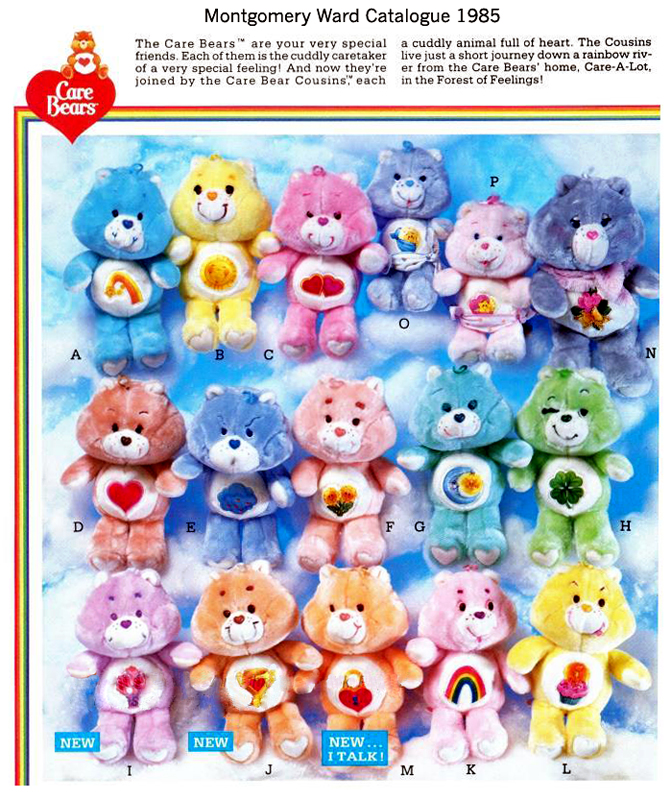
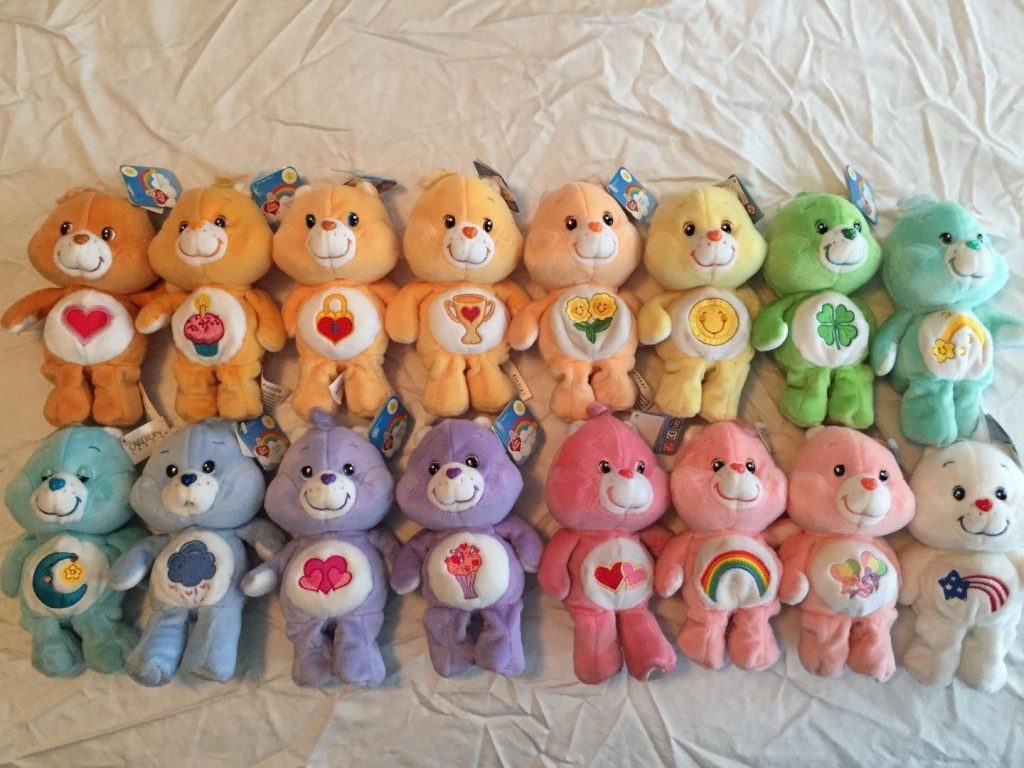
Some toy lines sold one thing well. Care Bears sold a feeling, then wrapped that feeling around a whole aisle. That success stemmed from a strategy designed by American Greetings to connect instantly with children. Every bear had a distinct color identity, an easy to remember name, and a belly symbol that acted like a personal badge.
The original 10 bears established the foundation of the brand. Cheer Bear was bright and upbeat, while Grumpy Bear offered a reluctant charm that felt grounded. Tenderheart Bear served as the classic heart forward lead, and Funshine Bear brought a constant, sunny optimism to the group. Whether it was Bedtime Bear, Good Luck Bear, or Wish Bear, these original 10 bears felt distinct without being difficult to follow.
This merchandising strategy was gold, but it also made emotional sense. Kids could choose a bear that matched their personality, or the personality they wanted to emulate that day. It turned collecting into self-expression on a bedroom shelf. The immense merchandise revenue generated during this era proved how effective this approach was for Kenner toys. As the brand expanded, it introduced the Care Bear Cousins, who hailed from the mystical Forest of Feelings. These new characters were vital in widening the scope of the brand, ensuring that the Forest of Feelings became just as iconic as Cloud-a-Lot.
The broader franchise history shows how quickly the property moved across plush toys, specials, a movie, and television. That spread is a key part of the story, but the timing mattered as well. The 80s were packed with character goods, and Care Bears slid into that world effortlessly. Today, vintage Care Bears remain highly sought after by collectors who remember the quality of these original Kenner toys.
The line also crossed age lines better than most rivals. Younger children loved the soft look of the plush toys, while older kids could still enjoy the cartoon or keep a favorite character on display. Then there was the gift factor. Grandparents understood them, parents appreciated the positive message, and kids wanted them. That created a three-way win that boosted merchandise revenue significantly.
You can see the smart mix now. Plush for cuddling, bedding for the room, and small collectibles for trading. Television provided repeat attention, and a theatrical film offered event excitement. It was a complete ecosystem, and for those who still seek out vintage Care Bears, it remains a defining memory of 80s pop culture.
Why Care Bears Still Hit 80s Kids Right in the Heart
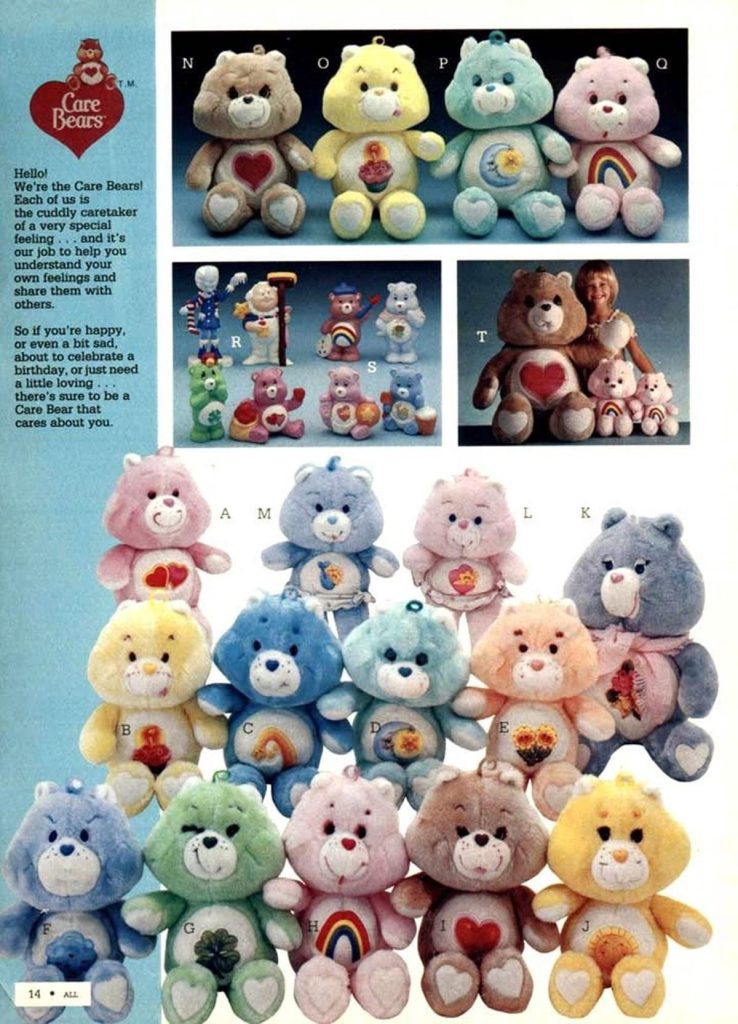
Ask people why they still love Care Bears, and the answer usually is not complicated. They make people feel good. Part of that is visual memory, as those colors still read like an 80s daydream of soft pastels, rainbows, and stars. Part of it is tactile. A lot of nostalgic brands live in the mind, but these plush toys live in the hands. You remember the fur, the unique tummy symbols, and the way a bear sat in the crook of your elbow while watching a Nelvana cartoon.
The emotional core remains the biggest draw. Originally created by American Greetings, the franchise was built on a simple idea: kindness counts and tenderness is a strength. That is a message kids understood then, and adults still appreciate today. From the iconic Care Bear Stare to the introduction of the Care Bear Cousins, the brand always prioritized heart over grit. The charm lies in how unapologetic the show was. In pop culture, sweetness can age poorly, but the design was strong enough to endure.
The longevity of the franchise is also a testament to its modern stewards. Cloudco Entertainment has done an incredible job keeping the legacy alive, ensuring the Care Bear Stare resonates with new generations. When collectors hunt for vintage plush toys, they are often looking for the quality established by early partners and later solidified by the production excellence of Play Along Toys. Whether it is finding a rare version of the Care Bear Cousins or admiring the updated art style from Cloudco Entertainment, fans are reconnecting with a specific mood.
It is a Saturday morning mood, a version of childhood where a bright character with distinctive tummy symbols could fix a bad day. While the production landscape evolved through Nelvana and later Play Along Toys, the soul of the brand remained consistent. Even as Cloudco Entertainment oversees new media, the core values remain intact. Not every 80s property can pull that off decades later, but thanks to the foundation laid by Play Along Toys and the enduring spirit of the original bears, the Care Bears still hit home.
Frequently Asked Questions
Where did the Care Bears originate?
The Care Bears began as greeting card illustrations created by artist Elena Kucharik for American Greetings. Their success as stationery designs led to a collaboration with Kenner toys to create the plush versions that defined the 1980s.
Why were Care Bears so popular in 80s bedrooms?
The bears were designed to double as both toys and room decor, fitting perfectly into the colorful, cozy aesthetic of the era. Their soft, huggable nature made them comforting companions that provided a sense of safety and personalization to a child’s private space.
How did the animated series impact the brand’s success?
The Nelvana animated series gave the bears distinct personalities and voices, transforming them from static plush toys into relatable characters with clear values. This TV presence fueled the popularity of the merchandise, creating a perfect loop where kids watched the bears on Saturday mornings and played with them throughout the day.
What are the Care Bear Cousins?
The Care Bear Cousins were a group of animal characters introduced to expand the brand’s lore beyond the original bears. Hailing from the Forest of Feelings, they played a vital role in broadening the franchise’s world and keeping the merchandise and storylines fresh for young fans.
Some characters were huge in the 80s, then faded once the trend cooled. Care Bears stuck because they lived in two places at once, on the screen and in the room. The journey began with greeting cards from American Greetings and the artistic vision of Elena Kucharik, whose designs brought the original 10 bears to life. These characters soon evolved through Those Characters From Cleveland, eventually leading to the beloved animated TV series produced by Nelvana.
That is the magic people remember. The cartoon gave the bears personality, and the iconic Care Bear Stare proved that goodness could conquer any obstacle within the Kingdom of Caring. Whether viewers were visiting the Forest of Feelings or watching The Care Bears Movie, the connection felt real. Beyond the screen, the merchandise made those personalities part of daily life. For many, the Care Bear Cousins were just as essential as the main crew, and the unique tummy symbols or belly badges made each toy feel special.
Even today, fans celebrate the legacy started by those early greeting cards and the creative brilliance of Elena Kucharik. The Care Bear Stare remains a symbol of optimism, while the Care Bear Cousins continue to remind us of the strength found in friendship. From the work of Nelvana to the expanded lore introduced in The Care Bears Movie, these characters define a generation. Thanks to Those Characters From Cleveland and the enduring appeal of the Kingdom of Caring, the legacy of the original 10 bears lives on. Whether you are revisiting the Forest of Feelings or simply remembering the comfort of a plush toy, the Care Bear Stare remains a timeless piece of childhood. For a lot of 80s kids, the Care Bears and the Care Bear Cousins were not just background decor. They were a vital part of how childhood looked, felt, and softened the edges of the day.