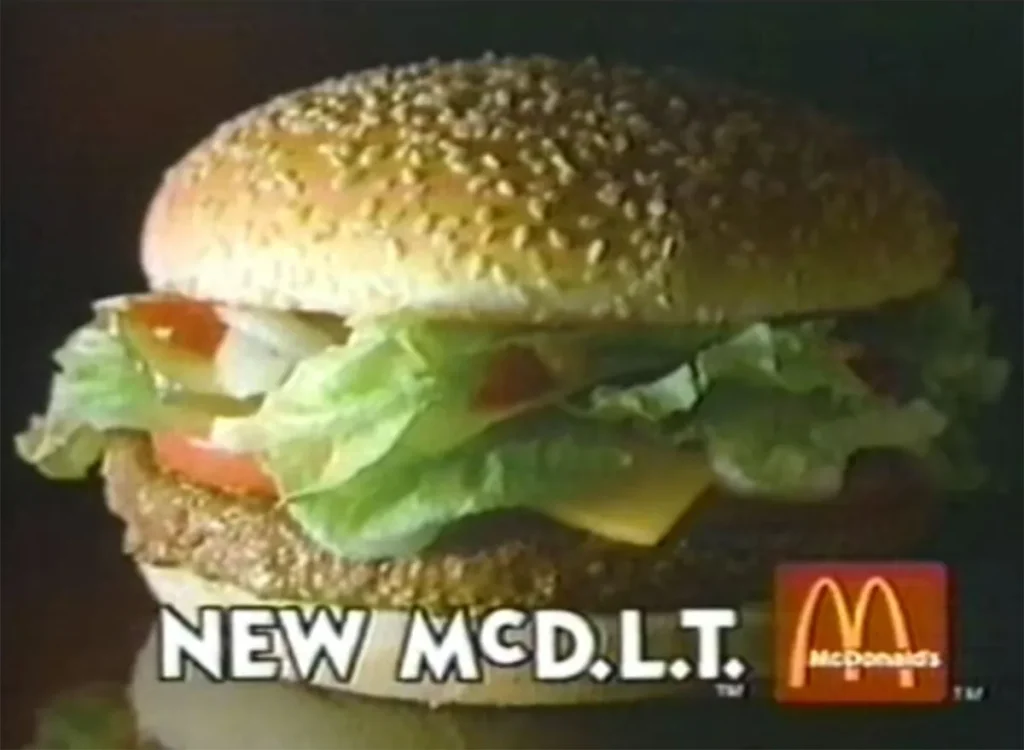
Some fast-food items disappear and stay gone. Others keep living in your head, right next to cartoon theme songs and mall arcade noise. The McDLT is one of those burgers.
If you were a kid in the 1980s, it didn’t feel like lunch alone. It felt like a mini production, a little fast-food magic trick with a hot side, a cool side, and a strange sense that you were part of the assembly team. That’s why people still talk about it.
The Burger That Wanted to Feel Fresher Than Fast Food
The McDLT showed up in the mid-1980s, when fast-food chains were battling over size, freshness, and that backyard-cookout look. This was the era when a burger wasn’t supposed to be only quick. It was supposed to look substantial.
McDonald’s already had the Big Mac, of course, but the McDLT chased a different idea. It aimed for the “real burger” feeling, the kind with lettuce, tomato, cheese, and a bun that didn’t arrive steamed into surrender. It looked more like the burger in a commercial than the burger you usually unwrapped in the car.
That mattered.
For adults, it suggested freshness. For kids, it suggested importance. This wasn’t the tiny burger from the kids’ menu. This was a big-person burger, the kind that seemed a little more grown-up and a lot more exciting.
And the name helped. “McDLT” sounded futuristic in that very 1980s way, like it belonged in a world of digital watches, neon windbreakers, and TVs on rolling carts. It was short, catchy, and weird enough to stick.
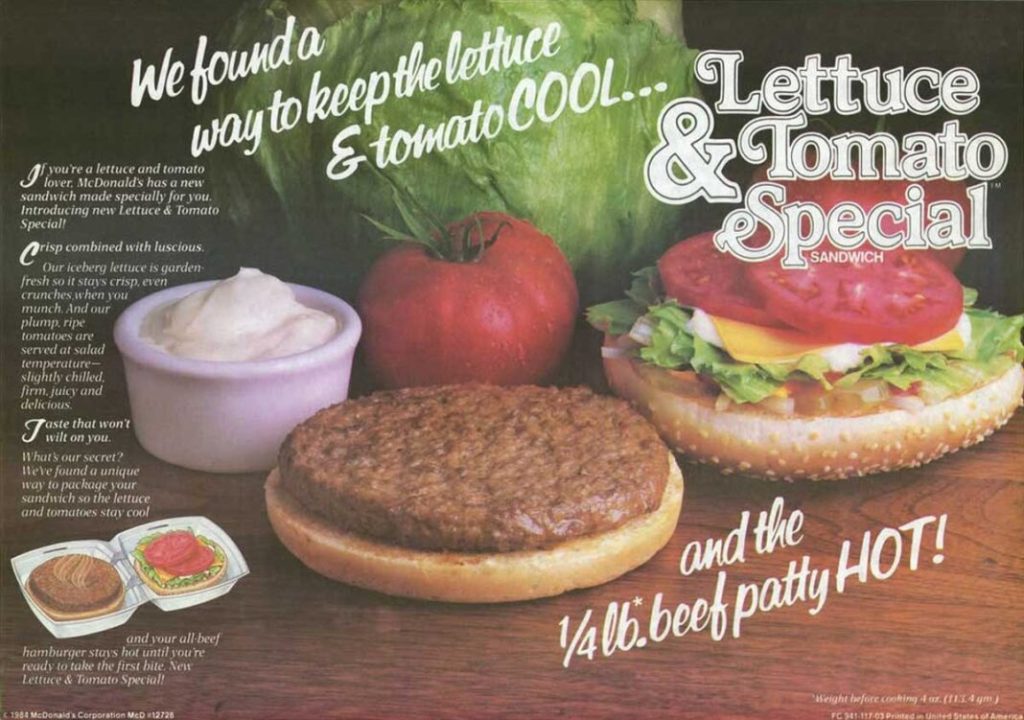
There was also the promise built right into the pitch: hot burger, cold toppings. That sounds obvious now. Back then, it felt almost revolutionary, or at least wonderfully overthought. Nobody wanted wilted lettuce. Nobody wanted a warm tomato slice sliding around like it had given up. The McDLT acted like it had solved a real problem.
Maybe it had.
Or maybe it had simply wrapped an ordinary burger in a better story.
Either way, it worked. The sandwich wasn’t just sold as food. It was sold as a burger with a point of view, and kids noticed that stuff more than adults ever admit.
The Genius, and the Ridiculousness, of the Split Container
The whole McDLT concept rested on its container. Without the packaging, it was a dressed burger. With the packaging, it became a showpiece.
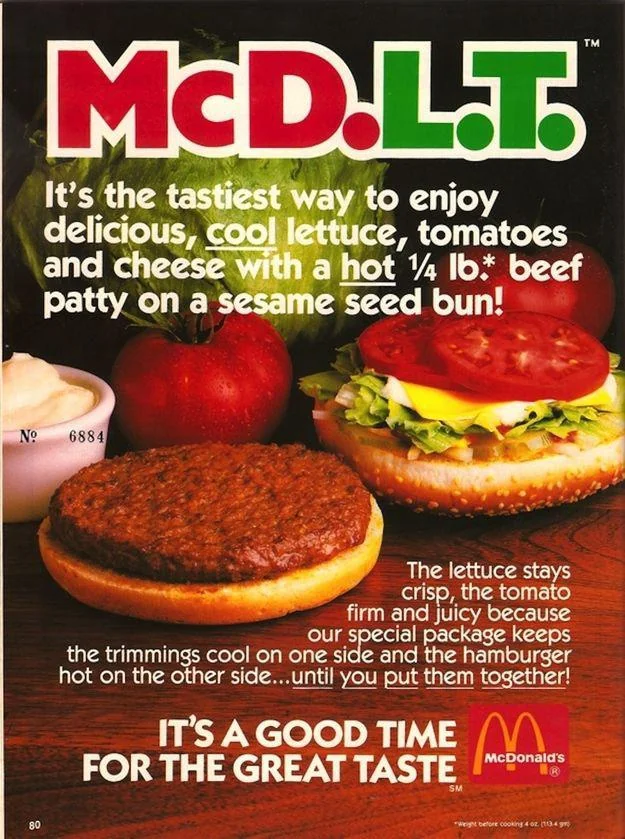
One side of the foam box held the hot part, the beef patty and bottom bun. The other side held the cool part, the top bun, lettuce, tomato, cheese, pickles, and sauce. You were supposed to fold or flip the cool side onto the hot side right before eating.
Here’s the basic setup:
| Side | What it held | Why it mattered |
|---|---|---|
| Hot side | Beef patty and bottom bun | Kept the burger warm |
| Cool side | Top bun, lettuce, tomato, cheese, pickles, sauces | Kept toppings crisp and cool |
That was the whole trick, and it was a good one.
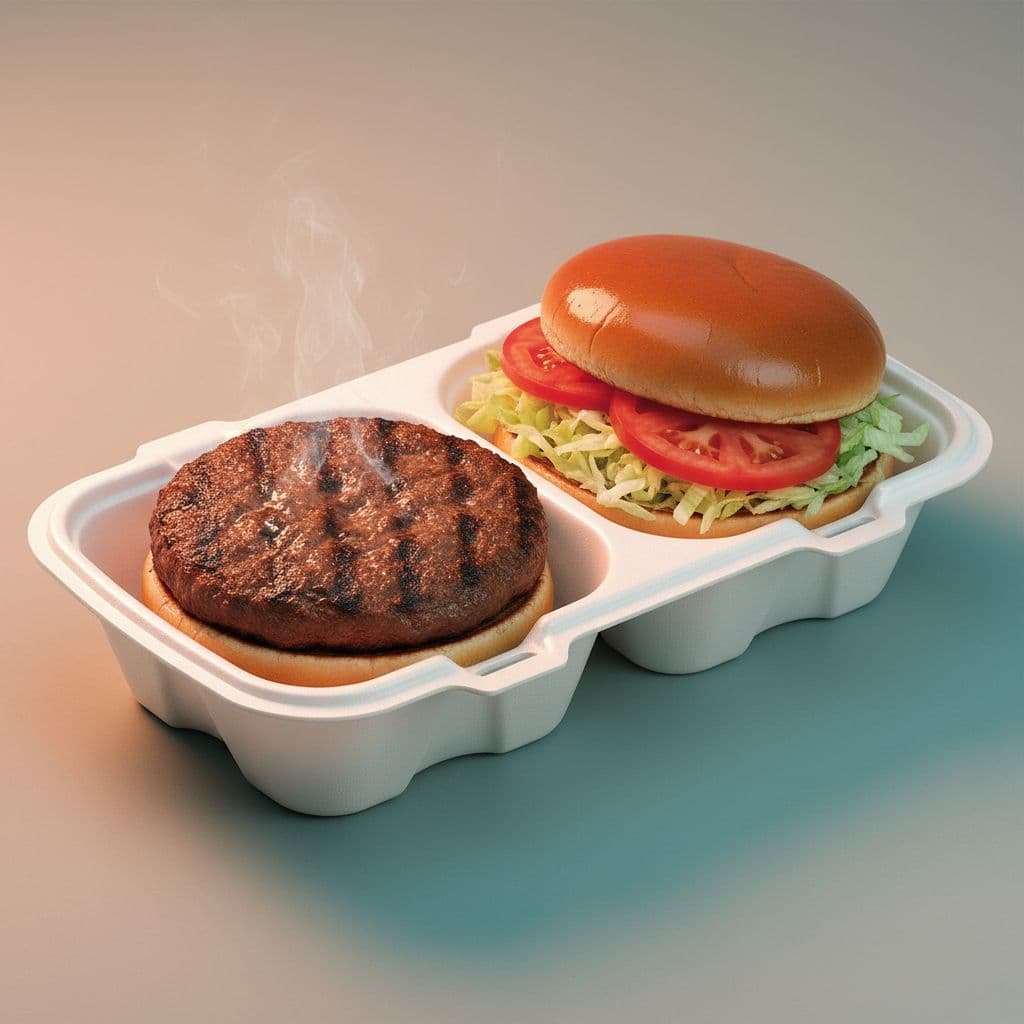
It also had a touch of glorious nonsense. You weren’t only eating a burger. You were participating in a process. Half lunch, half chemistry demo.
“Keep the hot side hot, and the cool side cool.”
That slogan became the whole identity of the sandwich. A fun Serious Eats look back at the McDLT captures how much of the appeal came down to temperature, theater, and that oversized two-part shell.
And yes, the shell was big. Really big. Even by 1980s fast-food standards, the polystyrene container looked like a lot of packaging for one burger. But in the moment, especially as a kid, that wasn’t the first thing you noticed. What you noticed was that this burger came with a system.
There was a tiny ritual to it. Open box. Inspect burger. Fold it together. Take the bite.
That ritual is a huge part of why the McDLT stuck in people’s memories. Routine meals disappear. Little ceremonies don’t.
Why the McDLT Felt So Big to Kids and Families
Kids remember feelings first. Then they remember flavors. The McDLT had a feeling.
It felt special because it asked something from you. Most fast food arrives finished. The McDLT handed over the final step. That gave it the kind of interactivity kids love, even if it was nothing more than folding lettuce and tomato onto a patty. In a child’s mind, that can feel like ownership.
It also felt bigger than life in the car seat. The container was wide, the burger looked neat and stacked, and the produce looked bright instead of flattened. That sounds small, but visual memory is half the game with old fast-food nostalgia. You remember what looked exciting in your lap.
Families had their reasons, too. The pitch was easy to understand. Hot stays hot. Cool stays cool. No soggy lettuce. No sad, steamed tomato. Even if the difference wasn’t life-changing, the promise made sense at a glance.
Then there were the commercials.
A 1985 ad with a pre-“Seinfeld” Jason Alexander turned the whole thing into a catchy song-and-dance number, which is about as 1980s as it gets. If you want the quick nostalgia hit, the basic McDLT history sums up the sandwich, the packaging, and that famous ad campaign in one place.
Commercials matter because they teach you how to remember a product. The McDLT ads said this burger was fun, clever, and a little flashy. So that’s how people stored it.
And once a food gets tied to a jingle, a car ride, a parent handing it back from the front seat, or that feeling of getting something “more adult” than usual, it stops being only a menu item. It becomes a time capsule.
That’s why the McDLT still gets talked about with a kind of fond disbelief. Not because it was the greatest burger ever made. Because it was specific. It had a gimmick, a look, and a ritual, and those things glue themselves to childhood memory.
Why the Foam Container Became a Problem
The same packaging that made the McDLT memorable also boxed it into a corner.
By the late 1980s and early 1990s, foam containers were drawing more criticism for waste and environmental impact. The McDLT’s giant polystyrene shell, once sold as clever engineering, started to look excessive. McDonald’s linked the sandwich’s end to its move away from that kind of packaging, and that reason remains the clearest one attached to the burger’s disappearance.
That makes sense. The container wasn’t an accessory. It was the product concept. Take away the split foam box and the whole “hot side/cool side” promise gets harder to pull off.
There were practical issues, too. The burger asked for special packaging, more space, and a slightly more elaborate handoff than a standard sandwich. In a fast-food setting, simplicity usually wins. The McDLT was simple to eat, once assembled, but it wasn’t as simple to build an identity around once the packaging became a liability.
A quick Everything 80s Podcast recap of the McDLT hits that same tension, the burger was fun, but the foam container became harder to defend.
And that’s how certain foods turn into legends. They don’t fade because nobody cared. They fade because the world around them changes, and suddenly their weird little brilliance no longer fits.
You see that same pattern with other lost favorites. The longing people still feel for the McDLT isn’t far off from the affection behind Marathon Bar 80s candy, another snack that survives mostly through memory, stories, and the occasional “why did they stop making that?” conversation.
The McDLT became a perfect nostalgia object for that reason. It was smart, a little clunky, very of its moment, and impossible to separate from the era that made it.
The McDLT lasted a short time, but it made a huge impression. Kids remember the folding box, the bright toppings, the jingle, and that odd little sense that this burger was doing something special.
What stays with people isn’t only the taste. It’s the ritual, the packaging, the car ride, the commercial, the whole McDLT experience.
Some foods fill you up and disappear. This one left a story behind.
One last piece of trivia for puzzle fans: the McDLT is the five-letter answer to the “iconic 1980s burger” crossword clue. Even the puzzle makers agree it belongs in the 80s hall of fame.