Say “Labyrinth David Bowie” to an 80s movie fan and watch what happens. Somebody will do the “Magic Dance” shoulder shuffle. Somebody else will whisper, “You have no power over me,” like they’re back in front of the VCR.
Jim Henson’s 1986 musical fantasy film didn’t become beloved because it was perfect. It became beloved because it was strange, beautiful, a little scary, and packed with things no other movie had. At the center of that glittering weirdness was David Bowie as Jareth, the Goblin King, facing Sarah Williams.
His entrance alone tells you this isn’t going to be an ordinary fairy tale.
Key Takeaways
- David Bowie made Jareth unforgettable by combining glam-rock theatricality, charm, menace, and perfectly committed absurdity.
- Labyrinth‘s practical puppets, handmade creatures, shifting sets, and Brian Froud-inspired designs give its fantasy world a tangible, living quality.
- Bowie’s songs, including “Magic Dance,” “As the World Falls Down,” and “Underground,” are woven into the story and reveal different sides of the Goblin King.
- Sarah’s journey is more than a trip through a maze: it is a coming-of-age story about responsibility, temptation, and refusing to surrender her choices.
- Though the film disappointed at the box office in 1986, VHS, television, and fan devotion turned Labyrinth into an enduring cult favorite.
Labyrinth David Bowie: Why Jareth Never Fades
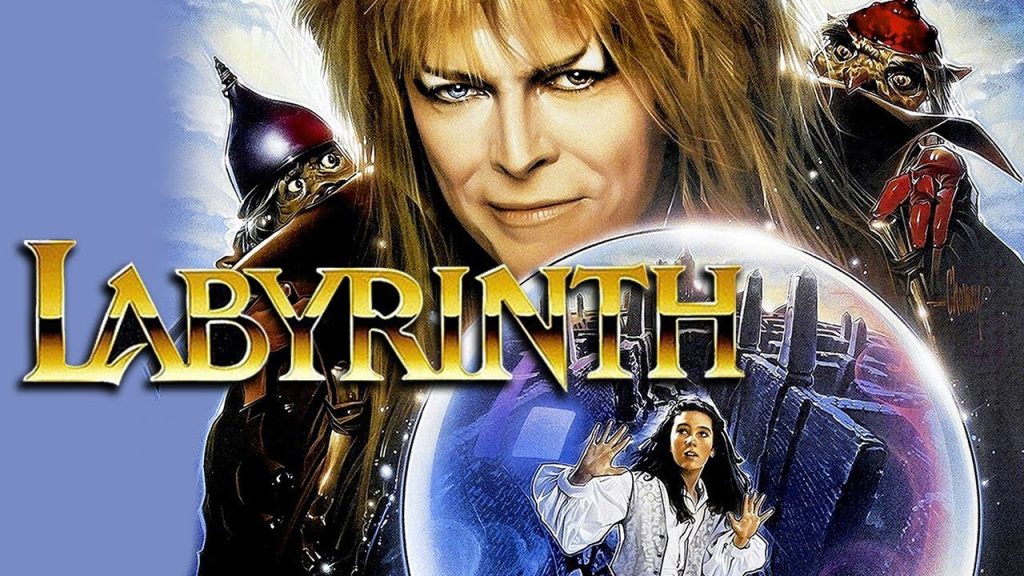
Jareth could have been a standard storybook bad guy, all growling threats and black capes. Bowie gave him something far more fun. He is elegant, petty, seductive, ridiculous, threatening, and fully aware that he looks fantastic while floating a crystal ball in his palm, a flourish built through contact juggling with Michael Moschen supplying the hand manipulation.
No public explanation reduces Bowie’s decision to play Jareth to one tidy reason. What is clear is that the part let him combine the things he did best: character work, theatricality, music, and a camera-ready sense of danger.
He Plays the Villain Like a Rock Star
Bowie had spent years creating larger-than-life stage identities, from Ziggy Stardust to the Thin White Duke. Jareth isn’t one of those personas in a costume, but the same confidence is there. He doesn’t stomp around the Goblin City demanding respect. He expects it.
That choice is why his scenes pop. When Jareth offers Sarah a life without responsibility, he sounds almost reasonable for a moment. In this fantasy film, the polished charm soon feels like a trap.
Jareth promises Sarah freedom from responsibility, then turns that freedom into another cage.
Bowie understood the joke, too. The party number is full-on goblin chaos, complete with a baby, a roomful of creatures, and lyrics that are cheerfully bonkers. He commits to every second. No wink needed.
The Hair, the Coats, the Whole Goblin King Package
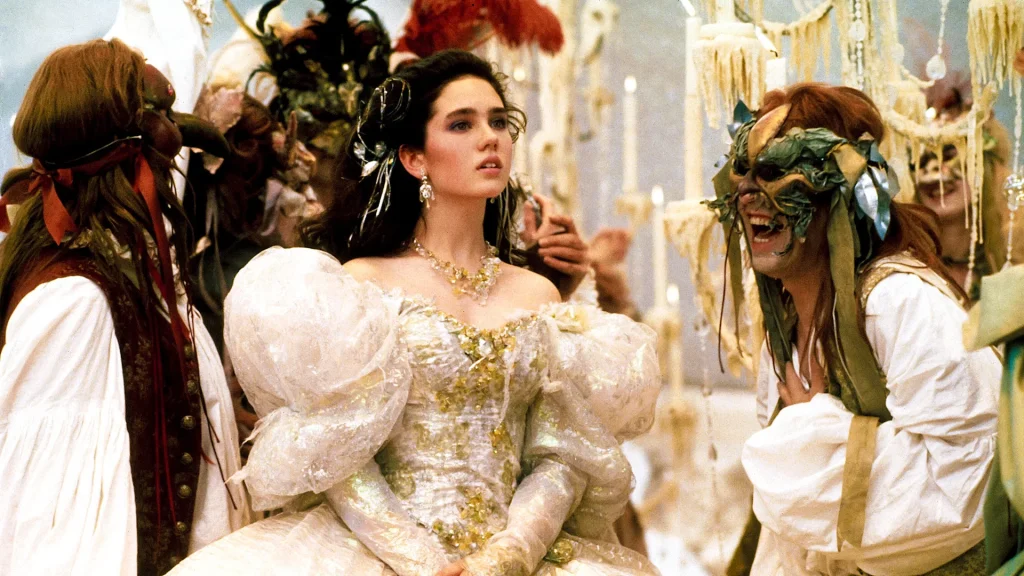
Let’s not pretend the visual side didn’t help. Jareth arrives with towering blond hair, dramatic makeup, fitted coats, boots, jewelry, and trousers that have inspired decades of raised eyebrows, all especially effective at the Masquerade Ball. The style is pure 80s excess, but it belongs in this off-kilter fairy-tale world.
Bowie’s physical presence makes Jareth feel unreal in the right way. He’s too polished for the grimy goblins around him, too glamorous for a damp maze, and too composed to be trusted. That contrast is the magic trick.
Jim Henson Built a Maze You Could Almost Touch
Labyrinth began after Jim Henson and fantasy artist Brian Froud worked together on The Dark Crystal. Henson wanted another fantasy picture, but not a repeat. Brian Froud’s strange sketches and folklore-heavy imagination gave the new film its personality.
George Lucas was executive producer on the Henson production with Lucasfilm Ltd. Terry Jones wrote the released screenplay from a story by Henson and poet Dennis Lee, while Elaine May contributed uncredited work during the long drafting process. You can see the movie’s many voices in it, for better and for weirdness.
Brian Froud’s Fairy Tales Have Teeth
The film borrows the feel of old European folklore, Victorian storybooks, nursery rhymes, and dreams that get a little too intense after midnight. Its creatures aren’t sleek fantasy heroes. They’re lumpy, grumpy, hairy, horned, and sometimes gloriously useless.
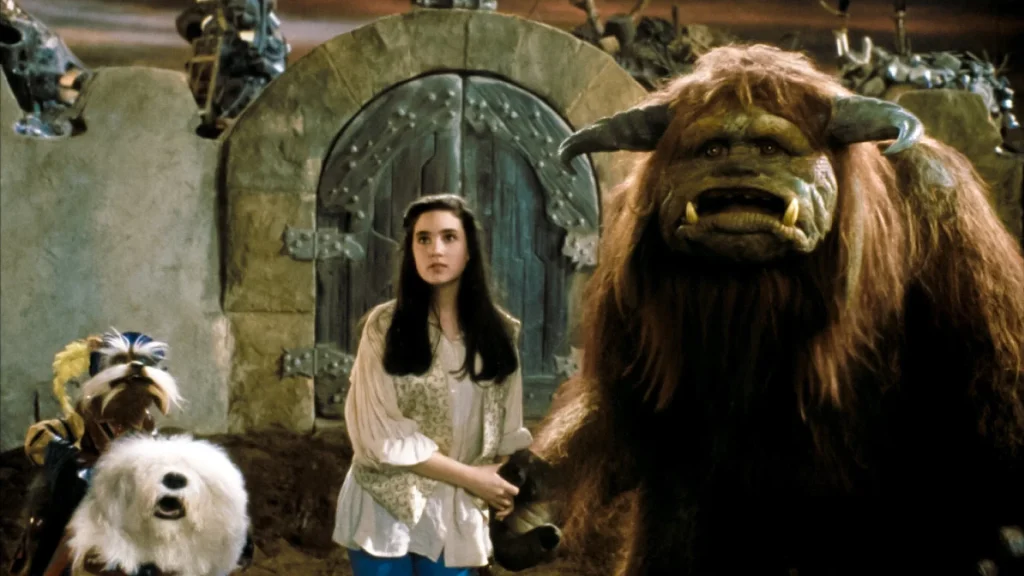
Hoggle looks like he’d sell you a cursed turnip. Ludo is a giant, shaggy sweetheart. Sir Didymus is a tiny knight with the confidence of a man twice his size and a dog named Ambrosius who has seen things.
Production designer Elliot Scott gave Brian Froud’s concepts a physical home at Elstree Studios. The maze shifts. Stairs bend into impossible angles. Doors lie. Even the floor can turn against Sarah. Practical sets and special visual effects work together, but the maze still feels built.
The Puppets Are Co-Stars, Not Decorations
Henson’s puppet creatures are co-stars, not decorations, and his crew earns a standing ovation. The Jim Henson Creature Shop coordinated remote puppeteers with performers inside creature suits, giving Hoggle’s face movement, timing, and personality.
The behind-the-scenes look at Labyrinth shows how remote puppeteers, creature-suit performers, and builders worked together. These weren’t easy little hand puppets, and every grin, blink, stumble, and goblin panic took careful coordination.
That handmade quality is why the Bog of Eternal Stench, the Fireys, and the Goblin City still feel so alive. You can almost smell the foam rubber, paint, dust, and studio lights. That’s a compliment in a fantasy film.
Bowie’s Songs Give the Movie Its Pulse
The Trevor Jones score supplies Labyrinth‘s orchestral foundation, but David Bowie’s songs give the movie its electric charge. They don’t sit politely in the background. They tell you what kind of fantasy film you’re watching.
The film’s cast and music credits highlight the unusual soundtrack album. It pairs original songs from a genuine pop star with orchestral music woven into the story.
“Magic Dance” Is Pure 80s Sugar Rush
“Magic Dance” is the song most people remember first, and fair enough. Bowie sings, goblins bounce, baby Toby giggles, and Jareth turns a kidnapping into a weirdly catchy cabaret number. It is nonsense. It is also impossible to forget.
“Underground” frames the film with a restless pop beat and a promise of escape. “As the World Falls Down” turns the Masquerade Ball into a dreamy, uneasy slow dance. “Within You” lands during Jareth’s final attempt to break Sarah’s will.
Each song reveals another side of him. The upbeat showman. The lonely romantic. The furious king who can’t believe a teenage girl might say no.
The Music Never Lets Jareth Become Ordinary
A lesser movie might have treated Bowie as a guest star and asked him to sing one song over the end credits. Labyrinth puts the music inside the character. Jareth performs because performance is his weapon.
That decision gives the movie an odd emotional range, as the Masquerade Ball moves from spectacle to intimate unease. One minute you’re laughing at goblin choreography. The next, Bowie is singing a fragile ballad under a sky full of stars. That is a lot to ask from one movie, and somehow it sticks.
Sarah’s Story Has More Bite Than It First Appears
Jennifer Connelly plays Sarah Williams as a teenager who is bored, angry, dramatic, and fed up with babysitting her baby brother Toby. When she wishes the goblins would take him away, the fantasy starts. So does the guilt.
The movie never claims Sarah is perfect. Thank goodness. As a coming-of-age story, this fantasy film makes her mistakes part of her emotional growth, so the journey feels earned.
Jennifer Connelly Keeps Sarah Williams Grounded
She was a teenager when she made the film, and her direct performance holds the whole candy-colored production together. Around her, walls talk, goblins sing, and a worm in a scarf offers confusing directions. Sarah has to react like a real person.
Jareth Wants Her to Stay a Child
Sarah’s adventure is full of tempting escapes. The Junk Lady offers endless stuff. The Masquerade Ball offers romantic fantasy, tempting Sarah to escape responsibility. Jareth offers a world where she can hand over her choices and let someone else rule.
That makes the film’s finale land harder than its playful tone suggests. Sarah doesn’t defeat Jareth with a sword. She names his power for what it is and refuses it.
The dark heart of Sarah’s childhood is part of why the movie has held up for adult viewers. It gives a teenage girl room to be selfish, frightened, imaginative, and finally stronger.
Her final scene also changes the movie’s mood. She returns home, but the fantasy hasn’t vanished. Hoggle, Ludo, Sir Didymus, and the gang are still there when she needs them. Childhood isn’t discarded. It just stops running the show.
How a Box Office Miss Became an 80s Favorite
The fantasy film Labyrinth opened in the United States on June 27, 1986, with TriStar Pictures as its distributor. It earned about $12.9 million in North America against a reported $25 million production budget, and early reviews were mixed. Critics praised its special visual effects and visual imagination, while some found the story messy.
The film’s release and box-office history makes its early commercial disappointment plain, but calling it a box office bomb is too simple. Even George Lucas’s executive-producer credit, alongside Henson’s name, couldn’t guarantee an immediate hit. It wasn’t an instant smash on the scale of E.T. or Back to the Future.
VHS Gave the Maze Another Life
Then came VHS, cable television, repeat viewings, and a generation of kids who found the movie at home. You could pause on the goblins. You could replay the songs. You could argue with friends about whether the Fireys were hilarious or nightmare fuel.
That kind of movie grows through repetition. Its odd details become familiar. Its flaws become part of the texture. And Bowie, already unforgettable, became permanently tied to a crystal ball and a kingdom of goblins.
Jim Henson had already proved that music and puppets could carry real emotion in Fraggle Rock‘s magical world of puppets. Labyrinth took that idea somewhere darker, louder, and much more glam.
The Cult Following Makes Perfect Sense
Today’s cult following has kept the film alive through costumes, fan art, conventions, music covers, comics, and endless Jareth impressions. It isn’t nostalgia alone. The movie offers an entire mood: painted skies, crooked corridors, theatrical pop songs, and creatures with more personality than most human sidekicks.
For 80s kids, it also carries a particular charge. It recalls a time when mainstream movies could be expensive, ambitious, and wonderfully peculiar.
Frequently Asked Questions
Why is David Bowie so memorable as Jareth?
David Bowie brings Jareth his trademark theatrical confidence, musicality, glamour, and danger. He plays the Goblin King as both ridiculous and threatening, which makes the character impossible to reduce to a standard fairy-tale villain.
What songs did David Bowie perform in Labyrinth?
Bowie performs several original songs, including “Magic Dance,” “Underground,” “As the World Falls Down,” and “Within You.” Each one adds to the story by showing another side of Jareth, from playful showman to lonely and furious king.
Was Labyrinth successful when it was released?
No, the film earned about $12.9 million in North America against a reported $25 million production budget, and its early reviews were mixed. VHS, cable television, and repeat viewings later helped it grow into a beloved cult classic.
What does Jareth represent in Sarah’s story?
Jareth represents tempting escapes from responsibility and the danger of letting someone else control your choices. Sarah defeats his influence by recognizing his power and refusing to give in to it.
The Goblin King Still Has the Last Word
Labyrinth didn’t need to be a box-office winner to matter. Its long life comes from Jim Henson’s tangible fantasy and Sarah Williams’s sharp-hearted agency. It also comes from David Bowie’s willingness to make Jareth strange instead of safe.
Bowie made the Goblin King unforgettable because he treated every crystal-ball flourish, every song, and every ridiculous goblin as worthy of total commitment.
And somewhere, a worm is still telling you to come inside and meet the missus.