
Some movies leave you with a favorite scene. The Breakfast Club leaves you reciting a whole Saturday, even if you never spent one in detention.
Released in 1985, The Breakfast Club turns a locked school library into an arena where Saturday detention traps five students. John Hughes gave us a coming-of-age teen film with one location and five kids, plus a soundtrack that helped its quotable attitude last four decades. The closing soundtrack connection to Simple Minds and “Don’t You (Forget About Me)” made the final moments unforgettable.
Key Takeaways
- The Breakfast Club brings five students from opposing high school cliques together in Saturday detention, where their labels gradually give way to more complicated truths.
- John Hughes made a small, one-location coming-of-age movie feel emotionally huge through messy dialogue, sharp character writing, and a focus on teenage vulnerability.
- The film’s final letter, raised fist, and Simple Minds’ “Don’t You (Forget About Me)” became one of the most recognizable endings in 1980s cinema.
- Its cultural impact remains strong, even as modern viewers re-examine Bender’s treatment of Claire, Allison’s makeover, and the film’s dated assumptions.
- The Breakfast Club endures because it understands the fear beneath teenage performance and reminds us that nobody is only the role they play at school.
The Breakfast Club Puts Five Cliques in One Room
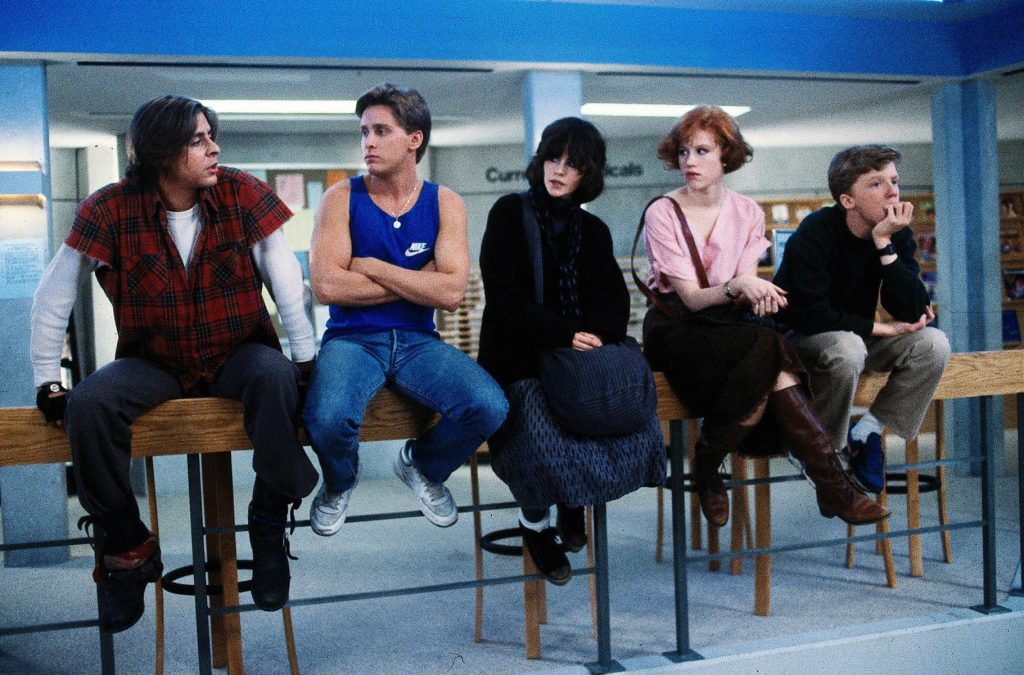
The plot is deliciously simple. The Breakfast Club puts five Shermer High School students from different corners into Saturday detention under Vice Principal Richard Vernon. Their assignment is to write an essay explaining who they think they are.
Instead, The Breakfast Club lets them peel off the labels that brought them there. There are jokes, fights, a little dancing, a lot of teenage posturing, and late-afternoon confessions that make the movie hit harder than its fluffy-looking premise suggests. The soundtrack eventually turns that buildup into an emotional payoff with Simple Minds’ ‘Don’t You (Forget About Me)’.
Five Labels, Five Real People
Brian Johnson, played by Anthony Michael Hall, is the brain. Andrew Clark, played by Emilio Estevez, is the wrestler. Molly Ringwald plays Claire Standish, the princess. Ally Sheedy plays Allison Reynolds, the basket case. Judd Nelson plays John Bender, the criminal.
On paper, that sounds like the most 1980s lineup imaginable, with high school cliques reinforced by peer pressure. Yet John Hughes lets each character crack open. Claire has money but little freedom. Andrew carries the crushing need to please his father. Brian is terrified of failure. Allison hides behind strange behavior. Bender turns cruelty into armor.
The movie’s sharpest idea is that cliques do not disappear when detention ends. They just look less solid once you hear the person inside the label.
Why Each Teen Landed in Detention
The Breakfast Club makes the reasons for their detention ridiculous, painful, and revealing in equal measure:
- Andrew taped fellow student Larry Lester’s buttocks together as a macho prank.
- Claire skipped school so she could go shopping.
- Bender pulled a fire alarm.
- Brian brought a flare gun to school during a crisis over his grades.
- Allison says she did nothing wrong. She simply had nowhere else to be.
That last one still lands with a little thud. Allison’s joke is funny, but it also tells you plenty about how lonely a Saturday can feel.
Why The Breakfast Club Became the Teen Movie Everyone Quoted
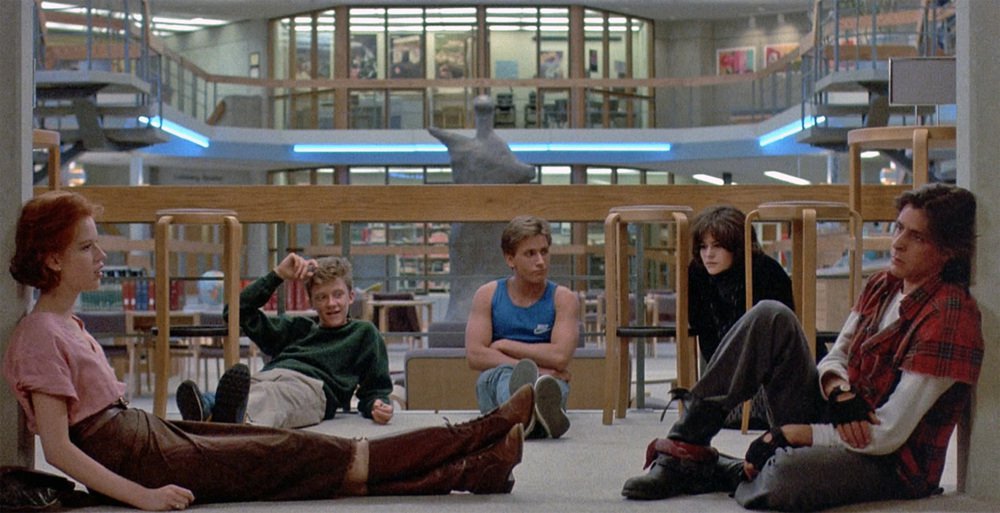
A lot of coming-of-age movies have catchphrases. The Breakfast Club has lines people borrow because they sound like something they wished they had said at 16.
Bender’s “Eat my shorts” has the perfect amount of reckless swagger. The final letter’s description of “a brain, an athlete, a basket case, a princess, and a criminal” is not just a tidy roll call. It gives viewers names for the roles high school assigns before they have much say, especially under peer pressure.
The Dialogue Has Teeth
Nobody in the movie speaks like a polished sitcom teenager. They interrupt, exaggerate, lie, needle each other, then blurt out something far too honest. That messy emotional honesty is the trick.
Memorable quotes carry feelings in small packages, and The Breakfast Club keeps them moving. Bender’s insults are funny because he aims them like darts, while Brian cannot stop explaining. Claire’s cool-girl defenses wobble when somebody pushes too hard.
The lines work at sleepovers, in school hallways, and now in group chats because they are portable. You do not need the entire scene to understand the mood. A few words say: “I am annoyed, I am scared, I am trying to look tougher than I feel.”
The Final Letter Changes the Whole Day
The closing narration is the movie’s knockout punch. Brian writes to Mr. Vernon. The Breakfast Club turns his note into a reply to adults who reduce teens to labels.
Then comes that raised fist, that freeze-frame, and Simple Minds singing “Don’t You (Forget About Me)” on the soundtrack. That soundtrack moment makes the song, image, and narration feel inseparable, with Simple Minds’ “Don’t You (Forget About Me)” at its center. The ending does not promise that Monday will fix everything. It offers something smaller and sweeter: for one day, they saw one another clearly.
John Hughes Made a Small Movie Feel Huge
John Hughes wrote, directed, and produced The Breakfast Club, which Universal Pictures released in the United States on February 15, 1985. The film’s credited cast and production details read like a snapshot of peak 80s teen cinema.
Hughes had already struck gold with Sixteen Candles, but his one-location choice gave this film a different flavor. It’s less about getting the guy or surviving a party. It’s about being trapped in a room where nobody can keep up the act forever.
Shermer High School Was a Real Illinois School
The The Breakfast Club‘s fictional campus feels lived-in because much of it was filmed at Maine North High School. Maine North High School supplied the brick halls, institutional windows, and suburban-school texture the story needed.
The library was too small for the cameras. Production built its larger version inside Maine North High School’s gymnasium. Filming at Maine North High School in Des Plaines, Illinois, added the grounded suburban setting Hughes needed.
A Million-Dollar Bet That Paid Off
The Film Independent look at the production calls it a shoestring $1 million picture. There are no explosions, exotic locations, or giant action sequences to hide behind.
The gamble paid off at the box office. Universal Pictures handled the modestly budgeted film’s distribution. The Breakfast Club reached a commonly reported worldwide box office total of $51.5 million, a figure captured in the film’s box-office overview.
The soundtrack features Simple Minds’ Don’t You (Forget About Me), a song closely associated with the film’s closing moments. That connection gave Simple Minds a lasting place in the film’s memory, while Don’t You (Forget About Me) still evokes its era. Rotten Tomatoes’ continuing listing reflects that afterlife and its status as a classic 1980s film.
The Brat Pack Energy Was Real, Even If the Label Was Messy
The Breakfast Club is often filed under the Brat Pack banner, and it is easy to see why. Emilio Estevez, Judd Nelson, Ringwald, Sheedy, and Hall had the faces, fashion, and on-screen electricity that made 80s teen movies feel like a whole universe. The film’s soundtrack, especially Simple Minds’ “Don’t You (Forget About Me),” helped make that universe last beyond the classroom.
Still, the label can flatten what makes their work different. Estevez gives Andrew a scared softness under all that athlete confidence. Nelson makes Bender funny, threatening, and wounded in the same breath. Hall lets Brian be anxious without making him a punchline, while Simple Minds’ enduring association with the film keeps its 1980s memory vivid. That blend is why The Breakfast Club still feels like a coming-of-age story, not a lineup of types.
Molly Ringwald Gives Claire More Than a Perfect Outfit
Ringwald could have played Claire as a one-note rich girl in a pink gloss. Instead, she lets you see the pressure behind the polished hair and perfect boots. Her discomfort with Bender is real, and so is her frustration with being treated like a prize.
For more of that star-power magic, revisit Molly Ringwald’s 80s teen movie roles. She was not merely the face of a decade. She made guarded characters feel like people you knew.
Simple Minds Turned the Ending Into a Memory
“Don’t You (Forget About Me)” was not background music. Simple Minds made it the emotional receipt for The Breakfast Club.
The song became the movie’s emotional soundtrack, carrying the room’s fragile honesty into the world outside.
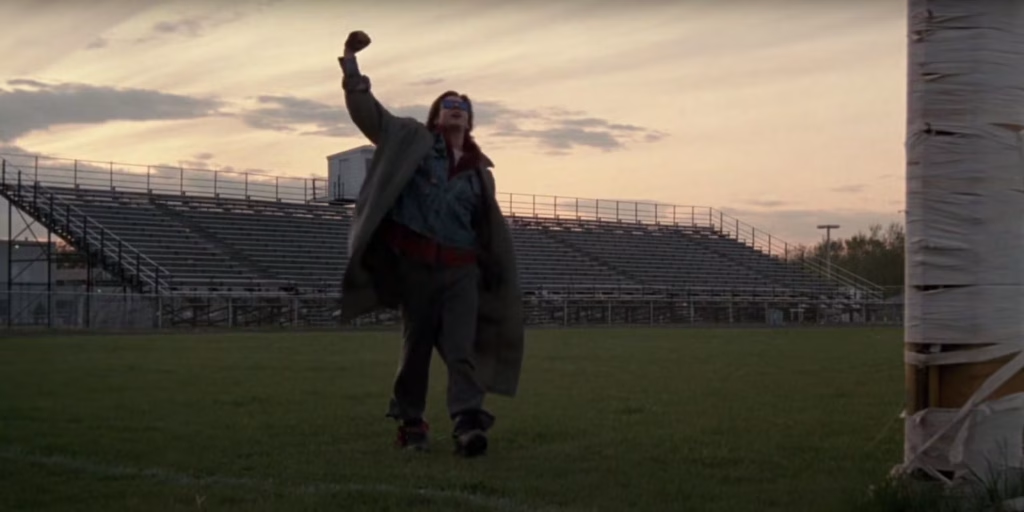
Simple Minds gave the closing scene a pulse that never seems to age. In The Breakfast Club, Bender’s walk across the football field lets the soundtrack and image move together. As “Don’t You (Forget About Me)” rises, one raised fist becomes a declaration.
Why That Song Still Hits
The title feels like a plea from every character. “Don’t You (Forget About Me)” asks the audience to remember who they were before anyone decided what they were.
Simple Minds turn that plea into something direct and communal. The song also gives the movie’s soundtrack its lasting identity, pairing teenage hurt with a bright, forward-driving release.
That is why the track became bigger than a soundtrack cut. The soundtrack still works as a nostalgic shortcut at an 80s party, where The Breakfast Club appears through lockers, detention, black gloves, tousled hair, and a Saturday that suddenly felt important.
Years later, Simple Minds and “Don’t You (Forget About Me)” still carry that Saturday into memory.
The Parts We Can’t Put Back in the Time Capsule
Loving an 80s favorite does not require airbrushing it. The Breakfast Club still has rough edges, and some are more than a little rough.
Bender and Claire Need a Modern Re-Read
In The Breakfast Club, Bender’s treatment of Claire includes sexual harassment and intimidation. The film frames much of it as provocative banter, then gives the pair a romantic ending without asking him to repair the harm.
That dynamic played differently in 1985. Today, it is hard to watch without wishing Claire had more control and Bender had been held accountable. Peer pressure shadows Claire’s pairing with Bender, making conformity seem part of the film’s idea of acceptance. The film understands his pain, but even Simple Minds’ emotional ending can’t make pain a free pass.
Allison’s Makeover Is Still a Complicated Moment
In The Breakfast Club, Allison begins as the most mysterious person in the room. By the end, her dramatic makeover and pairing with Andrew suggest that acceptance arrives when she looks more conventionally pretty.
It is a lovely visual moment, but it also shrinks her. The film’s suburban, mostly white frame carries dated stereotyping and assumptions that limit its promise of seeing everyone beyond the surface. Those limits do not erase its heart. They make the conversation around it more honest.
Frequently Asked Questions
What is The Breakfast Club about?
The Breakfast Club follows five Shermer High School students from different social groups during Saturday detention. As they spend the day together, they begin to question the labels and expectations placed on them.
Who are the five students in The Breakfast Club?
The group includes Brian Johnson, the brain; Andrew Clark, the athlete; Claire Standish, the princess; Allison Reynolds, the basket case; and John Bender, the criminal. Each character gradually reveals the fears and pressures hidden beneath that label.
Why is “Don’t You (Forget About Me)” important to the film?
Simple Minds’ song plays over the closing moments, accompanying Bender’s walk across the football field and his raised fist. Its emotional connection to the ending helped make the song and the film inseparable in popular memory.
Is The Breakfast Club still relevant today?
The film remains relevant because its themes of peer pressure, loneliness, parental expectations, and the need to be understood still resonate. However, its treatment of harassment, romance, appearance, and social identity also deserves a more critical modern reading.
Why We Still Return to Shermer High
The Breakfast Club lasts because it understands the teenage urge to act invincible while hoping somebody notices the fear underneath. Its jokes still pop, and its five kids remain recognizable whenever viewers mentally return to Shermer High School.
That coming-of-age insight keeps The Breakfast Club familiar, even to people who have outgrown high school but remember needing to be seen. John Hughes understood that adolescent performance often hides fear, not certainty.
The movie is not perfect, and it doesn’t need to be. The Breakfast Club’s soundtrack keeps its emotional memory alive, with Simple Minds’ “Don’t You (Forget About Me)” turning the raised fist into a shared signal.
Simple Minds gave the soundtrack a pulse that still feels triumphant and tender, while “Don’t You (Forget About Me)” preserves the scene’s open-ended hope. That soundtrack carries the feeling beyond the film, proving music can preserve emotion more vividly than plot.
The Breakfast Club reminds us that nobody is only the part they play at lunch.