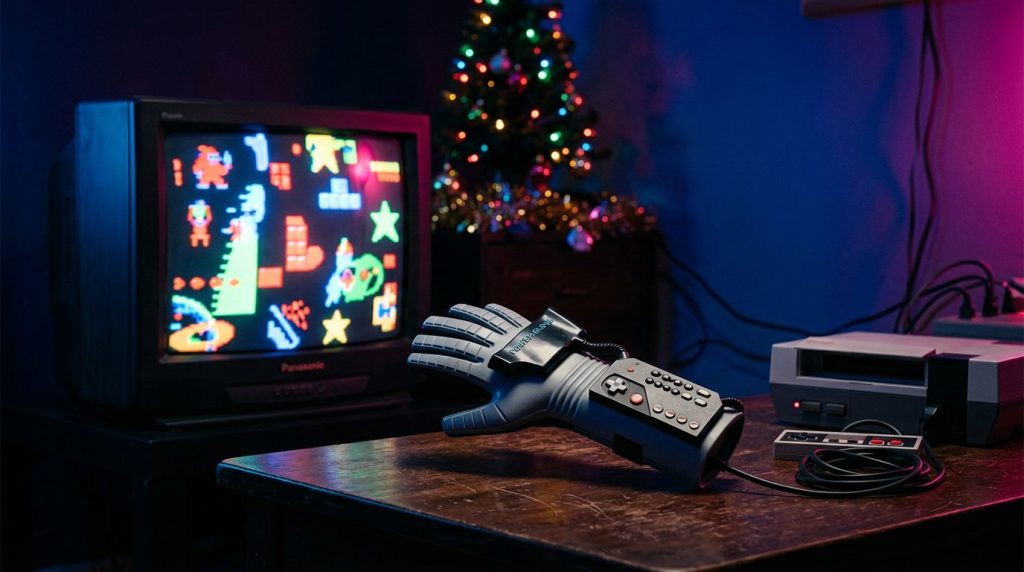
The future arrived in 1989 wearing gray plastic, a black keypad, and enough attitude to make every kid feel like they belonged in a sci-fi movie. The Nintendo Power Glove looked less like a standard video game controller and more like forbidden equipment from a secret arcade laboratory, especially when you ordered it in size large to fit your older brother or teenage self.
That was the problem, of course. It looked incredible. It also had to work.
For one glorious holiday season, the glove promised that Mario, Mike Tyson, and every other NES hero could respond to your hand movements. Then kids got it home, opened the instruction manual, and discovered that the future needed a whole lot of troubleshooting.
Key Takeaways
- The Nintendo Power Glove was released in 1989 as a futuristic motion-control accessory for the NES, heavily promoted by pop culture touchstones like the movie The Wizard.
- Despite its iconic sci-fi design and massive holiday hype, the glove suffered from unreliable ultrasonic tracking, latency, and a cumbersome setup process.
- Nintendo’s existing NES game library was not built for hand-tracking, meaning the glove had to awkwardly fake traditional D-pad and button inputs.
- Only two games, Super Glove Ball and Bad Street Brawler, were designed specifically to utilize the glove’s unique capabilities.
- While a commercial failure that vanished by 1990, the Power Glove remains a beloved pop culture relic and a prized collectible for retro gaming enthusiasts.
Nintendo Power Glove: A Future You Could Wear
A standard NES controller was a brick with buttons. The Nintendo Power Glove was something else entirely.
You wore it on your right hand. It came in regular and size large variants for the Nintendo Entertainment System, featuring finger sensors, a thumb-mounted directional pad, red A and B buttons, Start and Select buttons, and a number pad strapped across the back of the hand. A long cable snaked from the glove into the console.
Put that thing on in front of a CRT television and you didn’t feel like you were playing a game. You felt like you were about to pilot a robot.
The controller was developed by Abrams/Gentile Entertainment, better known as AGE, then manufactured and marketed by Mattel under license from Nintendo. Its roots were stranger than the toy store presentation suggested, growing out of VPL Research and its pioneering DataGlove technology for virtual reality, rather than the simple button-pushing world of NES accessories. A look at the glove’s messy origins makes clear that this was never a normal Nintendo accessory.
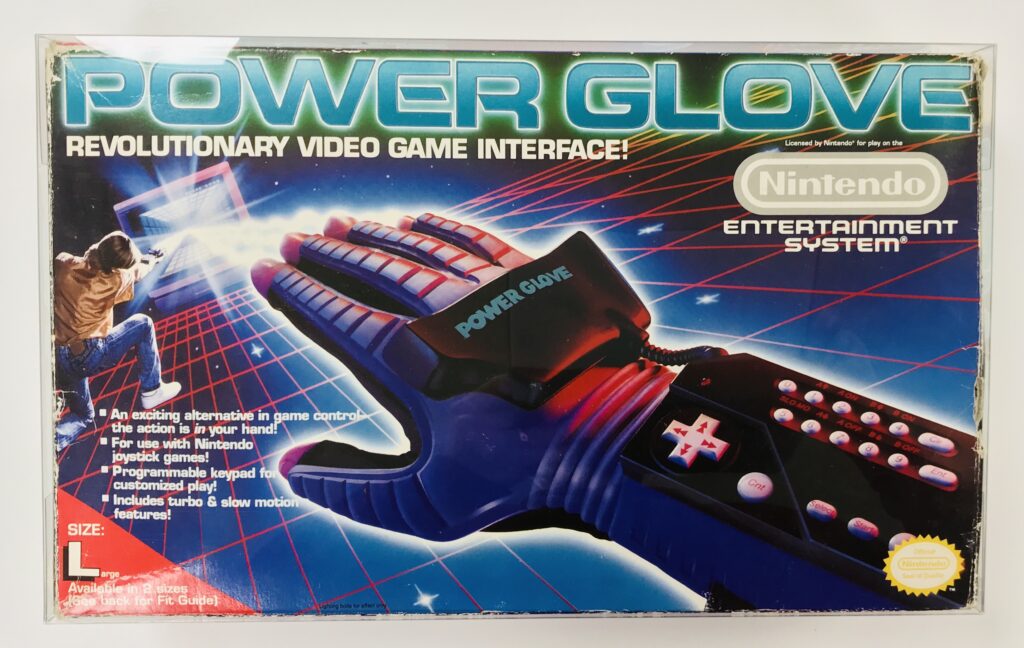
Mattel brought it to American stores in late 1989 inside an eye-catching original box, right when parents were hunting for the biggest Christmas present in the room. Estimates of its retail price vary, but it was commonly sold around $75 to $100. That was serious money for an accessory with no game inside the box.
Still, none of that mattered when you saw it.
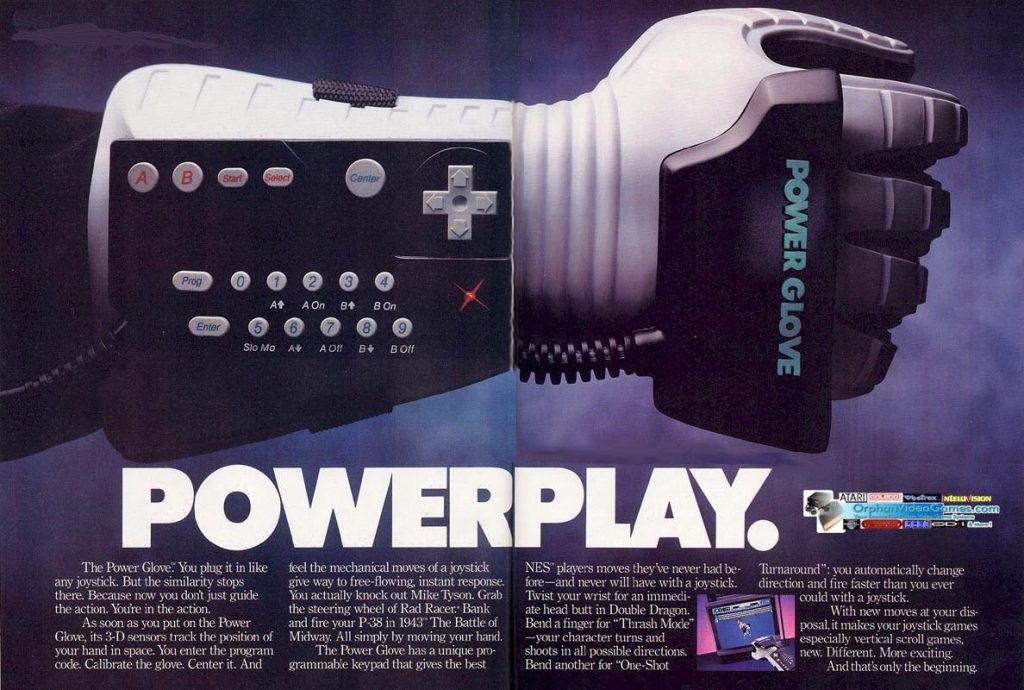
The Power Glove had the kind of design that could sell a million posters before it ever registered a punch in Punch-Out!!. Those segmented fingers, that industrial color scheme, that keypad? Pure 1989 space-age candy.
The glove’s greatest feature was visible before you ever plugged it in: it made an ordinary kid look like the final boss.
The Wizard Sold the Dream Before Anyone Tested It
Then came The Wizard.
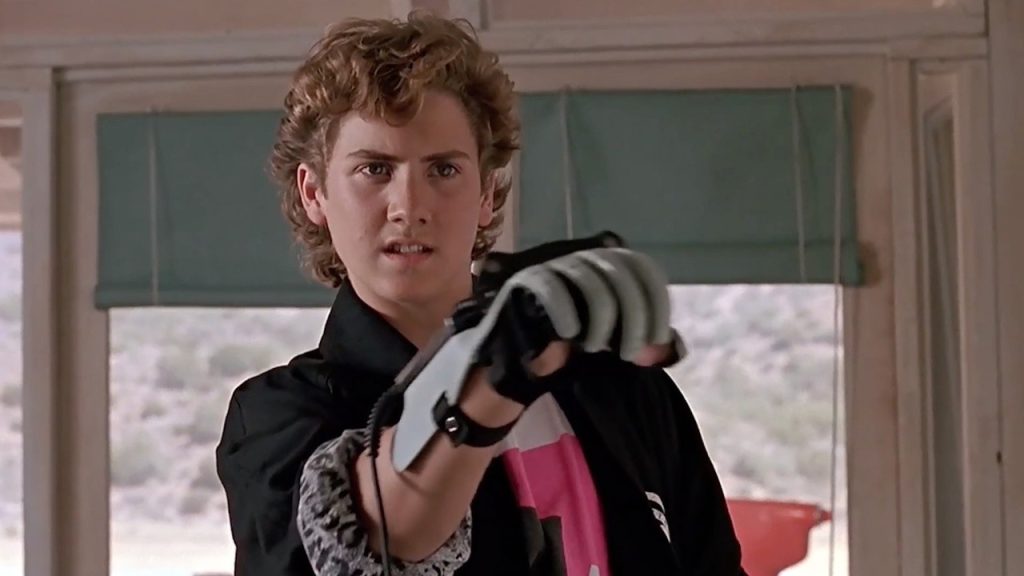
The 1989 movie wrapped Nintendo culture, family drama, cross-country adventure, and a big championship showdown into one shiny package. It also gave the Power Glove its most famous close-up, cementing the movie The Wizard as the ultimate marketing tool.
Lucas Barton, the movie’s sneering arcade hotshot, slips on the glove and says the line that lived forever: “I love the Power Glove. It’s so bad.”
He meant bad in the good way. Dangerous. Cool. Untouchable.
Kids understood that language immediately.
The movie made the glove look like it could fire off moves with a flick of the wrist. It made hand gestures seem faster than button presses. It made the thing feel essential, right up there with a BMX bike, a leather jacket, and a subscription to Nintendo Power.
Nintendo was already everywhere by then. If you remember why 80s kids wanted the NES, you remember the feeling. Mario and Zelda weren’t only games. They were playground currency. You traded secrets, argued about levels, and hoped your local video store still had the cartridge you wanted.
The Power Glove landed right in the middle of that frenzy.
Mattel didn’t need to explain ultrasonic tracking, finger switches, or calibration codes. The commercial, the movie, and the original box did the selling. A kid could see the accessory and imagine walking into a bedroom, raising one hand, and suddenly owning the whole screen.
The reality was less Lucas Barton. More sitting on the carpet, staring at the instruction manual, and asking your dad if he could please move the television sensor again.
The Hardware Had to Guess What Your Hand Meant
The Nintendo Power Glove’s big trick was early motion control. L-shaped sensor bars sat on top of the television, and the glove used ultrasonic sound to work out the position of your hand.
On paper, that sounds wonderfully futuristic. In a real living room, it was fussy.
You had to position the sensor correctly. You had to sit or stand at the right distance. You had to calibrate it. You had to keep your movements within the system’s limited tracking area. A hand motion that felt broad and heroic could register as a tiny twitch, or nothing at all.
Then there was the delay.
A regular NES controller answered instantly because your thumb pressed a physical switch. The glove had to read your movement, interpret it, and translate that into a command the NES understood. That extra step made timing feel mushy. Try landing a precise jump in Super Mario Bros. when the controller is having a small identity crisis. Not cute.
The finger sensors didn’t always help either. Closing your hand was supposed to trigger an action, but the response could be inconsistent. The Power Glove was bulky, too. It wasn’t built for a long evening of tense platforming or rapid-fire button taps.
Its keypad added another headache. Players entered game-specific program codes found inside the instruction manual for games on the Nintendo Entertainment System, and these codes changed how the glove mapped movements to controls. A child who wanted to play Metroid shouldn’t have needed to feel like they were programming a VCR.
A retro fan’s blunt assessment of the glove’s spotty performance gets to the heart of it. The gadget was impractical for most of the library, even when it technically worked.
The Power Glove wasn’t completely dead on arrival. You could make it do things. But “you can make it do things” is not the same as “you can beat World 8-3 with it.”
Backward Compatibility Was the Big Bad
Nintendo wanted the glove to work with its enormous existing game library. That sounds sensible until you remember one detail: none of those games had been designed for hand-tracking controls on the Nintendo Entertainment System.
The NES library was built around a directional pad and a handful of crisp buttons. Every action had a simple home. Move left. Move right. Jump. Punch. Pause.
The glove had to fake that language.
Wave left and it might mean left on the D-pad. Curl a finger and it might mean A. Tilt your hand and it might mean something completely different, depending on the selected code. Instead of improving familiar games, the controller often put a wobbly layer between you and the action.
That is why the Power Glove never became the new way to play The Legend of Zelda or Contra. It was an alternate video game controller for titles that needed no alternate controller.
The painful part is that Nintendo already had a terrific device. Among all historical NES accessories, the rectangular pad was simple, sturdy, and precise. It vanished in your hands after five minutes. The Power Glove never did. You were always aware of it, tugging at your wrist, waiting for the sensor to agree with you.
For a device sold on freedom of movement, it created a lot of rules.
Two Glove Games Could Not Save It
Only two games were made specifically with the glove in mind: Super Glove Ball and Bad Street Brawler.
That was nowhere near enough.
Super Glove Ball gave players a maze-like challenge where the controller’s motion gimmick had room to breathe. It was the closer match to the product’s promise, though it still couldn’t hide the hardware’s limits.
Bad Street Brawler took the more obvious route. You brawled by punching and gesturing. Sounds perfect, right? In practice, it became the game’s own little joke. The action was clumsy, the character moved awkwardly, and the Power Glove did not transform anyone into a street-fighting wizard.
A great accessory needs software that makes people say, “You have to try this.” The Power Glove had software that often made owners say, “Wait, let me set it up again.”
Mattel shipped plenty of units in a striking original box hoping for massive holiday sales, but the device disappeared from new-store shelves by 1990. It became one of those classic 80s toys with a spectacular gap between the commercial and the living room.
That doesn’t mean it was useless. It gave us one of the decade’s best-looking pieces of gaming hardware. It also taught the industry a hard lesson: a cool controller needs games built around its strengths.
Why the Power Glove Still Has a Grip on Us
Here’s the funny thing. People still love the Power Glove.
Not because it made Mega Man 2 easier. Nobody is pretending that happened. We love it because it captures the 80s at maximum volume.
It is big. It is plastic. It is wildly overconfident. It promises tomorrow in a package that barely survived today.
The glove also arrived years before motion control became normal. Nintendo’s Wii Remote, released in 2006, made broad physical gestures part of everyday console play. Later VR systems put tracked controllers right in players’ hands. Modern retro gaming enthusiasts appreciate how the device saw the destination, even if it took the bumpiest possible route there.
Collectors cherish it. Today, finding a factory sealed unit preserved inside its original box, particularly the elusive size large edition, is the ultimate flex for any retro gaming display. Musicians have adapted it for experimental performances. Even people who never owned one know exactly what it is. That silhouette is burned into pop culture.
A fan tribute to its unforgettable style gets the split perfectly: rotten game controller, sensational fashion accessory.
No other NES peripheral made you look so ready to control lightning.
Frequently Asked Questions
What was the Nintendo Power Glove?
It was an innovative motion-control peripheral released in 1989 for the Nintendo Entertainment System. Manufactured by Mattel, it allowed players to use hand gestures and a keypad to interact with games, though its actual performance often fell short of its futuristic promise.
Why did the Power Glove fail?
The device relied on early ultrasonic tracking technology that was fussy, prone to lag, and difficult to calibrate in a standard living room. Furthermore, because existing NES games were designed for standard controllers, the glove struggled to translate hand movements into accurate gameplay commands.
How many games were made for the Power Glove?
Only two games were officially designed specifically for the peripheral: Super Glove Ball and Bad Street Brawler. This extreme lack of dedicated software severely limited its usefulness and contributed to its quick disappearance from store shelves.
Is the Nintendo Power Glove a valuable collectible today?
Yes, despite being a poor video game controller, the Power Glove has achieved legendary status in pop culture. Original units, especially those preserved in their boxes or in large sizes, are highly sought after by retro gaming collectors.
The Power Glove Was Better as a Dream
The Nintendo Power Glove failed because it asked fragile 1989 technology to deliver movie magic in a kid’s bedroom, requiring complex setups that were barely explained by its original instruction manual. The tracking was unreliable, the setup was a chore, and the NES games people loved were never built for it.
Whether you find it complete in box or factory sealed, the hardware remains an iconic symbol of gaming history. One look at that gray glove still brings back the glowing television, the cartridge cases, and the belief that the future might be waiting under the tree.
It didn’t work right. It looked fantastic trying.