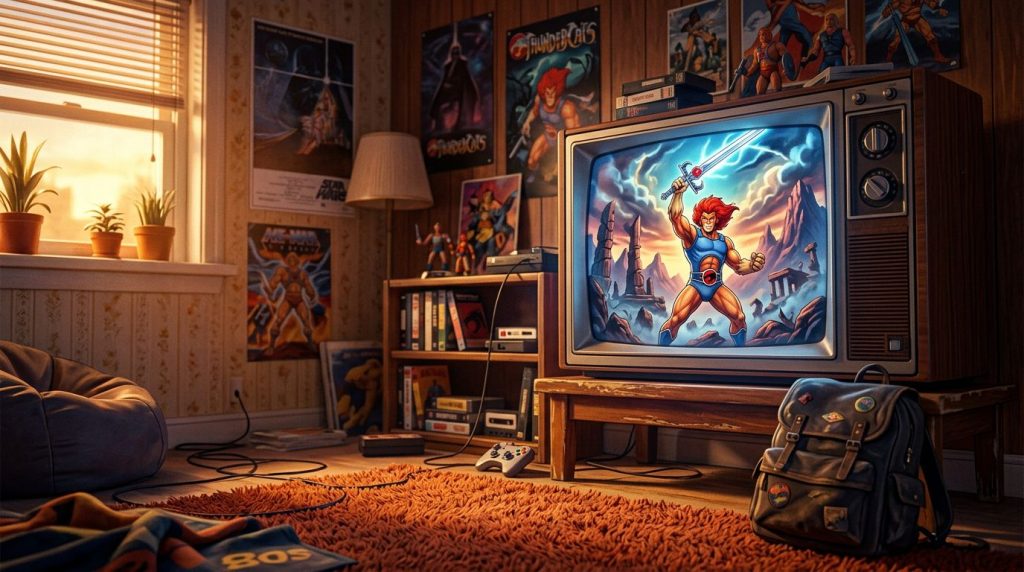
You knew the feeling. The school bus had barely disappeared, your backpack hit the floor, and the TV was already warming up in the den. The ThunderCats cartoon was more than something to watch. It was a full-volume appointment with danger, magic, mutant creeps, and a sword featuring the glowing Eye of Thundera in its hilt that could see things nobody else could.
For 80s kids, Third Earth felt huge. It had ancient ruins, futuristic gadgets, monsters in the shadows, and a distinct science fantasy vibe where a young hero was learning how to lead on the fly.
That daily race home had a secret weapon, and it was called “ThunderCats, Ho!”
Key Takeaways
- The classic 1985 series arrived with a bold mix of science fiction, fantasy, and monster-movie weirdness.
- Lion-O was a hero who had power, but his character development ensured he still had plenty to learn.
- The show’s weekday syndication made it a major part of the after-school routine.
- LJN action figures, the ThunderTank, and Cats’ Lair brought Third Earth onto bedroom floors.
- Its art, music, and gigantic sense of adventure still hit that nostalgic sweet spot.
Why the ThunderCats cartoon Ruled After School
The ThunderCats cartoon first aired in the United States on January 23, 1985. Created by Tobin “Ted” Wolf and produced by Rankin/Bass Animated Entertainment with Leisure Concepts, this animated television series eventually gave fans 130 episodes across four seasons. Its original 1985 to 1989 series listing is a little time capsule of an era when weekday television syndication meant animated shows came in loud, colorful, and ready to sell you a fantasy world before dinner.
Unlike Saturday morning programming, this was often a weekday treat. You had homework waiting. You probably had a snack nearby. Still, for 30 minutes, the homework could sit there looking sad.
The opening sequence did a lot of heavy lifting. A dying Planet Thundera. A refugee ship. Lion-O, Cheetara, Panthro, Tygra, WilyKit, WilyKat, and Snarf crash-landing on Third Earth. Then came Mumm-Ra, a shrieking mummy sorcerer invoking the ancient spirits of evil who made Skeletor look like he needed to pick up the pace.
Every episode started with a promise: something big was about to happen. The ThunderCats might battle the Mutants, uncover a lost secret, or stumble into another strange corner of Third Earth. That world had a fabulous junk-drawer logic. Egyptian tombs sat beside laser weapons. Robots had feelings. Mutants lived on Plun-Darr and still found time to cause problems everywhere else.
The show never treated Third Earth like a toy aisle with dialogue. It treated it like a place where every cave, crypt, and crumbling monument had a bad feeling attached.
That seriousness mattered. The classic 1985 series looked cooler than many cartoons in the rotation, but it also gave kids a story to grab onto. You weren’t only waiting for the ThunderTank. You wanted to know if Lion-O could outthink Mumm-Ra this time.
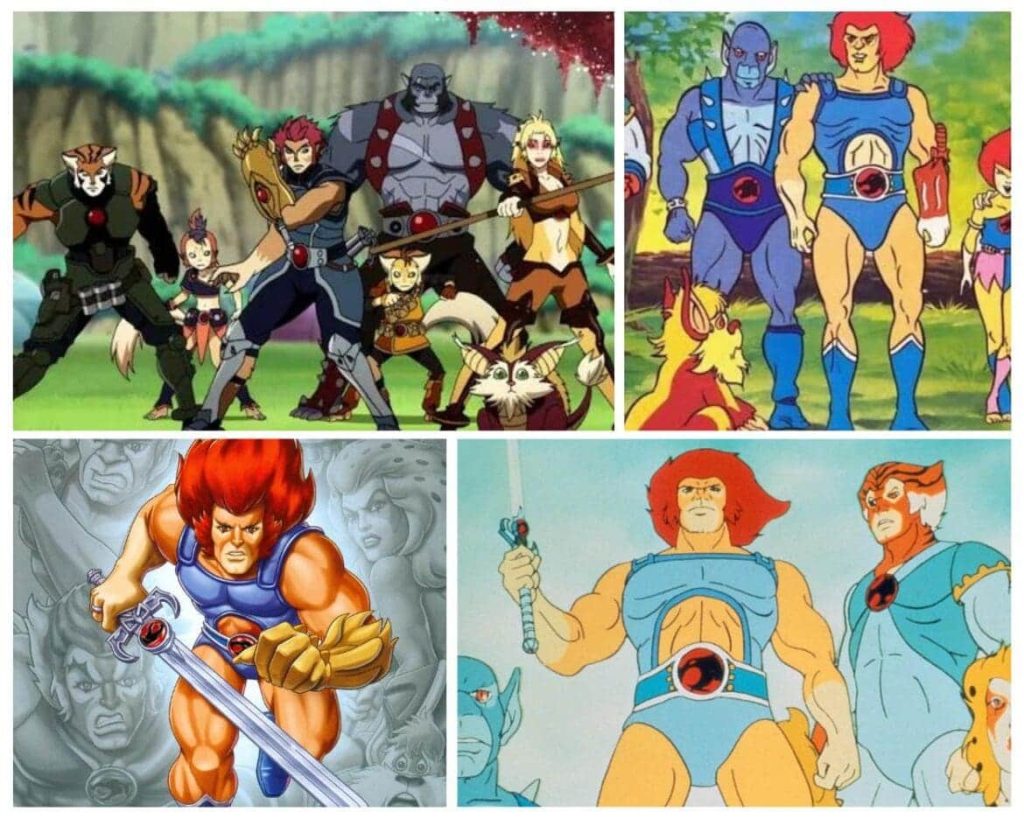
Third Earth Was a Wild Place to Visit
Third Earth wasn’t a polished future. It was dusty, dangerous, and loaded with ancient wreckage. That gave ThunderCats its own flavor. G.I. Joe had military missions. He-Man had castles and magic. ThunderCats had both, then tossed in a science-fiction spaceship and a mummy who transformed by calling on ancient evil spirits.
Lion-O made the setup even better. He was physically an adult after the long journey from Planet Thundera, but his suspended-animation pod had left him mentally young. Imagine being handed a magic weapon, a new planet, a team looking to you for answers, and a villain who keeps turning into a giant blue nightmare. No pressure, pal.
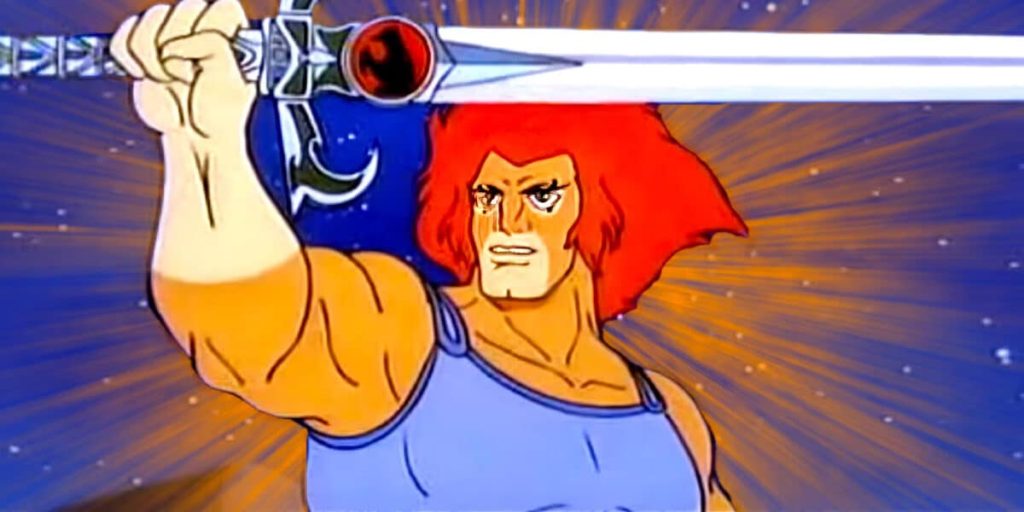
That detail kept the hero from becoming a bland, perfect leader. Lion-O made mistakes, got angry, and went through genuine character development. The Sword of Omens, housing the glowing power of the Eye of Thundera, gave him sight beyond sight, but it couldn’t do the growing up for him.
The supporting cast had real personality, too. Panthro was the tough mechanic and resident ThunderTank driver. Cheetara was fast, focused, and far too cool to need a big speech every five minutes. Tygra had the engineer brain. WilyKit and WilyKat had kid energy, which meant curiosity often became trouble. Snarf, well, Snarf was Snarf. Every team needs one voice that sounds like it is arguing with a vacuum cleaner.
For fans raised on the soft comfort of the Care Bears 80s cartoon era, ThunderCats brought a different kind of afternoon energy. It was louder, stranger, and a little scarier. And when Mumm-Ra appeared in that tomb, it could feel downright spooky.
The ThunderCats Cartoon Made Toys Feel Instead of Just Being Plastic
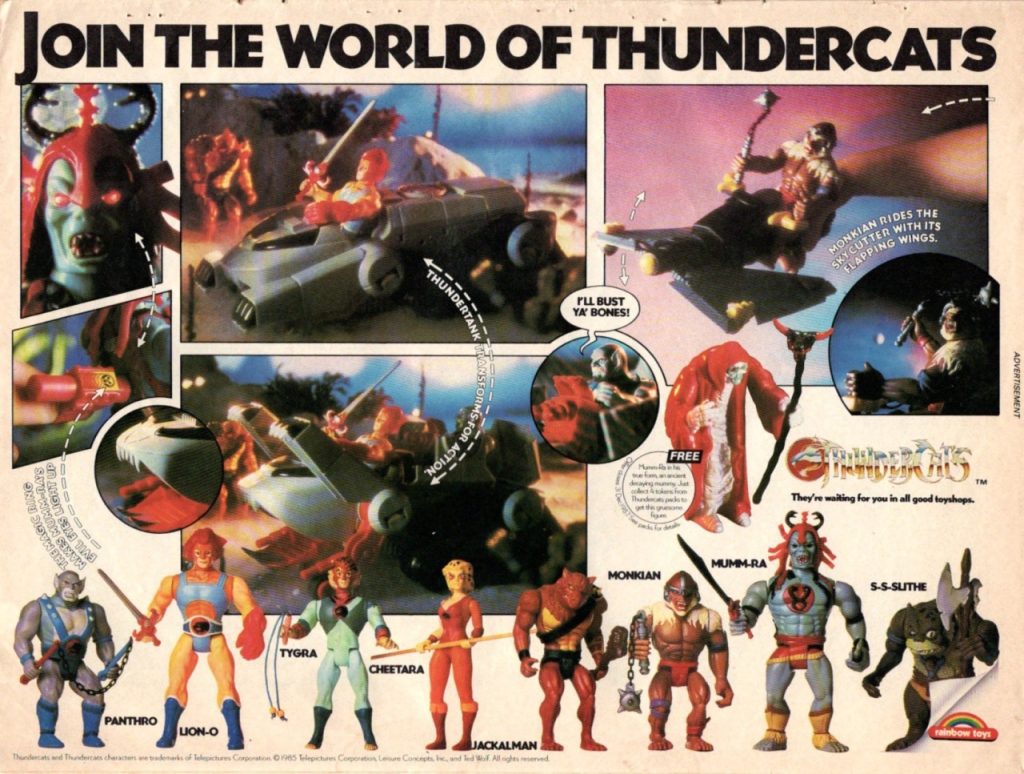
The ThunderCats cartoon and its celebrated toy line were built to feed each other, but the toys had enough personality to stand on their own. LJN released the first American action figures in 1985, putting Lion-O, Panthro, Cheetara, Tygra, Mumm-Ra, and the Mutants within reach of any kid with birthday money and a patient parent.
The figures were chunky, colorful, and made for action. Lion-O had that red hair and the Sword of Omens. Mumm-Ra had a transformation gimmick. Panthro looked like he could drive through a wall, then fix the wall afterward. The ThunderTank became a living-room wrecking ball, while the Cats’ Lair let you stage a siege before your mom asked why the coffee table had become Third Earth.
A 1985 Rainbow Toys advertisement catches that early rush perfectly. Kids didn’t see a standard toy line. They saw a ticket into the show.
That was the real trick of 80s toy culture. The cartoon supplied the voices, the music, and the cliffhangers. Your bedroom floor supplied the next episode. Maybe Mumm-Ra took over the couch cushions. Maybe those same action figures got stuck under a chair, which suddenly became a cave on Third Earth. Rules were loose. Imagination handled the details.
The appeal wasn’t limited to battle scenes, either. These toys looked good lined up on a shelf. The Cat heads, the weapons, the vehicles, the oddball villains, it was a collection with visual punch. You could spot ThunderCats stuff across a room.
The Theme Song Was Pure Rocket Fuel
Some cartoons had pleasant themes. ThunderCats had a warning siren set to music.
Those opening drums, the guitar, the fast cuts of Lion-O running and Mumm-Ra doing his terrifying change, it got your attention before anyone said a word. Bernard Hoffer’s score gave the series a heroic charge that made even a walk to the kitchen feel like a mission. That unforgettable theme song set the exact mood for the chaos that followed.
Then there was the animation. Rankin/Bass had already made a name with holiday TV favorites, but ThunderCats came out with a sleeker, more dramatic look. The work of Pacific Animation Corporation helped give characters weight, sharp expressions, and movement that felt more intense than the standard Saturday-morning scramble. The talented team of voice actors brought that intense energy to life with every battle cry.
Mumm-Ra deserves his own gold-plated creepy statue. His normal form was a shriveled old menace wrapped in bandages. His powered-up form was all fangs, muscles, and rage, called forth by the ancient spirits of evil. The transformation scene was a tiny horror movie, delivered right in the middle of the afternoon.
And nobody forgot the catchphrase. “ThunderCats, Ho!” is one of those lines that lives in the back of an 80s kid’s brain forever. You might not have said it out loud in front of company. But you knew it. Oh, you knew it.
The series also shared space in memory with Saturday morning cartoons from the 1980s. Yet ThunderCats had its own rhythm. Saturday mornings were pajamas, cereal, and the Muppet Babies cartoon turning one nursery into a full-scale adventure. ThunderCats was the buzzer after school, the little burst of freedom before real life started asking questions.
Why We Still Want One More Look at Third Earth
Nostalgia works best when the original thing still has some spark. The ThunderCats cartoon has it. Its dialogue can be grand. Snarf can test your patience. Some plots are gloriously bonkers. That is part of the package.
But the show also has style to spare. Lion-O remains an unusually human action hero. Mumm-Ra is still a grade-A cartoon villain. Third Earth still looks like the kind of place you would visit if somebody handed you a hoverboard and a questionable map.
Most of all, it remembers what childhood adventure felt like. The future was strange. Villains were obvious. Your friends had your back. A sword could solve the problem, provided you raised it high enough.
That enduring appeal is why the franchise keeps finding new ways to return. Fans saw a dramatic reimagining in the 2011 reboot produced by Warner Bros. Animation, which brought an anime inspired style and a dark aesthetic to the mythology. That version, animated by Studio 4°C, found a passionate audience when it aired during the Cartoon Network Toonami block.
Even outside of television, the world of Third Earth expanded through a popular comic book series that explored new corners of the lore. When modern revivals occasionally pop up on Cartoon Network or through other streaming platforms, viewers are reminded of why they fell in love with the premise in the first place.
Frequently Asked Questions
When did the ThunderCats cartoon first premiere?
The classic series originally premiered in the United States on January 23, 1985. It ran for 130 episodes across four seasons, establishing itself as a weekday syndication staple.
Who is the main villain of the series?
The main antagonist is Mumm-Ra, a shrieking mummy sorcerer who resides in a black pyramid on Third Earth. He frequently calls upon the ancient spirits of evil to transform into a much larger, monstrous form to battle the ThunderCats.
Why does Lion-O look like an adult if he is young?
Although his physical body grew to adulthood during the long space journey from Planet Thundera in a suspension capsule, his mind remained that of a child. This unique premise allowed for genuine character growth as he learned how to lead the team.
The After-School Magic Lives On
ThunderCats made weekday afternoons feel bigger than they were. A glowing TV, a bowl of chips, and a few minutes before homework could turn into a trip across a dangerous alien planet.
That is why the show lasts. The ThunderCats cartoon gave kids an action world with heart, a compelling narrative storyline, and moments like raising the Sword of Omens or searching for the Book of Omens that defined a generation of animation.