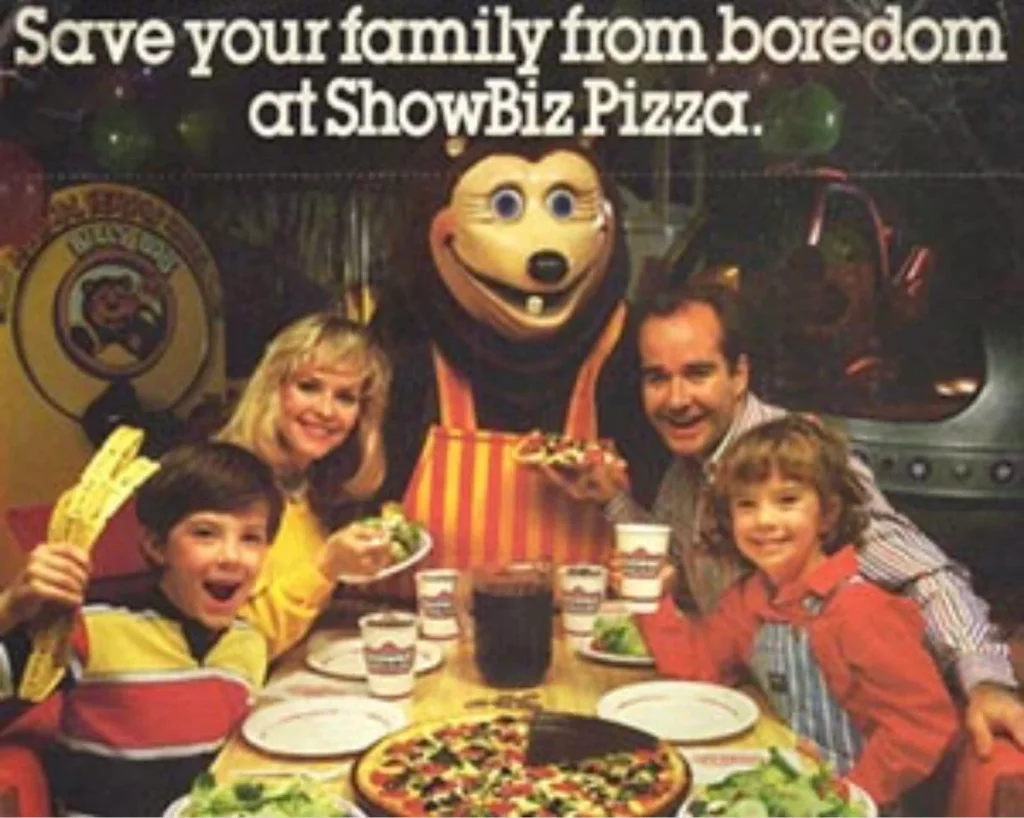
Before bounce houses and party packages took over, one birthday flex ruled the 80s: ShowBiz Pizza. If your name was on that cake table, you were the main character for an afternoon, crowned by tokens, soda, and an animatronic band that felt bigger than any real concert you had seen.
For kids, it was paradise with fluorescent lighting. For parents, it was pizza, built-in entertainment, and a room full of children too distracted to be bored. As the ultimate family entertainment center of its era, ShowBiz Pizza created a unique atmosphere that kept everyone happy. To understand why so many people still talk about the venue like it was enchanted, you have to step back into the noise.
Key Takeaways
- ShowBiz Pizza served as the quintessential 80s birthday destination, combining pizza, high-energy arcade games, and the iconic Rock-afire Explosion animatronic band to create an immersive entertainment experience.
- The venue provided a unique “birthday formula” that relieved parents of hosting duties while offering kids a sensory-rich environment that felt like a private, stage-lit carnival.
- The Rock-afire Explosion band, created by Creative Engineering, served as the emotional center of the restaurant, providing a “weird and wonderful” performance that resonated deeply with children of the era.
- Following a 1984 merger with rival Pizza Time Theatre, the ShowBiz brand was eventually phased out during the early 1990s as all locations were rebranded as Chuck E. Cheese through a process known as Concept Unification.
Why ShowBiz Pizza Felt Like Pure Magic
Imagine a neighborhood pizza place, an arcade, and a stage musical made of animatronic animals, all crashing into one room. That was ShowBiz Pizza Place. It opened in 1980 and spread throughout the decade, landing right in the sweet spot of what families wanted: cheap fun, air conditioning, and something kids would talk about at school on Monday.
The timing mattered. The 80s loved places that turned ordinary outings into events. The brand was famously brought to life by Robert L. Brock, the hotelier who saw the potential for a massive entertainment destination. A trip to dinner could sit in the same memory folder as the classic 80s mall experience or a Saturday at the movies. Kids did not want quiet ambiance. They wanted lights, sounds, buttons, prizes, and enough stimulation to make the adults give up and order another pitcher.
The company understood that hunger better than almost anybody. Pizza was the excuse, but the real product was anticipation. You walked in and heard the machines before you reached the table. You saw the stage from across the room. You knew tokens were involved, and that changed everything.
And there was social currency in it. On Monday morning, kids compared party favors, prize counter hauls, and favorite characters. Saying you had a ShowBiz Pizza party landed with real weight. It meant you had not just blown out candles in a den; you had done it in a stage lit kingdom of cheese and arcade noise.
For younger readers, this was not a sleek entertainment center. It was louder, stranger, and more charming than that. The carpet looked busy. The tables felt sticky. The ceiling buzzed. And all of it worked.
A detailed fan archive on the ShowBizPizza.com history page captures how big the chain felt at its peak. The facts matter, sure, but the memory is the real headline. Once you went, you wanted your own party there, preferably as soon as humanly possible.
The Birthday Party Formula That Never Failed
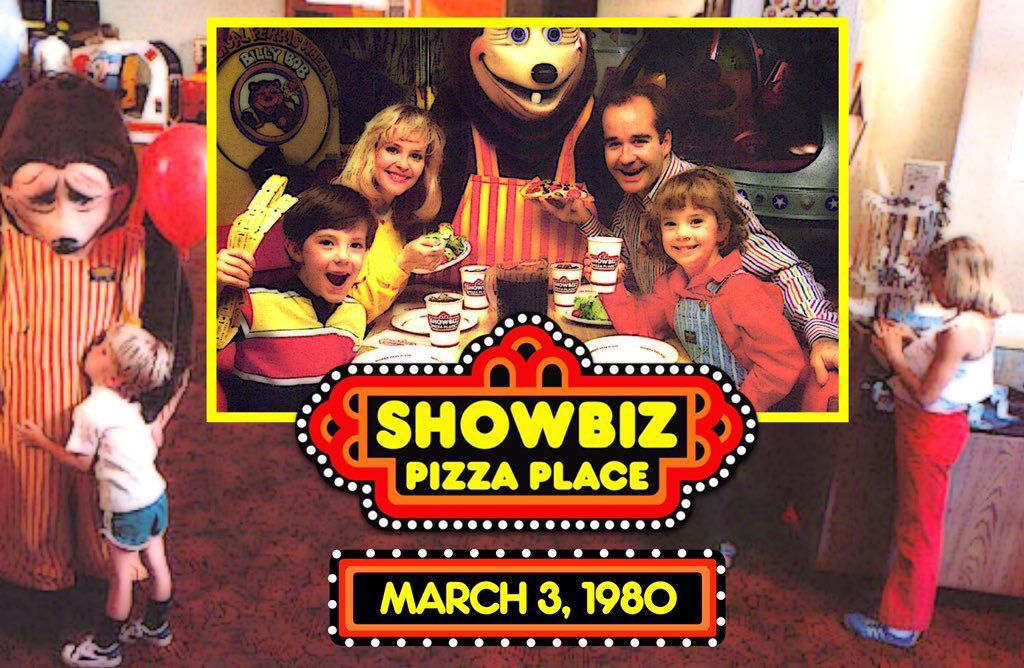
A home birthday party asked you to pretend the living room was exciting. ShowBiz didn’t have to pretend. It had the goods.
First came the table. Paper hats. A pitcher of soda sweating onto the surface. Paper plates bending under thick slices of pizza. Somewhere nearby, a parent guarded the cake while kids kept half-looking toward the game room, already vibrating in their seats.
Then the token cup appeared, and any remaining attention vanished. The arcade at ShowBiz wasn’t background decoration. It was the engine. Racing games, blinking cabinets, ticket spitters, and Skee-Ball lanes that clacked like a factory line, it all pulled you in. The whole place ran on the same electricity as the golden age of arcade games, filled with iconic arcade games that defined the era, except now you got pizza grease on the joystick.
ShowBiz Pizza wasn’t dinner with entertainment on the side. It was a birthday party disguised as a restaurant.
There was a perfect rhythm to it. Eat fast. Run faster. Feed tokens into easy 80s arcade games like your social life depended on it. Win a paper ribbon of tickets, then hold it like treasure even if it only bought a plastic spider ring or a rubber fingertip monster at ShowBiz Pizza.
And then came that little birthday ache, the good kind. You wanted more tokens. More time. One more try at the machine that almost paid off. Kids didn’t leave calm. They left wired, clutching prizes, stage music still bouncing around in their heads.
Parents knew the trick, too. They didn’t need to hire a clown or invent five activities. They bought the package, lit the candles, and let the room take over.
That’s why a ShowBiz party beat a backyard party for so many kids. No awkward party games. No waiting for an uncle to light charcoal. No handmade fun with construction paper and folding chairs. The room did the work. The arcade made everybody brave. Even shy kids had something to do, whether they were chasing tickets or camping near the prize counter, staring at the top shelf like it held the Crown Jewels.
Rock-afire Explosion and the Big Room Energy
For all the noise, ShowBiz had a center of gravity: the stage.
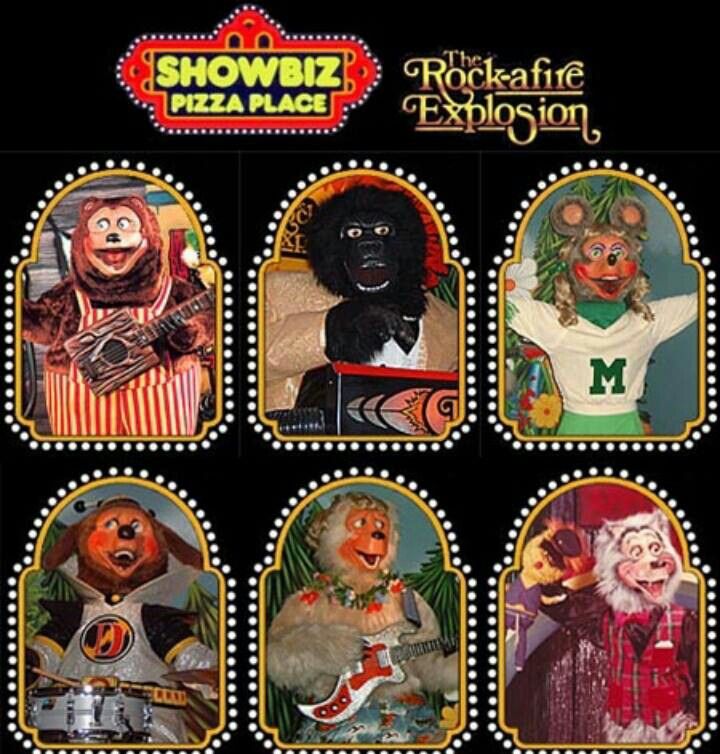
The Rock-afire Explosion wasn’t background scenery. Billy Bob, Mitzi, Fatz, Beach Bear, and the rest were the headline act. This legendary animatronic band was created by Aaron Fechter and his company, Creative Engineering, to push the boundaries of entertainment. They sang, joked, twitched, blinked, and pulled off that odd little miracle only 80s kids fully understand, a machine performance that felt alive enough to matter.
Adults saw robots with fur and canned jokes. Kids saw stars. Maybe not glamorous stars, but our kind. They were chunky, colorful, a little chaotic, and always on. When the lights shifted, pizza slices stopped halfway to mouths. Even the kids who acted too cool for the arcade ended up watching the show.
Part of the magic was that the venue never felt polished in a sterile way. It had rough edges. The audio was loud, the movements were jerky, and the timing got weird sometimes. None of that hurt the experience. If anything, the wobble made the place feel more alive, like anything could happen after the next song cue.
There was also something wonderfully democratic about it. The birthday kid got the candles and the chorus, but every child in the room got access to the same spectacle. You didn’t need to be rich or popular. You needed a few tokens, a tolerance for noise, and a willingness to be amazed by a banjo-playing bear.
That same handmade weirdness is why the memory has lasted. People still pass around photos and party stories online, and this 1984 birthday post nails the flavor: huge smiles, huge colors, and a room built to blow a kid’s mind.
A lot of childhood places shrink when you revisit them in memory. ShowBiz Pizza doesn’t. It stays huge, with huge sound, huge feelings, and huge promises. You weren’t there just to have a slice and go home. You were there to be dropped into a kid-sized carnival where pizza happened to be part of the deal.
How ShowBiz Pizza Became Chuck E. Cheese
Memory likes to freeze ShowBiz in amber, but the business kept moving.
Chuck E. Cheese, originally known as Pizza Time Theatre, launched under Atari founder Nolan Bushnell in 1977. ShowBiz Pizza Place opened a few years later with a similar mix of food, games, and animatronic entertainment. The two chains spent the early 80s chasing the same birthday crowd, and for a while, kids picked sides with the seriousness of sports fans.
The turning point arrived after the parent company of Chuck E. Cheese hit financial trouble and filed for bankruptcy. ShowBiz Pizza Place completed a merger with its rival in 1984, and both brands continued operating independently for several years. If you were a kid, that probably felt normal. One town had ShowBiz. Another had Chuck E. Cheese. It was the same basic promise, but with different mascots, different stage personalities, and the same chance to burn through tokens at an alarming speed.
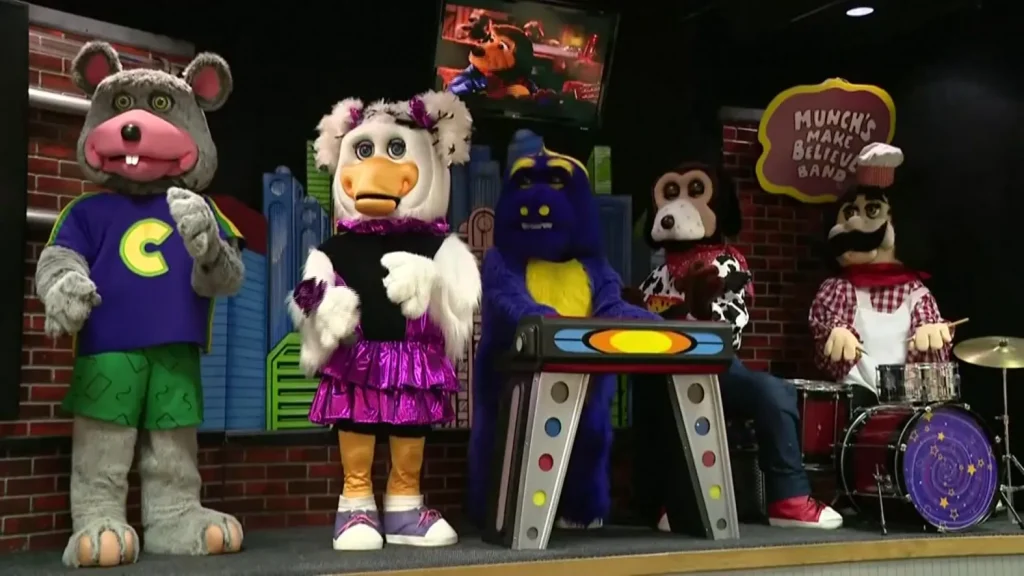
The bigger change arrived in the early 1990s. Following disputes with Creative Engineering, the company behind the Rock-afire band, ShowBiz Pizza Time initiated a transition process known as Concept Unification. All remaining ShowBiz locations were gradually rebranded as Chuck E. Cheese. During this shift, the Rock-afire Explosion was removed to make room for the Chuck E. Cheese cast of characters. By 1992, the ShowBiz name was mostly gone from storefronts.
That is the part that still stings a little. It was not just a logo swap. A certain flavor of 80s weirdness went with it. For many fans, ShowBiz now lives beside other classic fast food memories that changed, disappeared, or got cleaned up until the oddness faded.
Still, the timeline is clear once you know it. ShowBiz did not vanish in one dramatic instant. It folded into the Chuck E. Cheese brand, and a whole generation carried the earlier version in memory, right down to the paper hats, the prize counter, and that first blast of arcade noise when the door opened.
Frequently Asked Questions
What made a ShowBiz Pizza birthday party different from other places?
ShowBiz Pizza functioned as a “birthday party disguised as a restaurant,” taking the burden of entertainment off the parents. By providing a built-in arcade, loud animatronic music, and a structured prize system, it transformed a simple meal into an event that held significant social currency among kids at school.
Who created the animatronic band known as the Rock-afire Explosion?
The legendary band, which featured characters like Billy Bob and Mitzi Mozzarella, was designed and built by Aaron Fechter and his company, Creative Engineering. Their work is often credited with giving ShowBiz Pizza its distinct, slightly chaotic, and memorable personality.
Why did ShowBiz Pizza stop existing?
The chain went through a merger with its rival, Chuck E. Cheese, in 1984. By the early 1990s, the company initiated “Concept Unification,” which systematically rebranded all ShowBiz locations to the Chuck E. Cheese name and replaced the original Rock-afire Explosion band with the Chuck E. Cheese cast.
The Party Still Echoes
ShowBiz Pizza stayed in the minds of a generation because it understood childhood better than most places did. Kids craved spectacle, motion, noise, and a story to tell their friends at school the next day. This venue provided all four, along with greasy pizza and a pocket full of prize tickets.
That is why the memory still glows today. It persists not because the food was gourmet or the carpets were pristine, but because ShowBiz Pizza made ordinary birthday celebrations feel enormous. For a few hours, you were not just another kid at a table; you were immersed in the party every kid wanted. While the brand eventually transitioned into the modern era as Chuck E. Cheese, the unique spirit of that original 80s experience continues to define how we look back at the golden age of arcade entertainment.