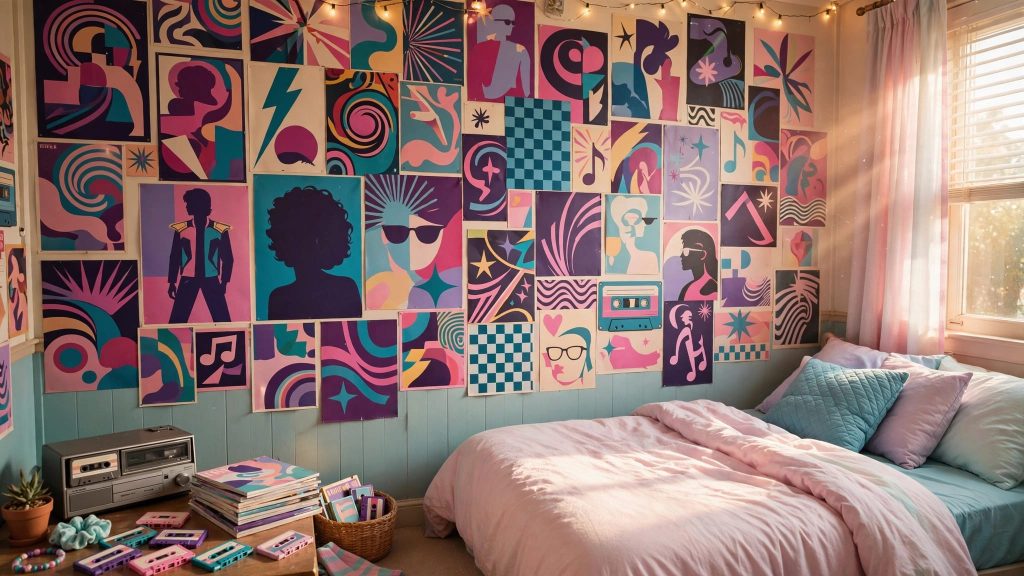
A bedroom wall in 1985 could tell you everything. A Duran Duran foldout near the dresser. Rob Lowe taped to the closet door. Molly Ringwald over the bed, looking like she understood your entire complicated eighth-grade existence.
These 80s teen idols weren’t ranked by record sales or box-office totals alone. They were teen heartthrobs judged by poster appeal and cultural ubiquity, based on how strongly their images belonged on a bedroom wall. This isn’t an objective ranking of talent, sales, beauty, personal worth, or exact popularity.
Subjective? Completely. But if you ever smoothed out a crease in a Tiger Beat poster with the seriousness of an art conservator, you already understand the assignment. Consider it a nostalgia trip with a very limited supply of wall space.
Key Takeaways
- This ranking measures 80s teen idols by bedroom-poster appeal, cultural ubiquity, and the power to command precious wall space—not by objective talent, sales, beauty, or personal worth.
- Duran Duran claimed the top spot because five stylish members, glossy music videos, and MTV visibility turned the band into a complete bedroom-wall universe.
- Jon Bon Jovi, Rob Lowe, Michael J. Fox, and Molly Ringwald each offered a different kind of poster magic, from stadium-sized rock-star energy to movie-star heat, comic charm, and emotional recognition.
- Teen magazines, television, movies, MTV, and colorful poster inserts helped turn celebrity images into everyday declarations of taste, devotion, and carefully managed bedroom real estate.
How Bedroom Poster Power Worked in the 1980s
A poster was never only a poster. For teenage fans, it was a declaration: you liked this person. You watched their movies, bought their cassette, clipped their photos, and maybe defended them during lunch when somebody said another star was cuter.
The poster had to survive a tough test. Could it hold its own next to a neon plastic telephone, a Strawberry Shortcake pillow, a boom box, and a hundred tiny star stickers? Could it make your room feel a little more grown-up?
The Teen-Magazine Pipeline
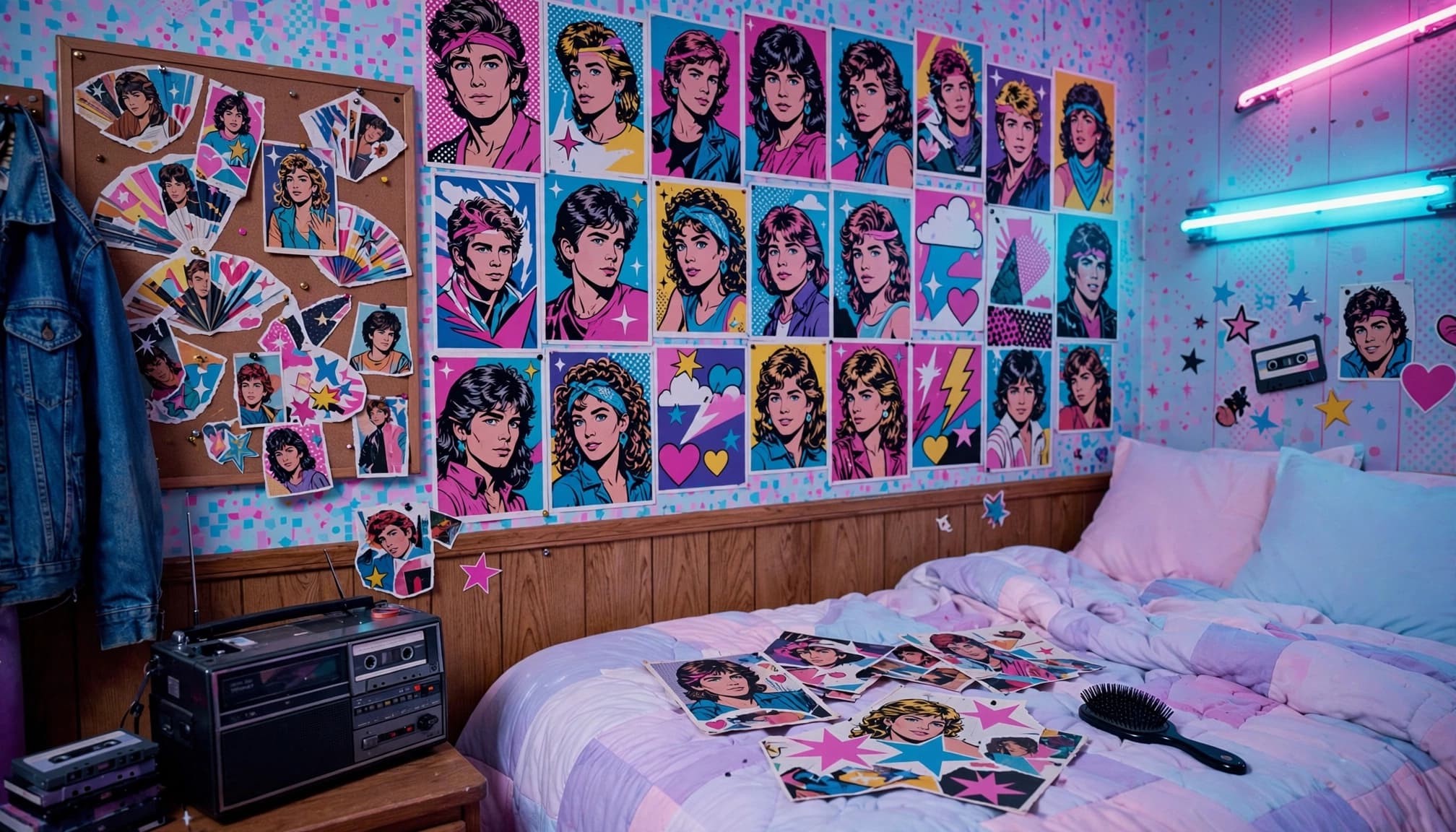
Tiger Beat, Bop, Teen Beat, and SuperTeen were fan magazines that turned celebrity photos into bedroom wallpaper. You bought an issue for the quiz about whether your crush liked shy girls. Then you carefully removed the poster insert and decorated your room, a small ritual of youth culture.
A surviving stack of 1980s Tiger Beat issues is a colorful reminder of the formula: big hair, soft-focus photos, dreamy interviews, and a face big enough to fill a wall.
The most powerful poster stars seemed to be everywhere, on TV, at the movies, in magazines, and on your friend’s binder.
Visibility Was Everything
A heartthrob with one hit movie could cause a brief flutter. A star on a weekly television series, MTV, and movie screens could take over an entire wall.
That is why this list mixes actors, singers, sitcom guys, and one band that had several members competing for prime real estate. The 1980s didn’t care about categories. If the photo made you sigh, it qualified.
No. 8: Ricky Schroder, the Sweetheart Pick
Ricky Schroder had the clean-cut appeal of a crush your parents might approve of. On Silver Spoons, he played Ricky Stratton, a wealthy kid with a dream house, an indoor train, video games, and a father played by Joel Higgins. It was Saturday afternoon wish fulfillment, complete with feathered hair.
The Boy Next Door With an Indoor Train
Schroder’s poster power came from approachability. His clean-cut image could have appealed to younger fans. He wasn’t trying to be a rebel. He looked like the nice kid who’d carry your books, share his arcade tokens, and never make fun of your Cabbage Patch Kid.
For plenty of younger fans, that was enough to earn a place beside the bed. His grin brought a softer kind of teen-idol heat, more puppy love than smoky nightclub drama. For the full scrapbook treatment, revisit Ricky Schroder’s heartthrob years.
No. 7: Andrew McCarthy, the Quietly Intense Dreamboat
Andrew McCarthy didn’t need to grin like he was posing for a toothpaste commercial. He had the faraway look. The sensitive eyes. The slightly rumpled hair that suggested he had thoughts, feelings, and perhaps a complicated mixtape.
He joined the era’s loosely defined Brat Pack grouping through St. Elmo’s Fire in 1985, then made Blane McDonough in Pretty in Pink the object of many a bedroom-poster stare. Those silver screen roles established his place in 1980s movie culture and Hollywood stardom.
Why Blane Had the Edge
In a decade filled with leather jackets and cocky movie stars, McCarthy offered a softer flavor. His characters could be distant, wounded, and not always great at communication. Sound familiar? Teen movies had discovered emotional unavailability, and many of us apparently said, “Put it on the wall.”
He later built a substantial career behind the camera as a television director, but that 1986 Pretty in Pink photo was pure poster gold.
No. 6: John Stamos, the TV Crush With Perfect Hair
John Stamos arrived with soap-opera polish as Blackie Parrish on General Hospital. Then Full House premiered in 1987, moving him from daytime television into primetime television and a much broader weekly audience.
The leather jacket helped. The motorcycle helped. The hair, frankly, was doing advanced work.
Uncle Jesse Owned Friday Nights
Stamos had the rare ability to charm different generations at once. As a sitcom star, he was the fun uncle to kids, the cute guy in the band to teenagers, and the man who might finally organize that scruffy corner of the family room for adults.
His poster appeal sat in the sweet spot between rock-star cool and sitcom safety, at least by our subjective bedroom-wall ranking. The leather jacket, humor, music, and weekly television visibility gave him serious heartthrob status. That’s a devastating combination when you’re 13 and your bedroom door has a “Keep Out” sign.
No. 5: Molly Ringwald, the Teen Queen Who Got Us
Molly Ringwald’s posters weren’t always about a conventional crush. They were about recognition. In Sixteen Candles (1984), The Breakfast Club (1985), and Pretty in Pink (1986), she played girls whose feelings felt enormous because, well, they were enormous.
Her red hair, expressive face, thrift-store-meets-prom-dress style, and sharp comic timing made her, in the cultural imagination, the face of John Hughes’s coming of age films.
More Than a Pretty Pink Poster
Samantha Baker wanted her sixteenth birthday to matter. Claire Standish sat in detention with a diamond earring and a careful social mask. Andie Walsh made a pink dress out of vintage pieces because she wasn’t about to let a lousy prom situation win.
Ringwald made teenage embarrassment feel glamorous, but never fake. That is why her image belonged on bedroom walls, lockers, and the back of folders. She felt like one of us, only with better bangs. The glow of Molly Ringwald’s teen-queen legacy hasn’t faded one bit.
No. 4: Michael J. Fox, the Funny Guy Who Became a Movie Star
An award winning actor, Michael J. Fox had already won viewers over as Alex P. Keaton on Family Ties, which ran from 1982 to 1989. Then 1985 happened. Back to the Future became a box office hit and gave him his breakout role on the silver screen, while Teen Wolf arrived later that same summer.
Suddenly, Fox was the smart, funny, likable hero of two major hits. No brooding required. This ranking reflects Marty’s visual charm and personality, not an objective verdict on Fox’s acting or career as a whole.
Marty McFly Made Time Travel Look Cute
Fox had a different poster advantage. He looked like the guy who’d make you laugh during chemistry class, then borrow a DeLorean and accidentally alter history before dinner.
His appeal was warmth. He was quick with a comeback, good with a skateboard, and believable as the kid dropped into an impossible situation. Britannica traces Michael J. Fox’s rise in the 1980s, but fans of the period remember the simpler truth: Marty McFly’s red vest became instant visual shorthand for cool.
No. 3: Rob Lowe, the Brat Pack Poster Heavyweight
Rob Lowe had the smile, the blue eyes, the hair, and the smoldering stare that made fan magazines reach for extra ink. By the middle of the decade, he was a fixture in the Brat Pack conversation thanks to The Outsiders, St. Elmo’s Fire, and About Last Night….
Francis Ford Coppola’s The Outsiders opened in 1983 and packed an eye-popping lineup of future stars, including Lowe, Matt Dillon, Tom Cruise, Emilio Estevez, C. Thomas Howell, and Patrick Swayze. One movie, many future posters. The mall photo-shop economy was never the same.
The Saxophone Did Not Hurt
As Billy Hicks in St. Elmo’s Fire, Lowe played a charming mess with a saxophone. Was Billy good boyfriend material? Let’s not get distracted by facts. He looked fantastic under moody lighting, and that mattered.
Lowe’s appeal mixed a little danger with a lot of polish. His screen image translated easily into bedroom-wall momentum. For this ranking, poster appeal matters more than talent or personal worth. He was the guy whose poster you put up when you wanted your room to look less like a child’s room and more like a backstage pass. Revisit Rob Lowe’s 1980s heartthrob era for the full Brat Pack swoon file.
No. 2: Jon Bon Jovi, the Rock Star With Bedroom-Wall Gravity
Jon Bon Jovi had the hair of a shampoo commercial and the voice of a packed arena. When Slippery When Wet exploded in 1986, he became a full-on pop music sensation on MTV. The album delivered chart topping hits including “You Give Love a Bad Name,” “Livin’ on a Prayer,” and “Wanted Dead or Alive.”
That kind of visibility creates posters. Lots of posters.
Denim, Leather, and a Stadium-Sized Smile
Movie idols offered a single frozen character. An actor and singer like Jon Bon Jovi offered music videos, concerts, album covers, and magazine shoots. He might even point into the crowd during a guitar solo and spot you.
His music career gave the posters a soundtrack. You could tape one above your bed, blast “Never Say Goodbye,” and feel like your ordinary suburb had suddenly acquired smoke machines. For more feathered-hair appreciation, here’s Jon Bon Jovi’s 80s rise.
No. 1: Duran Duran, the Poster-Making Machine
Picking one member of Duran Duran would be like picking one flavor of Pop Rocks. Why limit yourself? Simon Le Bon had the voice and the tousled frontman look. John Taylor had bass-player cool. Nick Rhodes had sharp style and mysterious eyeliner energy. Roger Taylor and Andy Taylor had their own devoted fan armies.
The English band didn’t merely sell records. They arrived in your room as a complete glossy universe.
Five Faces, Endless Wall Space
Their videos looked expensive, sun-soaked, and far away from anybody’s school bus stop. “Rio,” “Hungry Like the Wolf,” and “The Reflex” made the band feel international before “international” was a word most of us used outside geography class.
Duran Duran’s own 1980 to 1995 timeline captures the scale of their visual ambition, including a Bengal tiger flown to Australia for a Seven and the Ragged Tiger cover shoot. That visual identity made them feel like natural poster staples. They could turn an ordinary bedroom wall into a passport stamp.
The Near-Misses That Still Ruled the Wall
Tom Cruise had Risky Business and Top Gun, classic movies with Ray-Bans and a grin made for a full-page poster. Corey Haim became a late-80s favorite through Lucas, The Lost Boys, and License to Drive. Many fans still consider The Lost Boys a cult favorite. River Phoenix brought soulful intensity to every photo spread.
Then there were the pop stars. George Michael, Wham!, Morten Harket of a-ha, Debbie Gibson, and Tiffany inspired serious wall devotion, though their poster visibility varied. A-ha’s “Take On Me” alone could turn a charcoal-pencil animation into a crushing event.
Poster Fame Could Be a Lot to Carry
The same machinery that made a teenager feel famous could be brutal, turning interviews into demands for perfect faces, romances, and answers. Real people faced growing pains, private struggles, and careers that changed shape. That’s why a later where are they now question matters.
That is part of why the best 80s teen idols stay interesting. The posters froze iconic roles and career moments, while the people kept living.
Before the 80s, There Was Sinatra
Frank Sinatra is commonly cited as a historical precursor to the modern teen idol. His documented bobby-soxer fandom in the 1940s helped establish the blueprint: screaming fans, magazine photos, souvenirs, and skeptical adults.
In this article’s playful reading, the 1980s added cable TV, glossy color printing, and enough hair spray to damage the ozone layer.
Frequently Asked Questions
How were these 80s teen idols ranked?
They were ranked by poster appeal, visibility, and cultural ubiquity during the 1980s. In other words, this is a playful bedroom-wall ranking, not a scoreboard for talent, sales, attractiveness, or personal worth.
Why did Duran Duran take the No. 1 spot?
Duran Duran offered five stylish faces, memorable music videos, MTV exposure, and a glossy international image. A single poster could bring an entire glamorous universe to an otherwise ordinary bedroom wall.
Which magazines helped create teen-idol poster culture?
Tiger Beat, Bop, Teen Beat, and SuperTeen regularly turned celebrity photos into poster inserts and collectible bedroom décor. Fans bought the magazines for interviews, quizzes, and the chance to carefully remove the wall-worthy page.
Why is Molly Ringwald included even though the ranking focuses on heartthrobs?
Ringwald’s poster appeal came from recognition as much as conventional crush appeal. Her characters made teenage embarrassment, longing, friendship, and style feel enormous—and somehow worthy of prime wall space.
Were these stars actually the most popular teen idols of the 1980s?
Not necessarily, because popularity changed from year to year and depended on music, movies, television, and personal taste. This list captures the stars who felt especially present in the colorful, crowded imagination of an 1980s bedroom.
The Bedroom Wall Was the Real Hall of Fame
The strongest bedroom-poster choices became pop culture icons through a mix of recognition, excitement, and visual ubiquity. The biggest 80s teen idols made you feel seen, thrilled, or wildly sophisticated while you sat on a floral bedspread doing algebra. Molly gave us feelings. Fox gave us laughs. Lowe gave us movie-star heat. Jon Bon Jovi brought the volume. Duran Duran brought the whole glamorous world.
A poster could wrinkle, fade, or leave little tape ghosts on the paint, evoking 1980s nostalgia from an iconic decade. This ranking measures bedroom-poster appeal and cultural ubiquity, not objective talent, career value, attractiveness, or personal worth. The memory of choosing it never does.