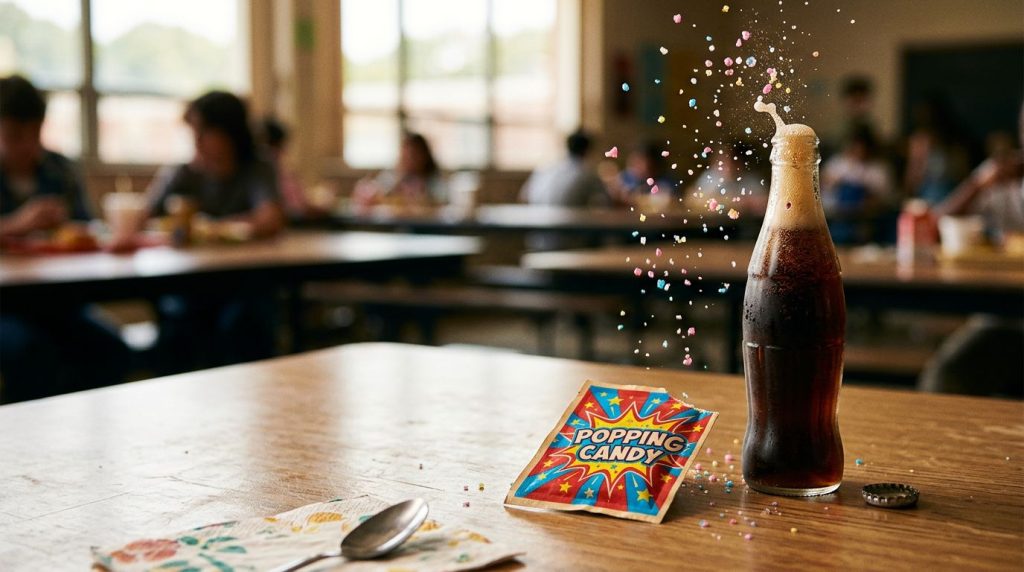
A tiny packet of popping candy could turn your whole mouth into a fireworks show. That was the magic of Pop Rocks, and for 80s kids, it came with one terrifying piece of lunchroom lore.
The Pop Rocks myth said the treat could become dangerous when mixing soda and pop rocks. Plenty of us believed it, even if we also wanted to test it with a can of Coke and a friend standing by as medical support.
It was an urban legend, plain and simple. But the story stuck because Pop Rocks already felt like candy science gone gloriously wild.
Key Takeaways
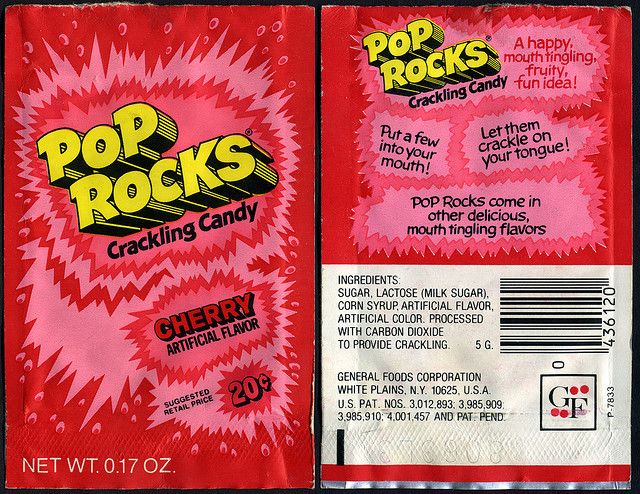
- Pop Rocks are a type of carbonated candy that contain tiny pockets of carbon dioxide gas trapped inside hardened sugar.
- The familiar crackle starts when saliva dissolves the candy and releases that gas.
- Drinking a carbonated soda with popping candy may make you burp or feel extra fizzy, but it doesn’t create a deadly reaction.
- The famous urban legend became tied to Little Mikey, the child actor from Life cereal commercials, though he was never harmed by Pop Rocks.
- The candy was built for schoolyard chatter, dares, and that wonderful 80s feeling that snacks could do anything.
How the Pop Rocks myth Took Over the Schoolyard
Pop Rocks arrived with built-in drama. You tore open the packet, tipped the jagged crystals onto your tongue, and waited. Then came the snap, crackle, hiss, and pop. It felt as if a miniature bowl of Rice Krispies had taken up residence in your molars.
That sensation was enough to make kids suspicious of the popping candy.
Somebody’s older brother had heard something. A cousin’s friend supposedly knew a kid who mixed the popping candy with cola and got sick. By the time the rumor crossed three lunch tables and a bus ride home, it had turned into a full-blown warning.
No parents needed to be in on it. No newspapers needed to confirm it. The schoolyard had its own news service, and it ran on whispers, wide eyes, and total confidence.
The Pop Rocks myth landed at the perfect time. Kids were already surrounded by products that promised action. Slime oozed. Gum came in wild colors. Breakfast cereal had marshmallows shaped like cartoon characters. A candy that exploded in your mouth did not feel impossible. It felt like the next logical step.
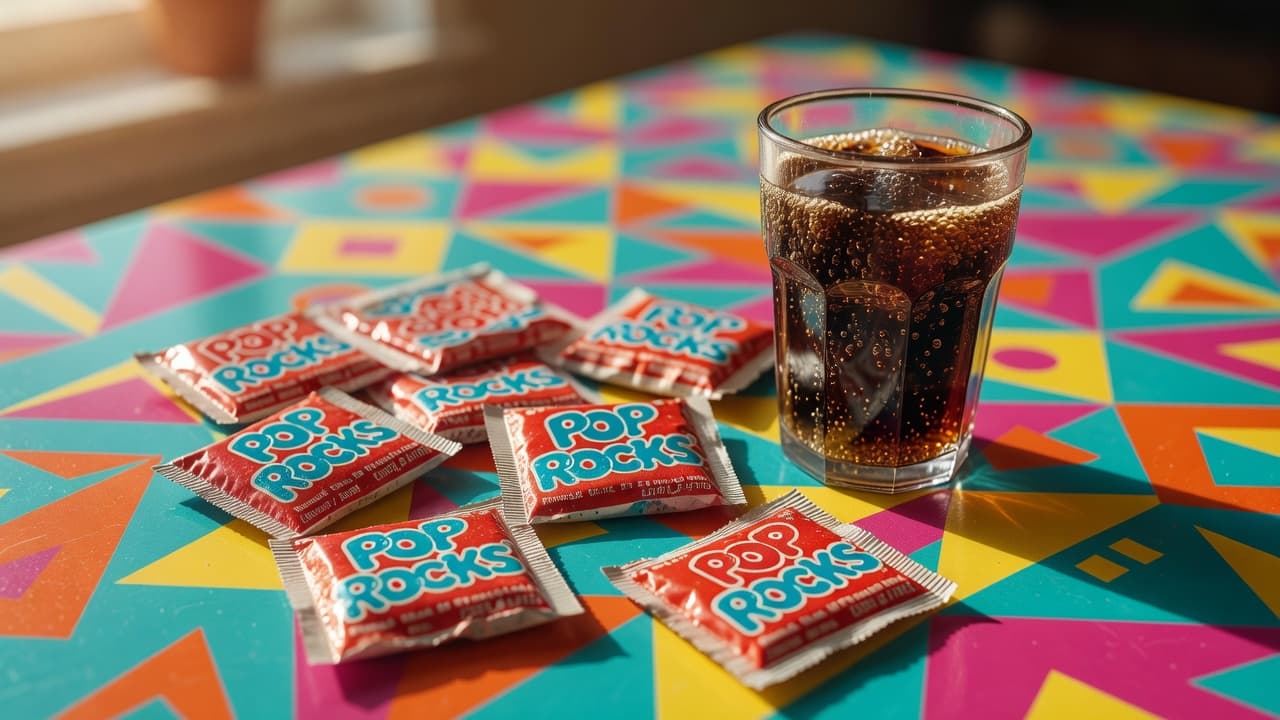
The treat had been developed by food chemist William A. Mitchell while working for General Foods. The candy reached stores in the mid-1970s, but its legend found a bigger audience as the 80s rolled in.
General Foods and later manufacturers like Zeta Espacial S.A. constantly had to deal with the fallout of persistent safety rumors.
A packet was cheap, portable, and easy to pass around during recess. Better yet, it gave kids a reaction. You didn’t merely eat Pop Rocks. You performed them.
The rumor worked because the candy already made a strange, noisy sensation feel real inside your mouth.
That made it the ideal subject for an urban legend. The product did the special effect. Kids supplied the scary ending.
Why Pop Rocks Fizz, Even With Soda
Here is the real trick behind the popular popping candy. Manufacturers heat sugar, add flavoring and color, then expose the mixture to carbon dioxide gas under pressure. When the candy hardens, it traps tiny bubbles of carbon dioxide inside.
Put the crystals on your tongue and saliva begins dissolving the sugar shell. Those pressurized bubbles escape. The release creates the popping sound and the light, tickly feeling.
That’s it. No chemical explosion. No mysterious reaction. No secret candy danger lurking beside the vending machine, and no threat to consumer safety.
Soda can make the experience feel bigger because it already contains dissolved carbon dioxide. If you enjoy carbonated candy and follow it with carbonated beverages, you may burp. You may feel more gas in your stomach for a few minutes. If you gulp a lot of soda, you might feel uncomfortably full.
When mixing soda and pop rocks, some kids worried that the combination of acid and soda, along with natural stomach acid, would cause a dramatic stomach explosion.
In reality, the body handles the gas easily. It comes out as a burp, not a disaster.
The Pop Rocks myth confused a fun sensory effect with a medical threat. That mix-up is easy to understand when you’re nine years old and the candy sounds like it has a tiny campfire going inside your head.
A glass of cola also looks dramatic when bubbles race up the sides. Add a packet of popping candy to the mental picture and suddenly every kid is a scientist in a danger movie. “Don’t do it!” someone says. Naturally, that makes everybody want to do it more.
There is a sensible footnote here. Anyone with a medical condition that limits sugar intake or requires dietary care should follow their clinician’s advice. And nobody needs to pound several packets of candy and a giant soda in one sitting. That would be a rough afternoon for reasons far less exciting than an urban legend.
Still, the central fact remains: eating Pop Rocks with a fizzy drink does not cause a deadly reaction.
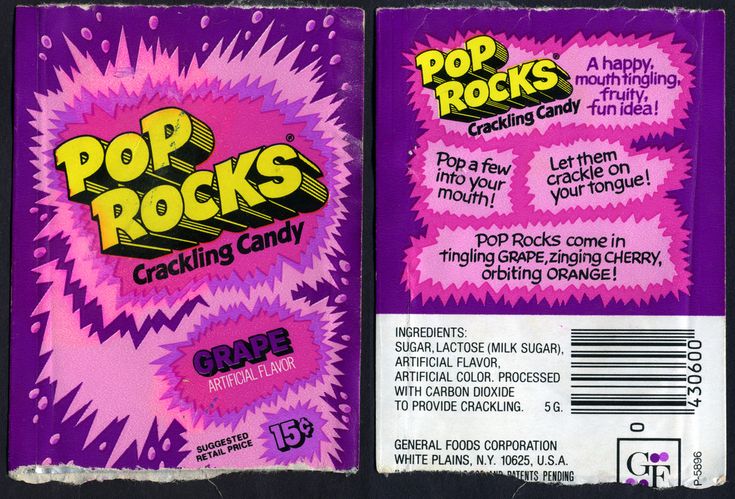
Little Mikey and the Rumor That Wouldn’t Quit
The story got its most famous name from John Gilchrist, the child actor who played Little Mikey in the classic Life cereal commercial. You know the one: two older boys stare at a bowl of cereal, then hand it to Mikey because “he won’t eat it.” Mikey takes a bite. He likes it. Commercial history.
At some point, the Pop Rocks rumor attached itself to him. Kids claimed Little Mikey had eaten the candy with Coca-Cola and died. It was false. Gilchrist was alive, and the commercial character had nothing to do with the candy.
The connection had a weird sort of playground logic. Mikey was already famous as a kid associated with eating something adults expected him to reject. He was recognizable enough that people could repeat his name like a fact. The story gained a face, and that made it travel faster.
Thrillist’s look at the Little Mikey rumor traces how that false connection became the version so many people remember. It is a reminder that the best urban legend material does not need evidence. It needs a detail that sounds familiar.
Then there was the brand’s awkward position. How do you convince a kid that a candy which crackles in their mouth is harmless, when the whole point is that it seems a little bit impossible? General Foods even took out full-page newspaper ads and wrote letters to school principals to fight the relentless safety rumors surrounding soda and pop rocks.
You can print warnings. You can reassure parents. You can explain carbon dioxide. But you can’t compete with the kid on the bus who says, “My brother’s friend saw it happen.” Decades later, a dedicated MythBusters episode even tested the combination to finally put the Pop Rocks myth to rest.
The rumor outlived the candy’s original run in many stores. It showed up at sleepovers, in classrooms, and eventually in online nostalgia threads. The name changed depending on the neighborhood. The warning stayed the same.
Don’t mix it with soda.
Or, if you were an 80s kid with a stubborn streak, don’t get caught mixing it with soda.
Why 80s Candy Was Made for Rumors
Pop Rocks weren’t the only treat that felt bigger than its wrapper. The 80s candy aisle was bright, loud, and proudly ridiculous. It was full of chewy centers, sour faces, strange colors, and commercial jingles that drilled straight into your brain.
Take Bonkers! candy, another 80s favorite built around a surprise. The outside gave you a fruit chew, then the juicy center showed up halfway through. Candy wasn’t content to sit there. It needed a plot twist.
General Foods and later Zeta Espacial S.A. took that idea one step further with carbonated candy. Instead of a filling, the surprise was sound. Instead of a slogan, the proof of popping candy happened on your tongue.
That kind of treat invited storytelling. Kids compared flavors, dared each other to pour in the whole packet, and described the sensation with the kind of dramatic vocabulary normally saved for monster movies. It was crazy. It was insane. It was probably going to blow your head off.
Nobody meant it as a scientific paper.
The Pop Rocks myth also shows how childhood fears, childhood fun, and consumer safety concerns often shared the same hallway. You wanted the weird candy because it seemed risky. You avoided the soda because someone said you should. Then you told the story to somebody younger, with a few extra details because that was simply how these things worked.
Frequently Asked Questions
Can mixing Pop Rocks and soda cause your stomach to explode?
No, combining popping candy with carbonated beverages will not cause any dangerous explosions. The reaction simply releases carbon dioxide gas, which may cause you to burp or feel temporarily extra fizzy.
Did Little Mikey from the Life cereal commercials die from eating Pop Rocks?
No, that was entirely a false urban legend. The child actor, John Gilchrist, was never harmed by the candy, and the rumor had no basis in reality.
Why do Pop Rocks make a popping sound in your mouth?
Pop Rocks contain tiny pockets of pressurized carbon dioxide gas trapped inside hardened sugar. When saliva dissolves the sugar shell, the gas escapes and creates the famous crackling sound.
The Sweet Truth About Pop Rocks
The Pop Rocks myth was never a warning from science. It was a schoolyard ghost story with sugar crystals, cola bubbles, and one unfortunate cereal-commercial kid at its center.
Science eventually cleared the air, proving that mixing soda and pop rocks cannot cause a stomach explosion when the candy reacts with stomach acid.
What made the legend last was the candy itself. This iconic popping candy was noisy, surprising, and a little bit mischievous, turning an ordinary snack break into a moment worth talking about.
For 80s kids, that crackle still carries a little playground magic, even after the rumor has fizzled out.